

Uncategorized
What To Review Before Moving Into July Fertility Management
Late June is a useful moment to slow down and look at the whole growing system. By now, the season has enough history to teach
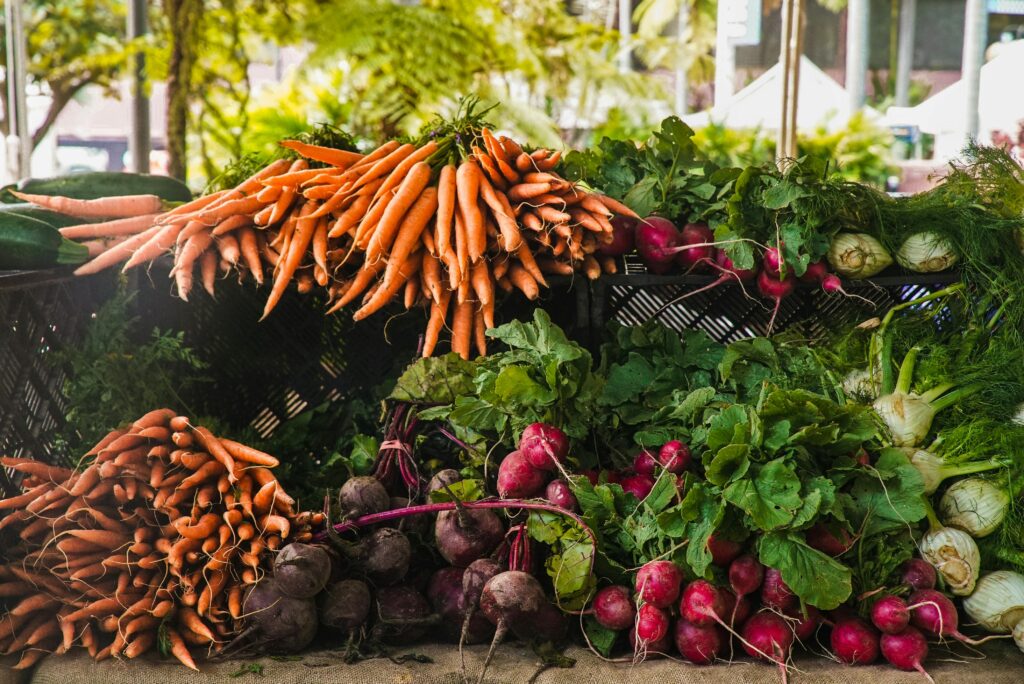
Many home and commercial vegetable growers have their own secret recipes to produce the biggest and best-tasting vegetables. Often, magnesium (Mg) is a crucial part of these recipes. Magnesium is an essential element required by all plants and is the nutrient most likely to be deficient in vegetable soils.
Vegetable crops vary in their sensitivity to magnesium deficiencies in the soil. Beans, English peas, beets, radish, lettuce, Swiss chard, and sweet potatoes tend to tolerate low magnesium levels better. They seemingly use the available magnesium more efficiently than other crops. Deficiency symptoms in these crops tend not to develop until magnesium levels are critically low.
Conversely, crops in the Solanaceous family (such as tomatoes, peppers, eggplants) and the Cucurbit family (including watermelons, cucumbers, squash) develop deficiency issues quickly when magnesium levels are low. Many Brassica crops, especially greens, broccoli, and cabbage, also exhibit this problem.
Growers should proactively prevent magnesium deficiency before it becomes problematic. The best way to determine if magnesium needs to be applied is by performing a soil test. A soil test will identify nutrient deficiencies, and the Auburn University soil test lab can provide recommendations on which nutrients need to be added.
Magnesium is a mobile element, meaning it can travel through the plant from old growth to new, developing growth. Consequently, deficiency symptoms appear on older growth first. If untreated, these symptoms progress to younger growth. Typical magnesium deficiency symptoms on collards include yellowing between the veins of lower leaves and upward cupping of affected leaf margins.
Several common sources of magnesium are available for vegetable growers. Epsom salts (magnesium sulfate) is one of the most popular sources and is often included in many growers’ management plans. The Epsom salt typically used in vegetable production is the heptahydrate sulfate mineral epsomite.
Other common sources of magnesium include:
Magnesium is often applied from dolomitic limestone (11% Mg) or high-magnesium limestones, especially if a pH adjustment is required. If no liming agent is needed, magnesium should be applied as a fertilizer on low-magnesium soils.
If a vegetable crop develops a deficiency, it is recommended to apply 2 to 4 pounds of actual magnesium per acre via a drip irrigation system using a water-soluble form, such as Epsom salt. To determine how much Epsom salt to inject, multiply the recommended level of magnesium per acre by 10.136. For example, if 4 pounds per acre of magnesium are needed, multiply 4 by 10.136 to get 40.54 pounds of Epsom salts. Do not apply all at once; inject it over three or four irrigation events.
For sidedressing, apply 25 to 30 pounds per acre of actual magnesium. In an emergency, magnesium may be applied as a foliar spray, though results may be limited since magnesium does not penetrate leaves well. A rate of 2 tablespoons of Epsom salts per gallon of water is generally recommended, applied multiple times to have an impact. Avoid adding dish detergents or soaps to the Epsom salts, as this can cause crop damage.
While magnesium is crucial for vegetable growth, applying more than what the soil test indicates will not enhance growth further. Applications are only beneficial when soil levels are insufficient, and exceeding recommended levels is a waste of resources.
Late June is a useful moment to slow down and look at the whole growing system. By now, the season has enough history to teach
Late June is when lawns start showing the truth about summer management. A lawn may have looked strong in May. It may have greened up
Give us a call or visit our store, and we’ll help you find the right solution for your business.
© Supply Solutions LLC 2026