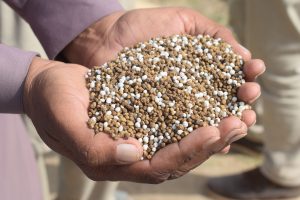
Spring vegetables ask a lot from a field or garden bed in a short amount of time.
Whether you grow acres of fresh market produce or a few family beds, early crops like lettuce, spinach, peas, brassicas, onions, carrots, and potatoes all want:
- A steady, not excessive, nitrogen supply
- Enough phosphorus and potassium to support roots and quality
- Good tilth and drainage after winter soaking
- A root zone that can actually hold water and nutrients
If you come out of winter and immediately throw “a little of everything” at the soil, you can end up with:
- Too much phosphorus in already rich beds
- Not enough potassium where removal has been high
- Nitrogen that leaches or burns instead of feeding
- Structure problems that no fertilizer can fix
In this article, we will walk through a practical, soil-first approach to staging spring vegetable fields and beds using:
The goal is to help you prepare beds that wake up quickly, feed crops steadily, and keep improving over time instead of being “reset” every year.
Step 1: Let Winter Show You Where The Real Problems Are
Before you reach for any fertilizer, walk your fields or beds.
Look for:
- Low spots that stayed soggy or grew moss or algae
- Crusted surfaces where water ran off instead of soaking in
- Hardpan or compaction from last year’s harvest traffic
- Beds that stayed greener all winter versus those that looked tired
- Areas that always seem to dry out faster in spring
These clues point you toward:
- Structure and drainage issues that might need Supply Solutions Gypsum Powder – Purest and Soluble and humic support
- Zones with different organic matter, where nitrogen and water behave differently
- Whether you can afford the same crop and fertility on every bed, or if some should be rotated into a lighter demand crop or cover
Write down what you see on a simple sketch map. That small step makes it much easier to match your fertilizer choices to actual field behavior.
Step 2: Use A Soil Test To Separate “Needs” From “Nice To Haves”
Spring vegetables move quickly. They do not give you much time to fix underlying fertility problems after planting.
A soil test is the clearest way to know:
- pH
- Organic matter
- Phosphorus (P)
- Potassium (K)
- Calcium and magnesium
- Sulfur (S) if reported
- Any sodium or salinity concerns
Once you have results, ask:
- Are phosphorus and potassium genuinely low, or just not perfect
- Is sulfur borderline, especially on sandier or low organic matter soils
- Is pH in a reasonable range for most vegetables
- Are there structural or salinity hints that say “fix the soil” as much as “feed the crop”
That information decides where a balanced fertilizer like 10-10-10 makes sense and where you should lean toward more targeted inputs such as ammonium sulfate, 7-0-26, or sulfate of potash.
If you are unsure how to read the report, you can always contact Supply Solutions with your soil test for a second set of eyes before you guess at rates.
Step 3: When A Balanced 10-10-10 Is The Right Tool
“All purpose” fertilizers are tempting because they sound like they solve everything.
Supply Solutions 10-10-10 Complete Lawn & Garden Granular Fertilizer with Micronutrients is designed to:
- Provide equal parts nitrogen, phosphorus, and potassium
- Include micronutrients to support general plant health
- Serve as a simple, starter friendly choice when soil tests show balanced needs
It is a strong fit when:
- Soil phosphorus and potassium both test low to moderate
- You are preparing mixed vegetable areas with many crops sharing a bed
- You want one product for small plots or home gardens and are following label rates
10-10-10 is not the right tool when:
- Soil P is already high
- You mainly need nitrogen and potassium, not more phosphorus
- You are feeding long term high removal crops like potatoes or brassicas in fields with uneven K levels
In those situations, it makes more sense to use 10-10-10 sparingly or focus on more targeted products, so you are not quietly overloading the soil with P you do not need.
Always follow the 10-10-10 label for rates and timing on vegetables, lawns, and ornamentals. Measure your beds and rows instead of guessing, so the “right tool” truly does the right job.
Step 4: Build A Long Term Fertility Foundation With Nutri-Proganic 4-3-2
Synthetic fertilizers can correct deficiencies quickly, but they do not add much organic matter. If you want your vegetable fields and beds to get easier to manage over time, you need carbon in the mix.
4-3-2 Nutri-Proganic Pellet is an organic chicken manure based fertilizer that:
- Provides slow release nitrogen, phosphorus, and potassium
- Adds organic matter and micronutrients
- Feeds soil biology as it breaks down
Nutri-Proganic is especially useful when:
- You want to build soil quality over several seasons, not just chase this year’s yield
- You use cover crops and want your fertilizer program to support that biology
- You farm intensively and need a “buffer” that makes minor rate errors less risky
Practical ways to use Nutri-Proganic for spring vegetables:
- Broadcast or band pellets in the root zone several weeks before planting, at label rates, so they begin to mineralize as soils warm
- Use it as the base fertility in organic or reduced synthetic systems, then add soluble N or K only if in-season growth calls for it
- Apply ahead of heavy feeders in rotations, such as brassicas, corn, or solanaceous crops, to keep long term fertility trending upward
Remember that release from Nutri-Proganic is temperature and moisture dependent. In cold, wet soil, nutrients come slower. That is not a problem if you plan for it and use quick acting sources where truly needed.
Step 5: Match Nitrogen To Early Growth With Ammonium Sulfate And 7-0-26
Vegetable crops are sensitive to both too little and too much nitrogen.
Too little N and you see slow growth and pale leaves.
Too much and you get soft growth, disease issues, and sometimes poor flavor or storage.
Spring soils are often cool and inconsistent. This is where your N sources really matter.
Ammonium Sulfate 21-0-0 + 24% Sulfur
Supply Solutions Ammonium Sulfate 21-0-0 + 24% Sulfur provides:
- 21 percent ammoniacal nitrogen for early growth
- 24 percent sulfur in the sulfate form
- An acidifying effect over time, helpful in slightly high pH soils
It is a good fit when:
- Soil tests or past experience suggest sulfur is borderline or low
- You grow brassicas, alliums, or other S responsive vegetables
- pH is on the high side and a modest acidifying fertilizer is welcome
Practical use ideas:
- Blend into preplant bands along rows for crops like onions, brassicas, and leafy greens, within label and crop safety limits
- Apply in modest side dressings for crops that show early N and S needs
- Use ammonium sulfate as the N backbone in fields with low S, then fine tune with other sources as needed
Always budget its nitrogen into your total N plan. Do not “stack” ammonium sulfate on top of a full N program without accounting for it.
7-0-26 Nitrogen Fertilizer
Supply Solutions 7-0-26 Nitrogen Fertilizer is a water soluble fertilizer that provides:
- 7 percent nitrogen
- 0 percent phosphorus
- 26 percent potassium
It shines when:
- Soil P is already adequate or high
- Potassium is moderate or low and you care about quality and stress tolerance
- You are fertigating or feeding through irrigation in greenhouses, tunnels, or drip systems
For spring vegetables, 7-0-26 is especially helpful for:
- Leafy greens that benefit from steady N and strong K without excessive P
- Fruiting crops in tunnels and greenhouses that already have P in the root zone from preplant fertilizers or past seasons
- Fine tuning N and K in real time as you watch crop response and weather
Because it is water soluble, start with modest strengths in cool, low light conditions. Increase only if crops clearly signal they need more, always staying within label directions.
Step 6: Use Sulfate Of Potash When Potassium Is The Quiet Limiting Factor
Potassium often becomes the “silent shortfall” in vegetable systems, especially where:
- Crops remove a lot of biomass
- Straw or residues are exported
- Soils are naturally low to moderate in K
K is critical for:
- Disease tolerance
- Water regulation and drought resilience
- Fruit size, firmness, and shelf life
- Overall plant vigor under heat and stress
Sulfate of Potash 0-0-50 Plant Fertilizer is a concentrated potassium sulfate fertilizer that:
- Delivers 0-0-50 analysis
- Supplies sulfur in a plant available sulfate form
- Contains no nitrogen and no phosphorus
That makes it valuable when:
- Soil tests show low or borderline K but P is already adequate
- You are growing K hungry crops such as potatoes, tomatoes, peppers, squash, melons, and many root crops
- You want chloride free potassium for sensitive vegetables or high value crops
Spring strategies for sulfate of potash:
- Apply ahead of planting or at early growth stages at soil test guided rates
- Use in bands or zones where K deficiency has shown up in previous seasons
- Combine with ammonium sulfate or Nutri-Proganic where you also need N and S
Because sulfate of potash is concentrated, rate control matters. Follow label instructions and remember that too much K can interfere with magnesium or calcium uptake.
Step 7: Fix Structure And Drainage With Gypsum Where It Actually Helps
If your vegetable beds:
- Seal over and crust when they dry
- Pond water after modest rains
- Stay slick and sticky when moisture is high
- Show shallow rooting even in long season crops
then soil structure is likely limiting your return on fertilizer.
Supply Solutions Gypsum Powder – Purest and Soluble is a high purity calcium sulfate that can help where:
- Sodium is elevated
- Magnesium is high relative to calcium
- Clays tend to disperse and seal instead of forming good aggregates
Gypsum in spring:
- Supplies calcium without raising pH
- Supplies sulfur in sulfate form
- Supports better aggregation and infiltration in suitable soils
Practical uses:
- Apply over compacted or crusting vegetable fields ahead of light tillage or shallow bed shaping, following label rates
- Target drive lanes, headlands, and troublesome beds if you cannot treat every acre right away
- Combine gypsum with cover crops, organic matter, and reduced traffic on wet soils to get a compounding effect over several seasons
Gypsum is not a silver bullet, and it is not needed in every soil. Let soil tests, field behavior, and local guidance confirm that gypsum is appropriate before you make it part of your program.
Step 8: Help Soil Hold Nutrients With HumiPro(K) WSP
Fertilizer is only half the story. Your soil also needs the ability to hold and cycle those nutrients in the root zone.
HumiPro(K) WSP humic and fulvic acid powder is a concentrated humic and fulvic blend designed to:
- Be mixed into a concentrate and then diluted
- Be applied to soil in fall, early spring, and during the growing season
- Support soil structure, nutrient retention, and root development when used as directed
In vegetable systems, HumiPro(K) is particularly helpful when:
- Soils are sandy or low in organic matter
- Beds dry out quickly or lose nutrients between feedings
- You want to increase the efficiency of the fertilizers you already use
Spring uses:
- Apply to fields or beds ahead of planting, then water in or allow rain to move it into the topsoil
- Use under plastic mulch or drip lines to support roots that are confined to a specific volume of soil
- Combine with Nutri-Proganic, ammonium sulfate, 10-10-10, or sulfate of potash so more of the applied nutrients stay near roots rather than leaching away
Always follow label directions for mixing and application. If you intend to tank mix HumiPro(K) with other products, run a jar test first to check compatibility and avoid surprises in the spray tank or injector.
Step 9: Practical Program Examples For Different Growers
Every farm and garden is different, but here are a few examples to show how these products can work together.
Example A: Market Garden Beds With Mixed Crops And Moderate Soil Fertility
Soil test:
- pH near neutral
- P and K moderate
- S borderline
- Organic matter decent but trending flat
Goals:
- Support multiple crops per season
- Keep beds productive without building excessive P
Spring plan:
Example B: High Tunnel Greens And Early Vegetables On High P Soil
Soil test:
- pH acceptable
- P high
- K moderate
- S low
- Organic matter good
Goals:
- Avoid adding more P
- Support steady N and K for quality
- Maintain soil health in an intensive environment
Spring plan:
Example C: Heavy Field Vegetable Ground With Crusting And Low K
Soil test:
- pH acceptable
- P adequate
- K low
- S borderline
- Ca moderate, Mg high
- Clear crusting and slow infiltration
Goals:
- Improve structure enough to plant on time
- Correct potassium for quality and yield
- Supply sulfur and nitrogen efficiently
Spring plan:
Example D: Home Vegetable Garden With Unknown Fertility
Conditions:
- Mixed vegetables in a few raised or in-ground beds
- Unclear fertilizer history, but compost likely used off and on
- Some areas crust, others stay soggy
Spring plan:
Step 10: A Simple Checklist For Spring Vegetable Fertility
You can print this and keep it in your shop, barn, or garden shed.
- Walk each field or bed
- Note soggy spots, crusted areas, hardpan signs, and where crops did best last year
- Pull or review recent soil tests
- Focus on pH, P, K, S, organic matter, and any sodium or structural clues
- Decide your main jobs for each area
- Balanced NPK
- Extra K
- N + S
- Structure and drainage
- Long term carbon and biology
- Match products to those jobs
- Balanced feed when P and K are low to moderate
- Organic base fertility and carbon
- Nitrogen plus sulfur
- Nitrogen plus potassium, no phosphorus
- Potassium plus sulfur, no N or P
- Structure, calcium, and sulfur in appropriate soils
- Soil conditioning and nutrient efficiency
- Write a bed-by-bed or field-by-field plan
- Product, rate, timing, and purpose for each area
- Check every product against its label
- Make sure crops and application methods match what is allowed
- Adjust in season based on crop response
- Use leaf color, growth rate, and soil moisture as your guides, not habit or calendar dates alone
Final Thoughts: Build Beds That Get Better Every Spring
A strong spring vegetable crop is not just about “enough fertilizer.”
It is about:
- Letting winter show you where soil structure and drainage need help
- Using soil tests to separate real needs from nice to haves
- Choosing products that match those needs instead of treating everything the same
- Building a foundation of organic matter and humics so each pound of N, P, K, and S does more work
When you combine tools like:
as part of a thoughtful, soil-test-based plan, your beds do not just produce a crop this year. They slowly become easier to manage, more resilient, and more forgiving year after year.
If you would like help turning your soil tests and crop plans into a specific spring vegetable fertility program, the Supply Solutions team is ready to go through the details with you.
Connect with Supply Solutions: