Some of the hardest working grass on any property is not in the middle of the lawn.
It is along:
- Driveways and farm lanes
- Roadside ditches and shoulders
- Parking areas and shop yards
- Sidewalk edges and city boulevards
Through winter, these strips take the abuse:
- De icing salts and sand
- Plowed and piled snow
- Tire traffic while soils are soft
- Freeze thaw cycles that break aggregates
- Concentrated runoff and standing meltwater
By the time spring arrives, you see:
- Dead or patchy grass near the road
- Soil that feels tight, crusted, or greasy when wet
- Thin, pale regrowth compared to the rest of the turf
- Ruts or puddles that never quite dry
In this article we will walk through how to diagnose and repair these stressed edges using a realistic combination of:
The focus is on farmyards, acreages, and home landscapes that live in the real world, with snowplows, trucks, deliveries, and kids, not in a picture book.
Step 1: Read The Damage Before You Start Fixing It
When the snow starts to melt, do not rush straight to the spreader. Take a slow walk and look for patterns.
Pay special attention to:
- The first 3 to 10 feet along paved surfaces
- Areas where snow was piled or blown off roofs
- Inside and outside corners of driveways and lanes
- Gate approaches and parking spots for equipment or visitors
You are looking for four main things.
1. Winterkill or salt burn
Signs include:
- Grass that is dead or straw colored in irregular bands near the pavement
- Turf that stayed brown long after the rest of the lawn started to green
- Spots where only the inner side of a curve is damaged
These often line up with:
- Salt or de icing material that was thrown off a spreader
- Drip lines from thawing piles of salty snow
- Splash from road spray and passing traffic
2. Compaction and rutting
Look for:
- Visible tire tracks that stayed imprinted after the soil dried
- Areas where your heel barely sinks in, even when the soil is damp
- Places where water ponds in shallow footprints or wheel marks
These spots usually mark:
- Heavy vehicle use when soils were soft in fall or thaw periods
- Repeated turning or braking zones near shop doors and gates
3. Crusting and poor infiltration
On a dry day, scratch the surface with a small shovel or even a key.
You might find:
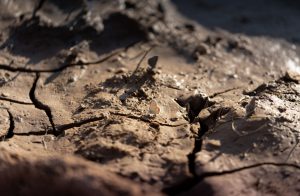
- A hard, thin crust that breaks into flakes
- Soil under the crust that feels smeared or dense
- Water standing in small depressions when it rains
Crusts form when:
- Fine particles seal over and repel water
- Sodium or dispersive clays break aggregates
- Repeated freeze thaw cycles and traffic push soil particles together
4. Thatch and buried debris
In some high traffic areas, the problem is less chemistry and more housekeeping.
Check for:
- Thick layers of matted dead grass or leaves
- Plowed gravel, sand, or chunks of asphalt pushed into the turf
- Old thatch that never breaks down because the soil is too compacted
You may need to remove or thin some of this material before soil amendments and fertilizers can do their best work.
Write down or mark the worst zones. Not every foot of edge needs the same intensity of repair.
Step 2: Decide What You Can Fix This Season
Honesty helps here.
Along every driveway or road, there are usually three kinds of turf zones.
- Areas that will respond well to repair
- Moderate damage, but the grass is still present
- Soil that can be loosened or amended
- Reasonable sunlight and drainage
- Areas that will only ever be “functional grass”
- Constant traffic, limited soil depth, or shade
- Places where you mostly need dust control and mud reduction
- Areas that may be better off regraded or repurposed
- Chronic ponding, extremely shallow or rocky soil
- Spots where vehicles constantly run off the edge
It makes sense to put the most effort into category 1, stabilize category 2, and think about design changes for category 3.
This mindset keeps you from overspending fertilizer and time on strips of soil that simply cannot give you a dense, high quality stand yet.
Step 3: Where Gypsum Belongs In Winter Salt And Traffic Repair
If you have salt exposure, sodium issues, or sticky, dispersive clays, calcium can be your friend.
Supply Solutions Gypsum Powder – Purest and Soluble is a high purity calcium sulfate that:
- Provides calcium without raising pH
- Supplies sulfur in sulfate form
- Helps improve soil structure and infiltration in suitable soils
In winter damaged edges, gypsum can help with:
- Soils that have received regular salt spray or de icing material from roads and sidewalks
- Tight, slick clays near driveways that smear when wet
- Rutted and compacted strips where you want better root depth and drainage
Practical steps:
- Use soil tests and local guidance if you suspect sodium or high magnesium issues.
- In spring, once soils are firm enough to work, apply gypsum to the damaged strips at label rates.
- Where possible, lightly incorporate the top half inch to inch with a rake in lawn settings or shallow cultivation in wider turf and farm lanes.
- Allow spring rains or irrigation to move calcium and sulfate into the root zone.
Gypsum will not magically fix every salt problem. It works best in the context of:
- Reasonable drainage
- Reduced future salt load if you can adjust de icing practices
- Organic amendments and good turf management
Step 4: Give The Soil A “Sponge Upgrade” With HumiPro(K) WSP
Even after you correct sodium and improve structure, many roadside and yard edges still struggle with:
- Rapid drying between rains
- Nutrients that leach beyond shallow root zones
- Limited biological activity in compacted soil
HumiPro(K) WSP humic and fulvic acid powder helps on the “soil engine” side.
It is a water soluble humic and fulvic blend designed to:
- Be mixed into a concentrate then diluted
- Be applied to soil in early spring and through the season
- Support soil structure, nutrient holding, and root development when used as directed
In winter stressed edges, HumiPro(K) is especially helpful when:
- Organic matter is low
- Soil has been repeatedly compacted or salted
- You want the limited fertilizer you can afford to stay in the root zone and do more good
Practical use:
- After gypsum and any light surface loosening, apply HumiPro(K) to the damaged strips as a soil drench, following the label for dilution and rates.
- Water in if rain is not expected soon.
- For wider farm lanes or pasture edges, a boom or hose application in a narrow band can be efficient.
HumiPro(K) is not a replacement for N, P, or K. It is a way to help the soil hold those nutrients and deliver them to roots more reliably after a tough winter.
Step 5: Decide How Much Organic Fertility You Can Realistically Add
Winter damaged edges often lack more than just nutrients. They lack carbon.
Between traffic, plowed snow, and thin topsoil, there is not much organic matter to buffer moisture or feed biology. That is where 4-3-2 Nutri-Proganic Pellet can help.
Nutri-Proganic is an organic, chicken manure based pellet that:
- Supplies 4 percent N, 3 percent P, and 2 percent K
- Adds organic matter and micronutrients
- Feeds soil organisms as it breaks down
For turf edges and yard strips, Nutri-Proganic makes sense when:
- You want to build soil quality over several seasons
- You are already addressing compaction and salt problems
- You prefer a more forgiving, slower release nutrient for high traffic areas
Practical tips:
- Apply Nutri-Proganic at label turf or garden rates along damaged edges once the soil is workable.
- Where you plan to reseed thin strips, incorporate pellets lightly before seeding.
- Pair Nutri-Proganic with HumiPro(K) and gypsum where appropriate to speed up biological recovery.
In farmyards and around shops, Nutri-Proganic can be used in wider bands where you want better ground cover but still need a surface that can handle occasional traffic.
Step 6: Use Synthetic Fertilizer Where It Adds Precision, Not Just “More”
Once structure and organic support are addressed, it is time to talk about synthetic fertilizers.
The key is to match the product to what the soil test and turf actually need.
When a balanced fertilizer is appropriate
Supply Solutions 10-10-10 Complete Lawn & Garden Granular Fertilizer with Micronutrients can be a good fit for roadside and yard edges when:
- Soil tests show both P and K in the low to moderate range
- You are already using 10-10-10 in the main lawn and want a consistent, label supported program
- You are repairing mixed areas with grass, ornamentals, and bed edges in one pass
In those cases:
- Follow the label rates for turf and ornamental beds.
- Focus on the strips that can realistically become part of a healthy lawn, not the spots that will stay drive tracks.
Where P is already high, it is usually better to focus on N and K rather than adding more phosphorus.
When nitrogen and sulfur are the main gap
Along roadways and farmyards, sulfur can leach through sandy or disturbed soils faster than in thicker, more protected turf.
Supply Solutions Ammonium Sulfate 21-0-0 + 24% Sulfur brings:
- 21 percent ammoniacal N
- 24 percent sulfate S
- An acidifying effect in the fertilizer band over time
It becomes a strong choice when:
- Soil tests suggest low or borderline S
- The turf species and site can benefit from an acid forming N source
- You need a focused N and S feed without extra P
Practical approach:
- Use ammonium sulfate at label lawn or pasture rates where turf is pale but soil tests do not call for extra P or K.
- Combine with gypsum and HumiPro(K) in salt exposed strips, so that N and S applications are not wasted by poor soil structure.
When potassium and sulfur are the quiet limiters
In some winter stressed zones, especially where topsoil is thin and leaching is high, potassium can be short even if the main lawn is fine.
Sulfate of Potash 0-0-50 Plant Fertilizer is a chloride free potassium sulfate fertilizer that:
- Supplies strong K with no N or P
- Adds sulfate sulfur at the same time
It is useful when:
- Soil test K is low in high traffic strips compared to the main yard or field
- You want to improve stress tolerance and recovery without changing N rates
Use sulfate of potash along damaged edges only when soil tests justify it, and always stay within label rates.
Step 7: Reseeding And Surface Repair The Right Way
Fertility and soil conditioners are only part of the story. Many winter damaged strips also need:
- Some physical reshaping
- Better contact between seed and soil
- A realistic choice of grass species
Practical sequence:
- Clean up
- Remove plowed gravel, chunks of asphalt, and thick debris mats.
- Rake away excessive thatch or dead material.
- Lightly loosen the surface
- Use a garden fork, small aerator, or rake to break shallow compaction without bringing up stones from deep layers, especially along roads.
- Apply gypsum, HumiPro(K), and organic amendments
- Gypsum first where appropriate, then Nutri-Proganic, then HumiPro(K) as a drench if part of your plan.
- Add fertilizer if needed
- Choose 10-10-10, ammonium sulfate, sulfate of potash, or a combination based on your soil test and goals.
- Reseed with appropriate species
- Use turf species that match the rest of the lawn, but consider more traffic tolerant mixes in the heaviest use strips. Always follow seed label and local recommendations.
- Protect the repair
- Use light straw, erosion control blankets, or simple signs and temporary stakes to keep vehicles off the repaired area while seedlings establish.
The more you can limit early traffic, the better chance your fertilizer and soil work have to pay off.
Step 8: Adjust De Icing And Traffic Practices Where You Can
You cannot control the weather, but you can often adjust how you respond to it.
A few small changes can protect the work you put into turf edges.
- Calibrate salt and sand spreaders so you are not overapplying near sensitive grass.
- Angle plows so they push snow onto more resilient areas when possible, not always onto the same narrow strip of turf.
- Use designated pull off and parking zones for heavy vehicles, and accept that those areas may never look like a golf course.
- When soils are very soft in late winter, keep heavy delivery or manure trucks on more stable routes rather than cutting across lawns or field edges.
These kinds of habits protect your investment in gypsum, humics, organic matter, and fertilizer.
Step 9: A Simple Spring Edge Repair Checklist
Here is a short checklist you can print and keep in the shop or garage.
- Walk all roadsides, drive lanes, shop yards, and sidewalks
- Mark winterkill, salt damage, ruts, ponding, and crusting.
- Decide which strips are worth full repair this year
- Focus on moderate damage and good response potential first.
- Address structure and salt exposure
- Support soil biology and nutrient holding
- Choose fertilizer based on soil tests
- Reseed where turf is thin or dead
- Lightly loosen the surface, seed, and protect repairs from traffic.
- Adjust winter practices for next year
- Tune spreaders, adjust plow patterns, and mark zones to avoid with heavy vehicles in thaw conditions.
Final Thoughts: Edges Work Hard, So Help Them Recover
Roadside and yard edges will probably never look as perfect as the center of a protected lawn, but they can do much better than weak, muddy strips that never quite keep up.
When you:
- Read the damage carefully
- Fix structure and salt imbalances with gypsum where appropriate
- Support soil biology and nutrient holding with HumiPro(K) and Nutri-Proganic
- Use fertilizers like 10-10-10, ammonium sulfate, and sulfate of potash only where the soil test and turf truly need them
- Combine all that with smarter winter traffic and de icing habits
you give these hard working edges a real chance to green up with the rest of the property when spring arrives.
If you would like help interpreting your soil tests, choosing between gypsum, humic support, organic pellets, and different fertilizer options for your specific roadside or yard edge challenges, the Supply Solutions team is ready to talk through your situation and identify products that fit your goals and budget.
Supply Solutions is a veteran owned fertilizer and industrial supplier serving farmers, growers, and green industry professionals across the Pacific Northwest and beyond. From complete lawn and garden fertilizers and soluble gypsum to sulfate of potash, ammonium sulfate, humic solutions, and organic 4-3-2 pellets, our team is here to help you feed smarter and grow stronger.
Connect with Supply Solutions: