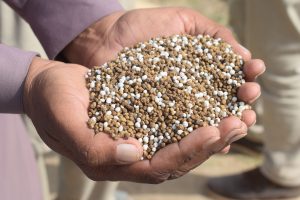
“Balanced fertilizer” is one of the most common phrases in lawn care, gardening, and farm conversations, and it is also one of the most misunderstood.
Some people use “balanced” to mean equal numbers on the bag, like 10-10-10. Others use it to mean “covers everything,” including micronutrients. In a Pacific Northwest context, balanced should mean something more practical: a fertilizer that matches what your soil can supply and what your plants actually need, without creating new problems.
February is a good time to get this right because many fertilizer decisions made now are really decisions about spring performance.
The first meaning of “balanced” is simple: the N-P-K ratio
When you see a fertilizer like 10-10-10, the numbers represent the percentage of nitrogen (N), phosphorus (P), and potassium (K). Equal numbers mean the fertilizer is balanced in ratio, not necessarily balanced for your soil.
A product like Supply Solutions 10-10-10 Complete Lawn & Garden Granular Fertilizer with Micronutrients is a classic example of a balanced N-P-K ratio, designed as a general-purpose fertilizer across a wide range of plants and sites.
A fertilizer like Supply Solutions 16-16-16 Complete Lawn & Garden All Purpose Granular Fertilizer is also balanced in ratio, but it delivers more nutrients per pound applied because the analysis is higher.
Ratio is only the first layer of the decision. In the PNW, the second layer is usually the one that determines whether a “balanced fertilizer” actually performs.
The second meaning of “balanced” is the one that matters: balanced for your soil test
In many parts of the Pacific Northwest, soils can already have adequate phosphorus, especially on properties that have received repeated “all-purpose” applications over the years. When phosphorus is already sufficient, adding more does not always improve performance. It can simply build phosphorus levels higher than you need.
That is why a truly balanced fertilizer plan is not always an equal-number fertilizer. Sometimes the most balanced choice is nitrogen-forward, especially on turf. Sometimes the most balanced choice is potassium-forward, especially on fruiting systems. Sometimes the most balanced choice is adding sulfur or magnesium rather than pushing more N-P-K.
A soil test is the quickest way to stop guessing. It turns “balanced” from a marketing word into a nutrient plan.
Balanced does not mean “one fertilizer for everything”
It is tempting to pick one fertilizer and apply it everywhere because February is busy and the weather window is narrow. But lawns, pastures, ornamental beds, and vegetable gardens do not have the same nutrient pattern.
A balanced fertilizer can still be used as a base, but it should be used with intent.
Lawns and managed turf
Many lawns do not need heavy phosphorus year after year. Turf often responds most consistently to nitrogen, with potassium playing a supporting role for stress tolerance and resilience.
A balanced fertilizer like 10-10-10 or 16-16-16 can make sense when:
- You are establishing new turf or repairing areas where root support is part of the goal
- A soil test shows phosphorus and potassium are not excessive
- You want a general-purpose feeding that is not heavily skewed
If phosphorus is already high, the more balanced choice for that specific lawn may be a fertilizer that emphasizes nitrogen and potassium instead of continuing to add phosphorus.
Landscape beds and ornamentals
Ornamentals often benefit from steady feeding rather than a quick surge, especially heading into spring. A balanced fertilizer can be useful as a baseline, but plant type and growth stage matter.
When foliage growth is the priority, a fertilizer with a higher nitrogen proportion can make sense. A product like Supply Solutions 12-6-6 Ornamental Booster Fertilizer is an example of a fertilizer that is intentionally not balanced in equal ratio, because it is designed to support vegetative growth and ornamental performance.
That comparison is helpful: balanced in ratio is not always balanced in function. Sometimes the most appropriate fertilizer is the one that matches the plant’s current demand.
Home gardens
Vegetable gardens often rotate crops and nutrient demand shifts across the season. A balanced fertilizer can be a useful spring foundation, particularly when you are preparing beds and want even nutrition.
A balanced option like Supply Solutions 10-10-10 Complete Lawn & Garden Granular Fertilizer with Micronutrients can fit well as a general base when you are feeding a mix of crops, especially if you are not yet targeting a specific growth stage.
For higher feeding pressure or bigger nutrient demand, a higher-analysis balanced fertilizer like Supply Solutions 16-16-16 Complete Lawn & Garden All Purpose Granular Fertilizer can make sense when it aligns with your soil test and your crop needs.
The important part is not which one is “better.” The important part is whether the nutrient load matches what your soil already has and what your garden will actually remove.
Farms and production systems
On farms, “balanced” should almost always mean balanced to the field and the crop. A blanket equal-number fertilizer can be useful in specific scenarios, but most production systems benefit from fertilizer decisions guided by removal, yield goals, and soil tests.
In a wet PNW winter and early spring, the balance question often becomes:
- Do we need nitrogen now, or do we need to stage it?
- Are potassium and sulfur in place for spring growth?
- Is phosphorus actually limiting, or is it already sufficient?
Balanced is not a bag. Balanced is a plan.
10-10-10 versus 16-16-16: why both can be right
These two fertilizers are both balanced in ratio, but they play different roles.
When a lower analysis balanced fertilizer can be useful
A 10-10-10 is often easier to apply without accidentally overshooting nutrient rates, especially in gardens and landscapes where you are feeding mixed plantings and you want a more forgiving product.
It can also be useful when you want steady nutrition without pushing too hard in cool, wet conditions.
When a higher analysis balanced fertilizer can be useful
A 16-16-16 delivers more nutrients per pound. That can be helpful when nutrient demand is higher or when logistics favor applying less total material.
In February, the caution is that more concentration does not change the weather. Higher analysis nutrients still need good timing and sensible rates, especially when soils are wet and uptake is inconsistent.
The micronutrient question: is it part of “balanced”?
For many PNW sites, micronutrients become part of the conversation because plants can look off-color in late winter. Cold, saturated soils can reduce uptake even when micronutrient levels are adequate.
Micronutrients can be valuable when a real deficiency exists, but they are not a substitute for getting N-P-K and sulfur aligned first. In many cases, the “micronutrient problem” clears up as soils warm and root function improves.
If you choose a fertilizer that includes micronutrients, treat it as insurance, not as a cure-all. If you suspect a consistent deficiency, testing is the fastest way to avoid unnecessary applications.
February matters: balanced fertilizer timing in wet conditions
Even the best-balanced fertilizer can underperform in February if timing is poor.
A February-friendly approach usually looks like this:
- Avoid applying fertilizers on saturated ground where water is moving across the surface
- Use conservative rates when growth is still limited by soil temperature
- Treat February applications as the start of a spring program, not the whole program
- Match fertilizer choice to what you want the next 6 to 10 weeks to look like, not just the next 6 to 10 days
Balanced fertilizer is most effective when you are feeding a season, not chasing a quick response in cold soil.
A simple way to use “balanced” without getting trapped by the word
If you want a practical definition that works in the Pacific Northwest, use this:
A balanced fertilizer is the one that supplies nutrients in proportion to what your soil is missing and what your plants will use next, without adding extra nutrients that create waste or future problems.
Sometimes that will be a classic equal-number fertilizer like 10-10-10 or 16-16-16. Sometimes it will be a targeted fertilizer like 12-6-6. The correct choice depends on the site, the plant, and the season.
Supply Solutions can help you choose a balanced fertilizer that fits your Pacific Northwest goals, whether you need an equal-ratio base fertilizer for broad coverage or a more targeted formula for lawns, ornamentals, or gardens. Always read and follow the product label, and if you are unsure about which analysis fits your soil and timing, contact Supply Solutions for guidance.