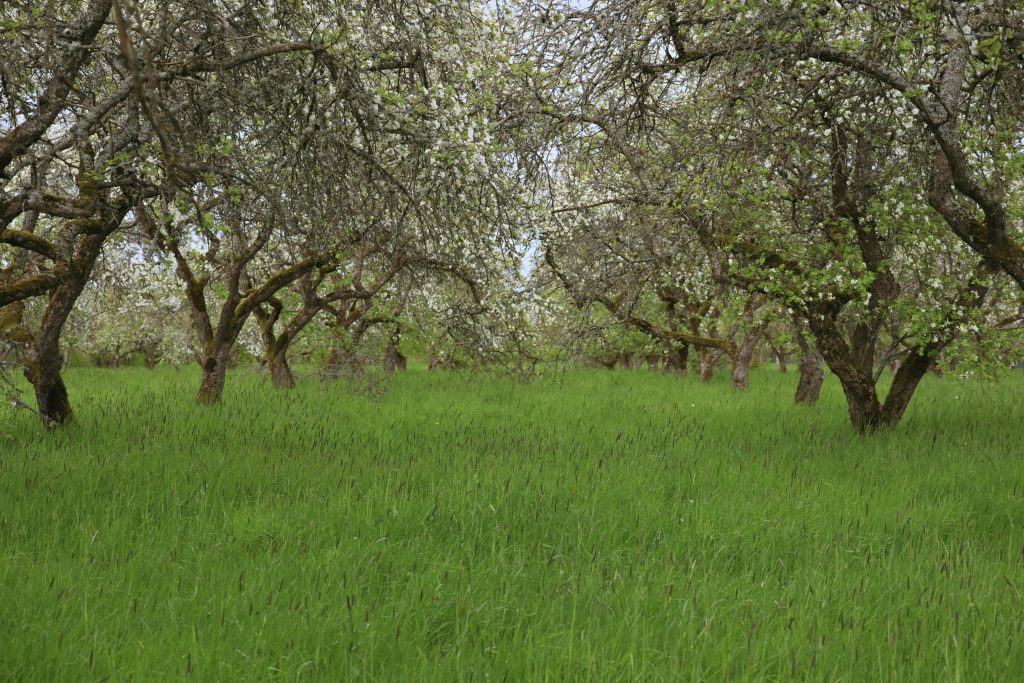
Orchard nutrition is easiest to manage when you treat it like a calendar and a conversation at the same time. The calendar matters because trees change their nutrient demand fast as buds swell and growth begins. The conversation matters because your soil, your variety, your crop load history, and your pruning goals decide what “right” looks like for your block.
February in the Pacific Northwest is a strategic time for that conversation. Trees are dormant or just starting to think about waking up. Winter rainfall has done what it does best, which is move water and influence nutrient availability. You can still make thoughtful moves now that pay off in spring without overfeeding soil that is too cold and wet to respond.
This post stays focused on fertilizer decisions: nitrogen timing, potassium foundation, calcium support, and micronutrient coverage for orchard and home fruit trees.
The February reality: dormant trees, active weather
In late winter, soil conditions often limit uptake more than the tree itself. Cold soils slow root activity. Saturated orchard floors reduce oxygen. That means the wrong kind of “early push” can waste fertilizer or create growth that is not well-timed.
A February orchard plan is usually about:
- Preparing nutrients for early spring demand
- Avoiding heavy rates during saturated conditions
- Building a balanced foundation so spring nitrogen does not become the only lever you pull
Nitrogen: the most powerful tool, and the easiest to misuse
Nitrogen drives canopy growth and sets the tone for early season vigor. It also influences fruit quality indirectly by shaping leaf area, shading, and the tree’s balance between vegetative growth and fruiting.
When nitrogen makes sense in late winter
If you have an orchard block that struggled to push growth last year, or you are building a young orchard canopy, nitrogen is often central to the plan. But February applications should be weather-aware.
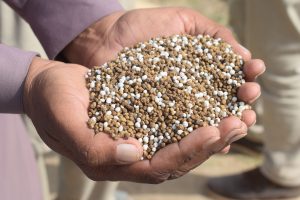
A concentrated nitrogen option is Supply Solutions Urea 46-0-0 Nitrogen Fertilizer. It is a high-analysis tool that can fit orchard fertility programs when you are ready for nitrogen and you can time applications for conditions that reduce loss and increase availability.
If sulfur is part of your limiting factors, which is common after wet PNW winters, Supply Solutions Ammonium Sulfate 21-0-0 +24% Sulfur pairs nitrogen with sulfur in a way that often supports more efficient use of nitrogen. It can also be useful where orchard soils are trending higher in pH and you want a nitrogen source that supports a more favorable root zone environment for nutrient uptake.
The best nitrogen programs are rarely “one big application.” They tend to be built around timing and response, especially in climates where spring weather can swing widely.
Potassium: the quiet driver of fruit quality and tree resilience
Potassium is not just a yield nutrient. It supports water regulation, sugar movement, and overall plant function. In practical orchard terms, potassium is part of what helps fruit size, finish, and consistency, and it supports the tree through stress periods.
If you are building a potassium plan, the key question is whether you want potassium alone or potassium plus sulfur, and whether your crop or soil history suggests you should avoid chloride-heavy options.
For potassium plus sulfur, Supply Solutions Sulfate of Potash 0-0-50 is a clean, versatile orchard option. It supports potassium needs without adding nitrogen and provides sulfur support, which often helps overall nutrient efficiency in wet climates.
If you are correcting low potassium based on soil test results and you want a high-potassium correction tool, Supply Solutions Muriate of Potash 0-0-60 Fertilizer is a concentrated option. This is typically most valuable when you are correcting a confirmed potassium deficit, not when you are guessing.
If magnesium is also low, or you have a history of magnesium limitation in the block, KMS 0-0-21.5 (Potassium Magnesium Sulfate) Fertilizer can simplify the plan by supporting potassium and magnesium while also contributing sulfur.
Calcium: support that shows up later, not immediately
Calcium is often discussed in fruit quality conversations because it is tied to cell wall strength and firmness. In late winter, the right way to think about calcium is “foundation and access,” not “quick correction.”
For a nitrogen plus calcium tool that can fit fruit and vegetable programs, Supply Solutions 7/11 (7-0-0) 7% Nitrogen and 11% Calcium is an option that provides both nutrients together. This can fit programs where early nitrogen is appropriate and calcium support is part of the broader plan.
For calcium plus sulfur support, especially where soil structure and infiltration are part of the orchard story, Supply Solutions Purest Gypsum Soil Acidifier can be used as a targeted tool. Gypsum is not a complete fertilizer, but it can help supply calcium and sulfur in a form commonly used in soil amendment programs.
Phosphorus: important for new trees, often unnecessary for mature orchards
Many mature orchards have adequate phosphorus, especially if they have been fertilized with blended products over the years. In those cases, routine phosphorus applications do not always improve performance.
Phosphorus becomes more relevant when:
- You are establishing a new orchard
- You are replanting sections and need rooting support
- Soil tests show low phosphorus
For root-focused phosphorus plus calcium support in planting zones, Supply Solutions Organic Fish Bone Meal Fertilizer 6-13-0 + 14% Calcium can be a practical option for new plantings and replant situations where early rooting support matters.
Micronutrients and trace minerals: the orchard “small parts” that prevent big headaches
Micronutrients are often where orchard nutrition gets frustrating because symptoms can look like nitrogen problems, water problems, or disease issues.
One simple approach, especially for home orchards or mixed plantings, is to use a fertilizer that includes micronutrients as part of the blend when it fits your soil program.
Supply Solutions 10-10-10 Complete Lawn & Garden Granular Fertilizer with Micronutrients is a balanced option that includes micronutrients. It can be useful for home orchards, mixed landscape fruit trees, and small plantings where a broad foundation is preferred and where soil tests support a balanced NPK approach.
For longer-term trace mineral support, especially in soils that have been cropped for years and show a pattern of “flat” performance, Azomite Granulated Trace Minerals can be part of an orchard soil-building plan. Trace minerals are not a fast fix. They are a foundation tool.
Organic and in-season feeding options for orchards and home fruit trees
Many orchard managers and home growers like having a flexible in-season option that supports soil biology and gentle feeding once growth is active.
Supply Solutions Pacific Bounty 2.0-0.5-1.25 Organic Fish Fertilizer is a useful tool for in-season feeding, especially when you want a liquid organic approach that can be adjusted based on tree response and weather.
February is not always the best time for liquid feeding because heavy rain can move nutrients quickly. As spring growth becomes consistent, fish fertilizer can become a practical part of the program.
Timing habits that protect fertilizer efficiency in a wet PNW orchard
Orchards reward careful timing more than almost any other crop system in this region.
A February fertilizer decision tends to work better when:
- You avoid saturated orchard floors where water is moving and soil is oxygen-limited
- You apply conservatively in late winter and build the program as spring demand becomes real
- You focus on the nutrients that build resilience and set the stage, especially potassium and sulfur, rather than trying to force a nitrogen response in cold soil
Uniform application matters too. Orchard blocks often have variability in soil texture and drainage. If parts of the block stay wetter longer, those areas can respond later, and over-applying to “fix” the slow areas can create uneven growth once the weather shifts.
What success looks like from a February orchard fertilizer plan
A strong late winter fertilizer plan tends to show up as:
- More even budbreak and early canopy development
- Fewer blocks that look “hungry” right after bloom
- Stronger response to spring nitrogen because potassium, sulfur, and calcium are not limiting
- Better consistency in fruit development later because the foundation was built early
Supply Solutions can help you build an orchard fertilizer plan that fits Pacific Northwest conditions, whether you are timing nitrogen with Supply Solutions Urea 46-0-0 or Supply Solutions Ammonium Sulfate 21-0-0 +24% Sulfur, supporting fruit quality with Supply Solutions Sulfate of Potash 0-0-50 or KMS 0-0-21.5, and building calcium support with Supply Solutions 7/11 (7-0-0) 7% Nitrogen and 11% Calcium or Supply Solutions Purest Gypsum Soil Acidifier. Always read and follow the product label, and if you are unsure which products fit your orchard goals, timing, or rates, contact Supply Solutions for guidance.