

Uncategorized
Should You Fertilize a Heat-Stressed Lawn in August? Often, the Answer Is Not Yet
A brown lawn in August creates pressure to make it green. The grass may appear thin, dull, or lifeless. A fertilizer bag promises color and
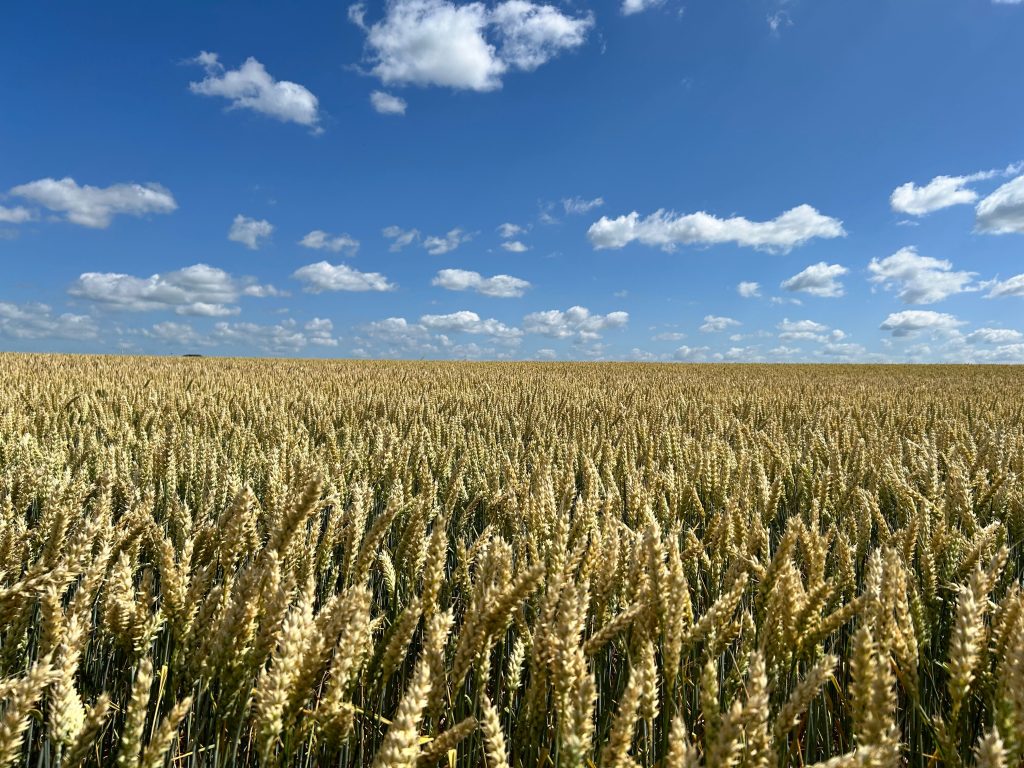
August changes the way a farmer should look at a field.
Earlier in the growing season, most decisions center on establishment. We watch emergence, plant population, weed competition, early nutrient availability, and root development. By August, much of the crop has moved into reproductive growth. The questions become more specific: Is the plant holding the yield potential it established earlier? Does the root system have enough water and nutrient access to finish? Are visible symptoms caused by an actual fertility shortage, or is dry, compacted, diseased, or saturated soil restricting uptake?
Those distinctions matter because a treatment that would have helped six weeks earlier may do very little now.
The national crop picture entering August 2026 reflects that transition. USDA reported that 34% of corn in the 18 major reporting states was silking and 6% had reached dough by July 12. Soybeans were also advancing, with 19% setting pods. Individual fields will be much farther ahead or behind those national percentages by August, but the report confirms that a large share of U.S. corn and soybean acreage is moving into the stages when moisture, canopy health, and root function directly affect grain formation.
The seasonal weather outlook adds another reason to stay observant. NOAA’s July outlook favored above-normal temperatures across much of the western, southern, and eastern United States for the August-through-October period. Precipitation signals were mixed, with wetter tendencies in portions of the Southwest, Rockies, Plains, and several central valleys, while drier conditions were favored in parts of the Pacific Northwest, Southern Plains, Lower Mississippi Valley, Upper Mississippi Valley, and Upper Great Lakes. A seasonal outlook does not predict the weather on an individual farm, but it does reinforce the likelihood of uneven moisture conditions and continued heat pressure in many regions.
That means August decisions should begin with the crop stage and the soil profile, not with the calendar or the color of the crop from the road.
A plant’s nutrient and water requirements change as it develops. Early corn invests heavily in leaves, stalks, and roots. Soybeans spend much of the first half of the season building nodes and canopy. Forage seedlings need to establish crowns and root systems. Vegetable crops shift from vegetative growth toward flowering, fruit set, and fruit fill.
Once reproductive growth begins, the plant starts moving carbohydrates and nutrients toward grain, seed, or fruit. That movement can make older leaves lose color even when the crop is functioning normally. It can also expose shortages that were not obvious earlier.
The practical mistake is assuming every yellow leaf means the same thing.
A lower corn leaf may yellow because nitrogen is being remobilized into the ear. It may also yellow because the plant is truly nitrogen deficient, the root zone has dried out, saturated soil damaged the roots, or disease has reduced the plant’s ability to move water and nutrients.
Soybean leaves may show yellowing along their margins because of potassium deficiency. Similar symptoms can appear during drought even where the soil contains adequate potassium, because potassium must move through soil water before roots can absorb it.
A pasture may look pale because nitrogen is limiting regrowth. It may also be pale because the plants have been grazed too short, roots have weakened, and the soil is too dry to support growth.
Crop stage gives the symptoms context.
Corn does not finish its work when pollination ends. Successful pollination determines the number of kernels initially established, but grain fill determines how much weight those kernels eventually develop.
At blister and milk stages, kernels are rapidly accumulating water and dry matter. The ear depends on current photosynthesis, stored carbohydrates, soil moisture, and continued nutrient uptake. At dough and dent, daily water use generally begins to decline, but the crop is still adding kernel weight.
A green field can therefore still be under serious stress. Leaves may remain upright in the morning and roll by afternoon. Plants on compacted headlands may show stress before the rest of the field. Sandy ridges may run out of available water while lower ground remains adequate. Fields with shallow rooting from early saturation may struggle even when the surface soil appears moist.
Before considering another nutrient application, inspect the root zone.
A spade or soil probe can reveal more than a windshield assessment. Check moisture at several depths and compare the problem area with a healthier area. Look for restricted roots, sidewall compaction, poor soil structure, insect feeding, crown discoloration, and evidence of ponding.
If roots cannot reach water, adding fertilizer to the surface does not restore the lost rooting volume.
Soybeans are flexible plants. They can produce more flowers and pods than they will retain, allowing them to adjust to changing conditions. That flexibility sometimes gives the impression that August stress is less important than stress in corn.
In reality, soybean sensitivity rises as the crop moves from pod formation into seed fill.
During flowering and early pod set, the plant can compensate for some flower loss if later conditions improve. Once pods are established and seeds begin enlarging, prolonged heat or moisture stress can reduce pod retention, seeds per pod, and final seed size. The field may still look reasonably green while yield potential is declining inside the canopy.
August soybean scouting should include more than counting pods. Examine:
A uniformly green canopy is encouraging, but it does not prove that roots are healthy or pods are filling normally.
August also marks an important transition for perennial forage systems.
Cool-season grasses often slow during hot, dry weather. When growth slows, grazing pressure can remove leaves faster than the plant can replace them. That matters because leaves are the plant’s energy-producing surface. Repeatedly grazing a stressed pasture too short forces the plant to draw on stored carbohydrates and reduces root growth.
The result is a smaller root system at the exact time the plant needs deeper roots to reach moisture.
A pasture that appears to need fertilizer may first need rest. Applying nitrogen to heavily grazed, drought-stressed grass does not automatically produce usable forage. The plants need adequate residual leaf area, moisture, and time to respond.
By mid-August, selected tall fescue fields may be rested for stockpiling. That is a different situation from trying to force growth from a severely overgrazed pasture. Stockpiling works best where the stand is healthy, livestock are removed, moisture is adequate, and fertility is matched to the field.
In gardens and specialty-crop fields, August often brings heavy harvest pressure at the same time plants are experiencing their highest heat and water demand.
Tomatoes, peppers, melons, cucumbers, and berries may all be flowering, setting fruit, and filling fruit simultaneously. This creates a strong demand for consistent water movement through the plant.
Irregular irrigation can produce cracking, blossom-end rot, misshapen fruit, poor pollination, flower abortion, and reduced fruit size. High salt concentrations near roots can make the plant behave as though the soil is drier than it is because roots must work harder to extract water.
This is why late-summer fertility should not be separated from irrigation.
Adding soluble fertilizer to very dry soil can increase the salt concentration around roots. Applying a high-nitrogen fertilizer may encourage new leafy growth at a time when the plant needs to support fruit. Applying calcium without correcting inconsistent watering may not address blossom-end rot.
The nutrient analysis on the bag is only one part of the decision. Soil moisture, root-zone volume, crop load, and growth stage determine whether the plant can use those nutrients.
Two farms can receive the same rain and experience different crop stress.
A coarse-textured soil may accept water quickly but hold relatively little. Crops on sandy ground can move from adequate moisture to stress within a few hot, windy days. Nutrients such as nitrate are also more vulnerable to leaching when excessive irrigation or intense rain moves water below the root zone.
A fine-textured soil generally stores more water, but infiltration may be slow. Compaction, poor aggregation, or a dense subsoil can limit rooting and create runoff. After heavy rainfall, the same soil may remain saturated long enough to restrict oxygen around roots.
A loam with good structure usually provides a more favorable balance, but even good soil cannot compensate indefinitely for shallow roots, poor drainage, or prolonged heat.
This is why field comparisons are valuable. Instead of asking only, “Is the field dry?” ask:
The answers help separate a nutrient shortage from a soil-access problem.
August often produces pressure to do something quickly. A crop changes color, weather forecasts turn hot, and yield is on the line. That is also when it is easiest to spend money on an application that cannot solve the problem.
A responsible late-season fertility decision should answer three questions.
What nutrient is actually limiting?
Visual symptoms can guide scouting, but they are rarely enough by themselves. Soil tests, tissue samples, field history, crop removal, and comparisons between healthy and affected areas provide stronger evidence.
Can the crop still respond?
The same deficiency has different economic meaning at V8, silking, early grain fill, and physiological maturity. A nutrient may still be required biologically even when there is not enough season left for an application to repay its cost.
Can roots take it up?
Dry soil, saturated soil, compaction, disease, and root injury can block uptake. A fertilizer application cannot bypass a nonfunctioning root system simply because the nutrient is present in the product.
August is therefore as much a month for gathering information as it is for applying inputs.
Some of the most valuable observations made in August will not lead to an immediate treatment. They will improve decisions after harvest.
Mark weak areas while the crop is still standing. Record whether symptoms follow soil type, elevation, drainage, planting direction, traffic patterns, previous manure applications, or irrigation coverage. Take photographs that show both the close symptom and its field pattern.
After harvest, these zones can be sampled separately.
A composite sample that mixes an eroded knoll with a productive low area may produce a result that represents neither location well. Separate samples can reveal whether the weak area has lower potassium, lower organic matter, lower pH, higher salts, or a physical limitation that ordinary fertility testing will not capture.
The same principle applies to pasture and garden soil. Do not combine visibly different management areas into one sample and expect a precise recommendation.
A useful August field walk should leave you with evidence, not only impressions. Bring a spade, soil probe, knife, notebook, and several labeled bags.
Look at the whole plant before focusing on a leaf. Note where symptoms begin, which leaves are affected, and whether the pattern is uniform or patchy. Dig roots rather than pulling plants from hard soil. Split stems when disease is possible. Open corn ears and examine kernel development. Check soybean pods from the lower, middle, and upper canopy.
Then examine the soil.
A nutrient deficiency that follows eroded ridges may have a different cause from a deficiency that follows wheel tracks. Symptoms around a pivot edge may reflect irrigation uniformity. Yellow plants in a depression may result from root damage after saturation. Pale pasture plants may be telling you more about grazing pressure than nitrogen supply.
That field-level reasoning is the foundation of efficient fertilizer use.
August can still protect yield, but it can also tempt a grower to treat symptoms without understanding them. The best decision is not always another application. Sometimes it is irrigation. Sometimes it is rest. Sometimes it is earlier harvest, disease testing, improved drainage, or a note for the fall soil-sampling plan.
Supply Solutions can help growers interpret soil conditions and select a fertilizer only where the nutrient source, application timing, and crop need line up. Contacting the company before making a questionable late-season application can help separate a real fertility opportunity from a problem that fertilizer cannot fix.
A brown lawn in August creates pressure to make it green. The grass may appear thin, dull, or lifeless. A fertilizer bag promises color and
An orchard can look finished after the bins leave the row. The crop is harvested, irrigation demand begins to decline, and the urgency of the
Give us a call or visit our store, and we’ll help you find the right solution for your business.