
Uncategorized
How to Read a Fertilizer Grade: What N-P-K Numbers Actually Tell You
Walk into a fertilizer warehouse, farm supply store, greenhouse, or garden center and the first thing most people notice on a fertilizer bag is a
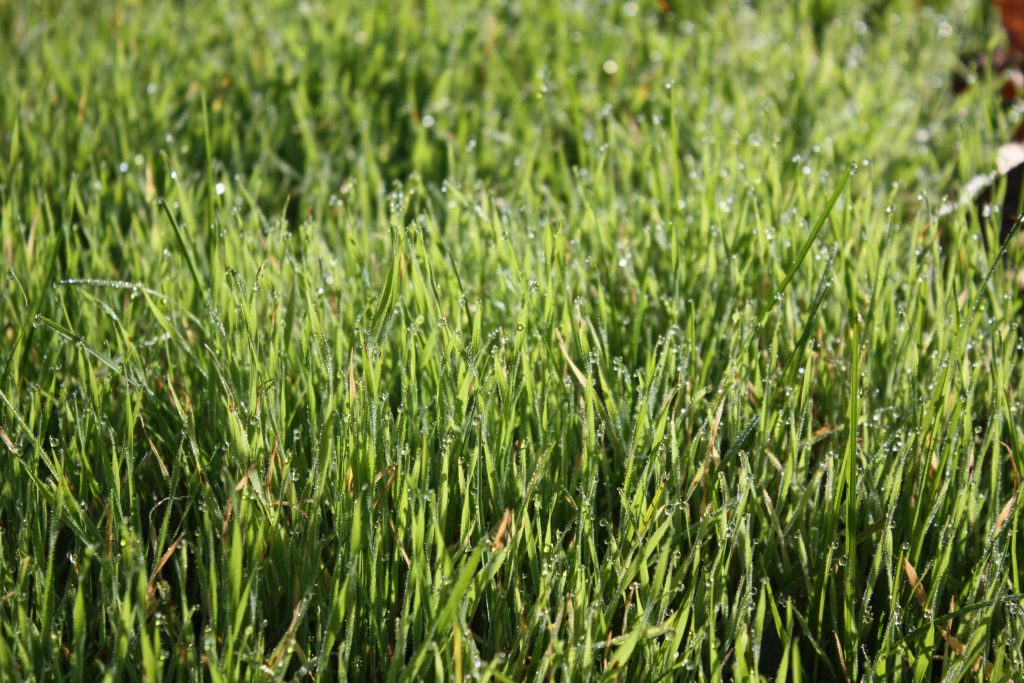
For cattle producers in the tall fescue belt, August is more than the final stretch of summer grazing. It is also the month when a portion of the pasture can be turned into standing winter feed.
Stockpiling tall fescue means allowing late-summer and fall growth to accumulate instead of grazing or cutting it immediately. That forage is then saved for grazing during late fall and winter, when pasture growth has slowed and many operations would otherwise be feeding hay every day.
Tall fescue is particularly well suited to this system because it continues growing during cool fall weather and maintains forage quality better after frost than many other pasture species. Its relatively waxy leaves help it retain quality into winter, and properly managed stockpiled fescue can provide a substantial amount of high-quality forage long after most warm-season grasses have stopped growing.
University of Kentucky’s Master Grazer program recommends beginning the stockpiling process in early to mid-August. Pastures are typically grazed or clipped down to roughly three to four inches, livestock are removed, and the stand is allowed to regrow until late fall or winter. Kentucky guidance identifies approximately 40 to 80 pounds of actual nitrogen per acre as a common range for stockpiling, although the economical rate depends heavily on fertilizer cost, stand condition, soil fertility, and available moisture.
The timing is important because tall fescue needs enough warm growing weather after the nitrogen application to convert that nutrient into additional leaves and tillers before temperatures slow growth. Applying nitrogen too late shortens that growth period. Applying it too early can encourage warm-season competitors and may not synchronize the nitrogen as effectively with the fall flush of fescue growth.
This year, economics make the decision more complicated. On August 14, 2026, University of Missouri Extension reported that nitrogen prices had risen sharply during the previous six months. Missouri research over the past three years found that a 60-pound-per-acre fall nitrogen application increased stockpiled tall fescue yield by an average of about 35 percent, but the return varied widely with rainfall. During drought years, researchers observed roughly eight pounds of additional forage for each pound of nitrogen applied, while favorable moisture conditions produced responses closer to 20 to 25 pounds of forage per pound of N.
That variability explains why the August nitrogen decision should never be separated from pasture condition, soil moisture, weather prospects, and the cost of alternative winter feed.
Tall fescue is a cool-season perennial grass. Summer heat slows its growth, particularly when moisture is limited, but declining temperatures in late summer and early fall create another favorable growing period.
That seasonal response is one reason stockpiling works so well across Kentucky, Missouri, Tennessee, Virginia, West Virginia, parts of the Carolinas and Georgia, and other areas of the transition zone. Instead of asking the pasture to support livestock continuously through August and September, the producer temporarily removes grazing pressure and allows the grass to capture the fall growing period.
The difference between a grazed pasture and a stockpiled pasture is therefore not simply fertilizer. Rest is just as important.
If cattle remain on the paddock after nitrogen is applied, they continually remove new leaves as the grass produces them. The fertilizer may stimulate growth, but the producer never gets the accumulation needed for winter grazing.
University of Kentucky recommends removing cattle from stockpile acres after the pasture has been grazed or clipped to approximately three to four inches. The grass then grows uninterrupted until grazing resumes in November or December.
That deferred grazing period allows the pasture to build standing dry matter rather than continually recycling new growth through livestock during the fall.
The management principle is straightforward: nitrogen helps determine how much forage can grow, while rest determines how much of that growth remains available for winter.
It can be tempting to choose the poorest-looking pasture for stockpiling because removing it from the summer rotation seems easier. In most cases, that is backward.
The best stockpile generally comes from a reasonably dense, productive tall fescue stand with suitable soil fertility and enough root development to respond when late-summer rain arrives.
Nitrogen cannot create a dense fescue stand where very little fescue remains.
A pasture dominated by summer weeds, bare soil, weak fescue crowns, severe compaction, or another grass species will not respond the same way as a healthy fescue sod. Fertilizer may stimulate whatever vegetation is present rather than producing the high-quality tall fescue stockpile the producer intended.
Drainage also matters. Stockpiled forage is often grazed during late fall and winter when soils can be wet. A poorly drained field may produce acceptable forage but become badly pugged when cattle graze it during wet weather. That damage can reduce stand persistence and create mud problems that offset part of the benefit of winter grazing.
Kentucky forage guidance recommends selecting a strong, well-drained tall fescue stand for stockpiling for exactly this reason.
Producers should therefore look across the farm and identify the paddocks most capable of producing and carrying winter forage rather than automatically stockpiling the pasture with the least summer value.
Stockpiled tall fescue should consist primarily of fresh vegetative growth rather than a mixture of new leaves, old seed stems, mature summer forage, and weeds.
That is why August pasture preparation usually begins by grazing, clipping, or harvesting existing growth.
University of Kentucky recommends taking the pasture down to approximately three to four inches before beginning the stockpile period.
Removing older material accomplishes several things. It allows more light to reach developing tillers, improves the proportion of fresh vegetative tissue in the eventual stockpile, and creates a more uniform starting point. It also prevents mature, low-quality summer material from diluting the quality of the forage that cattle will consume several months later.
The pasture should not be scalped to bare ground. Tall fescue still needs enough green leaf area and stored root reserves to recover rapidly. The objective is to reset the stand, not weaken it.
Once the pasture is prepared, cattle should be moved elsewhere. Warm-season pasture, summer annuals, hay, or other paddocks can carry the herd while the designated fescue ground is allowed to accumulate.
That separation requires planning. A producer who does not have enough forage elsewhere may find it difficult to leave a productive paddock untouched for two or three months.
Stockpiling works best when it is part of the whole grazing system rather than a last-minute fertilizer decision.
Tall fescue is a grass, and productive grass stands generally respond strongly to nitrogen when the other growing conditions are favorable.
An August nitrogen application can increase tillering, leaf growth, and the amount of forage accumulated before cold weather. University of Georgia notes that late-summer nitrogen can also encourage fescue tillering and help strengthen weaker stands as fall growth begins.
The problem is that nitrogen cannot compensate for lack of water.
The 2026 Missouri results illustrate this clearly. A 60-pound nitrogen rate increased stockpile yield by an average of about 35 percent over the past three years, but rainfall had a major effect on nitrogen-use efficiency. Under drought conditions, each pound of N sometimes produced only about eight pounds of additional forage. With favorable moisture, the response increased to approximately 20 to 25 pounds of forage per pound of nitrogen.
That difference changes the economics dramatically.
A farmer looking at a green pasture after a recent rain may have good reason to expect another flush of fescue growth. A farmer looking at dormant fescue in powder-dry soil with no meaningful rain in the forecast has a much harder decision.
The nitrogen may remain in the system long enough to become useful when rain eventually arrives, but the shortening fall growth window reduces how much forage can be produced before cold weather. In addition, surface-applied nitrogen sources such as urea can lose efficiency if they remain exposed under conditions favorable for ammonia volatilization.
The decision should therefore consider both current soil moisture and the realistic chance of receiving enough rainfall to support fall growth.
The value of an August nitrogen application comes partly from the number of growing days that remain afterward.
Tall fescue responds strongly as summer heat begins easing, but growth eventually slows as temperatures fall and day length shortens. A nitrogen application made after much of that favorable period has passed cannot create additional calendar days.
University of Kentucky generally places the start of stockpiling in early to mid-August, while current Missouri guidance emphasizes a mid- to late-August nitrogen window for its conditions.
Farther south, timing can shift later because warm weather persists longer. University of Georgia guidance for stockpiling varies the recommended period by region, with northern mountain and limestone-valley areas beginning earlier than the Piedmont.
This regional difference is important for a national U.S. audience.
“Apply nitrogen in August” is not a universal date recommendation for every tall fescue pasture. Producers should use local Extension timing because latitude, elevation, temperature, rainfall patterns, and the expected first frost all affect how much fall growth remains.
The principle is more useful than one specific date: remove summer growth, apply nitrogen as the productive fall fescue period begins, and provide enough uninterrupted growing time for that nitrogen to become standing forage.
University recommendations for stockpiled fescue commonly fall somewhere between roughly 40 and 80 pounds of actual nitrogen per acre, although specific recommendations vary by state, stand, endophyte status, and economics.
Kentucky guidance commonly identifies approximately 40 to 80 pounds of N per acre as an effective range. Missouri recommendations have often centered on approximately 40 to 60 pounds for stockpiling, while Georgia recommendations also frequently fall around 40 to 60 pounds under suitable moisture conditions.
Applying more nitrogen does not necessarily mean the additional pounds will provide the same return as the first pounds.
The economic rate depends on the cost of N and how much additional usable forage each pound is expected to produce. Current Missouri guidance is particularly relevant in 2026 because high nitrogen prices have made that calculation much more important. MU Extension suggests comparing the fertilizer cost required to produce a ton of additional stockpiled forage with the delivered cost of hay.
Under favorable moisture, nitrogen may produce enough additional forage that stockpiling remains one of the lower-cost ways to feed cattle through part of the winter. Under severe drought, the cost per ton of additional forage can rise quickly because the nitrogen response becomes smaller.
This is why a producer should not choose the highest nitrogen rate simply because Extension research shows that fescue is capable of responding to it.
The rate needs to make sense for this pasture, this rainfall outlook, this fertilizer price, and this winter-feed situation.
Nitrogen normally receives most of the attention in stockpiled fescue because it produces the most visible short-term growth response.
That does not mean phosphorus, potassium, and soil pH can be ignored.
A pasture that is deficient in potassium or phosphorus may not respond to nitrogen as efficiently as a field with balanced fertility. Likewise, strongly acidic soil can restrict root growth and nutrient availability.
University of Kentucky recommends using soil testing to determine the phosphorus, potassium, and lime requirements of stockpiled fescue rather than applying those nutrients automatically.
This matters because a producer could otherwise apply nitrogen to a pasture whose most important limitation is something else.
If soil-test potassium is low, K may need correction to support long-term stand productivity. If phosphorus is already high, adding more P simply because the field is being fertilized wastes money. If soil pH is below the recommended range, correcting acidity may be more important to the pasture’s long-term performance than adding another nutrient to an unfavorable root environment.
The nitrogen application should therefore be part of a pasture fertility program rather than a substitute for one.
Where soil fertility is otherwise adequate and nitrogen is the primary nutrient needed to stimulate fall tall fescue growth, Supply Solutions Urea 46-0-0 Nitrogen Fertilizer provides a concentrated source of nitrogen. Supply Solutions lists the material at 46 percent nitrogen, making it one of the most concentrated dry nitrogen fertilizer sources available.
The agronomic reason to use urea in a stockpiling program is straightforward. Tall fescue needs additional nitrogen to produce more late-summer and fall vegetative growth when the stand, weather, and economics support that response. A high-analysis material allows the required nitrogen to be delivered without automatically adding phosphorus or potassium to a pasture that may already contain adequate levels of those nutrients.
The application timing is critical because urea applied to the soil surface must convert into plant-available forms, and part of the nitrogen can be lost as ammonia before it moves into the soil.
University of Georgia specifically advises producers using volatile nitrogen sources such as urea for stockpiled tall fescue to apply them immediately before predicted rainfall when practical. Its guidance also suggests more conservative nitrogen rates when urea is used or when below-average fall rainfall is expected.
The problem Urea 46-0-0 solves is inadequate nitrogen supply for productive fescue regrowth. It does not solve drought, a thin pasture stand, low soil pH, potassium deficiency, or the absence of enough growing days before winter.
That distinction should guide the application.
If the pasture is actively capable of responding and meaningful rain can move the fertilizer into the root zone, urea can be a practical nitrogen source. If the stand is dormant from drought and the forecast remains dry, the producer should think carefully about whether enough forage response is likely to justify the expense.
Urea begins changing after it contacts moist soil. The urease enzyme converts it through reactions that can temporarily create conditions favorable for ammonia loss at the soil surface.
Warm temperatures, surface moisture followed by drying, higher-pH conditions, residue, and lack of incorporation can increase volatilization risk.
August can provide several of those conditions at once.
This is why timing urea shortly before a meaningful rainfall is valuable. Rain moves the fertilizer into the soil, where ammonium can be retained more effectively and eventually become available to roots.
A light sprinkle that barely wets the leaves may not provide the same benefit as enough rain to move the material into the soil.
Missouri Extension has also noted the importance of protecting surface-applied urea from volatilization during hot August conditions and has discussed treated urea as one possible strategy where rainfall timing is uncertain.
For producers using untreated Urea 46-0-0, monitoring the forecast becomes part of the fertilizer application rather than an optional detail.
The goal is not simply to spread the correct number of pounds. It is to retain enough of that nitrogen in the root zone to produce additional forage.
Tall fescue pastures are not always pure grass.
Many contain red clover, white clover, or other legumes capable of fixing atmospheric nitrogen through their association with rhizobia.
Those legumes can contribute nitrogen to the forage system and improve forage quality. Heavy commercial nitrogen applications can also increase competition from the grass and reduce the role of the clover.
Missouri Extension notes that pure fescue stands generally fit stockpiling particularly well and that fescue-legume systems can produce substantial fall growth without the same amount of commercial nitrogen required by straight fescue.
This does not mean producers should never fertilize a mixed fescue-clover pasture with nitrogen.
It means the amount of legume present should be included in the decision.
A dense pure fescue paddock being set aside specifically for winter stockpile may justify an N application more readily than a pasture with a strong clover component already supplying biologically fixed nitrogen.
There is also a longer-term management concern. Missouri Extension reports that heavy fall nitrogen applications before winter red-clover seeding can sharply reduce clover establishment because the added N strengthens grass competition.
Producers planning to frost-seed clover into a stockpiled paddock during the coming winter should therefore think beyond this fall’s forage tonnage when choosing the nitrogen rate.
Much of the tall fescue acreage in the transition zone still contains older toxic endophyte-infected stands such as Kentucky 31.
The endophyte helps the plant persist under stress, but it can produce ergot alkaloids that reduce animal performance and contribute to fescue toxicosis.
Nitrogen management can interact with that issue.
Missouri Extension cautions that heavier nitrogen fertilization can increase toxin concerns in toxic tall fescue and recommends more conservative N management than may be appropriate for novel-endophyte stands.
The good news is that stockpiling itself can provide a management advantage. Ergovaline concentrations generally decline as the forage moves deeper into winter. Missouri and Kentucky sources both note that delaying grazing of toxic endophyte fescue until later in the winter can reduce exposure compared with grazing the same forage earlier in fall.
That does not eliminate the need to manage toxic fescue carefully, but it can influence which stockpiled fields are grazed first.
Novel-endophyte or endophyte-free stands can generally be managed with less concern about toxicosis, while older toxic fescue may be saved for later winter use where the grazing system allows.
A producer should therefore know what type of fescue is being fertilized before selecting the most aggressive nitrogen rate.
Producing 2,000 or 3,000 pounds of standing forage per acre has limited value if cattle waste half of it.
Grazing management determines how much of the stockpile actually replaces hay.
Continuous access to a large stockpiled field allows livestock to select the best forage first, walk over unused grass, contaminate portions with manure, and trample forage into the soil.
Strip grazing can significantly improve utilization.
University of Georgia estimates that continuous stocking may result in only about 30 to 40 percent forage use, while moderate rotational stocking can raise utilization to approximately 50 to 60 percent. Allocating smaller strips every one to three days can raise utilization into the range of roughly 65 to 75 percent under good management.
That difference can be economically larger than the response to another few pounds of fertilizer.
If a pasture produces 2,000 pounds of usable dry matter per acre, increasing grazing efficiency from 40 percent to 70 percent makes hundreds of additional pounds of forage available to livestock without growing another blade of grass.
This is why stockpiling should be evaluated as a system rather than simply an August nitrogen treatment.
The system includes pasture selection, mowing or grazing height, nitrogen timing, rest, rainfall, winter fencing, livestock allocation, and forage utilization.
The economic value of stockpiling comes largely from replacing mechanically harvested and fed forage with forage the cow harvests herself.
Feeding hay requires mowing or purchasing, baling, hauling, storage, tractor time, fuel, and labor. Hay feeding also creates waste around rings and feeding areas.
Stockpiled pasture removes many of those costs.
University of Missouri describes stockpiled fescue as an important low-cost winter feed resource and notes that many producers have used it to reduce the amount of hay needed during winter.
However, stockpiling should not eliminate contingency planning.
Snow, ice, mud, extended drought, or lower-than-expected fall forage growth can reduce grazing availability. Kentucky recommends keeping hay available for adverse winter conditions even when a strong stockpile has been established.
Hay can also contribute fertility when it is purchased from off the farm and fed strategically. Nutrients contained in the hay are redistributed through manure and urine.
Current Missouri guidance points out that this nutrient value deserves consideration when producers compare the economics of buying hay with applying expensive nitrogen to produce additional stockpile.
The correct choice is not always fertilizer or hay. Many farms will use a combination of both.
August forage planning always includes some uncertainty because no one controls fall rainfall.
The current Missouri research provides a useful way to think about that risk.
When one pound of nitrogen produces only eight pounds of additional forage during a dry year, the cost per ton of stockpile becomes much higher than when the same pound of N produces 20 or 25 pounds of forage under favorable moisture.
A producer should therefore avoid budgeting with the best possible nitrogen response when the pasture profile is already dry.
Consider how much soil moisture is currently available, whether recent rain has restarted fescue growth, how much rainfall is normally received during the stockpiling period, and whether the field has enough rooting depth and water-holding capacity to support regrowth.
Deep, productive soils may continue growing longer into a dry spell than shallow upland sites.
The same nitrogen rate can therefore produce different returns on two paddocks within the same farm.
If only part of the acreage can be fertilized economically, prioritize the fields most likely to convert nitrogen into forage.
That is more defensible than spreading a lower rate uniformly simply because every pasture has traditionally received fall fertilizer.
The purpose of applying nitrogen to stockpiled fescue is not to create the greenest pasture in October.
The goal is to reduce the cost of carrying cattle through late fall and winter while maintaining adequate animal nutrition and protecting pasture condition.
That means the eventual grazing plan should be considered before fertilizer is spread.
A paddock with no practical winter water source may be difficult to use.
A field that becomes impassable after rain may suffer severe pugging.
A pasture located far from handling facilities may be inconvenient for animals requiring frequent observation.
A field that cannot be divided easily with temporary fence may have lower forage utilization.
These factors influence the economic value of the nitrogen application because only forage that can be efficiently grazed is actually replacing purchased or harvested feed.
A well-designed stockpiling program therefore begins by asking where the cattle will graze in November, December, January, and beyond, not merely which pasture is available for fertilization in August.
Tall fescue gives cattle producers in the transition zone a valuable opportunity to grow winter feed while temperatures and moisture still allow productive fall growth. August is the critical management window because the pasture can be reset, livestock can be removed, and nitrogen can be applied early enough for the grass to build standing forage before cold weather slows growth. The response can be substantial when moisture is favorable, but the 2026 combination of high nitrogen prices and variable rainfall makes it especially important to evaluate each field on its own merits.
Where a healthy fescue stand has adequate phosphorus, potassium, and pH, sufficient moisture is available, and nitrogen is the main fertility limitation, Supply Solutions Urea 46-0-0 provides a concentrated nitrogen source that can fit the stockpiling program. Its value depends on correct timing, an agronomically appropriate N rate, and weather conditions that move the urea into the soil rather than leaving it exposed to volatilization losses. The fertilizer should be used because the pasture is capable of turning additional nitrogen into economically useful fall forage, not simply because August has arrived.
Producers who combine that nitrogen decision with proper pasture preparation, deferred grazing, soil testing, endophyte awareness, and efficient winter strip grazing can often capture far more value from the same acre than fertilizer alone could provide. Supply Solutions can help growers and livestock producers select an appropriate nitrogen source, but successful stockpiling ultimately comes from matching fertilizer to moisture, stand condition, grazing management, and the amount of winter feed the farm actually needs.
Walk into a fertilizer warehouse, farm supply store, greenhouse, or garden center and the first thing most people notice on a fertilizer bag is a
When fertilizer prices are high, farmers naturally want every pound of nutrient they purchase to contribute as much as possible to crop production. That makes
Give us a call or visit our store, and we’ll help you find the right solution for your business.