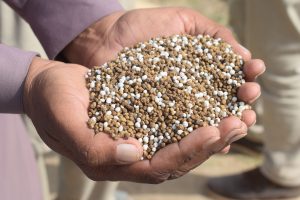
When the ground is cold and the fields look quiet, a lot is actually happening below the surface.
Cover crops are holding soil in place, soaking up leftover nutrients, and feeding soil biology. At the same time, many growers are asking how organic fertilizers fit into that winter picture.
Questions like:
- If I have a good cover crop, do I still need manure or organic fertilizer?
- When should I apply something like an organic 4-3-2 pellet so it is available in spring, not locked up?
- How does cold soil change the way organic nutrients are released?
This article will walk through:
- What cover crops are doing for you in winter
- How nutrient cycling changes in cold soils
- Where organic fertilizers such as 4-3-2 Nutri-Proganic Pellet fit into that system
- Practical timing and placement ideas for farmers, home gardeners, and landscapers
- When to lean on the product label or call Supply Solutions for tailored guidance
The goal is simple: help your cover crops and your organic fertilizers work together instead of separately.
What Cover Crops Are Doing For Your Soil In Winter
Holding soil and nutrients in place
Well managed cover crops are one of the most powerful tools for winter soil protection. Research and farmer experience show that cover crops can:
- Reduce erosion and keep topsoil where it belongs
- Capture leftover nitrogen and other nutrients after harvest
- Improve soil structure and water holding capacity
- Help protect water quality by reducing nutrient runoff SARE+3SARE+3climatehubs.usda.gov+3
Studies on winter cover crops show that grass and legume covers can scavenge significant amounts of residual nitrogen that would otherwise leach, and then release that nitrogen back to the next crop as residues decompose. ScienceDirect+2PMC+2
In other words, winter covers are acting like a biological net, catching nutrients and handing them forward to spring.
Feeding soil biology and building structure
Cover crops also:
- Add organic matter above and below ground
- Support diverse microbial and macrofauna communities
- Increase both large pores (for drainage and air) and small pores (for water holding)
A large review of cover crop research found that covers improve soil structure, biological activity, and nutrient cycling, especially when used consistently over several years. Crops and Soils+3ScienceDirect+3reagtools.co.uk+3
That structure is particularly valuable in winter, when:
- Stable aggregates resist crusting
- Roots and channels improve infiltration
- Fields dry out and become workable earlier in spring
It is not unusual for farmers to report that cover cropped fields are both more moist in dry periods and easier to work in wet springs. That is the power of better structure.
How Cold Soils Change Nutrient Release From Organic Inputs
Microbes run the show
Most nutrients in organic fertilizers and manures are bound in organic forms. They become plant available only when soil microbes break them down. Temperature and moisture strongly influence that process.
Research on organic nitrogen sources shows that:
That means a pellet or granular 4-3-2 applied into cold winter soil is mostly “parked” until conditions warm enough for microbes to wake up and go to work.
Why that can be an advantage
Slow, biologically mediated release is one of the main reasons people choose organic fertilizers. A winter or very early spring application in many climates can:
- Give pellets time to soften and integrate into the soil
- Position nutrients near roots before growth starts
- Spread release over a longer window, which can match crop uptake better
The key is to remember that cold soil is not a good time to expect rapid nutrient response. Winter is the setup phase. Spring is when the real nutrient flow begins.
What Makes Nutri-Proganic 4-3-2 Different From Synthetic Fertilizers
4-3-2 Nutri-Proganic Pellet is Supply Solutions’ organic chicken manure based fertilizer, formulated as a slow release 4-3-2 with additional secondary nutrients. Soil Smiles+3Supply Solutions, LLC+3walmart.com+3
From publicly available product descriptions and general information on chicken manure pellets:
- It is made from organic chicken manure
- Provides approximately 4 percent nitrogen, 3 percent phosphorus, and 2 percent potassium (N-P-K)
- Contains organic matter and a range of micronutrients
- Acts as both a fertilizer and a soil conditioner
- Is designed as a slow release, long lasting nutrient source
These characteristics make it well suited to:
- Food crops and market gardens
- Perennial beds and orchards
- Home gardens that value organic inputs
- Landscapes where soil health and resilience matter
The label for Nutri-Proganic provides specific crop and rate guidance and should always be your primary reference for application decisions.
How Cover Crops And Nutri-Proganic Can Work Together
Instead of thinking “cover crops versus fertilizer,” it is more helpful to think “cover crops plus organic fertility, in balance.”
Role of cover crops
Cover crops are primarily:
- Nutrient catchers and recyclers
- Organic matter builders
- Biological and structural improvers
They do not usually add large amounts of phosphorus or potassium from outside the system. They mostly move and transform what is already there. Legume covers can add nitrogen through fixation, but that is still strongly influenced by species, nodulation, and growing conditions. SARE+2ScienceDirect+2
Role of Nutri-Proganic 4-3-2
Nutri-Proganic is primarily:
Where cover crops move and buffer nutrients, Nutri-Proganic brings new nutrients in a stable, slow release form.
Together in a winter system
When you put them together, a winter system might look like this:
- A fall seeded cover crop protects soil and captures leftover nutrients after cash crop harvest
- In late winter or early spring, Nutri-Proganic is applied and lightly incorporated or surface applied where the label allows
- As soils warm, microbes decompose both cover crop residues and Nutri-Proganic pellets, releasing nutrients in a staggered, biologically moderated way
- The spring crop benefits from both the improved structure and the blended nutrient supply
The details of timing, rate, and placement will vary by crop, soil, and climate. Those decisions should always be grounded in soil tests, cover crop species, and the Nutri-Proganic label.
Practical Strategies For Farmers
Strategy 1: Ahead of spring vegetables or specialty crops
For diversified vegetable farms and specialty crop growers, a common pattern is:
- Plant a fall cover such as cereal rye, oats, or a legume mixture after the main crop.
- Let the cover grow through winter where conditions allow.
- In late winter or early spring, apply Nutri-Proganic 4-3-2 to the planned beds, following soil test and label guidance.
- Terminate and incorporate the cover crop (where tillage is part of the system) or crimp or mow it and plant into strips, depending on your equipment.
Nutri-Proganic in this context:
- Adds a predictable, external nutrient source to complement the cover crop’s recycled nutrients
- Supplies phosphorus and potassium where tests show they are needed
- Provides N in a slower, more sustained way than many synthetic preplant options
Because release depends on temperature and moisture, it is often better to apply slightly ahead of the main flush of growth, not weeks after transplanting, unless the label suggests split applications.
Strategy 2: Building tired soils in rotation
In rotations where parts of the farm are chronically low in organic matter or structure, you might designate a “rebuild year” that relies on:
- A robust cover crop or mix
- Reduced traffic and tillage
- One or more Nutri-Proganic applications at appropriate times
The aim is not just to feed one crop, but to:
- Increase biological activity
- Build soil carbon
- Improve moisture infiltration and holding capacity
Chicken manure based fertilizers such as 4-3-2 pellets are noted for improving soil organic matter and supporting nutrient cycling over time, especially when combined with other soil health practices. climatehubs.usda.gov+4MDPI+4Soil Smiles+4
Because this approach is very field specific, it is wise to share soil tests and rotation plans with Supply Solutions or a trusted agronomist before committing to a multi year amendment strategy.
Strategy 3: Filling nutrient gaps after cover crops
Cover crops do not automatically supply all nutrients in the right balance. For example:
- A cereal rye cover may capture a lot of nitrogen and some sulfur, but does not add new phosphorus or potassium
- A legume cover can contribute nitrogen, but may still leave phosphorus or potassium short if soil tests are low SARE+2ScienceDirect+2
A practical workflow is:
- Sample soils after several years of cover crop use.
- Compare nutrient levels and organic matter trends.
- Identify fields where N dynamics have improved but P or K remain low or borderline.
- Use Nutri-Proganic to strategically add balanced N-P-K and organic matter where the soil test supports it.
This is especially useful in mixed vegetable systems and perennial fruit where repeated high removals can quietly drain P and K without obvious deficiency symptoms at first.
Strategy 4: Transitioning fields toward more organic fertility
For farmers transitioning part of their acres toward organic or reduced synthetic systems, winter is the ideal time to experiment at a manageable scale.
You might:
- Choose one or two fields with active cover crops
- Use Nutri-Proganic as the main preplant organic fertilizer
- Supplement, if needed and allowed, with other sources for specific nutrients that test low
- Monitor crop performance, soil tests, and economic returns over several years
Published research shows that poultry based organic fertilizers can support good yields and soil fertility when managed carefully, but release patterns differ from synthetic fertilizers. Soil Smiles+3ResearchGate+3MDPI+3
Because organic systems are complex, it is critical to:
- Follow the Nutri-Proganic label precisely
- Coordinate with organic certifiers if you are pursuing certification
- Ask for technical support rather than guessing if you are new to organic inputs
Practical Strategies For Home Gardeners
Winter cover crops in beds and Nutri-Proganic as the “starter”
In gardens, common winter covers include clovers, cereal rye, oats, and other green manures. These covers:
A simple pattern for gardeners is:
- Sow a fall cover crop after summer vegetables.
- Let it grow until late winter or early spring, then cut or turn it in.
- Once soil is workable, lightly apply Nutri-Proganic 4-3-2 across the bed, at label rates for vegetables or fruit.
- Mix gently into the top few inches of soil or leave on the surface under mulch if the label supports that approach.
Here Nutri-Proganic:
- Adds balanced N-P-K and micronutrients to complement the cover crop residues
- Acts as a steady feed through the early growth of spring crops
- Helps build soil organic matter along with the cover roots and residue
Because garden plots are small, it is very important to avoid over applying. Organic does not mean “use as much as you want.” Always measure, do not just “shake some on.”
Fruit trees and small fruits with living groundcovers
Gardeners often use clover or low growing cover crops under fruit trees and brambles. In these systems:
- The cover crop protects soil and adds nitrogen if it is a legume
- Nutri-Proganic can be used in bands or rings around the drip line of trees or along fruit rows, following the label
Take care to:
- Keep pellets away from direct contact with trunks or stems
- Respect any restrictions on tree age or pre harvest intervals on the label
- Avoid applying to frozen soil where heavy rain could cause runoff before nutrients can move into the root zone
If you are not sure how much to apply around established trees or shrubs, contacting Supply Solutions with tree age, spacing, and soil test results is a smart next step.
Practical Strategies For Landscapers
Renovating tired beds and slopes
Many landscape sites suffer from:
- Thin, compacted soils
- Erosion on slopes
- Repeated cycles of annual color with little soil improvement
Cover crops are not always feasible on maintained sites, but they can be used:
- In off season renovation of shrub beds
- On construction sites before final planting
- On large out of the way slopes that can be seeded to a temporary cover
In those situations, Nutri-Proganic 4-3-2 can be applied:
- As a preplant organic base fertilizer when new plantings go in
- At label rates under mulch in shrub and perennial beds
- Along with deep root feeding where trees and shrubs are a priority
The combined effect of cover crops, organic 4-3-2, and mulch can dramatically improve soil structure, reduce runoff, and support healthier plantings over time.
Managing turf transitions
For high value turf, cover crops take a bit more planning, but some landscapers and grounds managers use:
- Temporary covers on fields taken out of play for renovation
- Green manures in staging areas where soil is being built for future lawns Crops and Soils+1
Nutri-Proganic can supply organic matter and balanced nutrients that support root development and soil health in those transition zones. However, turf fertilization programs often have strict timing and rate rules, especially in regulated areas, so always check local guidelines and the product label.
When Should You Not Lean On Nutri-Proganic Alone?
Even with a strong cover crop program and high quality organic fertilizer, there are situations where Nutri-Proganic alone may not be enough, including:
- Very low soil test phosphorus or potassium where larger corrections are needed
- High yielding systems with extremely heavy nutrient removal
- Very cold, short season climates where mineralization windows are narrow
In those cases, you may need:
- Additional organic or mineral sources of specific nutrients
- A transition plan that uses both organic and conventional inputs for a period
- Closer soil and tissue testing to avoid over or under correction
This is exactly where contact with Supply Solutions pays off. With your soil tests and crop plans in hand, they can help you decide:
- Where Nutri-Proganic should be the main organic fertilizer
- Where it should be part of a blended strategy
- Where other Supply Solutions products, such as HumiPro(K), gypsum, or sulfate of potash, may also be needed
A Simple Winter Planning Checklist
Here is a short checklist you can adapt for your operation.
- Review your cover crops
- What species are growing in each field or bed?
- Are they mainly nitrogen fixers, nutrient scavengers, or a mix?
- Pull or review soil tests
- Check organic matter, N, P, K and pH
- Identify fields or beds that are low in P or K or need a boost in organic matter
- Decide where Nutri-Proganic fits best
- Fields with active cover crops but nutrient gaps
- High value vegetable or fruit areas
- Tired soils needing both nutrients and organic matter
- Set timing windows
- Late winter or very early spring for many row and vegetable crops
- Label appropriate times for perennials and turf
- Match rates to the label
- Do not guess
- Adjust rates based on soil test information and crop sensitivity
- Plan integration with other products if needed
- HumiPro(K) for additional carbon and nutrient efficiency
- Gypsum where calcium and structure issues are documented
- Sulfate of potash where K is specifically low
- Ask for help when unsure
- Share soil tests and cover crop information with Supply Solutions
- Confirm that your plan aligns with labels and local guidance
Final Thoughts: Let Winter Work For You
Cold soils and quiet fields can feel like a pause button, but winter is actually a key season for shaping how your soil will behave in spring.
Cover crops are holding and cycling nutrients. Microbes are slowing down and waiting for the right conditions. Organic fertilizers such as 4-3-2 Nutri-Proganic Pellet are sitting in the wings, ready to release nutrients as soon as soil biology and temperatures allow.
When you put these pieces together thoughtfully, you can:
- Protect soil and nutrients over winter
- Build long term fertility and structure
- Support spring crops with a steady, biologically mediated nutrient supply
- Rely less on emergency, high rate applications in season
If you would like help weaving cover crops, Nutri-Proganic 4-3-2, and other Supply Solutions products into a winter to spring fertility plan, the team is happy to work through the details with you.
Ready to let your cover crops and organic fertilizers work together this winter?
Supply Solutions is a veteran owned fertilizer and industrial supplier serving farmers, growers, and green industry professionals across the Pacific Northwest and beyond. From organic 4-3-2 Nutri-Proganic pellets and humic solutions to Diamond K fertigation products, our team is here to help you feed smarter and grow stronger.
Connect with Supply Solutions: