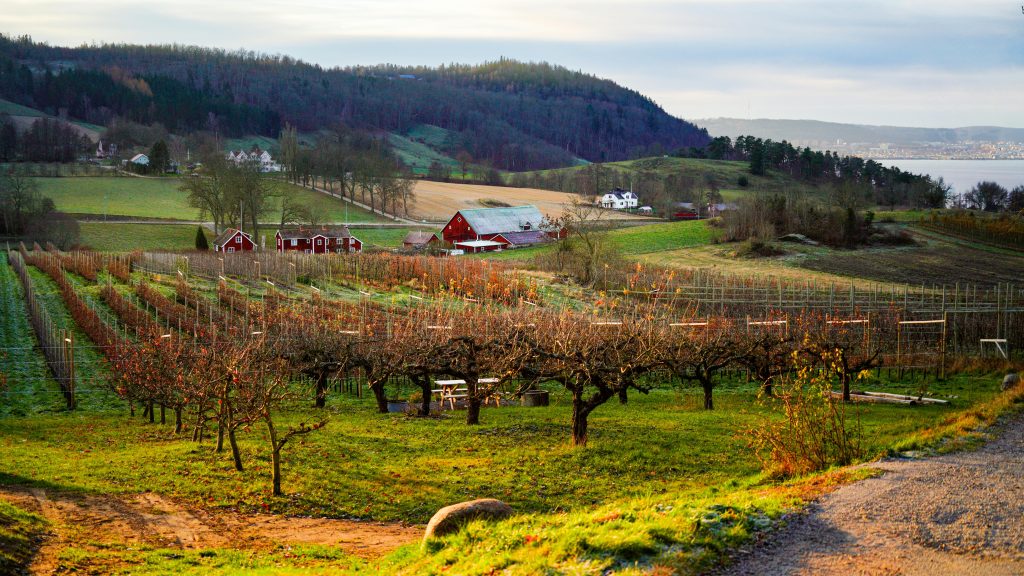
Fruit trees and berry plants spend winter looking quiet, but inside those buds everything important for your next harvest is already being planned.
When you walk an orchard or berry block in late winter you are really seeing:
- How well last year’s nutrition and pruning prepared the plant
- Whether soil structure is helping or fighting roots
- How much cold, waterlogging, and traffic those rows tolerated
- Which blocks deserve more fertility this spring and which need structural help first
A small timing mistake, an overaggressive nitrogen application, or ignoring potassium and calcium can all show up later as:
- Weak bloom and poor fruit set
- Soft, low quality fruit that does not store or ship well
- More disease pressure and winter injury
- Shorter orchard or planting life
In this article we will walk through a practical, field-ready approach to late winter and early spring fertility for fruit trees and berries using tools you already know from Supply Solutions:
The goal is not to push maximum growth at all costs. It is to give trees and berry plants:
- Enough nitrogen to support healthy canopy without rank growth
- Enough potassium, calcium, and sulfur to protect quality and stress tolerance
- Soil structure and biology that let roots explore and actually use the fertility you invest in
Step 1: Walk The Block Before You Touch A Fertilizer Bag
Before you look at soil tests or spreadsheets, walk your orchard or berry block with a notepad.
For each block or planting, note:
- Tree or plant vigor last season
- Crop load
- Light, balanced, overloaded
- Visible winter damage
- Dead wood, bark cracking, winter kill at the base, cane loss in berries
- Soil and traffic condition
- Ruts in alleys, puddles under drip lines, crusting, compaction near headlands
- Weed pressure and groundcover
- Bare strips, healthy sod, weedy “nutrient thieves”
Divide blocks loosely into three groups:
- Strong, productive blocks that responded well last season
- Middle blocks with uneven vigor or quality concerns
- Poor or stressed blocks with structural issues or declining plants
Your spring fertility dollars will go farthest when you spend most of them in group 1 and 2, while group 3 may need structural work and future replant planning more than high fertilizer rates.
Step 2: Read Your Soil Tests With Fruit Eyes, Not Just Row Crop Eyes
Fruit and berry crops live on a site for many years. They feel every imbalance more deeply than a one-year crop.
When you pull out soil tests for orchard and berry ground, pay particular attention to:
- pH
- Organic matter
- Phosphorus (P)
- Potassium (K)
- Calcium and magnesium balance
- Sulfur (S), if tested
- Cation exchange capacity (CEC) and any sodium information
Then ask:
- Is pH in the right range for this crop
- Is potassium low, borderline, or healthy
- Is sulfur likely to limit nitrogen and protein synthesis in leaves
- Is calcium supply and structure strong enough to support fruit firmness and root health
- Is organic matter high enough to buffer water and nutrients
A few general patterns:
- Most tree fruit prefer a near-neutral to slightly acidic pH.
- Blueberries and some caneberries are more comfortable in acidic soil.
- Potassium is critical for fruit size, color, and stress tolerance, yet is often mined quietly.
- Sulfur has become more important as a partner to nitrogen in many soils.
Use these tests to separate nutrients into “must address this spring” and “improve over several years.”
Step 3: Decide What You Want Fertility To Do This Year
Before choosing products, clarify your priorities for each block.
Common goals include:
- Recovering canopy on a recently planted or stressed block
- Maintaining balanced vigor in a mature, productive orchard
- Improving fruit quality, color, and storability more than raw yield
- Preparing a block for a heavy crop after a lighter off year
Write one sentence per block, for example:
- “Young apple block: build structure and K, moderate N, support root growth.”
- “Mature blueberries: avoid excess N, support K and S, protect pH and calcium.”
- “Older cherries: maintain K and S, focus on calcium and structure, plan for replant in a few years.”
That sentence will keep you from falling back into “same rate everywhere” habits.
Step 4: Use Nitrogen With A Careful Hand
Nitrogen is both essential and dangerous in orchards and berry plantings.
Too little and you get:
- Weak shoots
- Pale leaves
- Small fruit and poor return bloom
Too much and you see:
- Rank growth that shades fruiting wood
- More disease and insect pressure
- Soft fruit and delayed maturity
- Winter hardiness issues
Late winter and early spring are when you set the tone.
Ammonium sulfate for N plus sulfur and gentle acidification
Supply Solutions Ammonium Sulfate 21-0-0 + 24% Sulfur brings:
- Ammoniacal nitrogen that is well suited to many perennial crops
- Sulfur in sulfate form, which supports protein and enzyme systems
- An acidifying effect over time in the application band
It is a strong fit when:
- Soil tests show low or borderline sulfur
- pH is slightly high for the crop, and modest acidification is welcome
- You are feeding species that appreciate ammonium-based N, such as blueberries in the right soils
Practical points:
- Base rates on tree or plant age, vigor, and realistic yield goals, not on “what we have always done.”
- Apply in a band or pattern that matches the active root zone (often under the drip line), following the label and local agronomic guidance.
- Avoid heavy, late nitrogen on blocks where you struggle with excessive vigor, disease, or soft fruit.
For small orchards and home plantings, ammonium sulfate can be used at garden and tree label rates where soil tests and plant needs support N + S and a slightly acidifying source.
7-0-26 for precise N and K without more P
In some irrigated orchards and berry operations, fertigation is part of normal life.
Supply Solutions 7-0-26 Nitrogen Fertilizer is a water soluble fertilizer with:
- 7 percent nitrogen
- 0 percent phosphorus
- 26 percent potassium
It fits well when:
- Soil P is already adequate or high
- You want to deliver modest N with strong K support through the irrigation system
- You are fine-tuning crop load, fruit quality, and stress resilience during key growth stages
Practical uses:
- Early to mid-season feeds to support canopy and fruit sizing without excess N.
- Programs where foliar and fertigated applications are coordinated to avoid overlaps.
Always keep 7-0-26 within the framework of your total annual N and K plan. It is a steering wheel, not a way to pile on extra nutrients without counting them.
Step 5: Put Potassium Where Fruit And Berries Can Find It
Potassium is a workhorse nutrient in orchards and berries. It influences:
- Fruit size, color, and sugar accumulation
- Disease tolerance and stomatal function
- Winter hardiness and general stress resistance
Many long-lived plantings quietly remove K year after year until soil tests drift from “comfortable” to “borderline” without obvious symptoms.
Sulfate of Potash 0-0-50 Plant Fertilizer provides:
- Concentrated potash
- Sulfur in sulfate form
- No nitrogen and no phosphorus
That makes it ideal when:
- Soil test K is low or trending downward
- Soil P is adequate or high
- You want to support fruit quality and stress tolerance without shifting N or P
In late winter and early spring:
- Apply sulfate of potash in bands that align with the main feeder root zones, following label and local recommendations.
- Time applications ahead of active root growth and rainfall or irrigation that will move K into the upper profile.
- Combine with nitrogen plans that reflect the crop’s real N needs for the season.
Do not guess at K. Use your soil test as the starting point and adjust over several seasons rather than trying to move from low to ideal in one year.
Step 6: Use Organic Fertility To Build A Resilient Orchard Floor
Organic matter in the tree row and alley is more than just “nice to have.” It supports:
- Better water holding
- A more diverse soil biology
- Slower, steadier nutrient release
- Improved structure under foot and tire traffic
4-3-2 Nutri-Proganic Pellet is an organic chicken manure based pellet that:
- Provides slow-release N, P, and K
- Adds organic matter and micronutrients
- Feeds microbes as it breaks down
In orchards and berry blocks, Nutri-Proganic is most useful when:
- You are establishing new plantings and want a strong soil fertility base
- You are rebuilding tired orchard ground with low organic matter
- You are transitioning blocks toward more biologically active management
Practical ideas:
- Before planting new trees or berry plants, apply Nutri-Proganic in the future row area at label rates and incorporate to the depth where roots will initially develop.
- In established plantings, apply Nutri-Proganic in strips or bands under the canopy in early spring so mineralization starts as soils warm.
- Combine Nutri-Proganic with soluble N and K sources only as needed, letting the organic base carry part of the load.
You can think of Nutri-Proganic as part of the “long game” for block health, while ammonium sulfate and sulfate of potash handle more immediate needs.
Step 7: Where 10-10-10 Fits In Small Orchards And Home Fruit
Balanced fertilizers have a place when the soil actually needs balance.
Supply Solutions 10-10-10 Complete Lawn & Garden Granular Fertilizer with Micronutrients is useful for:
- Home orchards and small mixed plantings where soil tests show low to moderate P and K
- Situations where one simple product is more practical than multiple targeted fertilizers
- Garden-scale berry plantings that share space with other shrubs and ornamentals
Use 10-10-10 when:
- Soil P and K are not high
- You follow the label rates and timing for trees and shrubs
- You understand that it is the base feed, not a cure-all
Where P is already high, it is usually better to pair nitrogen and potassium sources that do not add more P, such as ammonium sulfate, 7-0-26, and sulfate of potash.
Step 8: Do Not Ignore Structure And Calcium
Tree and berry roots are long-term tenants. They suffer when:
- Surface compaction from harvest and winter traffic squeezes pore space
- Sodium or high magnesium levels disrupt structure
- Water ponds in low spots every spring
Supply Solutions Gypsum Powder – Purest and Soluble is a high purity calcium sulfate that:
- Supplies calcium without significantly changing pH
- Adds sulfur in sulfate form
- Helps improve soil aggregation and infiltration in suitable soils
It is especially helpful when:
- Sodium is elevated in your soil tests
- Magnesium is high relative to calcium and soils seal easily
- You see crusting, poor infiltration, and shallow rooting in key zones
Practical steps:
- Apply gypsum in tree or plant rows and compacted alleys where structure is a clear limitation and soil tests support its use.
- Time applications so that winter and spring moisture can carry soluble gypsum into the upper profile.
- Combine gypsum with controlled traffic, cover crops or alley grass, and organic additions for a compounding effect over time.
Calcium from gypsum supports structure and root health. It is part of the foundation on which your N, P, K, and S program stands.
Step 9: Help The Soil Hold Nutrients With HumiPro(K)
Even with good structure and organic matter, many orchard and berry soils can benefit from humic support.
HumiPro(K) WSP humic and fulvic acid powder is a concentrated humic and fulvic blend designed to:
- Be mixed into a concentrate, then diluted
- Be applied to soil in spring and through the season
- Support nutrient retention, aggregation, and root growth when used as directed
In perennial fruit systems, HumiPro(K) is particularly valuable when:
- Soils are sandy or low in organic matter
- Fertigation and drip systems deliver nutrients in a narrow band
- You want each pound of N, K, Ca, and Mg to do more work
Practical uses:
- Apply HumiPro(K) through irrigation where compatible, or as a soil drench in the wetted zone under drip lines.
- Combine with ammonium sulfate, sulfate of potash, or Nutri-Proganic programs to improve nutrient availability and reduce leaching.
- Focus on younger or high value blocks first if budget is limited.
HumiPro(K) does not replace fertilizer. It helps the soil behave more like a healthy sponge and less like a leaky or compacted container.
Step 10: Pulling It Together – Example Block Plans
Here are a few example situations to show how these pieces can fit together.
A. Young apple block on marginal, tired ground
Soil test:
- P medium, K low, S low, OM modest, some structural issues
Last season:
- Mixed vigor, some weak trees, compaction in alleys
Goals:
- Build soil structure and K
- Provide moderate N and S
- Support root growth and consistent canopy development
Possible approach:
B. Mature blueberry planting on slightly high pH soil
Soil test:
- P adequate, K borderline, S low, pH a bit high for blueberries
Last season:
- Good yields but some poor color and stress in heat
Goals:
- Support K and S
- Gently acidify the root zone
- Avoid excess nitrogen
Possible approach:
C. Mixed small orchard at a homestead
Conditions:
- Apples, pears, cherries, and a few berry rows
- Soil test: P and K moderate, S low, OM decent
Goals:
- Simple, safe fertility program
- Support flowering and fruiting without overcomplicating products
Possible approach:
A Simple Late Winter And Early Spring Orchard Checklist
You can keep this in the shop or office as you plan.
- Walk every block or planting
- Note vigor, winter damage, soil condition, and crop history.
- Review soil tests
- Mark low or borderline K and S.
- Highlight pH issues and structure concerns.
- Write one line per block
- “Build canopy,” “maintain balance,” or “maintain while planning replant.”
- Choose nutrients to prioritize
- N and S where foliage and yield need support.
- K where soil tests and quality history say it is limiting.
- Ca and structure where roots are struggling.
- Match products to jobs
- Put it on paper block by block
- Product, rate, timing, and purpose.
- Check labels and local advice
- Confirm crop, rate, and method match the product label.
- Adjust after bloom and mid-season
- Watch leaf color, shoot length, fruit set, and quality, then refine next year’s plan.
Final Thoughts: Let Winter Tell You What Spring Fertility Should Do
Fruit trees and berries will tell you what they need, if you pay attention to:
- Last year’s vigor and quality
- Winter injury and soil behavior
- Honest soil tests for N partners like K, S, and Ca
When you:
- Use nitrogen as a careful tool, not a blunt instrument
- Keep potassium and sulfur in their proper place
- Support structure and biology with gypsum, humics, and organic fertility
- Match intensity of fertilization to block potential and age
you give your orchard or berry planting the best chance to turn winter’s quiet planning into a healthy bloom and a harvest that holds up in box, cooler, or market stand.
Supply Solutions carries the tools to support that plan, from ammonium sulfate, sulfate of potash, 7-0-26, 10-10-10, and soluble gypsum to humic solutions and organic 4-3-2 pellets. The products are important, but the plan you build with them is what protects your trees, canes, soil, and budget.
If you would like help reviewing your soil tests and walking through block-by-block fertility options, the Supply Solutions team is ready to talk through the details with you.
Connect with Supply Solutions: