It’s one of the more confusing situations early in the season.
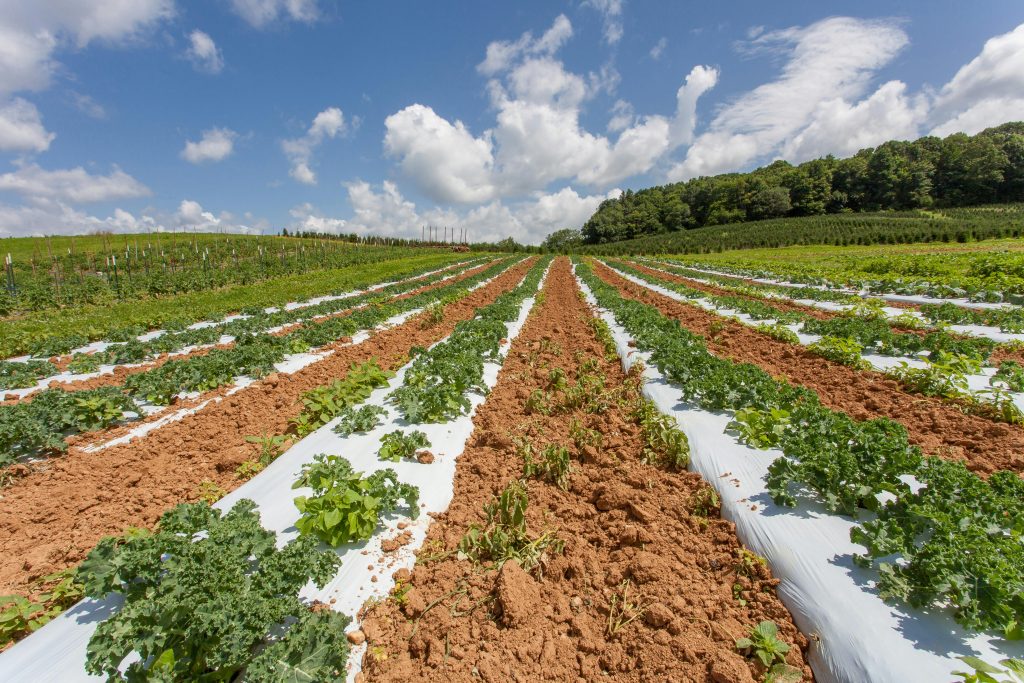
You apply fertilizer, conditions seem acceptable, and planting goes as planned. But a week or two later, growth feels slower than expected. Some plants look fine, others lag behind, and the field doesn’t develop with the kind of uniformity you were aiming for.
In April, this happens more often than most growers expect.
The instinct is usually to question the fertilizer. Was the rate too low? Was the product wrong? Should more be applied?
But in many cases, the issue isn’t that fertilizer wasn’t applied. It’s that the crop wasn’t in a position to use it yet.
Early-season growth is limited by more than nutrient supply.
Soil temperature is one of the first factors.
Even when daytime temperatures rise, cooler nights can keep soil temperatures low enough to slow root activity. When roots are not actively growing, nutrient uptake is limited regardless of how much fertilizer is present in the soil.
Phosphorus is especially affected by this. It plays a key role in early root development, but in cooler soils, it becomes less available. That can create a situation where fertilizer is present, but the plant still behaves as if it is lacking.
This is where balanced fertilizers begin to matter more than expected.
Using a product like Supply Solutions Premium 14-14-14 Fertilizer helps ensure that multiple nutrients are available together as conditions improve, rather than relying on a single nutrient to drive early growth.
It doesn’t force growth in cold conditions, but it positions nutrients so they are ready when the plant can use them.
Root development is the next limiting factor.
Early roots are small and restricted. Their ability to access nutrients depends heavily on placement and soil structure. If fertilizer is placed outside of the root zone, or if soil conditions limit root movement, uptake will be delayed.
This often shows up as uneven growth.
- Some plants establish faster where conditions are better
- Others lag where roots encounter resistance or limited access
- The field begins to develop inconsistently
Improving root access is often more effective than increasing fertilizer rates.
Soil structure plays a major role here. Compacted or uneven soils restrict root movement, limiting how much of the applied fertilizer can actually be reached.
This is where supporting soil conditions becomes part of solving the problem.
Inputs like Supply Solutions Humic Acid Soil Conditioner help improve soil structure and nutrient interaction.
They contribute to:
- Better root penetration through improved soil structure
- Increased nutrient availability within the root zone
- Improved moisture retention, which supports uptake
When roots can move more freely and nutrients remain accessible, the same fertilizer application tends to produce a stronger response.
Moisture also plays a significant role in early-season performance.
Fertilizer requires water to move into the soil and toward the roots. But April conditions rarely provide consistent moisture.
- Excess rainfall can push nutrients deeper than roots can reach
- Dry periods can limit nutrient movement entirely
- Uneven moisture creates uneven availability across the field
This variability often explains why some areas respond well while others do not.
Improving moisture balance through soil structure and timing applications around moderate rainfall can help stabilize nutrient availability.
Biological activity is another piece that is often overlooked.
Soil microbes drive nutrient cycling, helping convert nutrients into forms that plants can use. In early spring, this activity is still developing.
Until it becomes consistent:
- Nutrient release from organic matter is slower
- Soil response to fertilizer is less predictable
- Plant uptake may lag behind nutrient availability
Supporting this biological system helps improve how fertilizer functions.
Products like Supply Solutions Pacific Bounty Fish Fertilizer provide organic compounds that stimulate microbial activity.
This helps:
- Improve nutrient cycling
- Support a more active root zone
- Create a more responsive soil environment
In April, where soils are still transitioning, this support can make the difference between fertilizer sitting in the soil and fertilizer being used by the crop.
Nitrogen timing is another common reason for early-season stalls.
Nitrogen is often associated with visible growth, so it’s tempting to apply it early to push development. But in early conditions, this can work against the crop.
Applying nitrogen too soon, especially from sources like Supply Solutions Urea 46-0-0 Fertilizer, can lead to:
- Loss through leaching or volatilization
- Limited uptake due to underdeveloped roots
- Imbalance between leaf growth and root development
This creates a situation where fertilizer is applied, but not effectively used.
Waiting until the crop begins active growth allows nitrogen to be absorbed more efficiently.
At that stage:
- Roots are more developed
- Uptake increases
- Nitrogen contributes directly to growth
Field variability ties all of these factors together.
No field is completely uniform in April.
- Soil types vary
- Moisture distribution shifts
- Organic matter levels differ
These differences influence how fertilizer behaves across the field.
A single application can produce multiple outcomes depending on local conditions.
This is why early-season stalls often appear uneven rather than consistent.
Addressing the system, rather than just the fertilizer, improves results.
When soil structure, moisture, and biological activity are supported, fertilizer becomes more effective without increasing application rates.
Crops establish more evenly, and early growth becomes more consistent.
Using Supply Solutions Premium 14-14-14 Fertilizer helps provide a balanced nutrient base, while improving availability with Supply Solutions Humic Acid Soil Conditioner and supporting soil activity with Supply Solutions Pacific Bounty Fish Fertilizer helps ensure those nutrients are actually used. Bringing in nitrogen later with Supply Solutions Urea 46-0-0 Fertilizer aligns nutrient supply with crop demand once growth becomes consistent.
Supply Solutions works with growers to troubleshoot early-season performance by looking beyond fertilizer rates and focusing on how nutrients interact with real field conditions. If early growth feels slower than expected, it’s worth stepping back and looking at how the entire system is functioning, not just what was applied.