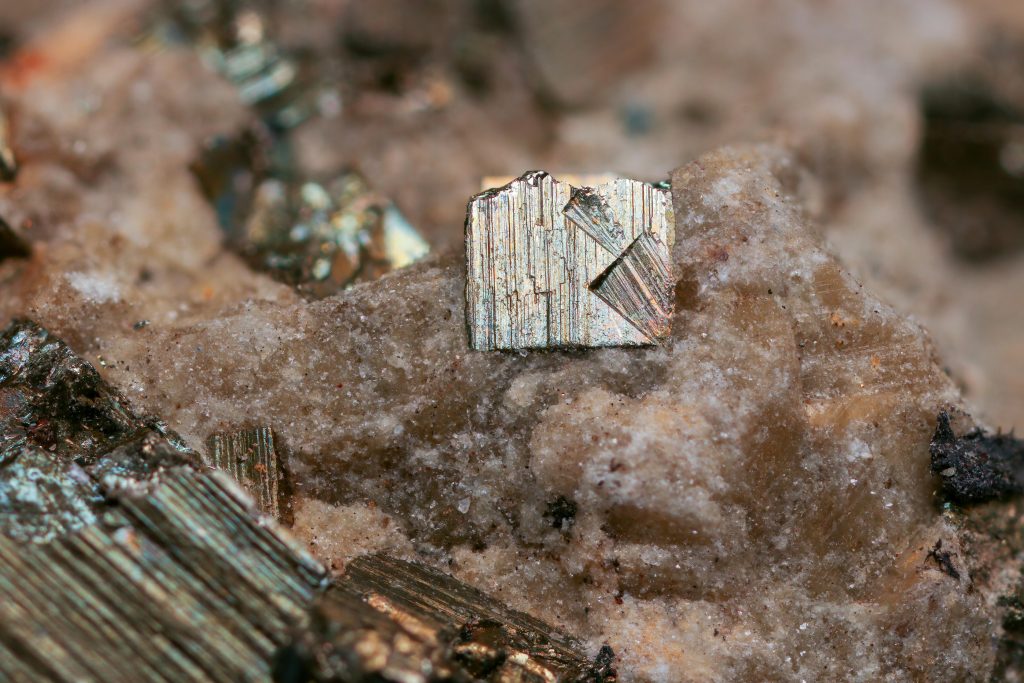
Trace minerals do not usually get much attention in May.
Most spring fertility conversations start with nitrogen, phosphorus, and potassium. That makes sense. Those nutrients drive a lot of visible early growth. Nitrogen greens plants and supports foliage. Phosphorus supports root development and plant energy. Potassium helps with water regulation, plant strength, and stress tolerance.
But a plant is not built from NPK alone.
Small nutrients matter too.
Iron, manganese, zinc, copper, boron, molybdenum, chlorine, and nickel are considered essential micronutrients for plant growth. They are needed in much smaller amounts than nitrogen, phosphorus, or potassium, but they still support important plant processes. University of Minnesota Extension lists these eight nutrients as essential micronutrients and notes that foliar testing can help determine whether crops are taking up optimal levels.
That is why May is a good month to think about trace minerals.
The season is still young. Roots are expanding. Vegetable gardens are being planted. Lawns are actively growing. Orchards, berries, trees, shrubs, and perennial beds are moving into stronger nutrient demand. Containers and potting mixes are being filled. Farmers are watching early crop color and root development. Landscapers are building beds that need to perform through summer heat.
Trace minerals are not usually the first fertilizer decision, but they help shape the season underneath everything else.
Trace minerals are small in quantity, not small in importance
Micronutrients are easy to underestimate because plants need them in tiny amounts.
That word “micro” can make them sound optional. They are not. A plant may need only a small amount of zinc or manganese compared with nitrogen, but if that small amount is missing or unavailable, growth can suffer.
Zinc, for example, is involved in enzyme systems and plant metabolism. University of Minnesota Extension explains that zinc is an essential micronutrient and that carbohydrate, protein, and chlorophyll formation are significantly reduced in zinc-deficient plants.
Manganese is another example. University of Minnesota Extension lists manganese as one of the essential micronutrients and notes that it is required for photosynthesis, nitrogen metabolism, lignin synthesis, root growth, and activation of many enzyme systems.
Those are not minor functions. Photosynthesis, protein formation, enzyme activity, root development, and chlorophyll formation are central to plant performance.
This is why trace minerals matter most when the growing season is long. A crop, lawn, or landscape may not show an obvious micronutrient problem on May 12. But if the root zone is short on trace mineral diversity, or if pH and soil conditions are limiting availability, the plant may carry that weakness into summer.
A small limitation early can become a larger limitation later when heat, fruit load, drought, mowing, traffic, or flowering demand increases.
May is a practical remineralization window
May is not always the easiest month, but it is a useful one.
Soils are warming. Roots are active. Moisture is often still available. Beds are being prepared. Containers are being filled. Lawns are feeding heavily. Trees and shrubs are producing new growth. Gardeners are still able to work soil before canopies close and vines spread.
That makes May a practical window for broad soil support.
A product like Azomite Granular fits larger beds, lawns, orchards, trees, shrubs, and perennial plantings where the goal is broad trace mineral support and remineralization. Supply Solutions describes Azomite Granular as a trace mineral product used to re-mineralize depleted soil, nourish root systems, support plant growth, and fit applications in vegetable and flower gardens, lawns, trees, fruit trees, grape vines, ornamentals, shrubs, potting soil, compost, and irrigation systems.
Azomite Powder fits similar goals but in a finer form. Supply Solutions describes Azomite Powder as a trace mineral product for re-mineralizing depleted soil, supporting roots, and fitting uses such as garden bulk applications, irrigation systems, potting soil, hydroponic systems, and combinations with fertilizers or soil inoculants.
The value of these products in May is timing. If you are preparing soil, mixing containers, top-dressing perennials, feeding lawns, or building a long-season crop program, this is a good point to support the mineral side of the soil system.
The problem they help solve is trace mineral depletion or low mineral diversity in soils and growing media that have been cropped, amended, watered, leached, or managed heavily over time.
They are not a replacement for a soil test. They are not a substitute for nitrogen, phosphorus, potassium, calcium, magnesium, or sulfur where those nutrients are deficient. They are a broad trace mineral support tool that fits into a larger fertility plan.
Remineralization is different from correcting a specific deficiency
This distinction matters.
A broad trace mineral product and a specific micronutrient fertilizer do not always serve the same purpose.
If a soil test or tissue test shows a clear zinc deficiency, the correction may need to be a targeted zinc source at the correct rate and placement. If a crop is short on boron, that correction must be handled carefully because boron has a narrow range between deficiency and toxicity. If iron chlorosis is caused by high pH, simply adding a broad mineral product may not solve the availability issue quickly.
Azomite products fit the soil-building and remineralization side of the program. They are useful when the goal is to restore a wider range of minerals to the soil or potting mix, especially in gardens, lawns, compost, orchards, and mixed plantings that have been used intensively.
Specific deficiencies still require specific diagnosis.
This is why soil testing, plant tissue testing, and observation remain important. University of Minnesota Extension notes that foliar testing helps determine fertilizer needs for high-value fruits and vegetables, and that each crop has its own sampling recommendations for submitting a foliar nutrient test.
For farmers and commercial growers, that kind of testing can be the difference between a smart correction and wasted product. For gardeners and landscapers, soil testing helps prevent the habit of applying “a little of everything” every season without knowing what is building up.
Broad remineralization has a place. Targeted correction has a place. They should not be confused.
Soil pH controls whether trace minerals are available
A soil can contain a micronutrient and still not make it available to the plant.
Soil pH is one of the biggest reasons. Several micronutrients become less available as soil pH rises. Iron, manganese, zinc, and copper can be especially tied up in high-pH conditions. In very acidic soils, other issues can appear, including possible manganese toxicity.
University of Minnesota Extension notes that manganese availability varies with soil pH and that deficiency can occur in calcareous mineral soils at pH values of 6.5 or above, while plant-available manganese increases as pH decreases and can become toxic in highly acidic soils.
This is why micronutrient symptoms can be confusing.
A plant may show yellowing even when the soil contains iron or manganese. The nutrient may be present, but pH or soil chemistry may be keeping it unavailable. A lawn may look pale, but the problem may not be nitrogen alone. A blueberry or azalea may struggle because pH is too high for the plant to access certain nutrients. A vegetable crop in a high-pH soil may show micronutrient stress even if the grower has applied plenty of general fertilizer.
Azomite can add broad trace mineral support, but it does not replace pH management.
If soil pH is the real problem, a grower needs to address pH with the correct amendment and timing. If a deficiency is severe and crop value is high, foliar correction or a specific micronutrient product may be needed while the soil program is adjusted.
That is practical agronomy. The right product has to match the real limitation.
Trace mineral problems often hide behind general weakness
Micronutrient issues do not always announce themselves clearly.
Sometimes the plant simply looks weak. Growth is slow. Leaf color is uneven. New leaves look pale. Fruit quality is not what it should be. Flowers are inconsistent. Turf color is dull even after feeding. Young trees grow, but not with much vigor.
These symptoms can have many causes. Nitrogen shortage, drought, waterlogging, compaction, disease, insects, pH, salinity, root damage, or weather stress can all create weak growth. Trace mineral shortages are only one possible cause.
That is why patterns matter.
If symptoms appear mostly on new leaves, think about nutrients that are less mobile in the plant, pH, root stress, or micronutrient availability. If symptoms appear mostly on older leaves, nitrogen, magnesium, potassium, or other mobile nutrients may be involved. If symptoms appear in high-pH areas, sandy zones, eroded knolls, containers, or heavily amended beds, micronutrients may deserve more attention.
The timing also matters.
In May, young roots may not have explored much soil yet. Cold or wet soil may slow uptake. A crop may look deficient early and improve as soil warms. At the same time, a real micronutrient issue can limit early momentum if it is ignored.
A good May fertility plan does not assume trace minerals are the answer to every weak plant. It includes them in the investigation.
Garden beds can become unbalanced over time
Home gardens are often more nutrient-complicated than people realize.
A garden bed may receive compost, manure, lime, peat moss, potting mix, bagged fertilizer, bone meal, fish meal, ash, mulch, and liquid feed over several years. Each input leaves a trace in the soil. Some nutrients build up. Others may still be low. pH may drift. Organic matter may increase. Salts may accumulate in raised beds or containers. Heavy watering may leach certain nutrients.
This is one reason May is a good time to look at the whole soil program.
A broad mineral product like Azomite Granular can fit long-used garden beds where the grower wants to support trace mineral diversity before the main growing season gets heavy. It is especially practical for vegetable and flower gardens because the granular form is easy to spread and lightly incorporate during bed preparation. Supply Solutions lists application guidance for vegetable and flower gardens, linear rows, trees, fruit trees, grape vines, ornamentals, shrubs, lawns, houseplants, greenhouse mixes, compost, and hydroponics.
Azomite Powder is a good fit where gardeners are mixing potting soil, preparing seed-starting or transplant media, incorporating minerals into small beds, or using irrigation-style applications where the finer particle size makes sense.
The problem these products help solve in gardens is not one single nutrient deficiency. It is the broader issue of soils that have been intensively planted and may benefit from trace mineral replenishment.
The timing is before planting, during bed preparation, or early in the growing season when roots are expanding and soil moisture can help move fine particles into the active zone.
Potting mixes need mineral support too
Containers are different from ground soil.
A potting mix may be light, well-drained, and easy to manage, but it does not have the same mineral reserve as field soil. Many potting mixes are built from peat, coir, bark, perlite, compost, or other components that provide structure and water-holding capacity, but they may need added fertility to sustain plants.
This matters in May because containers are everywhere.
Tomatoes go into pots. Herbs go onto patios. Annuals fill hanging baskets. Greenhouses move transplants. Landscapers install planters. Gardeners refresh window boxes. Nurseries are managing high-demand container crops.
Once roots fill a container, nutrient demand rises quickly. Frequent watering can move soluble nutrients through the pot. A plant may look good at planting and then decline by late May or June if nutrition is not maintained.
Azomite Powder fits potting mixes because it can be blended more evenly than coarser material. Supply Solutions specifically lists potting soil among the uses for Azomite Powder.
Azomite Granular can also be used in greenhouse and potting soil applications, with Supply Solutions listing application guidance for greenhouse and potting soil as well as houseplants and flowers.
The problem being solved is trace mineral limitation in a confined root zone. The timing is when the potting mix is being prepared or when containers are being planted. Once the plant is established, a surface application can still be watered in according to directions, but blending before planting usually gives better distribution.
Container growers should still remember that Azomite is not a complete fertilizer program by itself. Containers need NPK and often calcium, magnesium, and regular feeding depending on the crop. Trace minerals support the system, but they do not replace the main nutrient program.
Lawns can benefit from trace mineral thinking, but not guesswork
Lawns are often managed around nitrogen because nitrogen response is easy to see. A pale lawn greens up after feeding, and everyone notices.
But turf color and vigor also depend on iron, manganese, zinc, soil pH, root health, and water movement. Micronutrients are needed in very small amounts, but they can matter in certain turf situations.
Penn State Extension notes that turfgrasses require micronutrients such as iron, manganese, zinc, copper, molybdenum, boron, and chlorine, though they are needed only in minute amounts and are rarely needed on mineral soils. Micronutrient applications can be beneficial in high-sand or high-pH turf situations, but indiscriminate use can be harmful.
That is the caution lawn managers need.
A broad mineral product like Azomite Granular can fit lawns where the goal is annual trace mineral support and soil remineralization. Supply Solutions lists a lawn application rate and notes spring, fall, or winter timing for lawn use.
May is a good practical window because turf is actively growing and still building resilience before summer heat. But trace minerals should not be used as an excuse to ignore pH, compaction, watering, mowing height, or proper nitrogen and potassium fertility.
If turf is pale because it is nitrogen deficient, trace minerals alone will not solve the problem. If turf is yellow because the soil is compacted and roots are shallow, soil structure needs attention. If turf is growing in high-pH soil and showing iron chlorosis, a specific iron strategy may be needed.
Azomite fits lawn programs as broad soil support, not as a one-product cure for every turf color issue.
Orchards, berries, and perennials need long-season mineral planning
Perennial crops and plantings deserve special attention because they stay in place for years.
A vegetable bed can be corrected and replanted each season. A fruit tree, grape vine, blueberry planting, ornamental shrub, or perennial bed depends on the same root zone year after year. Nutrient imbalances can build slowly. Mineral depletion can go unnoticed. pH problems can become harder to correct once roots are established.
May is a useful time to support these plantings because new growth is active and the season’s demand is beginning.
Azomite Granular fits trees, fruit trees, grape vines, ornamentals, shrubs, and lawns because it can be spread around the root zone and watered or lightly worked into the soil where appropriate. Supply Solutions includes specific application guidance for trees, fruit trees, grape vines, ornamentals, shrubs, and similar plants.
For smaller perennial beds, nursery containers, or situations where mixing is easier, Azomite Powder can fit as part of the planting mix or soil preparation.
The problem these products help solve is long-term trace mineral depletion or lack of mineral diversity in permanent plantings. The timing is May because roots are active and soil moisture is often still present enough to support movement into the root zone.
For fruiting perennials, trace minerals should be part of a larger program that also includes pH management, potassium, calcium, magnesium, boron where specifically needed, irrigation, pruning, and crop load management. A broad mineral product supports the foundation, but it does not replace crop-specific fertility.
Farmers should use trace minerals with economics in mind
For farmers, trace mineral decisions need to be practical.
A product may sound beneficial, but field-scale application has to make agronomic and economic sense. Soil testing, tissue testing, field history, crop response, and deficiency risk should guide decisions.
Zinc is a good example. University of Minnesota Extension notes that zinc is recommended in fertilizer programs for corn, sweet corn, and edible beans in certain situations, and that a response is possible or likely when soil test zinc is low. It also notes that crop response varies and that banding low rates of zinc may give the best economic return in fields testing low.
That kind of guidance matters because not every field needs every micronutrient.
A broad product like Azomite may fit certain farm uses where remineralization, soil-building, compost enrichment, nursery production, orchards, vegetable farms, market gardens, or specialty crops are part of the system. But for commodity field crops, trace mineral correction should usually start with soil tests and crop-specific recommendations.
May field scouting can help identify whether micronutrients deserve closer investigation. Look at patterns. Are symptoms tied to high-pH zones, sandy areas, eroded knobs, low organic matter areas, or previous crop history? Are young plants showing interveinal chlorosis, stunting, or uneven growth that does not match nitrogen or moisture patterns? Are high-value crops showing quality issues from previous seasons?
Trace mineral management should be targeted when the economics require it.
Compost can be a good place for mineral support
Compost is often used to build organic matter and microbial activity, but it can also be a carrier for mineral amendments.
Supply Solutions lists compost use for Azomite Granular, with guidance for adding it at the beginning of the compost cycle.
That makes sense from a practical standpoint. Composting gives minerals time to mix with organic material, moisture, and microbial activity. When finished compost is applied to beds, gardens, or landscapes, the mineral material is more evenly distributed than if it were applied in one concentrated spot.
For home gardeners, market farms, and landscapers who make or use compost regularly, adding trace minerals during compost preparation can be part of a soil-building routine.
This does not make compost a complete fertilizer for every crop. Finished compost varies widely in nutrient content. It can add organic matter, improve soil structure, and contribute nutrients, but it should still be used with awareness of soil test results and crop needs.
A compost-mineral approach is slow and steady. That is exactly why it fits long-term soil building.
Do not expect trace minerals to fix poor roots
Trace minerals are important, but roots still control uptake.
If soil is compacted, waterlogged, dry, too cold, too acidic, too alkaline, or poorly aerated, micronutrient uptake may suffer even when minerals are present. This is especially true in May because weather can swing quickly. A bed may be cold and wet one week, then dry and crusted the next.
Before blaming trace mineral shortage, check the root zone.
Are roots white and growing? Is the soil moist but not saturated? Is the pH in the right range for the crop? Is water entering the soil? Are roots restricted by compaction, pot-binding, or a glazed planting hole? Was fertilizer applied too close to tender roots? Is mulch too thick or piled around stems?
A plant with poor roots cannot use nutrients efficiently.
Azomite products can support the mineral side of the soil system, but they still need roots, moisture, and biological activity to matter. Use them in soil that is being managed for plant growth, not as a shortcut around basic root-zone problems.
Powder or granular: choosing the right form
Both Azomite forms support trace mineral remineralization, but the form changes how they are easiest to use.
Azomite Granular is practical for larger areas. It spreads more easily in vegetable gardens, flower beds, lawns, orchards, tree circles, shrub borders, and compost piles. The granular form is usually easier to handle outdoors where dust control, spread pattern, and coverage matter.
Azomite Powder is practical where blending matters. Potting mixes, greenhouse media, small beds, container plantings, hydroponic-style systems, and irrigation-compatible uses may benefit from a finer material. It can be incorporated more evenly into mixes and smaller soil volumes.
The product choice should follow the application.
Use granular where spreading and top-dressing are easier. Use powder where mixing and fine distribution are needed. In both cases, follow the product directions and avoid assuming more is better.
Trace minerals are needed in small amounts. The goal is support, not excess.
May trace mineral planning should stay balanced
A good May fertility plan does not put trace minerals above everything else.
The plant still needs the major nutrients. Nitrogen supports growth. Phosphorus supports roots and energy. Potassium supports water regulation and stress tolerance. Calcium, magnesium, and sulfur matter. Soil pH matters. Organic matter matters. Water matters. Roots matter.
Trace minerals fit into that whole system.
They are especially useful when soils have been intensively cropped, potting mixes are being prepared, compost is being built, perennial plantings need long-term support, lawns need broad soil care, or growers want to remineralize depleted soils before summer demand increases.
They are less useful when applied blindly to correct symptoms that are actually caused by compaction, water stress, pH, or nitrogen shortage.
That is why May is a good time to think carefully. The season is active enough for products to matter, but early enough that growers can still adjust.
A practical May trace mineral program may look like this:
Test soil when there is a recurring problem or a high-value crop.
Use Azomite Granular for larger soil areas, lawns, beds, orchards, trees, shrubs, compost, and perennial plantings where broad remineralization is the goal.
Use Azomite Powder for potting mixes, containers, greenhouse media, small-area incorporation, and situations where a finer material fits the application better.
Keep pH in mind, because micronutrients may be present but unavailable if soil chemistry is wrong.
Use targeted micronutrient correction only when testing or clear crop diagnosis points to a specific deficiency.
Support roots with good soil structure, steady moisture, and proper fertility.
That approach keeps trace minerals in their proper place: important, but not isolated from the rest of the growing system.
Small nutrients help shape the long season
May is when the season still has room to be shaped.
A vegetable garden can be built before the canopy closes. A lawn can be supported before summer traffic and heat. A container mix can be blended before roots fill the pot. A fruit tree can receive root-zone support before fruit demand rises. A perennial bed can be strengthened before summer dry spells. A field or market garden can be scouted before small nutrient problems become bigger performance issues.
Trace minerals will not make up for poor watering, low nitrogen, compacted soil, or incorrect pH. But when the basics are handled well, they help round out the fertility program.
That is the best way to think about products like Azomite Granular and Azomite Powder. They are not emergency rescue products. They are soil-support products for growers who understand that a long season depends on more than the three big numbers on a fertilizer bag.
Used in May, they help address mineral depletion, support root-zone diversity, and fit naturally into gardens, lawns, orchards, containers, compost, and landscape beds that need more than a quick green-up. Match the form to the application, keep rates sensible, and use soil or tissue testing when symptoms point to a specific deficiency. Supply Solutions can help farmers, gardeners, and landscapers choose the right Azomite product and build it into a practical May fertility program that supports the soil before summer stress begins to test it.