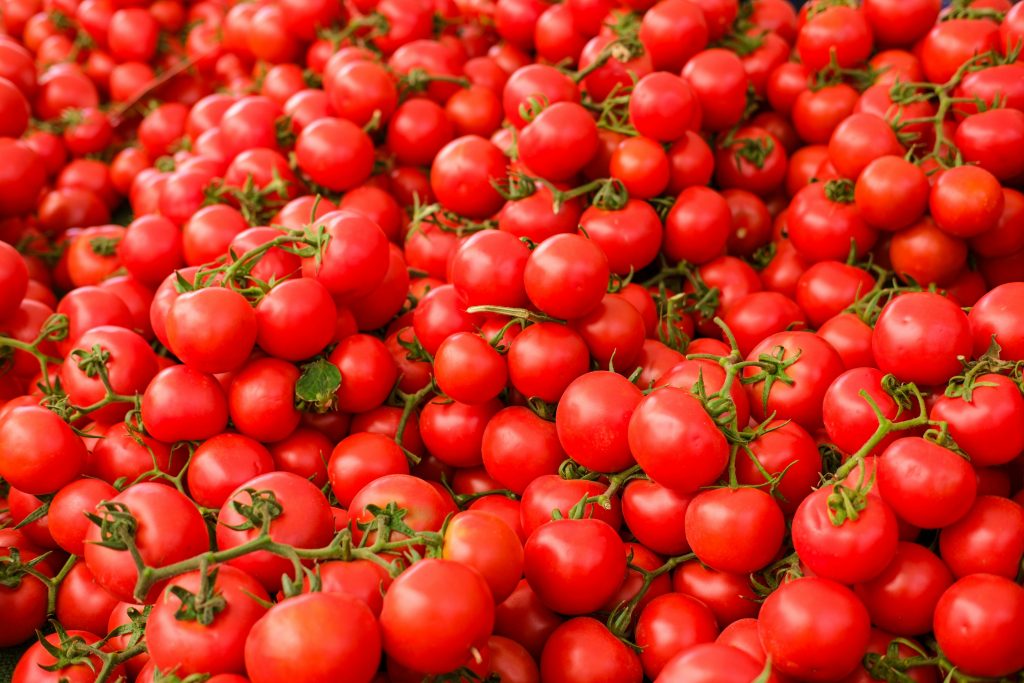
Tomatoes have a way of looking simple in May.
The plant goes in the ground. It gets watered. It stands upright. Maybe it even has a few flowers already. For a week or two, everything looks like the season is off to a clean start.
Then the plant begins telling the truth.
Leaves may yellow. Stems may stretch. Flowers may drop. The plant may grow a lot of foliage but set poorly. The first fruit may develop blossom end rot. Containers may dry out too fast. Garden beds may swing between wet and dry. A plant that looked strong in the tray may sit still after transplanting because the roots are not moving into the surrounding soil.
Most tomato problems that show up in June and July begin with decisions made in May.
That does not mean May tomato fertility needs to be complicated. It means it needs to be steady. Tomatoes need roots before they need heavy feeding. They need calcium before fruit problems appear. They need potassium before fruit load and summer heat increase. They need enough nitrogen to grow, but not so much that the plant becomes all leaves and weak fruiting balance.
A good May tomato program is not about pushing the plant. It is about building a plant that can keep producing when the season becomes harder.
Start with root establishment
A tomato transplant may look large above ground, but its root system is still limited when it first goes into the garden, raised bed, container, greenhouse bag, or field row.
The plant has to move from potting mix into a different root environment. That environment may be colder, wetter, drier, heavier, more compacted, or less biologically active than the media it came from. May weather can also swing hard. Cool nights, hot afternoons, spring storms, dry wind, and uneven soil moisture can all happen in the same week.
During that early period, the best fertility plan is gentle.
A tomato plant needs nitrogen, but not a hard nitrogen push right away. It needs phosphorus for root and energy development where soil conditions call for it. It needs potassium for water regulation and plant strength. It needs calcium for cell wall development and future fruit quality. But none of those nutrients help much if the roots are sitting in cold, saturated, compacted, or dry soil.
Before feeding tomatoes heavily, check whether the plant is actually establishing. Look for fresh new growth. Check that the root ball is staying moist but not waterlogged. Make sure water is moving into the surrounding soil instead of running around the transplant hole. If the plant was root-bound, make sure the roots were loosened enough to move outward.
A tomato plant that is still recovering from transplant shock usually needs steady moisture and time more than another fertilizer application.
Do not confuse early vigor with long-term strength
One of the most common tomato fertility mistakes is pushing too much leafy growth early.
A dark green tomato plant with thick foliage can look successful in May. But excessive early nitrogen can create a plant that is more vegetative than productive. It may delay flowering balance, become harder to manage, and increase the demand for calcium and water movement later.
Blossom end rot is often associated with calcium, but it is strongly affected by plant growth rate, water supply, and nutrient balance. Oregon State University Extension notes that blossom-end rot is tied to calcium deficiency in the plant and moisture stress, and that excess nitrogen, magnesium, potassium, or sodium can interfere with calcium uptake. Very wet or very dry conditions can also interfere with calcium movement.
That is why May nitrogen should be measured.
Tomatoes need enough nitrogen to build leaves and stems that can support photosynthesis. But they do not need to be forced into soft, rapid growth that outpaces the root system. A plant that grows steadily is usually easier to manage than one that flushes heavily and then struggles when fruit demand begins.
A practical May goal is medium-green, steady growth. Not pale and stalled. Not overly lush. Just active, balanced development.
Blossom end rot prevention starts before fruit is damaged
By the time blossom end rot appears, that fruit has already suffered.
The dark, sunken area on the blossom end of a tomato is not a fungal disease starting the problem. It is a physiological disorder connected to calcium shortage in the developing fruit. University of Maryland Extension describes blossom end rot as a common nutritional disorder of tomato, pepper, eggplant, pumpkin, squash, and watermelon caused by a shortage of calcium in enlarging fruits, often affecting the first developing fruits during rapid growth.
The important phrase is “enlarging fruits.”
That means prevention has to start before those fruits are sizing. May is the right window. Roots are establishing. Flowers are beginning. Irrigation habits are being formed. Mulch decisions are being made. Fertility programs are being set.
Calcium Nitrate 15.5-0-0 + 19% Ca fits this window when tomatoes are actively growing and need a soluble source of calcium along with nitrate nitrogen. Supply Solutions describes it as a fast-acting, water-soluble fertilizer that delivers nitrate nitrogen and calcium, with 19% water-soluble calcium, and positions it for vegetables, fruits, gardens, raised beds, greenhouses, hydroponics, and soil-based applications.
The problem it helps solve is calcium shortage during active growth and early fruit development. The timing is after transplant establishment, as plants begin steady vegetative growth and move toward flowering and fruit set. The caution is that calcium nitrate still contains nitrogen. It should support growth, not push excessive foliage.
Calcium nitrate works best when the plant has healthy roots and steady moisture. If a tomato is drying out between waterings or sitting in saturated soil, calcium uptake can still be inconsistent. The fertilizer supplies calcium, but water movement delivers it.
Water consistency matters as much as calcium supply
A lot of growers add calcium after seeing blossom end rot and wonder why the next fruit still struggles.
The answer is often water.
Calcium moves into the plant with the water stream. If soil dries too far, calcium movement slows. If soil stays saturated, roots lose oxygen and uptake slows. If the plant swings from dry to soaked repeatedly, calcium movement becomes uneven. Oklahoma State University Extension notes that blossom-end rot often occurs when plants grow rapidly early in the season and then experience prolonged dry weather, and that heavy nitrogen applications, fluctuating water supply, and hot, dry winds can increase the problem.
This is why May tomato care should establish a steady watering pattern.
For in-ground tomatoes, water deeply enough to encourage roots to move down. Shallow watering keeps roots near the surface, where they dry out faster. For raised beds, monitor moisture closely because they often drain and warm faster than ground beds. For containers, check daily as weather warms because a tomato in a pot can move from moist to stressed quickly. For market growers using drip irrigation, May is the time to make sure lines are working evenly before the crop carries fruit load.
Mulch can help once the soil has warmed. It reduces moisture swings, protects the surface from crusting, and keeps the root zone more stable. But mulch should not be piled against the stem, and it should not hide a dry root ball. Always check below the surface.
Calcium fertility and irrigation belong in the same conversation. One without the other is incomplete.
Potassium becomes more important as tomatoes move toward fruiting
Tomatoes need potassium before they are covered in fruit.
Potassium supports water regulation, plant strength, nutrient movement, flowering, and fruit quality. It becomes especially important as the plant shifts from establishment into bloom and fruit development. If potassium is short, the plant may still grow leaves, but it can struggle later with fruit quality, stress tolerance, and overall balance.
7-0-26 Organic Fertilizer is a strong fit for tomatoes in May once plants are established and beginning to move toward flowering. It supplies 7% nitrogen and 26% potash, and Supply Solutions describes it as an OMRI Listed organic fertilizer derived from soy protein hydrolysate and sulfate of potash, intended for vegetable gardens and tomato plants. The product page notes that its high potash content supports roots, sturdy stems, blooms, fruits, nutrient uptake, water movement, and plant resilience.
That nutrient balance is useful because tomatoes still need some nitrogen in May, but they also need more potassium support as they prepare to set fruit. The 7-0-26 analysis gives the plant a modest nitrogen supply without making nitrogen the main emphasis.
The problem this product helps solve is weak potassium support during the transition from transplant establishment to flowering and fruiting. The timing is after the plant has rooted and begun active growth, then as a side-dress during the growing season according to directions.
This is also where restraint matters. Potassium is important, but more is not always better. Too much potassium can interfere with calcium and magnesium balance in some soils. If a garden has received repeated fertilizer or compost applications for years, soil testing is valuable before making heavy potassium applications.
Use potassium to support tomato fruiting, not to guess your way through a problem.
Organic Shrimp Fertilizer fits tomato beds that need roots, phosphorus, calcium, and soil biology
For organic tomato programs, a product like Organic Shrimp Fertilizer 6-8-0 + 13% Calcium fits the foundation side of May fertility.
Supply Solutions describes this product as a 6-8-0 organic shrimp fertilizer with 13% calcium, made from wild-caught Pacific shrimp. It is positioned for tomatoes, peppers, squash, and flowering plants, with phosphorus and calcium support for deep roots, strong stems, flowering, steady fruit development, and soil microbes. The product page also notes the presence of chitin from shrimp shells, which supports beneficial soil microbes as organic matter breaks down.
This product solves a different problem than calcium nitrate.
Calcium nitrate provides soluble calcium and nitrate nitrogen for active uptake. Organic Shrimp Fertilizer supports the planting zone and soil system more gradually. It supplies nitrogen and phosphorus, adds calcium, and contributes organic material that supports microbial activity over time.
The timing is planting, transplanting, or early side-dressing. For transplants, Supply Solutions lists 1–2 tablespoons per hole, mixed into soil, and for established plants, side-dressing monthly according to plant size and directions.
That makes it useful in May because tomato roots are still expanding. The plant is building the foundation it will need later. A slower organic product can help support roots and early reproductive development without creating the same immediate nutrient push as a soluble fertilizer.
The caution is placement. Even organic fertilizer should not be dumped in a concentrated pile against tender roots. Mix it properly into the soil and water it in. Organic does not mean impossible to overapply.
Pacific Bounty helps transplants move into active growth
There is a period after transplanting when tomatoes need help, but not a hard shove.
The plant is adjusting. Roots are exploring. Leaves may pause. Weather may be inconsistent. In that window, a mild liquid feed can help support early growth, especially in containers, raised beds, and garden soils that are still warming.
Pacific Bounty Liquid Fish Fertilizer fits this May transplant window. Supply Solutions lists Pacific Bounty as a 2.0-0.5-1.25 organic fish fertilizer derived from fish protein hydrolysate and molasses, and describes it as useful for tomatoes, berries, citrus, young plants, transplants, and nutrient-demanding crops. The product page notes that it provides water-soluble nitrogen for fast plant uptake without burning when used as directed, and supports roots, soil, flowering, and fruiting.
This product solves the problem of slow early growth or transplant lag where the plant needs gentle available nutrition. It is not meant to replace the full fertility program. It helps bridge the plant from transplant shock into active growth.
The timing is early establishment and continued light feeding during the growing season. Supply Solutions lists application guidance that includes mixing with water and applying every 2–4 weeks, with established tomatoes applied every 3–4 weeks.
Pacific Bounty is especially useful where growers want an organic liquid option for tomatoes in raised beds, containers, small farms, and gardens. Because it is liquid, it places nutrients near the root zone quickly. Because it is gentle when used correctly, it fits young plants better than a harsh early push.
The caution is the same as with any liquid feed: do not make the mix stronger because the plant looks slow. If the tomato is sitting in cold or saturated soil, fertilizer will not solve that. Wait for roots to become active, then feed lightly.
Build the tomato program in stages
The best May tomato fertility program changes as the plant changes.
At transplanting, the plant needs root contact, moisture, and a planting-zone fertility foundation. This is where Organic Shrimp Fertilizer 6-8-0 + 13% Calcium fits organic programs that need phosphorus, calcium, and slow-release support. It helps build the root and soil environment rather than forcing quick top growth.
During early establishment, when the plant begins producing new growth, Pacific Bounty Liquid Fish Fertilizer can support a gentle transition into active growth. It is useful when tomatoes need mild available nutrition without a heavy fertilizer push.
As the plant becomes established and begins moving toward flowering, 7-0-26 Organic Fertilizer can help shift the fertility program toward potassium support. This matters because the tomato is preparing for stronger stems, flowers, water regulation, and fruit development.
As flowering and early fruit set begin, Calcium Nitrate 15.5-0-0 + 19% Ca can fit when soluble calcium and nitrate nitrogen are needed. It is most useful before blossom end rot appears, not after fruit damage is widespread.
These products do not all have to be used on every tomato plant. The point is to match the product to the stage and need.
A container tomato in a fresh potting mix may need regular liquid feeding and calcium support. A garden tomato in rich soil may need less nitrogen and more potassium balance. A market-row tomato may need a structured program based on soil testing, irrigation, and crop stage. A raised-bed tomato in soil with years of compost may need careful attention to nutrient balance before adding more phosphorus or potassium.
The tomato tells you what stage it is in. The soil test tells you what the soil already has.
Watch the first flowers carefully
Tomato flowers are a signal that the plant is changing priorities.
Before flowering, the plant is mostly building roots, leaves, and stems. At flowering, it begins asking more from the root system. Once fruit sets, demand increases again. Water, calcium, potassium, and overall nutrient balance become more important.
If the plant is pale and small at flowering, it may not have enough vegetative strength to support a good crop. If it is huge, dark green, and flowering poorly, it may have been pushed too hard with nitrogen or may be affected by weather, variety, or light conditions. If flowers form and drop, the cause may be heat, cold nights, drought, excess nitrogen, low pollination activity, or general stress.
Do not automatically solve every flower issue with fertilizer.
Look at the weather. Tomatoes often drop flowers during temperature extremes. Check moisture. Dry soil and inconsistent watering can interfere with fruit set. Check nitrogen level. Excess vegetative growth can shift the plant away from reproductive balance. Check potassium. A plant moving into fruiting needs potassium support. Check calcium and moisture before early fruit sizes up.
May flower management is mostly about setting the plant up for the first fruit clusters. The grower who waits until fruit is damaged has already missed the best prevention window.
Containers need closer attention than in-ground tomatoes
Container tomatoes are convenient, but they are less forgiving.
A tomato in the ground can explore more soil. A tomato in a container has only the volume of the pot. The larger the plant gets, the faster it uses water and nutrients. By late May, a container tomato may need daily moisture checks, especially in warm or windy conditions.
Containers also make blossom end rot more likely when moisture swings are severe. A pot can dry hard in one afternoon. Then it may be watered heavily and swing the other direction. That dry-wet cycle is hard on calcium movement.
For container tomatoes, Pacific Bounty Liquid Fish Fertilizer can fit regular light feeding. Calcium Nitrate 15.5-0-0 + 19% Ca can fit soluble calcium needs when the plant is actively growing and fruiting. 7-0-26 Organic Fertilizer can fit potassium support in larger containers where an organic granular program is appropriate. Organic Shrimp Fertilizer can be mixed into the growing media at planting where phosphorus and calcium support are desired.
The container must drain. Fertilizer cannot fix a pot that holds water around roots. It also cannot fix a pot that is too small for the plant. A full-size tomato in a small container will always be harder to manage.
Choose the right container size, keep moisture steady, and feed lightly but consistently.
Raised beds warm fast and dry fast
Raised beds are useful for tomatoes because they warm earlier and drain better than many ground beds. That can help May growth, especially in areas with heavy spring soils.
But raised beds also dry faster.
A raised bed with loose soil and active tomato roots may go from ideal moisture to dry stress quickly when weather turns sunny and windy. That moisture swing can affect calcium movement and nutrient uptake.
In raised beds, fertility should be paired with mulch and irrigation planning. Once the soil is warm, mulch around tomato plants to reduce evaporation and temperature swings. Water deeply enough to reach the root zone. Avoid shallow daily watering that keeps roots near the surface.
If using Organic Shrimp Fertilizer or 7-0-26 Organic Fertilizer, water them in well so nutrients move into the active root area. If using Pacific Bounty as a liquid feed, apply to moist soil rather than a dried-out bed. If using Calcium Nitrate, make sure the crop has consistent moisture so calcium can move.
Raised beds can grow excellent tomatoes. They simply require more frequent observation.
Soil testing prevents overcorrecting
Tomato growers often remember the last problem they had and fertilize against it the next year.
If last year had blossom end rot, they add calcium. If plants were pale, they add nitrogen. If fruiting was weak, they add potassium. If roots were poor, they add phosphorus. Some of those responses may be right. Some may not.
Without a soil test, it is easy to overcorrect.
A garden may already be high in phosphorus from compost, manure, bone meal, or years of balanced fertilizer. A raised bed may already have plenty of calcium but poor moisture consistency. A soil may have adequate potassium, but roots may be too shallow to access it. A container mix may need regular feeding because nutrients leach out with watering.
Blossom end rot, in particular, should not automatically lead to dumping calcium into the soil. Oregon State University Extension notes that calcium uptake may be inadequate because of insufficient soil calcium, excess fertilizer nutrients, very wet or very dry conditions, or combinations of these causes.
That is why testing and observation both matter. Soil tests tell you what is present. Root checks and moisture checks tell you whether the plant can use it.
A good May tomato grower uses both.
Common May tomato mistakes
The first mistake is planting into soil that is too cold or too wet. Tomatoes can survive less-than-ideal soil, but they do not thrive in cold, saturated conditions. Waiting for better soil conditions often produces better long-term growth.
The second mistake is fertilizing too heavily at planting. Strong fertilizer near tender roots can slow establishment or cause burn. Foundation products should be mixed properly and watered in.
The third mistake is pushing nitrogen too early. Tomatoes need nitrogen, but excessive nitrogen can produce lush plants with poor reproductive balance and higher risk of calcium movement problems.
The fourth mistake is waiting too long to think about calcium. Calcium support belongs before fruit is damaged.
The fifth mistake is ignoring potassium until fruit is already sizing. Potassium should be available as the plant moves toward flowering and fruiting.
The sixth mistake is watering inconsistently. No fertility program can fully overcome dry-wet swings in tomatoes.
The seventh mistake is treating every tomato the same. A container tomato, raised-bed tomato, field tomato, greenhouse tomato, and backyard garden tomato all need the same basic nutrients, but the timing and management differ.
May is the month to avoid these mistakes while the plant is still easy to guide.
A practical May tomato fertility rhythm
A strong May tomato program starts at planting with soil and roots.
Plant into warm, workable soil. Water transplants well. Avoid compacted beds and saturated holes. Use a foundation product like Organic Shrimp Fertilizer 6-8-0 + 13% Calcium where organic phosphorus, calcium, and soil-building support are needed. Mix it properly and keep it away from direct concentrated contact with tender roots.
As the plant establishes, feed gently. Pacific Bounty Liquid Fish Fertilizer can support early transplant growth with mild organic liquid nutrition, especially when roots are beginning to work and soil moisture is steady.
As the plant begins active growth and prepares for flowers, bring potassium into the plan. 7-0-26 Organic Fertilizer fits this stage because it supports roots, stems, blooms, fruits, nutrient uptake, water movement, and resilience with a high-potash organic formula.
As flowers and early fruit set arrive, support calcium movement. Calcium Nitrate 15.5-0-0 + 19% Ca fits where soluble calcium and nitrate nitrogen are needed for active growth and fruit quality.
Through all stages, keep water consistent. Mulch when appropriate. Avoid overfeeding nitrogen. Watch the first fruit. Remove damaged fruit if blossom end rot appears and correct the moisture and fertility pattern quickly.
The tomato plant you build in May is the plant you rely on later. A steady May program helps prevent the common problems that show up when the plant is under fruit load and summer stress. Supply Solutions offers products that fit each part of that program, from gentle transplant support with Pacific Bounty Liquid Fish Fertilizer to organic root and calcium support with Organic Shrimp Fertilizer 6-8-0 + 13% Calcium, potassium-focused feeding with 7-0-26 Organic Fertilizer, and soluble calcium support with Calcium Nitrate 15.5-0-0 + 19% Ca. Match the product to the crop stage, keep moisture steady, and contact Supply Solutions for guidance on building a tomato fertility plan that prevents problems before they cost you fruit.