

Uncategorized
Should You Fertilize a Heat-Stressed Lawn in August? Often, the Answer Is Not Yet
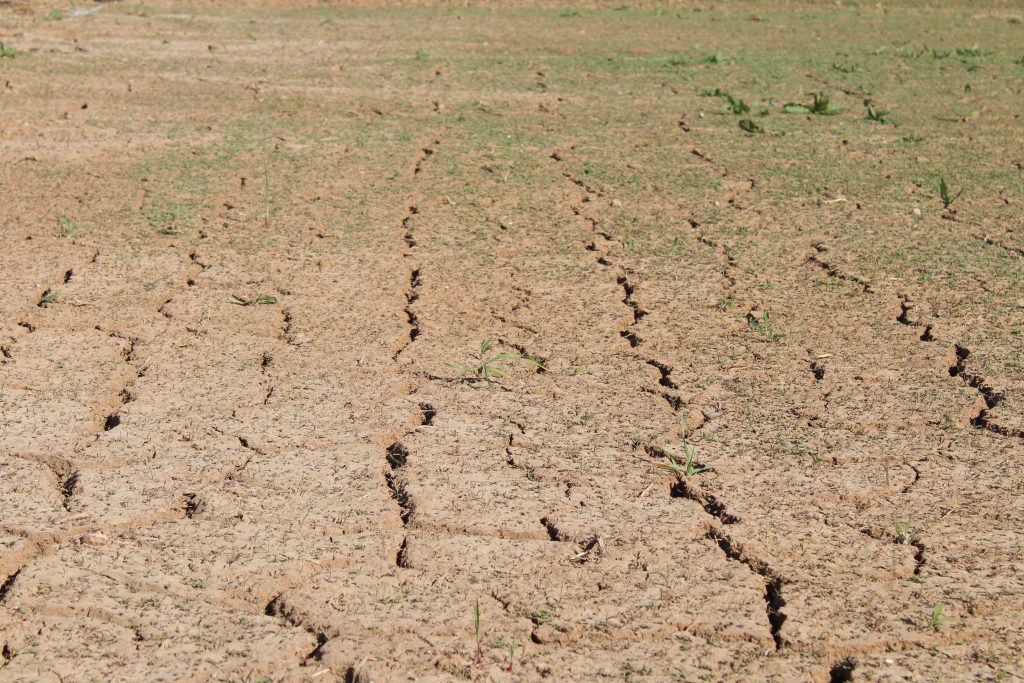
A brown lawn in August creates pressure to make it green. The grass may appear thin, dull, or lifeless. A fertilizer bag promises color and
Yellow leaves in August can create an expensive sense of urgency.
A grower sees firing along corn leaf edges or yellowing around soybean leaflets and recognizes a familiar pattern: potassium deficiency. The natural response is to consider applying potassium quickly.
Sometimes the field is truly deficient. In other cases, the soil contains adequate potassium but has become too dry for the nutrient to move efficiently toward the roots.
Those two situations can look similar aboveground and require very different decisions.
Iowa State University Extension notes that potassium deficiency symptoms commonly appear in corn and soybeans during dry weather because potassium movement and uptake depend strongly on soil moisture. Dry-weather symptoms do not automatically prove that soil potassium is low.
The practical task is to determine whether the crop has a soil-supply problem, a moisture-access problem, or both.
Roots do not pull dry fertilizer particles directly from the soil.
Nutrients must be present in soil solution before roots can absorb them. Potassium is held on exchange sites in the soil and released into solution as plants remove it. It then moves short distances toward roots, primarily by diffusion.
Diffusion slows sharply as soil dries.
The water films surrounding soil particles become thinner and less connected. Potassium may remain in the soil, but its movement toward active root surfaces becomes restricted. Root growth also slows, reducing the volume of soil the plant can explore.
That is why a field with an adequate soil test can show deficiency symptoms during drought.
The plant is experiencing a functional shortage even though the total soil supply is not necessarily low.
Potassium is mobile within the plant. When supply becomes inadequate, the plant moves potassium from older leaves toward younger tissue and reproductive organs.
In corn, symptoms generally begin on older, lower leaves. Yellowing starts near the tip and progresses down the outer margins. With continued stress, the yellow tissue turns brown and dies.
This pattern differs from classic nitrogen deficiency. Nitrogen deficiency also begins on older leaves, but yellowing usually forms a V shape that moves from the tip down the midrib.
Iowa State Extension describes potassium deficiency as marginal yellowing and necrosis on lower leaves, while nitrogen deficiency progresses down the center of the leaf. Dry-weather potassium symptoms can sometimes appear higher in the canopy than expected, which makes field context important.
Do not diagnose from a single damaged leaf. Examine several plants and determine where symptoms began.
Soybean potassium deficiency also begins as light green or yellow tissue along leaflet margins. The edges may later turn brown and brittle.
Early in the season, symptoms commonly appear on older leaves. During reproductive growth, deficiency can become visible in the middle or upper canopy, especially when crop demand is high and drought limits uptake.
Several other problems can resemble potassium shortage:
The field pattern helps narrow the cause.
Potassium deficiency may be worse on eroded knolls, coarse-textured areas, compacted zones, or high-yielding portions of the field that have removed more potassium over time. Disease may follow drainage patterns or occur in patches associated with previous crop rows. Spider mites often begin along field edges.
A recent, representative soil test is one of the strongest pieces of evidence.
A field testing very low or low in potassium has a greater chance that visible symptoms reflect a genuine shortage. A field consistently testing in an adequate range may be experiencing dry-soil-induced restriction, although sampling error and within-field variability still need consideration.
Do not rely only on the field average.
A composite sample can hide deficient zones. If eroded ridges, sandy areas, and productive low ground were mixed together, the result may not describe the problem area accurately.
Collect paired samples from affected and unaffected zones. Keep soil type, slope position, and management history as similar as possible. Note sampling depth and avoid fertilizer bands.
The comparison can reveal whether the affected area has lower potassium, lower organic matter, a different pH, higher magnesium, lower cation-exchange capacity, or another characteristic influencing availability.
Plant tissue analysis can confirm that affected plants contain less potassium than healthy plants, but it cannot always identify why.
A drought-stressed plant may test low because roots cannot absorb potassium from dry soil. A truly deficient soil can produce the same low tissue result.
Sampling only the damaged area therefore confirms plant stress but may not separate moisture effects from soil supply.
Paired tissue and soil samples are more useful.
Take the correct plant part for the crop stage and follow the laboratory’s instructions. Sample healthy and affected areas on the same day. Avoid dead tissue, dusty field edges, recently sprayed plants, and areas with multiple unrelated problems.
Record recent rainfall, irrigation, crop stage, hybrid or variety, and symptom location.
A plant with a limited root system has access to less soil and less potassium.
Compaction, early saturation, sidewall smearing, rootworm feeding, nematodes, disease, and low pH can all reduce root volume. The soil may test adequately, yet the plant cannot explore enough of it to meet peak demand.
Dig rather than pull the plant.
Corn roots should be examined for depth, branching, feeding injury, dark tissue, and abrupt changes at compacted layers. Soybean roots should be checked for lateral development, nodulation, rot, and cysts.
Compare the soil directly beneath a healthy plant with soil beneath a symptomatic plant.
A fertilizer application cannot rebuild roots that were lost earlier in the season.
Where dry soil is the main cause, rainfall or irrigation can restore potassium movement and allow new growth to function more normally.
Existing leaf damage will remain.
Dead margins do not turn green again. This can make a successful recovery look unsuccessful if the grower evaluates only the damaged leaves.
Watch newly developing tissue and overall plant function. In corn, observe whether symptoms continue progressing upward. In soybeans, monitor whether new leaves develop marginal yellowing and whether pods continue filling.
Iowa State Extension notes that corn growing on soil with adequate potassium may resume growth after rain even though existing leaf symptoms remain. Where soil potassium is genuinely deficient, symptoms are more likely to continue and yield may be affected by both the deficiency and dry weather.
Applying dry potassium fertilizer to droughted soil does not guarantee rapid uptake.
The material must dissolve, move into the root zone, and contact active roots. Without enough rain or irrigation, granules may remain near the surface while the crop continues extracting moisture from deeper layers.
A foliar application also has limitations. Corn and soybeans require potassium in quantities much larger than leaves can absorb efficiently through a typical foliar treatment. Foliar products may change tissue concentration temporarily, but they cannot replace a major soil potassium requirement.
Research-based extension guidance warns that soil or foliar potassium applications during drought generally do not overcome drought-induced uptake restrictions.
This is not an argument against correcting low soil potassium. It is an argument for correcting it at a time and placement that allows roots to use it.
An application may fit when several pieces of evidence point in the same direction:
In many August corn and soybean situations, the best agronomic response is to document the deficiency and correct soil fertility after harvest rather than attempting a rescue application.
That allows potassium to be applied according to soil test, crop rotation, expected removal, placement, and soil characteristics.
Some soils need more than potassium.
Low magnesium can also reduce crop performance and produce interveinal chlorosis. Sandy, acidic soils and fields with an imbalanced fertility history may be vulnerable to potassium, magnesium, and sulfur shortages.
Supply Solutions KMS 0-0-21.5 Potassium Magnesium Sulfate supplies potassium, magnesium, and sulfur without nitrogen. Supply Solutions recommends using soil testing to verify magnesium and other nutrient needs before application.
Its fit should be evaluated carefully.
Why it is used: It provides three nutrients that may be limiting in low-magnesium or nutrient-depleted soil.
When it should be applied: It should be applied when soil or tissue testing supports a potassium, magnesium, or sulfur need and moisture is available to move nutrients into the root zone. In an annual field-crop program, fall, preplant, or another locally recommended timing may be more effective than a drought-time August rescue.
What problem it solves: It addresses a confirmed nutrient shortage. It does not correct compacted soil, dead roots, drought, saturated ground, vascular disease, or spider mite injury.
The presence of potassium in the product is not enough reason to use it. The field must need the nutrients it contains.
More potassium is not always better.
Potassium, calcium, and magnesium interact on soil exchange sites and during plant uptake. Very high potassium applications can contribute to magnesium shortage in some situations. In forage systems, excessive potassium can also affect mineral balance in livestock diets.
That is another reason to use soil testing and crop-specific recommendations rather than treating every marginal scorch with the same product.
The goal is sufficiency, not maximum soil concentration.
An August deficiency pattern provides valuable information for fall.
Map the affected area. Review historical yield maps and soil tests. Estimate potassium removal from grain, silage, hay, or forage. Fields where residue is removed export much more potassium than fields where only grain leaves.
Check whether lime, manure, or fertilizer applications have been uniform. Review spreader calibration and product distribution. Examine whether headlands and field edges have received the same rate as the interior.
Consider soil sampling by management zone rather than using one composite sample for the entire field.
Where compaction or drainage contributed to the symptoms, include those corrections in the plan. Fertility alone will not compensate for a root zone that remains physically restricted.
The strongest potassium diagnosis combines the visual pattern, crop stage, soil moisture, rooting condition, soil-test history, tissue analysis, and field response after rain.
No single piece is enough in every situation.
A low soil test without symptoms still deserves correction according to local recommendations. Visible symptoms with an adequate test deserve investigation into moisture and roots. Low tissue potassium during drought should be interpreted with the weather and soil profile.
That reasoning protects both yield and input dollars.
Supply Solutions can help growers compare test results with the nutrient analysis of KMS and other potassium sources. Contact the company before making a late-season application where dry soil or root restriction may be preventing uptake. Proper potassium use begins with identifying whether the field lacks potassium or simply lacks access to it.
A brown lawn in August creates pressure to make it green. The grass may appear thin, dull, or lifeless. A fertilizer bag promises color and
An orchard can look finished after the bins leave the row. The crop is harvested, irrigation demand begins to decline, and the urgency of the
Give us a call or visit our store, and we’ll help you find the right solution for your business.