
Uncategorized
Why Clay Soils Need Structure Before More Fertilizer
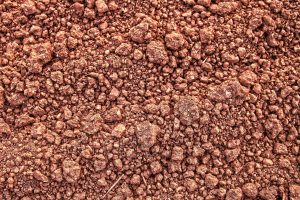
Clay soil can be some of the most productive soil a grower will ever work with. It can hold nutrients. It can hold moisture. It
May rain can reveal more about soil than almost anything else.
When a storm rolls through and water disappears into the ground within a reasonable time, the soil is usually open enough to breathe and move moisture. When water sits on the surface, runs across a lawn, pools in a garden bed, or leaves field areas too wet long after the rest of the ground is fit, the soil is telling you something.
It may be compacted. It may be sealed at the surface. It may have poor structure. It may be a heavy clay that was worked too wet. It may be carrying the effects of equipment traffic, foot traffic, livestock traffic, construction activity, or years of mowing the same paths. Whatever the cause, standing water in May is not just a drainage nuisance. It is a root-zone problem.
That matters because roots need both water and air. Too little water limits growth, but too much water filling the pore space can slow oxygen movement and weaken root function. Compacted soils have less pore space, poorer infiltration, slower drainage, and more resistance to root growth, which limits how well plants can take up both water and nutrients.
For farmers, that can mean uneven emergence, slow early growth, weak root systems, and poorer fertilizer response in wheel tracks or wet areas. For home gardeners, it can mean transplants that sit still, yellow leaves after rain, crusted beds, and vegetables that never seem to root deeply. For landscapers and lawn managers, it can mean thin turf, shallow roots, runoff, muddy areas, and plantings that struggle even when they are watered and fertilized.
May is the right month to deal with it because roots are actively trying to build the system that will carry the plant into summer.
A puddle does not automatically mean the soil is compacted. Sometimes the grade is wrong. Sometimes downspouts empty into a low area. Sometimes the site naturally has a high water table. Sometimes a heavy rain simply arrives faster than any soil can take it in.
But when water repeatedly sits in the same place, especially after moderate rain or irrigation, it is worth looking below the surface.
Healthy soil has pores of different sizes. Larger pores help water move downward and allow air to move through the soil. Smaller pores help hold moisture that roots can use later. When soil is compacted, those pore spaces are squeezed down. Water has fewer pathways to enter. Air exchange slows. Roots have to work harder to penetrate the soil. The result is a soil that may be wet on top but still a poor environment for plant growth.
This is one reason plants can look stressed after rainy weather. People often assume wet soil should make plants happy. In reality, saturated soil can leave roots short on oxygen. When roots slow down, nutrient uptake slows down too. A plant may turn yellow, stall, or wilt on sunny afternoons even though the soil is wet.
That is not a fertilizer-first problem. It is a root-zone problem.
Fertilizer works best when roots can reach it, water can move it into the active zone, and oxygen is available for root activity. When compaction restricts that system, adding more fertilizer may create only a short-term response or no response at all.
Spring is one of the easiest times to damage soil because moisture levels are often high. Wet soil does not carry weight well. Equipment, mowers, carts, livestock, loaders, tillers, and repeated foot traffic can press soil particles together when the soil is still plastic.
University extension guidance consistently warns that wet soils are especially vulnerable to compaction, and spring field operations can create lasting damage when traffic occurs before the soil is fit.
In crop fields, the damage often shows up in wheel tracks, end rows, gateways, low spots, and areas where equipment turned or paused. In lawns, it often shows up where people walk from the driveway to the door, where pets run, where mowers turn, or where water naturally drains. In gardens, it shows up in paths, around raised beds, and in beds that were tilled or walked on too soon after rain. In new landscapes, it often comes from construction traffic, grading, skid steers, delivery equipment, and foot traffic during installation.
The frustrating part is that compaction can be quiet at first.
The soil may still grow something. The lawn may still green up. The garden may still produce. The field may still emerge. But as the season gets hotter and roots need to move deeper, compacted zones start showing their limits.
A shallow-rooted lawn dries out faster. A tomato plant in tight soil struggles to keep up with water demand. A field crop in a compacted strip has less access to moisture and nutrients. A shrub planted into dense soil may sit in a wet hole after rain, then dry hard around the edges when weather turns hot.
May is when those problems are still easier to correct or at least reduce.
Before choosing a product or making an application, dig.
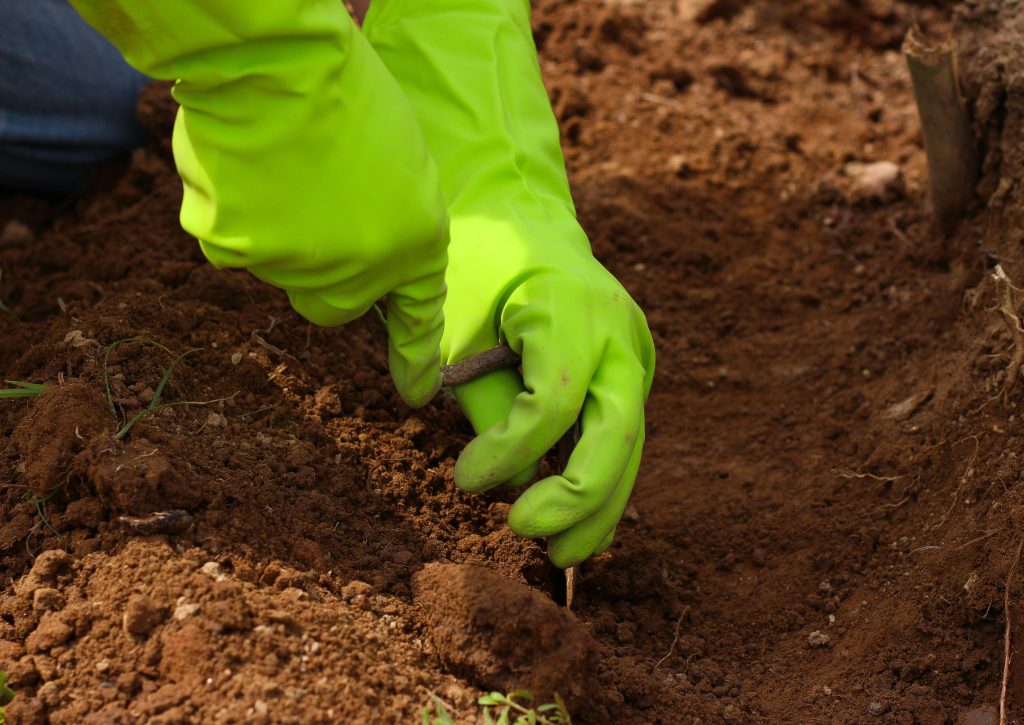
A shovel is still one of the best diagnostic tools in agriculture, gardening, and landscaping. Push into the soil where the water sits and compare it with a nearby area that drains better. Look for differences.
A compacted or poorly structured soil may show:
In a lawn, cut a small wedge and look at root depth. If roots are only in the top inch or two, the grass may be living on a very small soil volume. In a vegetable bed, gently check whether transplant roots are moving into surrounding soil or staying in the original root ball. In a field, look at roots in and out of wheel tracks. Strong differences tell you the problem is not just fertility.
The shovel test also helps prevent overreaction. Some soils are wet because of grade, drainage outlet issues, irrigation leaks, or surface runoff from hardscape areas. Fertility products and soil conditioners can support soil function, but they cannot replace proper grading, drainage correction, or physical repair where those are the main problems.
The goal is to match the solution to the cause.
A compacted soil does not just hold water poorly. It changes how the entire root system functions.
When roots cannot grow freely, they explore less soil volume. That means they contact fewer nutrient reserves. Nitrogen, potassium, calcium, magnesium, sulfur, phosphorus, and micronutrients may all be present somewhere in the soil, but roots have to reach them. Restricted roots create restricted uptake.
Compaction can also reduce air-filled pores. That matters because roots need oxygen. In saturated or tight soils, oxygen movement slows and carbon dioxide can build up around roots. This can reduce root health and make plants more vulnerable to disease and stress. Penn State Extension notes that compacted soils have fewer and smaller pores, fewer roots, reduced oxygen, and poorer water movement.
This is why a yellow plant in tight, wet soil can be misleading. It may look like a nutrient deficiency, and in some cases nutrients are part of the issue. But the deeper problem may be that roots cannot function well enough to take up what is already there.
In lawns, this often leads to a cycle. The lawn looks pale, so more fertilizer is applied. It greens for a short period, then thins again under heat or traffic. The real limitation was not only nitrogen. It was shallow rooting, poor infiltration, and weak soil structure.
In gardens, the same pattern shows up when transplants are fertilized repeatedly but still sit still. The plants may need warmth, oxygen, and root expansion before they can respond.
In field crops, compaction can make fertility look uneven. Nitrogen and potassium deficiency symptoms are common in compacted areas because restricted roots are less able to access nutrients and moisture.
Good soil care improves the odds that fertilizer does what it is supposed to do.
For lawns, turf areas, landscapes, flower beds, and soil media where water is not entering the surface well, Aqua Drive Liquid Lawn Aerator fits naturally into a May soil-care program.
Supply Solutions describes Aqua Drive as a liquid lawn aerator and soil conditioner designed to address soil compaction and standing water issues. The product uses non-ionic surfactant technology, is listed for lawns, turf areas, landscapes, flower beds, and soil media, and one quart treats 5,000 square feet.
That timing matters. In May, soils are usually warm enough for root activity, but many areas are still receiving spring moisture. If water is running off or sitting on top, improving penetration can help moisture move into the root zone instead of remaining at the surface.
For lawn care, Aqua Drive is especially relevant where turf is thin because water and fertilizer are not reaching the roots evenly. Better infiltration can support deeper rooting and more consistent nutrient movement. It also fits landscapes where beds have become sealed by rain impact, foot traffic, or installation work.
For home gardeners, it can make sense around compacted paths, flower beds, and areas where water beads or runs rather than soaking. For landscapers, it can be useful in maintenance programs where customer lawns or beds show surface sealing and uneven water movement.
Aqua Drive should not be oversold as a cure for every soil problem. If a property has poor grading, a buried drainage issue, a broken irrigation line, or a severely compacted subsoil layer, those problems may need physical correction. But where the issue is poor surface penetration and tight soil behavior, a liquid aeration and soil-conditioning product can be a practical May tool.
The important point is timing. Apply when the soil can accept water and when roots are actively growing. May is often a strong window because the goal is to improve the root environment before summer heat increases water demand.
Gypsum is another product that fits spring soil structure conversations, especially in clay-heavy soils, salt-affected soils, lawns, vegetable gardens, flower beds, trees, shrubs, and areas where calcium and sulfur are part of the soil plan.
Supply Solutions offers Gypsum Powder and Premium 97 Solution Grade Gypsum for these uses. The gypsum powder product is described as OMRI Listed, finely ground for easy dissolution, and suitable for indoor plants, outdoor plants, lawns, and vegetables.
Premium 97 Solution Grade Gypsum is described as calcium sulfate dihydrate and is positioned for root growth, lawns, and improved soil structure. Supply Solutions notes that it supplies calcium and sulfur, helps break up dense clay-heavy soils, supports water and air movement, and can be used in lawns, gardens, flower beds, trees, shrubs, and several liquid application systems.
The agronomic value of gypsum depends on the soil situation. Gypsum is not lime. It supplies calcium and sulfur, but it does not raise pH the way limestone does because it does not contain carbonate. University of Minnesota Extension explains that gypsum is calcium sulfate and does not change soil pH in the same way liming materials do.
That distinction matters. If the soil test says pH is too low, lime may be needed. If the issue is calcium and sulfur support, clay soil behavior, or sodium-related structure problems, gypsum may fit better. The right choice depends on the soil test, crop, site condition, and management goal.
In May, gypsum can be especially useful because moisture is often available to begin moving it into the soil, and plants are building roots that will benefit from improved soil conditions. For vegetable gardens and flower beds, it can be worked into the top several inches before planting or between crops where appropriate. For lawns, it can be applied and watered in. For trees and shrubs, it should be spread properly around the root zone and watered in rather than piled at the trunk.
Clay soil gets blamed for many problems, but clay is not automatically bad soil. Many productive farms, gardens, and landscapes are built on clay-based soils. Clay can hold nutrients and moisture well. The problem comes when clay loses structure.
A well-aggregated clay soil can take in water, hold nutrients, and support strong roots. A smeared, compacted, or sealed clay soil can behave like a brick when dry and a sponge when wet. That swing is hard on roots.
The biggest mistake with clay soil in May is working it too wet. Tilling, digging, grading, or planting into wet clay can smear the soil. Once it dries, those smeared layers can become dense and resistant to root growth. Gardeners often see this when a bed turns into hard clods after being tilled too early. Farmers see it in sidewall compaction or traffic pans. Landscapers see it when planting holes become glazed and water sits around the root ball.
With clay soils, the best first move is often restraint. Wait until the soil is fit. A simple hand test helps. Take a handful from the working depth and squeeze it. If it ribbons, smears, or stays in a sticky ball, it may still be too wet to work. If it crumbles with moderate pressure, it is closer to ready.
Gypsum can be part of improving clay-heavy soils when calcium sulfate fits the chemistry and structure needs. Organic matter, living roots, reduced unnecessary traffic, proper drainage, and careful timing also matter. No single product replaces good soil management.
The goal is not to fight clay. The goal is to help it form stable structure.
Lawns are one of the easiest places to see compaction because turf responds quickly to root-zone conditions.
A compacted lawn may show thin turf, puddling, moss in wet areas, weak color, shallow roots, hard soil, or runoff during irrigation. It may also require more frequent watering because roots are trapped near the surface. The lawn may green up after fertilizer, but it often struggles to hold density.
May is a good time to evaluate turf because growth is active and problems are visible before peak summer stress. Look at the areas people use most. Walkways from the driveway to the house, mower turnarounds, pet paths, play areas, and narrow side yards often compact first.
Aqua Drive Liquid Lawn Aerator fits these situations when the goal is to improve water penetration and reduce surface compaction behavior. Supply Solutions notes that Aqua Drive is compatible with fertilizers and is designed for different grass varieties, including Bermuda, which makes it practical for a broad range of U.S. lawn programs.
Gypsum can also fit lawn programs, especially where heavy clay or salt-related issues are present. The Premium 97 product page gives application guidance for established lawns and new lawns with heavy clay, along with the reminder that soil testing is recommended to determine actual nutrient requirements.
The best lawn program is not just product-based. It also includes mowing height, watering depth, traffic control, and soil testing. A lawn that is scalped every week and watered shallowly will struggle even with good products. A lawn that is managed for roots will usually handle summer better.
In vegetable gardens, standing water after rain can create several problems at once.
Seeds may rot before they emerge. Transplants may sit in wet soil and fail to root outward. Nitrogen may move or become unavailable under poor soil conditions. Roots may stay shallow. Soil crusting may make emergence harder for small-seeded crops. Diseases can become more likely around stressed roots.
This is why gardeners should avoid treating every weak plant with more fertilizer. If a tomato, pepper, squash, bean, or flower is yellow after several wet days, check the soil before feeding. If the root zone smells sour, feels sticky, or has little air space, fertilizer is not the first fix.
For new beds, Gypsum Powder or Premium 97 Solution Grade Gypsum can fit when the goal is to improve calcium and sulfur availability and support better structure in suitable soils. In clay-heavy garden beds, gypsum may be part of a broader program that includes compost, mulch, reduced foot traffic, and permanent paths.
For beds where surface water does not soak in well, Aqua Drive can fit around garden and flower bed soil care, especially where the surface has sealed and moisture is not moving evenly.
Gardeners should also protect the work they do. Permanent paths help keep feet out of growing beds. Mulch reduces raindrop impact and surface crusting. Compost supports aggregation over time. Raised beds can help where internal drainage is poor. These practices support what soil amendments and conditioners are trying to accomplish.
Good garden fertility starts with roots that can breathe.
Many landscape soils are not natural soils anymore. They are disturbed soils.
During construction, topsoil may be scraped away, mixed with subsoil, compacted by equipment, or covered with fill. Around new homes, the lawn and beds may be installed over soil that has been driven on repeatedly. Commercial landscapes often face even more compaction from grading, parking lot work, foot traffic, and installation equipment.
That creates a challenge for landscapers. Plants are expected to perform immediately, but the soil may not be ready to support them.
A shrub or tree planted into compacted soil can face two opposite problems at once. After rain, the planting hole may hold water like a bowl. Later, the surrounding dense soil may dry hard and prevent root expansion. The plant may survive the first few weeks on stored energy and nursery media, then decline when it needs to establish into the site.
May is a practical time to correct what can be corrected. Before planting, check drainage. Loosen compacted areas without creating a glazed hole. Avoid over-amending only the planting hole. Water the root ball and surrounding soil, not just the surface mulch.
Gypsum can fit landscape soil programs where clay-heavy conditions, calcium and sulfur needs, or structure concerns are present. Aqua Drive can fit maintenance programs where water is not penetrating beds or turf evenly.
For landscapers, these products are also useful educational tools. They help shift the customer conversation from “the plant needs more fertilizer” to “the soil needs to function better.” That is usually a more accurate conversation.
In field agriculture, May compaction often shows up in patterns.
Wheel tracks may stay wetter, emerge slower, or show paler growth. Headlands may be shorter. Low spots may yellow after rain. Areas worked a little too wet may show sidewall restriction or shallow roots. These are not random problems. They are soil-condition signals.
When traffic has to happen under less-than-ideal conditions, damage reduction matters. Controlled traffic, proper tire pressure, reduced axle loads where possible, and staying off fields until they are fit all help. Extension guidance emphasizes prevention because compaction can be difficult to correct after it occurs.
Fertility placement also matters in compacted areas. Restricted roots may not reach broadcast nutrients as effectively. Banding, starter placement, and timing decisions can become more important where soil conditions are difficult.
Gypsum may have a place in field soil programs where soil chemistry and structure support its use, especially in soils affected by sodium or where calcium and sulfur are needed. But field-scale gypsum decisions should be guided by soil testing and local agronomic advice. It is not something to apply blindly because a soil is simply “hard.”
The bigger lesson for farmers is to read May patterns early. Compaction that shows up now will often show up again under summer stress.
Aqua Drive and gypsum can both be useful, but they are not substitutes for basic drainage correction.
If a low area holds water because the grade directs runoff there, the grade may need to be changed. If a downspout dumps roof water into a bed, the downspout needs to be redirected. If a field has a tile issue, outlet issue, or natural wet spot, soil amendments alone will not correct the water table. If a lawn was installed over construction debris or compacted subsoil, deeper physical correction may be needed.
Soil conditioning works best when the problem is within the soil’s ability to accept, move, and hold water. Drainage correction is needed when water is being delivered to the wrong place or has no outlet.
A practical May evaluation asks:
The answers help decide whether the solution is soil conditioning, gypsum, aeration, drainage work, grading, organic matter, traffic control, or a combination.
The hardest part of May soil management is patience. Everything feels urgent, but wet soil does not respond well to being rushed.
If the soil is too wet to work, wait. If equipment will create ruts, wait if the operation can reasonably wait. If a garden bed smears under the shovel, wait. If a landscape bed is saturated, do not trap a new plant in that hole and expect fertilizer to fix it.
Products should be applied when the soil can receive them. Aqua Drive needs water movement to help it work into the soil. Gypsum should be watered in or timed with moisture so it can begin moving where it is needed. Fertilizer should be applied when roots can use it, not when roots are suffocating.
May rewards timing. One day of patience can prevent a season of clods, ruts, and shallow roots.
For homeowners, gardeners, landscapers, and farmers, the approach is similar even though the scale is different.
Start by observing after rain. Where does water sit? Where does it run? Where does it soak in normally? Compare strong areas with weak areas.
Dig into the soil. Look for roots, layers, smearing, moisture, color, and structure.
Decide whether the problem is surface sealing, deeper compaction, clay structure, poor drainage, or traffic damage.
Use Aqua Drive Liquid Lawn Aerator where water penetration and surface compaction are limiting lawns, turf, beds, or landscape soil.
Use Gypsum Powder or Premium 97 Solution Grade Gypsum where gypsum fits the soil condition, especially clay-heavy soils, calcium and sulfur support, or salt-related structure concerns.
Support the products with good management. Reduce unnecessary traffic. Avoid working wet soil. Maintain organic matter. Mulch gardens and beds. Mow lawns properly. Water deeply rather than constantly misting. Test soil where long-term fertility or pH questions exist.
The real goal is not just getting rid of a puddle. The goal is building soil that takes in water, holds enough moisture, drains excess water, lets oxygen move, and gives roots room to grow.
When soil can do that, fertilizer performs better. Lawns thicken. Transplants settle faster. Field crops root deeper. Landscapes hold up under summer stress. Gardens become easier to manage.
May is the month to listen to what standing water is telling you. If the soil is tight, sealed, or slow to drain, address the root zone before the heat of summer makes every weakness more expensive. Supply Solutions offers practical products like Aqua Drive Liquid Lawn Aerator, Gypsum Powder, and Premium 97 Solution Grade Gypsum for growers, gardeners, and landscapers working through these spring soil challenges. For the best results, match the product to the soil condition, apply it at the right time, and contact Supply Solutions when you need help choosing the right approach for your site.
Clay soil can be some of the most productive soil a grower will ever work with. It can hold nutrients. It can hold moisture. It
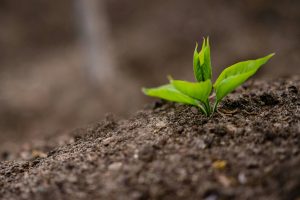
A greener May lawn does not start with the mower. The mower shows the result, but the real work is happening underneath the turf. Roots
Give us a call or visit our store, and we’ll help you find the right solution for your business.
© Supply Solutions LLC 2025