
Uncategorized
Fruit Trees and Berries: Feeding Through Early Fruit Sizing
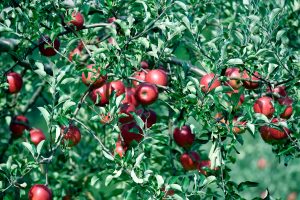
June is an important month for fruit trees and berries because the crop is no longer just setting. It is sizing. Apples, pears, peaches, plums,

Nitrogen (N) is a key nutrient for plant growth, but nitrogen loss through volatilization, leaching, and denitrification reduces fertilizer efficiency. To minimize nitrogen loss and improve nutrient uptake, protected urea (stabilized or coated urea) and calcium ammonium nitrate (CAN) are increasingly used as alternatives to regular urea.
This guide compares protected urea, regular urea, and calcium ammonium nitrate (CAN) in terms of nitrogen efficiency, environmental impact, and application suitability.
| Feature | Regular Urea (46-0-0) | Protected Urea | Calcium Ammonium Nitrate (27-0-0) |
|---|---|---|---|
| Nitrogen Content | 46% | 46% | 27% |
| Volatilization Risk | High if surface-applied | Low due to inhibitors/coating | Very Low |
| Leaching Risk | Moderate to High | Reduced due to slow release | Low |
| Release Rate | Fast (immediate availability) | Slow (gradual release) | Steady availability |
| Soil Acidification | Can lower pH over time | Reduced acidification | Neutral pH effect |
| Environmental Impact | Higher emissions & runoff risk | Lower emissions, more efficient use | Lower nitrate leaching risk |
| Best Use Cases | Cost-effective, high-N crops | Sandy soils, dry areas, slow-release needs | Soil health improvement, reduced pH impact |
✔ Reduces nitrogen volatilization – Inhibitors slow down the conversion of urea to ammonia gas.
✔ Less nitrogen loss through leaching – More nitrogen remains available for plant uptake.
✔ Longer nutrient availability – Suitable for crops needing extended nitrogen supply.
✔ Better for dryland farming – More efficient in hot and dry climates where urea volatilization is high.
✔ Lower volatilization risk – More nitrogen remains in the soil rather than being lost to the atmosphere.
✔ Provides calcium – Beneficial for soil structure and root development.
✔ Reduces soil acidification – Less pH drop compared to urea.
✔ Better for cool and wet climates – Less prone to runoff and nitrate leaching.
✅ You need the most cost-effective nitrogen source.
✅ You can incorporate it into the soil or apply before rainfall/irrigation.
✅ You have no concerns about volatilization or leaching losses.
✅ You are in a hot, dry, or sandy soil environment.
✅ You need slow-release nitrogen to reduce multiple applications.
✅ You want higher nitrogen efficiency with reduced emissions.
✅ You need stable nitrogen with lower environmental impact.
✅ Your soil is acidic and you want a neutral pH fertilizer.
✅ You are growing crops that benefit from calcium (e.g., potatoes, vegetables).
| Fertilizer Type | Volatilization Risk | Leaching Potential | Emissions Impact |
| Regular Urea | High | Moderate to High | High greenhouse gas emissions |
| Protected Urea | Low | Low | Lower emissions than urea |
| Calcium Ammonium Nitrate (CAN) | Very Low | Low | Least environmental impact |
Each nitrogen fertilizer has specific benefits and drawbacks, making the choice dependent on soil conditions, climate, crop type, and environmental concerns.
✔ Choose regular urea if cost is the main factor and volatilization risks are managed.
✔ Choose protected urea for reduced nitrogen loss and long-term availability.
✔ Choose CAN for soil health benefits, low volatilization, and better nitrate retention.
June is an important month for fruit trees and berries because the crop is no longer just setting. It is sizing. Apples, pears, peaches, plums,

Organic fertilizer behaves differently in June than it does in early spring. In March or April, soil may still be cold, wet, and slow. Roots
Give us a call or visit our store, and we’ll help you find the right solution for your business.
© Supply Solutions LLC 2026