A sports field has a hard life. Cleats, sliding, turning, marching bands, goals, and practices can all happen on the same patch of turf. By the time winter is over in the Pacific Northwest, many fields look tired: thin in the goal mouths, muddy in the middle, and uneven in the high-use zones.
Good spring nutrition is one of the most powerful tools you have to bring that turf back and keep it safe for play.
This guide will help you:
- Understand what heavy-use turf really needs in spring
- See why a product like a 25-7-12 turf fertilizer fits sports fields so well
- Build a simple feeding schedule around practices and games
- Combine fertilizer with soil structure and safety practices for better results
Whether you maintain a school field, a community park, or a high-use private pitch, you can use these ideas.
What makes sports turf different from a regular lawn
Sports turf is still grass, but its job is more demanding.
Compared to a home lawn, sports fields:
- Experience much higher traffic and concentrated wear
- Need consistent footing, not just good color
- Must recover quickly between events
- Are often expected to look good under tight budgets and schedules
That means your fertility program has to:
- Support dense, resilient grass plants
- Promote strong root systems for anchorage
- Provide steady nutrition that matches growth and wear
- Avoid pushing soft, lush growth that tears easily
The right fertilizer analysis and timing help you meet those goals.
Why a 25-7-12 analysis fits sports turf
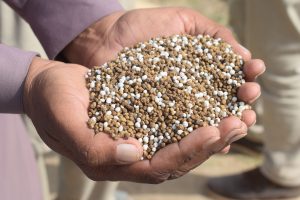
A 25-7-12 turf fertilizer typically contains:
- 25 percent nitrogen (N)
- 7 percent phosphate (P₂O₅)
- 12 percent potash (K₂O)
This ratio matches what sports turf usually needs most:
- A solid nitrogen supply to drive recovery and density
- Enough phosphorus to support rooting, especially where soil tests show a need
- Strong potassium levels to support wear tolerance, disease resistance, and stress handling
Many professional turf programs emphasize nitrogen and potassium for performance, while using soil tests to decide how much phosphorus to supply. A 25-7-12 fits neatly into that philosophy when your soil test shows P is not already excessive.
If your field soil already has high phosphorus, you may choose a nitrogen-and-potassium focused product instead. Soil testing is always the starting point.
Step 1: Assess your sports field before fertilizing
Before you bring out the spreader, take time to:
- Walk the field in a slow zig-zag pattern
- Look down and across for thin areas, compaction, and uneven color
- Note specific high-wear zones: goal mouths, center circle, yard lines, sidelines, and bench areas
- Look for drainage issues: standing water, soft spots, and areas that stay muddy longer than others
You are trying to answer:
- Is the whole field underfed, or are specific zones weaker
- Do we have structural problems (compaction, drainage) in addition to nutrition needs
- How soon will practices and games begin in earnest
Make notes and, if possible, take photos. These will help you explain needs to administrators and plan targeted interventions.
Step 2: Soil test for data, not guesses
Even with years of experience, soil tests make your decisions more precise.
Take samples from:
- Several representative spots in the main playing area
- At least one high-wear area (for example, a goal mouth)
- Any sections with persistent problems
Combine cores from each area into a composite sample for that zone. Use the same lab and form for consistency.
When your results come back, pay special attention to:
- pH (is it within an acceptable range for your turf species)
- Phosphorus and potassium levels (low, medium, or high relative to targets)
- Organic matter and any notes about compaction or structure-related issues (inferred from CEC and texture)
If P is low to medium and K is moderate or low, a 25-7-12 analysis makes good sense for spring. If P is high, you may still use a 25-7-12 strategically but may want to lean more on nitrogen and potassium-focused products in later applications.
When in doubt, share soil test results with Supply Solutions so we can help translate the numbers into a realistic fertility plan.
Step 3: Time your spring application around play
Sports turf does not live in a vacuum. Your schedule is dictated by:
- Practice start dates
- Game schedules
- Weather windows and field availability
A typical early spring pattern might look like:
- Late winter / very early spring
- Field is too soft for heavy equipment, but you can walk and visually inspect.
- Soil testing is done.
- Plans for aeration and topdressing are set.
- Early spring
- Once soil is firm enough, perform core aeration in high-compaction zones (or the whole field, if possible).
- Apply the first spring feeding of 25-7-12 at a rate suited to your grass type, soil test, and label.
- Allow a brief recovery period before intense use, if your schedule allows.
- Mid-spring
- Evaluate turf response.
- If needed, schedule a second, lighter application ahead of the heaviest part of the playing season.
Try to avoid:
- Running heavy spreaders or tractors on saturated soil, which creates ruts and compaction.
- Applying high nitrogen just before extreme weather variation (heavy storms followed by heat), if you can avoid it.
If your schedule is tight, communicate clearly with coaches and administrators about short rest periods needed after certain maintenance passes.
Step 4: Putting 25-7-12 to work
When applying a 25-7-12 sports turf fertilizer:
- Calibrate your spreader according to the product label.
- Aim for a rate that delivers the recommended pounds of nitrogen per 1,000 square feet or per acre, based on your turf type and intensity of use.
- Make two passes at half-rate in perpendicular directions if you want more even coverage.
- Keep fertilizer off hard surfaces like tracks, sidewalks, and neighboring areas. Sweep or blow it back onto the turf if it strays.
Where possible:
- Water in the fertilizer lightly if rain is not anticipated within 24 hours.
- Avoid applications just before a major storm that could wash nutrients off the field.
If your field is irrigated, coordinate fertilizer application with an irrigation cycle that will move nutrients into the root zone without causing puddling.
Step 5: Combine nutrition with aeration and topdressing
Fertilizer does its best work when roots can explore the soil and find air, water, and nutrients.
On sports fields, that means pairing spring feeding with:
- Core aeration
- Relieves compaction in the root zone.
- Provides channels for air and water.
- Helps fertilizer granules and water penetrate more evenly.
- Topdressing (where budgets and logistics allow)
- A thin layer of sand or sand/compost blend after aeration can help smooth the surface and improve long-term root zone conditions.
- Helps fill aeration holes and improve seed-to-soil contact if you are overseeding.
- Overseeding in worn areas
- Use appropriate sports turf grass blends that establish quickly.
- Fertility and seed together help thin zones recover more rapidly.
If your budget does not allow full-field aeration and topdressing, focus on the worst wear zones. Even localized aeration and feeding can improve safety and playability.
Step 6: Smart nitrogen rates and frequency
Too much nitrogen can create:
- Lush, soft tissue that tears easily under cleats
- Increased disease susceptibility
- Excessive mowing and clippings
Too little nitrogen can leave turf:
- Thin and open to weed invasion
- Slow to recover from traffic
- Pale and unattractive
Your soil test, turf species, and use intensity will guide total nitrogen per year. As a rough concept (always verify with local recommendations):
- Lightly used fields may receive lower total N across the season.
- Heavily used high school or community fields may require moderate to higher N, delivered in several applications.
Each time you apply 25-7-12, know how much nitrogen you are adding, and track cumulative nitrogen for the season. Supply Solutions can help you set a seasonal target and divide it into appropriate spring and summer feedings.
Step 7: Do not forget potassium’s role in wear tolerance
The “12” in 25-7-12 represents potash, which supplies potassium.
Adequate potassium:
- Improves turf’s ability to handle traffic and recover from injury
- Supports disease resistance and stress tolerance (cold, heat, and drought)
- Helps regulate internal water balance in the grass plant
If your soil test shows low or moderate potassium, a product like 25-7-12 helps you address that while also feeding nitrogen. Where K is significantly deficient, you might also:
- Use a dedicated potash source like sulfate of potash in a separate application, at test-based rates
- Focus especially on high-wear zones that show stress first
Think of potassium as the “toughness” nutrient for sports turf.
Step 8: Safety and player experience
Fertility is not just about aesthetics. It is about safety.
Dense, well-rooted turf:
- Provides stable footing
- Cushions falls
- Reduces bare, slick, or muddy spots that can contribute to injuries
When planning spring fertility:
- Avoid scheduling fertilizer applications immediately before big games where heavy granular product might be present on the surface.
- Water in, if needed, and allow a mowing pass before high-profile events.
- Communicate with coaches about any short-term access limitations, such as “Please stay off the field for 24 hours after aeration and fertilization.”
A field that is treated as an athletic asset, not just a green space, performs better for everyone.
A simple spring checklist for sports turf managers
To bring it all together, here is a basic sequence you can adapt:
- Soil test main field and key zones
- Review results with Supply Solutions and select appropriate 25-7-12 rate (and any other needed products)
- Schedule spring core aeration, especially for high-wear areas
- Apply 25-7-12 when soil is firm enough and grass is actively growing
- Water in as needed and plan a mow before heavy use
- Monitor turf response and plan a second, lighter feeding if required before peak season
- Keep records of dates, products, and rates for future planning
If you would like help translating your field size, soil tests, and schedule into a specific 25-7-12-based program, contact Supply Solutions. We can help you match products to your budget and the level of use your fields endure.
Supply Solutions, LLC – Fertilizer, Agricultural & Safety Solutions
Phone: 503-451-1622
Email: sales@mysolutionssupply.com
Hours: Monday to Friday, 7:00 a.m. to 5:00 p.m.
Web: www.mysolutionssupply.com
We provide 25-7-12 sports turf fertilizers, balanced blends, nitrogen and potassium products, gypsum, and practical support to help Pacific Northwest schools, parks, and facilities keep their fields safe, resilient, and playable from early spring through fall.