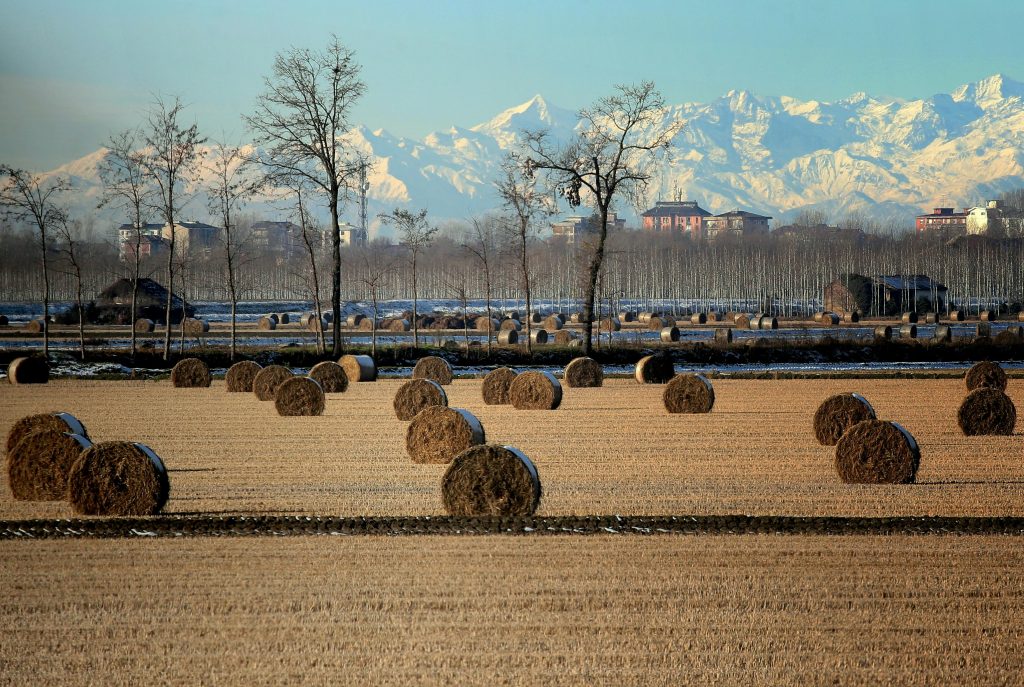
Hay fields have a way of telling the truth about fertility. Pastures can sometimes coast on recycled nutrients because grazing returns manure and urine to the field. Hay does not. When you cut and remove forage, you remove nutrients with it. Over time, that nutrient removal becomes visible as thinner stands, slower spring recovery, weaker regrowth between cuttings, and forage that simply does not “have the horsepower” it used to.
In the Pacific Northwest, hay fertility is also shaped by weather. Wet winters can move nutrients. Cool springs can delay uptake. That combination makes late winter and early spring fertilizer decisions feel risky. The reality is that hay fields usually need a plan, but the plan has to respect PNW timing.
If you only remember one idea from this post, make it this: nitrogen grows hay, but potassium and sulfur help protect the stand and make nitrogen pay back more reliably. When potassium and sulfur are low, hay fields often feel like they are working harder for less.
Why hay fields deplete potassium faster than most people expect
Potassium is one of the most heavily removed nutrients in forage systems. When you remove a large amount of plant material, you remove a large amount of potassium right along with it. That is why hay fields can slip into potassium deficiency even when they have been “fed” regularly with general-purpose blends.
When potassium slips, the field often shows it through stand persistence and regrowth. You may notice slower recovery after cutting, more stress during dry spells or cold snaps, and a stand that becomes less uniform over time. Potassium is not a cosmetic nutrient. It is a durability nutrient.
In the PNW, potassium also matters because winter and spring conditions often add stress. Wind, saturated soils, and temperature swings ask a lot of plants. Potassium helps plants manage water regulation and overall stress tolerance.
Potassium fertilizer choices for forage systems
The best potassium product depends on your soil test goals and whether you also want sulfur or magnesium in the same application.
Muriate of potash: the correction tool for low potassium soils
When soil tests show potassium is low and correction is the priority, a concentrated potassium source is often the most direct. Supply Solutions Muriate of Potash 0-0-60 Fertilizer is designed for that purpose: delivering a strong potassium dose per pound of product.
This is the potash choice that makes the most sense when your hay field needs real potassium rebuilding, especially after multiple seasons of forage removal.
Like any correction tool, it is most valuable when you are correcting a confirmed deficit. If you are unsure where potassium stands, soil testing is the simplest way to avoid over- or under-applying.
Sulfate of potash: potassium plus sulfur for a more complete forage foundation
If sulfur is part of the limitation, or if you want potassium support without skipping sulfur, Supply Solutions Sulfate of Potash 0-0-50 can be a strong fit.
This is a practical choice in PNW hay systems because sulfur often becomes limiting after wet winters, and sulfur supports protein building and nitrogen efficiency. Pairing potassium and sulfur can reduce the “why did my nitrogen not work?” conversations that show up in early spring.
Potassium magnesium sulfate: when magnesium also needs attention
Some forage fields are not only short on potassium and sulfur. They are also short on magnesium, or they have developed nutrient imbalances over time that make magnesium harder to maintain.
In those situations, KMS 0-0-21.5 (Potassium Magnesium Sulfate) Fertilizer can simplify the plan by delivering potassium and magnesium while also contributing sulfur.
KMS is not automatically needed in every hay field. It is most useful when magnesium is part of the soil test story or when field history suggests magnesium has been a recurring weak link.
Sulfur: the nitrogen multiplier that is easy to overlook
Sulfur is one of the most common limiting nutrients in the PNW after a wet winter. Sulfate sulfur can move in soil water, especially in lighter soils, and cool conditions can slow natural release from organic matter.
In hay systems, sulfur matters because it supports protein formation and helps plants use nitrogen efficiently. If sulfur is short, nitrogen response can be muted and forage quality can suffer.
Ammonium sulfate: an efficient nitrogen plus sulfur pairing
When you need nitrogen and sulfur together, Supply Solutions Ammonium Sulfate 21-0-0 +24% Sulfur is one of the clearest pairings available. It supplies nitrogen and a strong sulfur component, which can be a better fit than straight nitrogen when sulfur is limiting.
This is especially relevant in early spring hay plans, where the goal is not only tonnage but also a strong, efficient response that sets up the first cutting.
Nitrogen: the growth driver, best used with a plan
Nitrogen is the fuel for forage production. In late winter and early spring, nitrogen timing matters because cold soils slow uptake and heavy rain can move nitrogen before plants can use it.
Urea: concentrated nitrogen when conditions support it
If you are looking for a high-nitrogen fertilizer, Supply Solutions Urea 46-0-0 Nitrogen Fertilizer is a concentrated source that can fit forage systems when applied in a window that supports good utilization.
In the PNW, the practical approach is to apply when the field is not saturated and the forecast does not suggest immediate heavy rain on already wet ground. Hay fields reward well-timed nitrogen far more than they reward aggressive early nitrogen.
Phosphorus: valuable when it is low, expensive when it is not
Phosphorus supports root function and stand persistence. In many forage systems, phosphorus becomes important when soil tests show it is below target or when legumes are part of the mix.
At the same time, phosphorus is easy to overapply when people rely on the same “complete” blend every season without checking the soil.
If your soil test supports a balanced fertilizer that supplies nitrogen, phosphorus, and potassium together, a balanced blend can serve as a foundation.
For hay fields, balanced blends tend to make the most sense when soil tests show phosphorus and potassium both need support, and when you want a simple foundation application before fine-tuning with nitrogen and potash choices.
A PNW-friendly way to think about hay fertility timing
Hay fertility in the PNW usually performs better when you think in nutrient roles and weather windows rather than rigid calendar dates.
Early season focus: build the foundation without overexposing nutrients
In late winter, the foundation often means potassium and sulfur, and a conservative nitrogen approach that is positioned for spring uptake. If you go heavy on nitrogen while the field is still cold and wet, you risk feeding the rain. If you ignore potassium and sulfur, you risk a weak response and weaker stand recovery.
As growth becomes consistent: nitrogen becomes more reliable
When soils warm and the field is actively growing, nitrogen efficiency improves. That is when nitrogen dollars tend to pay back more consistently. If potassium and sulfur are already in place, the nitrogen response often looks smoother and more uniform.
Between cuttings: potassium protects regrowth
This is where hay fields show their personality. Fields that have been kept up on potassium often regrow more predictably. Fields that have drifted low can look tired and uneven even when nitrogen is applied.
Fertility goals differ across forage systems, and that is normal
Not every hay field is managed for the same outcome. Some are managed for maximum tonnage. Some are managed for horse hay consistency. Some are managed for mixed grass-legume forage. Fertility still matters in all of them, but the emphasis shifts.
The common thread is that potassium and sulfur are often undervalued until the field shows you why they matter. Nitrogen alone rarely maintains stand strength long-term in hay systems that remove large amounts of forage year after year.
A practical hay fertility mindset that stays grounded
If you are building a hay fertility plan for PNW conditions, a reliable mindset is:
- Confirm potassium status and correct it when it is low.
- Treat sulfur as a likely limiter after wet winters, especially if nitrogen response has been inconsistent.
- Use nitrogen in a weather-aware way so it feeds the crop rather than the storm cycle.
- Use balanced blends when soil tests support them, not as an automatic default.
Supply Solutions can help you match fertilizer choices to your forage goals, whether you are correcting potassium with Supply Solutions Muriate of Potash 0-0-60, pairing potassium with sulfur using Supply Solutions Sulfate of Potash 0-0-50 or KMS 0-0-21.5 (Potassium Magnesium Sulfate), and building an early nitrogen plan with Supply Solutions Urea 46-0-0 or Supply Solutions Ammonium Sulfate 21-0-0 +24% Sulfur. Always read and follow the product label, and if you are unsure which product fits your field conditions or application timing, contact Supply Solutions for guidance.