

Uncategorized
Summer Solstice Garden Check: What To Correct Before July
The summer solstice is a useful checkpoint in the garden because it arrives when the season starts to change tone. Spring establishment is mostly behind
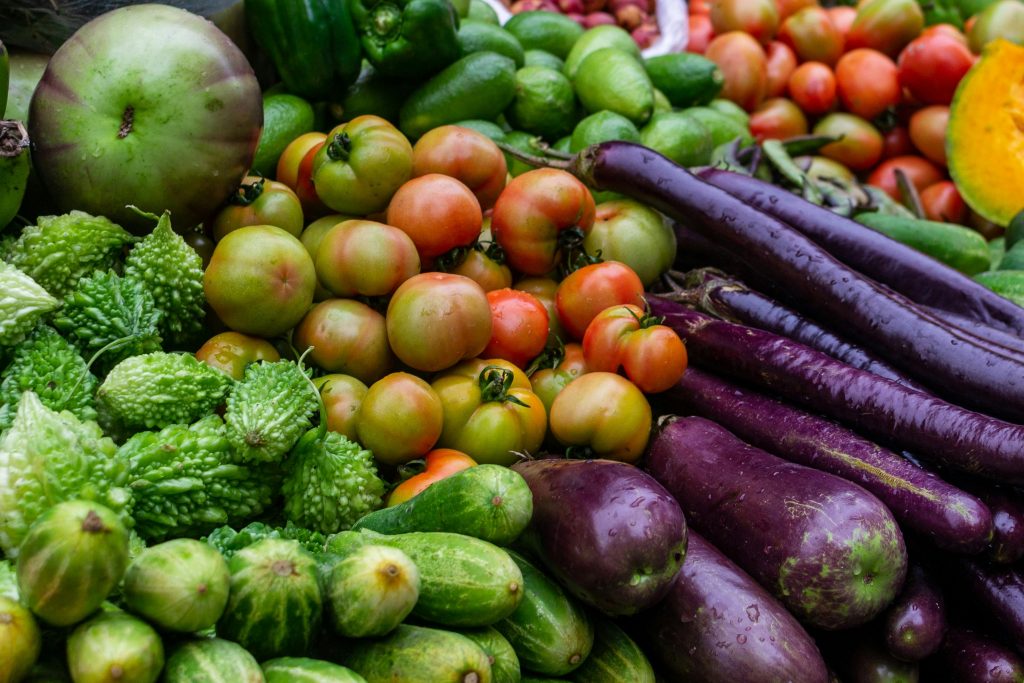
Early-season vegetable production doesn’t leave much room for correction.
Once crops are in the ground, the window to influence uniformity, growth rate, and eventual yield starts narrowing quickly. April planting, in particular, places pressure on getting fertility right from the beginning, because conditions are still shifting while crops are already expected to perform.
What separates average fields from high-yielding ones early on is rarely just how much fertilizer is applied.
It’s how well that fertilizer is aligned with how vegetables grow in the first few weeks.
Vegetable crops move quickly once they establish.
Unlike some row crops, they don’t spend long in a slow growth phase. Once temperatures stabilize, growth accelerates, and nutrient demand increases rapidly. That means early fertility decisions have to support both immediate establishment and what comes next.
Trying to meet all of those needs with a single application usually creates imbalance.
High-yield systems tend to approach this differently.
They build fertility in layers, aligning each input with a specific stage of development.
At planting, the focus is not on maximum growth. It’s on uniform establishment.
This is where balanced fertilizers provide the foundation.
Using a product like Supply Solutions Premium 14-14-14 Fertilizer ensures that nitrogen, phosphorus, and potassium are available together as roots begin to develop.
In early-season vegetable production, that balance supports several critical functions at once:
Uniformity at this stage is what allows the crop to move forward evenly.
Without it, variability begins early and becomes harder to correct later.
But even with a balanced fertilizer in place, early-season soils can limit how effectively those nutrients are used.
This is where supporting the soil environment becomes part of a high-yield strategy.
In vegetable systems, especially those using raised beds or intensive planting, soil activity can vary depending on previous management. Organic matter levels, moisture conditions, and temperature all influence how quickly nutrients become available.
Products like Supply Solutions Pacific Bounty Fish Fertilizer are often used to support this transition.
Fish-based fertilizers contribute:
In April conditions, this helps create a more active root zone, improving how nutrients are accessed during early growth.
This becomes especially important in high-yield systems where small delays in early development can affect overall performance.
Improving nutrient availability is the next layer.
Even when fertilizers are applied correctly, not all nutrients are immediately accessible. Soil conditions influence how nutrients bind and release, especially in early spring when temperatures are still fluctuating.
Inputs like Supply Solutions Humic Acid Soil Conditioner are used to improve how nutrients interact with the soil.
They help:
In high-yield vegetable production, improving availability often has a greater impact than increasing application rates.
It ensures that nutrients are not just present, but usable.
As the crop moves past establishment, nutrient demand begins to shift.
Vegetables enter a phase where growth accelerates, and nitrogen becomes more important.
This is where timing becomes critical.
Applying nitrogen too early, particularly from sources like Supply Solutions Urea 46-0-0 Fertilizer, can reduce efficiency:
Waiting until the crop begins active vegetative growth allows nitrogen to be used more effectively.
At that stage:
This staged approach is a defining characteristic of high-yield systems.
Rather than applying all nutrients upfront, inputs are timed to match how the crop develops.
Field conditions also play a role in how these strategies perform.
Managing these variables requires flexibility.
Balanced fertilizers provide a consistent base, while supporting inputs help adjust how nutrients are accessed across different conditions.
This reduces variability within the field or bed, which is critical for achieving uniform yields.
Another factor in high-yield vegetable production is consistency over time.
Early-season decisions influence how crops respond to later inputs.
Fields that establish evenly tend to respond more predictably to additional fertilizer applications. Fields that start uneven often require corrective inputs that are less efficient and more difficult to manage.
Building fertility in layers helps maintain that consistency.
This approach aligns with how both soil and plants behave in early-season conditions.
It also reduces the risk of over-applying nutrients at a stage where they cannot be fully used.
April is where these strategies begin to take shape.
Conditions are not yet stable, but they are predictable enough to build a structured approach.
Using Supply Solutions Premium 14-14-14 Fertilizer at planting provides a balanced foundation for early growth, while supporting soil activity with Supply Solutions Pacific Bounty Fish Fertilizer and improving nutrient availability with Supply Solutions Humic Acid Soil Conditioner helps ensure that nutrients are used efficiently. Introducing nitrogen later with Supply Solutions Urea 46-0-0 Fertilizer aligns nutrient supply with crop demand as growth accelerates.
Supply Solutions works with growers to develop fertilizer strategies that reflect the demands of high-yield vegetable production, focusing on timing, balance, and soil conditions rather than single-application approaches.
As you move through early-season planting, focus on building a system where each fertilizer application supports the next stage of growth. Review product labels carefully, and if you need guidance on structuring a high-yield fertilizer program for your crops, reaching out to Supply Solutions can help ensure your approach supports both performance and consistency throughout the season.
The summer solstice is a useful checkpoint in the garden because it arrives when the season starts to change tone. Spring establishment is mostly behind
June is when many fruiting crops begin asking a different question. In spring, the question was often whether the plant could get established. Could the
Give us a call or visit our store, and we’ll help you find the right solution for your business.
© Supply Solutions LLC 2026