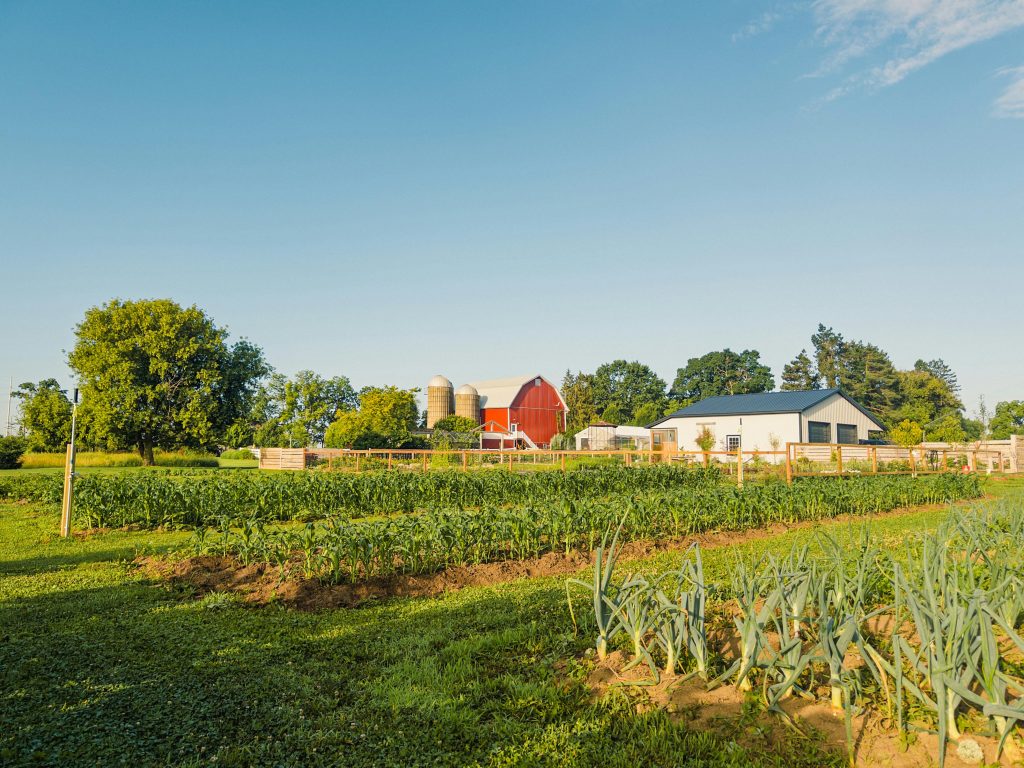
Small farms don’t usually struggle because of lack of effort.
They struggle because every decision carries more weight.
There’s less room for wasted inputs, less buffer for mistakes, and fewer opportunities to correct problems once the season is moving. In April, when planting begins and conditions are still shifting, fertilizer decisions tend to set the direction for everything that follows.
What makes this challenging is that fertilizer plans often become more complicated than they need to be.
Multiple products, overlapping applications, and unclear timing can create confusion instead of improving results. For small farms, a simpler approach that aligns with how crops actually grow tends to be more effective.
The goal is not to use more inputs.
It’s to use the right inputs at the right time, in a way that supports consistent growth without unnecessary cost or complexity.
That starts with understanding what the crop needs first.
Early in the season, crops are not demanding maximum nutrition. They are establishing.
- Roots are developing
- Soil conditions are still stabilizing
- Nutrient uptake is limited by temperature and moisture
At this stage, fertilizer should support that process without overwhelming it.
A balanced fertilizer becomes the starting point for most simple programs.
Using a product like Supply Solutions Premium 14-14-14 Fertilizer at planting provides nitrogen, phosphorus, and potassium together in a form that supports early development.
This helps:
- Ensure phosphorus is available for root growth in cooler soils
- Provide enough nitrogen for early leaf development
- Support plant stability through potassium as moisture conditions shift
For small farms, this kind of balanced approach reduces the need to manage multiple products at once.
It creates a foundation that can carry the crop through early stages without requiring constant adjustment.
But even with a balanced fertilizer in place, early-season conditions can limit how well nutrients are used.
Soil biology, structure, and moisture all influence nutrient availability.
This is where adding a supporting input can improve efficiency without adding complexity.
Products like Supply Solutions Pacific Bounty Fish Fertilizer are often used in small-scale systems because they are easy to apply and support early soil activity.
They contribute:
- Organic compounds that stimulate microbial processes
- Trace nutrients that support early plant development
- A gradual nutrient release that complements base fertilizers
In April, when soils are still becoming active, this helps create a more responsive environment without requiring additional complexity in the fertilizer plan.
It’s not about replacing the base fertilizer.
It’s about helping the soil make better use of it.
Another simple improvement comes from increasing nutrient availability.
Even when fertilizer is applied, not all nutrients are immediately accessible to the plant. Soil conditions influence how nutrients bind and release, especially in early spring.
Inputs like Supply Solutions Humic Acid Soil Conditioner can be used to improve how nutrients are accessed.
They help:
- Release nutrients already present in the soil
- Improve soil structure for better root movement
- Support moisture retention, which influences nutrient uptake
For small farms, this means getting more value out of existing inputs rather than increasing fertilizer rates.
This keeps the program simple while improving results.
As the crop begins to grow, nutrient demand changes.
This is where many fertilizer programs become inefficient.
Applying all nutrients at once during planting often leads to early losses or underuse, especially for nitrogen.
A simple plan separates early needs from later needs.
At planting:
- Balanced fertilizer supports establishment
Later in the season:
- Nitrogen supports active growth
Using a product like Supply Solutions Urea 46-0-0 Fertilizer after the crop begins active growth allows nitrogen to be used more efficiently.
Applying it too early often leads to:
- Losses from rainfall
- Limited uptake due to small root systems
- Imbalanced early growth
Waiting until the crop is ready ensures that nitrogen contributes directly to development.
This staged approach keeps the fertilizer plan simple while improving efficiency.
Instead of managing multiple applications at once, inputs are applied when they are most useful.
Weather also influences how simple plans perform.
April conditions are variable, but a simple plan can still adapt.
- Apply fertilizer ahead of moderate rainfall to improve incorporation
- Avoid application before heavy rainfall to reduce loss
- Monitor soil moisture to understand when nutrients will become available
These adjustments do not require additional products, just attention to timing.
Field variability is another consideration.
Small farms often include areas with different soil types, drainage patterns, or exposure. A simple fertilizer plan helps manage that variability by providing a consistent baseline.
Balanced fertilizers create uniform starting conditions, while supporting inputs improve how nutrients are accessed across different areas.
This reduces the need for field-specific adjustments, which can complicate management.
Over time, simple fertilizer programs tend to produce more consistent results.
Crops establish more evenly, respond more predictably to later inputs, and require fewer corrections.
Complex programs can work, but they often require more precision and management than small farms can realistically maintain during busy periods.
Simplicity, when aligned with crop needs, tends to be more reliable.
Using Supply Solutions Premium 14-14-14 Fertilizer at planting provides a balanced foundation, while supporting soil activity with Supply Solutions Pacific Bounty Fish Fertilizer and improving nutrient availability with Supply Solutions Humic Acid Soil Conditioner helps ensure that nutrients are used effectively. Introducing nitrogen later with Supply Solutions Urea 46-0-0 Fertilizer keeps the program aligned with crop demand without adding unnecessary complexity.
Supply Solutions works with growers to simplify fertilizer programs while maintaining effectiveness, helping ensure that each input contributes to consistent crop performance.
As you plan your fertilizer program this April, focus on building a system that is easy to manage and aligned with how your crops actually grow. Review product labels carefully, and if you need guidance on creating a simple, effective fertilizer plan for your farm, reaching out to Supply Solutions can help ensure your approach supports both efficiency and long-term success.