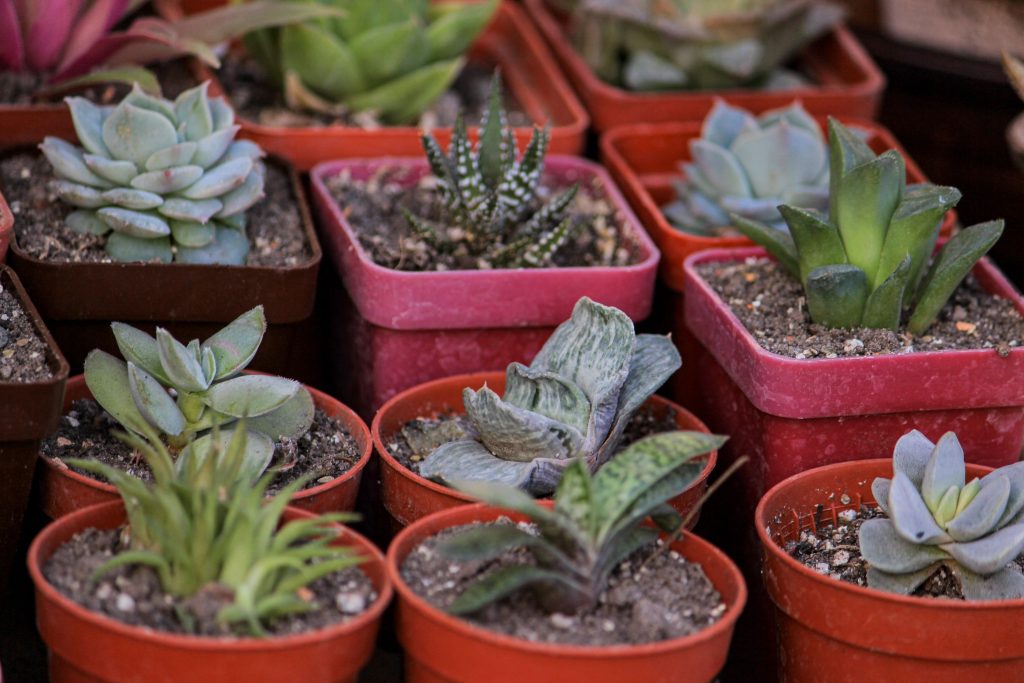
Container plants can look perfect when they first come home.
The leaves are clean. The flowers are bright. The tomato transplant is upright. The hanging basket is full. The herbs smell fresh. The patio planter looks finished. Everything seems ready for the season.
Then May weather starts working on the container.
Warm afternoons dry the pot faster than expected. Wind pulls moisture out of the leaves. A black nursery pot heats up on a deck. A hanging basket dries from all sides. A tomato in a five-gallon bucket doubles in size and starts using more water every day. Rain misses the planter under the porch roof. A container near brick or concrete sits in a warmer microclimate than the rest of the yard.
At the same time, every watering moves some nutrients through the pot.
That is why container plants run out of fertility faster than many gardeners expect. They are not growing in a field, garden bed, or landscape soil with a wide root zone. They are growing in a limited volume of potting mix. Once roots fill that space, the plant depends heavily on regular watering and regular feeding.
University of Maryland Extension notes that container-grown vegetables have a limited volume of growing medium, making it critical to keep roots moist, and that container plants need regular fertilization because watering leaches nutrients from the container. Long-season crops such as tomatoes, cucumbers, eggplants, and peppers may need light feeding every two weeks to keep producing.
That is the practical reason May container care needs a plan. Potting mix does not feed forever. The plant is growing fast, the weather is warming, and the root zone is small.
Potting mix is built for drainage, not long-term fertility
A good potting mix is usually light, porous, and quick-draining. That is useful because container roots need oxygen as much as they need water. A heavy garden soil packed into a pot can stay too wet, drain poorly, and suffocate roots. Potting mix solves that problem by creating air space and drainage.
But that same drainage means nutrients do not stay put forever.
Every time water runs through the container, soluble nutrients can move with it. This is especially true for nitrogen, but potassium, magnesium, and micronutrients can also be depleted over time depending on the media, fertilizer program, irrigation, and crop demand.
A garden bed has more soil volume to buffer mistakes. A container does not.
If a tomato in the ground misses one feeding, it may still explore more soil. If a tomato in a pot runs short, it has nowhere else to go. If petunias in a hanging basket run out of nutrients, they cannot send roots into the landscape bed below. If herbs in a patio planter are watered every day, nutrients can be diluted and leached quickly.
That is why container plants often look good for the first few weeks and then begin to fade.
The original potting mix may have had some starter fertilizer. The transplant may have carried fertility from the greenhouse. But by late May, those reserves can drop sharply, especially in fast-growing crops and flowering annuals.
Container fertility has to be maintained.
May growth changes the demand curve
A small transplant does not use as much water or fertilizer as a full plant.
That seems obvious, but it is easy to overlook in May. A tomato planted at the beginning of the month may be modest in size. By the end of May, it may have a much larger canopy, more roots, more flowers, and greater water demand. A hanging basket that was manageable on cool spring days may need daily attention after a week of warm weather. A petunia container that looked full at purchase may begin blooming heavily and demand more regular feeding.
The plant’s demand rises as the plant grows.
Temperature also changes demand. Containers heat faster than ground soil. Potting mix dries faster when roots fill the pot. Wind and sun increase water use. Containers on decks, patios, driveways, balconies, and near buildings may sit in heat pockets that make them dry even faster. University of Maryland Extension warns that container gardens can be affected by microclimates, including heat sinks created by brick, concrete, and reflective surfaces, and that some containers may need watering every day in hot, dry weather.
That means the May feeding program should not be based only on what was done at planting.
A container plant that was fine two weeks ago may now need more consistent feeding. A basket that was watered twice a week in early May may need daily checks by late May. A tomato that had enough starter fertilizer may now need a regular soluble feed or liquid organic support.
Container care is not one decision. It is a moving target.
Watering and feeding cannot be separated
In containers, watering is the delivery system for fertility.
If the potting mix is too dry, nutrients do not move evenly. If it pulls away from the side of the pot, water may run down the gap and out the drainage hole without wetting the root zone. If the pot is watered lightly every day, only the top layer may get wet while lower roots stay dry. If it is watered too heavily too often, roots may lose oxygen and nutrients may leach away faster.
University of Maryland Extension recommends watering containers until water begins to run out of the drainage holes, while avoiding quick shallow watering; it also warns that poor drainage and excessive watering can lead to root rot and other diseases.
That is the balance container growers have to manage.
The container needs enough water to wet the whole root zone. It also needs drainage so roots can breathe. Fertilizer should be applied to moist, active roots, not bone-dry roots. A water-soluble fertilizer should be mixed correctly and applied evenly. A liquid organic feed should be used when the plant is ready to take it up.
If a container is dry and wilted, water first. Let the root zone rehydrate. Then feed later when the plant has recovered. If the container is saturated, do not add more fertilizer and water. Let oxygen return to the root zone.
Container plants do not fail from lack of care only. They often fail from uneven care.
Jack’s 20-20-20 fits broad container feeding
For mixed containers, vegetable planters, patio pots, greenhouse starts, and general-purpose container crops, Jack’s Classic 20-20-20 All Purpose Water-Soluble Fertilizer is a practical fit.
Supply Solutions describes this product as a balanced 20-20-20 water-soluble fertilizer with micronutrients that supports full, balanced growth, fast green-up, leaf expansion, and both root and foliar feeding. It can be used as a root drench, foliar spray, or in continuous feed systems.
That makes it useful when the container needs a complete, general feed.
The problem it helps solve is overall nutrient depletion in potting mix. A container may be short on nitrogen for green growth, phosphorus for root and flowering support, potassium for strength and water regulation, and micronutrients for steady plant function. A balanced water-soluble product addresses that broad need.
The timing is May through active growth, especially after the first few weeks when starter fertility in the mix may be running out. It fits tomatoes, peppers, herbs, mixed annuals, foliage plants, patio containers, nursery pots, and general garden containers that need consistent feeding.
The caution is concentration. A water-soluble fertilizer is only as safe as the mix rate and timing. Stronger is not better. If the plant is drought-stressed, root-bound, or sitting in saturated media, fertilizer response may be poor or damaging. Always mix according to directions and apply to a container that can drain.
For gardeners and landscapers managing many kinds of containers, Jack’s 20-20-20 is useful because it is broad. It is not trying to solve one specialty issue. It supports general container growth where the plant needs balanced nutrition.
Petunia Feed fits iron-hungry annuals and heavy-blooming baskets
Not every container plant behaves the same.
Petunias, calibrachoa, million bells, and other heavy-blooming annuals often need more careful feeding than people expect. They grow fast, bloom heavily, and can show nutrient stress quickly in containers. They may look strong at purchase, then turn pale, thin, or tired after several weeks of watering and blooming.
Jack’s Classic 20-6-22 Petunia Feed fits this kind of container because it is designed for iron-hungry annuals such as petunias. Supply Solutions describes it as a 20-6-22 water-soluble fertilizer with micronutrients that supports lush green growth, can be used as a foliar spray, root drench, or continuous feed, and provides essential trace elements for consistent plant growth.
The nutrient balance matters.
The nitrogen supports green growth and recovery after bloom cycles. The lower phosphorus level is useful in containers where repeated high-phosphorus feeding is not always needed. The higher potassium supports plant strength, water regulation, and flowering performance. The micronutrients help support color and overall vigor in annuals that can become pale under container conditions.
The problem this product helps solve is fading annual color, pale foliage, and nutrient depletion in heavily flowering containers. The timing is May once baskets and annual planters are actively growing and blooming, especially as watering frequency increases.
This product is especially relevant for hanging baskets because baskets have very little root-zone reserve. They dry from the top, sides, and bottom. They are exposed to wind. They are often packed with vigorous plants. By late May, a basket can use up available nutrients quickly.
The caution is the same as with any soluble feed. Do not overmix. Do not feed dry, wilted baskets with a strong solution. Water stressed plants first. Then use a proper feeding solution when roots are functioning.
Petunia Feed is not just for making flowers look green for a week. Used properly, it helps keep high-demand annuals fed through repeated watering and bloom cycles.
Pacific Bounty fits gentle organic liquid support
Some container growers prefer a gentler organic liquid feed, especially for young plants, transplants, tomatoes, herbs, berries, citrus, and edible patio crops.
Pacific Bounty Liquid Fish Fertilizer fits that role.
Supply Solutions lists Pacific Bounty as a 2.0-0.5-1.25 organic fish fertilizer derived from fish protein hydrolysate and molasses. The product page describes it as providing water-soluble nitrogen for fast plant uptake without burning when used as directed, along with macro- and micronutrients, calcium, vitamins, amino acids, and support for roots, flowering, and fruiting.
That makes Pacific Bounty useful when the container needs support but not a strong synthetic push.
The problem it helps solve is early transplant lag, mild nutrient demand, and root-zone support in container plants that need gentle feeding. It can be especially useful for tomatoes, berries, citrus, herbs, young plants, and edible containers where steady organic nutrition is preferred.
The timing is May planting and active growth. Supply Solutions lists container use for new plants by applying a diluted solution into quality potting mix before planting, allowing the container to drain, and established plants by applying diluted solution around the plant base every three to four weeks.
That fits the way container crops develop. A new container needs help settling in. An established container needs periodic feeding as watering continues to remove nutrients. Pacific Bounty gives growers a mild liquid option that can be worked into that rhythm.
The caution is that organic liquid feeding is not the same as a full, high-analysis container feed. A heavy tomato or petunia basket may need more frequent or more complete nutrition depending on growth stage and crop demand. Pacific Bounty is useful, but the grower still has to watch color, growth, flowering, and fruit load.
Containers run out faster when plants are crowded
Many containers are planted too full.
That is understandable. A full container looks better on day one. Customers like instant color. Homeowners want a planter that looks finished. Retail baskets are often sold at peak fullness. But crowded containers have more roots competing for the same small volume of potting mix.
The tighter the planting, the faster the container uses water and nutrients.
A mixed annual pot with petunias, verbena, calibrachoa, sweet potato vine, and a grass may look beautiful in May, but by late month those roots are competing hard. A tomato planted with basil and flowers in a small container may look charming at first, then struggle as the tomato takes over. A hanging basket with several vigorous plants may need feeding sooner than a lightly planted pot.
Crowding does not mean the container will fail. It means the maintenance demand rises.
Regular feeding becomes more important. Watering becomes more frequent. Deadheading, pruning, and observation matter more. Salt buildup may become more likely if fertilizer is applied heavily without occasional thorough watering.
For crowded annual containers, Jack’s Classic 20-6-22 Petunia Feed can help maintain color and vigor in high-demand blooming annuals. For mixed containers that need general nutrition, Jack’s Classic 20-20-20 may fit better. For edible or organic-style containers needing gentle support, Pacific Bounty can be a good option.
The more crowded the pot, the less forgiving it is.
Tomatoes in containers need steady feeding, not occasional rescue
Container tomatoes are some of the most common May plantings, and they are also some of the most demanding.
A tomato in the ground can explore more soil. A tomato in a pot depends on the pot. As the plant grows, it uses more water, more nitrogen, more potassium, more calcium, and more overall fertility. If the container is too small, the problem gets worse. If watering is inconsistent, blossom end rot and fruit quality issues become more likely.
Fertilizer should be steady rather than occasional.
Jack’s Classic 20-20-20 can support general growth in container tomatoes when the plant needs balanced nutrition during active vegetative growth. It helps solve general potting mix depletion and pale growth where the plant needs a complete feed.
Pacific Bounty can fit organic tomato container programs where the grower wants a gentler liquid feed. It is especially useful during establishment and regular maintenance feeding when mixed and applied according to directions.
As the tomato begins flowering and setting fruit, the fertility program may need to shift toward potassium and calcium support, depending on the soil mix and product program. The key is not to wait until the plant is pale, wilted, and fruiting poorly. In a container, problems develop fast.
The container should be large enough, drain well, and be watered consistently. Fertilizer cannot compensate for a small pot that dries out every afternoon.
Herbs need lighter feeding than tomatoes and baskets
Herbs are often grown in containers because they are convenient near the kitchen, patio, or greenhouse bench. But herbs do not all need the same fertility.
Basil is a faster grower and often responds well to regular light feeding. Parsley, cilantro, and chives also benefit from steady nutrition. Rosemary, thyme, oregano, and sage usually prefer leaner, well-drained conditions and can lose flavor or become too soft if overfed.
This is where product strength matters.
Pacific Bounty can fit herbs that need gentle organic support, especially basil and other actively harvested herbs. Jack’s Classic 20-20-20 may fit faster-growing herbs when a complete feed is needed, but it should be used lightly and according to directions.
Avoid treating woody Mediterranean herbs like heavy-feeding tomatoes. Their containers need drainage, sunlight, and moderate nutrition more than frequent strong feeding.
May herb containers should be watched for growth rate. If harvest is frequent and leaves are pale, light feeding may help. If growth is lush and soft, reduce feeding.
Petunias and hanging baskets need a routine
Hanging baskets are among the fastest containers to run out.
They often have small soil volume, high plant density, full sun exposure, and heavy flowering demand. They dry from every side. They may be under porch roofs where rain misses them. They are watered frequently, which means nutrients leach frequently.
That is why baskets often look best when feeding is routine.
Jack’s Classic 20-6-22 Petunia Feed is a strong fit for petunias and similar annuals because it supports lush green growth, provides micronutrients, and is designed for iron-hungry annuals. It solves the common problem of baskets that fade, yellow, and lose vigor after several weeks of bloom and watering.
Jack’s Classic 20-20-20 may fit mixed annual baskets where a general balanced feed is more appropriate.
The timing is May through the active flowering season. Begin before the basket is exhausted. Waiting until the plant is thin, woody, and pale makes recovery harder.
The caution is water stress. If a basket is wilted and dry, water thoroughly first. Let it recover. Feed later with the correct dilution. Feeding a dry, stressed basket with concentrated fertilizer can make the stress worse.
A hanging basket is not a small landscape bed. It is a high-demand container crop hanging in the air.
Containers near buildings need extra attention
Containers near buildings often dry differently than expected.
A pot near a south or west wall may heat up quickly. A planter on a driveway may get reflected heat from concrete. A balcony container may be exposed to wind. A porch planter may receive no rainfall even during storms. A window box may dry unevenly because one side gets more sun.
These microclimates change both watering and feeding.
A warm, fast-drying container will be watered more often, which means nutrients can leach faster. A shaded container may stay moist longer and need less frequent watering, but also may grow more slowly and use nutrients differently. A container under an overhang may need water even after a rainy week.
University of Maryland Extension emphasizes considering the microclimate around container gardens and notes that access to water is crucial because some containers require daily watering in hot, dry weather.
That is why container schedules should not be copied from one side of the house to another.
A tomato on a sunny driveway, a petunia basket on a windy porch, and a herb pot on an east-facing patio may need different watering and feeding rhythms. The product may be the same, but the timing changes.
Check containers individually. The plant will tell you more than the calendar.
Too much fertilizer can build salts in potting mix
Because containers have limited volume, overfertilizing can cause problems quickly.
When fertilizer salts build up, roots can be stressed. Leaf tips may burn. Plants may wilt even when the mix is moist. Growth may stall. White crust may appear on the soil surface or pot edges. This can happen when fertilizer is mixed too strong, applied too often, or when containers are watered lightly without enough drainage.
University of Maryland Extension cautions that too much fertilizer can burn plants and cause excessive salt buildup in the soil profile, so gardeners should follow the product label and avoid overfertilizing.
That applies to every container fertilizer program.
Jack’s Classic 20-20-20 is useful because it is complete and soluble, but it should be mixed accurately. Jack’s Classic 20-6-22 Petunia Feed is useful for annuals, but it should not be overused in a fading basket in hopes of forcing recovery overnight. Pacific Bounty is gentle when used as directed, but organic liquid products still need correct dilution and timing.
If salt buildup is suspected, water thoroughly enough to flush the container, assuming the pot has good drainage. Do not let containers sit in drained fertilizer water. Empty saucers after watering.
Feeding containers is about consistency, not strength.
New containers and established containers need different handling
A container planted today should not always be fed the same as a container planted six weeks ago.
A new container may contain potting mix with starter fertilizer. The plant may still be adjusting. Roots may not have filled the pot yet. A strong feed at planting may be unnecessary or stressful if the plant is not ready.
An established container is different. Roots are active. The plant is using nutrients quickly. Watering is more frequent. Fertility reserves may be dropping. That container usually needs a regular feeding rhythm.
Pacific Bounty has a clear fit in both stages when used properly. For new container plants, Supply Solutions gives directions for applying a diluted solution into quality potting mix before planting and allowing the container to drain. For established plants, it recommends applying a diluted solution around the base every three to four weeks.
For synthetic soluble programs, Jack’s Classic 20-20-20 can fit established containers that need balanced nutrition. Jack’s Classic 20-6-22 Petunia Feed fits established petunias and annuals that are actively growing and blooming.
The key is crop stage.
Do not feed a newly transplanted container like a mature fruiting tomato. Do not feed a mature hanging basket like a newly planted plug. May containers change quickly, and feeding should follow that change.
Water-soluble feeding gives control, but requires attention
Water-soluble fertilizers are useful in containers because they give quick control.
The grower can feed when the plant needs it. The nutrients move with water into the root zone. The rate can be adjusted according to plant stage. This is useful for home gardeners, landscapers, greenhouse growers, and anyone maintaining patio containers or annual color.
Jack’s Classic 20-20-20 is a broad water-soluble option for many plants. Jack’s Classic 20-6-22 Petunia Feed is more targeted to petunias and iron-hungry annuals.
The advantage is flexibility.
The risk is inconsistency.
If containers are fed heavily one week and ignored for three weeks, plants may surge and fade. If fertilizer is mixed by guessing, plants may burn or underperform. If feeding is done when the root zone is dry, uptake may be uneven. If containers are watered so lightly that no water drains, salts may accumulate.
A good soluble feeding program is simple but disciplined: mix accurately, apply to moist media, allow drainage, and repeat based on plant need.
Organic liquid feeding supports a gentler rhythm
Organic liquid feeding works differently.
Pacific Bounty supplies a lower-analysis organic feed with fish-based nutrients, amino acids, vitamins, and a mild nutrient profile. It is especially useful where the grower wants to support roots and steady growth without relying only on high-analysis soluble fertilizers.
This can fit edible containers well.
Tomatoes, herbs, citrus, berries, and young transplants can benefit from gentle feeding when roots are active and the potting mix drains well. Pacific Bounty is also useful where gardeners want an organic liquid option that can be applied as a soil drench or foliar spray according to product directions.
The problem it solves is not severe depletion in a heavy-feeding container that needs a complete high-analysis feed immediately. It solves the need for steady organic support, especially during establishment and regular maintenance.
The timing is May planting and active growth, then repeated as needed according to the plant and directions. It should be applied early or late in the day, not during the hottest, most stressful part of the afternoon.
Organic liquid feeding is often best as part of a broader container plan. It supports the plant gently, but the grower still needs to watch whether the crop needs more complete nutrition later.
Drainage holes matter more than decorative pots
A container without drainage is not a container system. It is a risk.
Water must be able to leave the pot. If it cannot, roots sit in saturated media, oxygen drops, and root rot becomes more likely. Fertilizer then becomes harder to manage because nutrients may accumulate in a soggy root zone while roots are too stressed to use them.
Decorative pots can be used, but they need drainage or a proper insert system.
If a nursery pot is placed inside a decorative container, remove it after watering and let it drain before putting it back. Do not let plants sit in water. Empty saucers after watering. Raise pots slightly if drainage holes are blocked by flat surfaces.
This matters for fertilizer because drainage controls leaching and salt buildup. A pot that never drains can accumulate salts and stay too wet. A pot that drains too fast may leach nutrients and dry out quickly. The grower’s job is to find the middle.
Fertilizer cannot fix a container with no oxygen.
Bigger containers are easier to manage
Small containers dry out faster and run out of nutrients faster.
A small pot may be fine for lettuce, herbs, or compact annuals, but it is usually too limiting for large tomatoes, peppers, cucumbers, or heavy-blooming mixed planters. A larger container provides more root volume, more moisture buffer, and more fertility reserve.
University of Maryland Extension notes that large volumes of potting soil hold more moisture and need less frequent watering than smaller containers, and that plants need more water as they grow larger and temperatures increase.
That is why pot size is part of fertility management.
A tomato in a small pot may need constant water and fertilizer, yet still struggle. A tomato in a larger container has more room for roots and a more stable moisture pattern. A hanging basket will always need frequent care because volume is limited. A large patio planter is more forgiving but still needs feeding.
Choose the largest practical container for long-season crops. Fertilizer works better when roots have room to use it.
Read the plant before changing the feed
Container plants show symptoms quickly, but symptoms can be misleading.
Pale leaves may mean low nitrogen, low iron, root stress, overwatering, cold nights, or leached nutrients. Burned tips may mean fertilizer concentration, salt buildup, drought stress, or wind. Wilting may mean dry media, root rot, heat stress, or a root-bound plant. Poor flowering may mean low light, too much nitrogen, low potassium, heat, or plant age.
Before changing fertilizer, check the basics.
Is the pot heavy or light? Is the mix dry below the surface? Does water run out too quickly? Is the plant root-bound? Are drainage holes working? Is the container in a heat pocket? Has it been fed recently? Is the plant actively growing, or just surviving?
Then choose the product.
Use Jack’s Classic 20-20-20 when the container needs balanced, complete feeding for general growth.
Use Jack’s Classic 20-6-22 Petunia Feed when petunias and iron-hungry annuals need targeted soluble nutrition, stronger color, and support through heavy bloom and frequent watering.
Use Pacific Bounty when the plant needs gentle organic liquid support, especially edible containers, transplants, tomatoes, berries, citrus, herbs, and young plants.
Product choice should follow the plant’s actual need.
A practical May container feeding rhythm
Start with the pot.
Make sure it is large enough, has drainage, and is filled with quality potting mix. Do not use dense garden soil in containers unless it is part of a tested container blend. Keep the container in a location that matches the plant’s sun and heat needs.
Water correctly.
Check the mix with your finger, not by looking at the surface. Water deeply enough that water drains from the bottom. Avoid frequent shallow watering. Do not let saucers hold water around the root zone.
Begin feeding once the plant is active.
If the potting mix contains starter fertilizer, the plant may be fine for a short period. After that, begin a regular feeding rhythm. Heavy feeders and long-season crops may need light feeding every couple of weeks. High-demand flowering baskets may need more consistent soluble feeding. Gentle organic programs may use a product like Pacific Bounty every few weeks according to directions.
Match the fertilizer to the plant.
General mixed containers and vegetables can use Jack’s Classic 20-20-20 All Purpose. Petunias and high-demand annuals can use Jack’s Classic 20-6-22 Petunia Feed. Organic-minded container programs can use Pacific Bounty Liquid Fish Fertilizer.
Watch for salt buildup, fading color, wilting, and root crowding. Adjust before plants collapse.
Containers are small systems. They reward regular attention.
May containers need steady hands
Container plants run out fast because they live in a limited root zone.
They run out of water faster. They run out of nutrients faster. They heat up faster. They respond faster to mistakes. That does not make them difficult, but it does make them less forgiving than plants in the ground.
The best May container program is steady. Use a quality potting mix. Choose the right pot size. Water deeply and let the container drain. Feed regularly but not heavily. Match the fertilizer to the crop. Do not wait until the plant is exhausted before starting a routine.
Supply Solutions offers container-feeding products that fit different needs. Jack’s Classic 20-20-20 All Purpose Water-Soluble Fertilizer supports balanced nutrition for mixed containers, vegetables, herbs, and general plant growth. Jack’s Classic 20-6-22 Petunia Feed fits petunias and iron-hungry annuals that need steady soluble nutrition through heavy bloom. Pacific Bounty Liquid Fish Fertilizer provides gentle organic liquid support for containers, young plants, tomatoes, berries, citrus, and edible crops. Used at the right time and mixed correctly, these products help keep May containers from fading just as the season starts to build. Contact Supply Solutions for help choosing the right container feeding program for your crops, baskets, patio planters, greenhouse plants, or landscape containers.