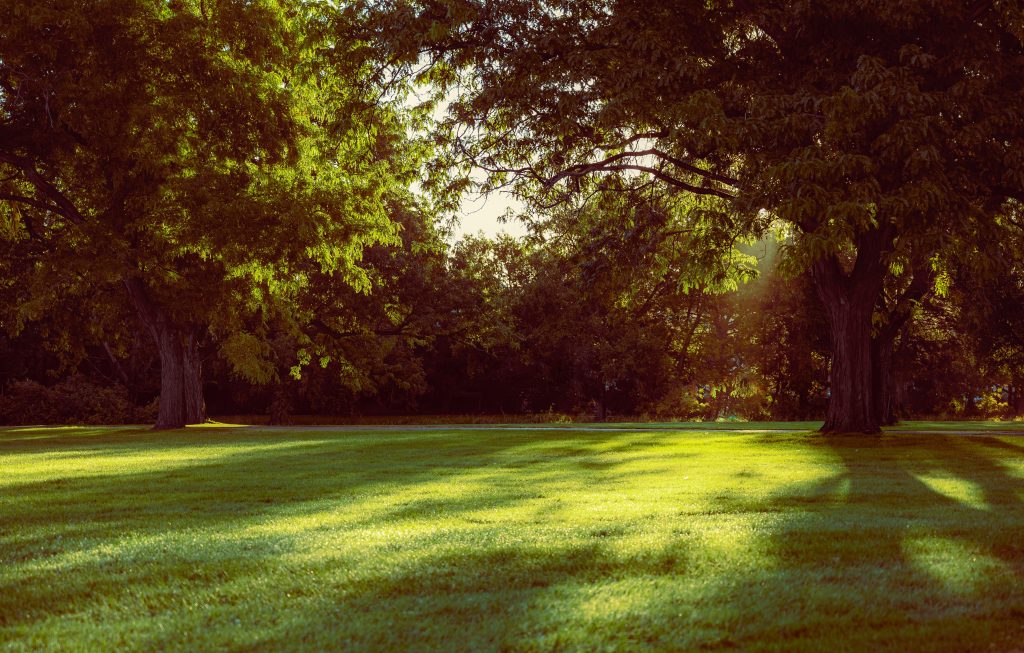
A lawn can look good in May and still be poorly prepared for summer.
That is one of the most common problems homeowners, landscapers, property managers, and turf crews run into. Spring moisture and moderate temperatures can make turf look better than it really is. Grass greens up. Mowing becomes regular. Bare spots are less noticeable. The surface looks fresh after a rain. From the driveway, the lawn may seem ready.
Then summer traffic begins.
Kids play on it. Pets run the same paths. Guests park near the edge. Mowers turn in the same corners. Landscapers move equipment across soft areas. Irrigation becomes uneven. Heat builds near sidewalks, patios, and driveways. Soil dries at the surface but stays compacted below. Foot traffic increases around pools, patios, entrances, shade trees, and outdoor living areas.
By July, the weak areas show.
The lawn thins along walking paths. The turf near the driveway fades first. Low areas stay wet and yellow. High areas dry out and brown. Grass under shade trees struggles with roots and traffic. Compact corners become hard as concrete. The lawn may still be green in spots, but it is no longer resilient.
That is why late May is an important time to build strength before summer traffic increases.
The goal is not just a darker green lawn today. The goal is a lawn that can handle heat, mowing, foot traffic, pets, irrigation swings, and dry spells with less decline. That means building the root zone, improving water movement, feeding with the right nitrogen and potassium balance, and correcting soil structure where compaction or clay limits performance.
A resilient lawn starts below the mower deck.
Resilience is different from quick green-up
Quick green-up is easy to notice.
A lawn gets nitrogen, the color improves, growth speeds up, and the property looks better. That response has value, especially in spring when turf needs to recover from winter and begin active growth. But quick color does not always mean long-term strength.
Resilience is different.
A resilient lawn has enough roots to reach moisture. It has enough potassium to support stress tolerance. It has soil that accepts water instead of shedding it. It has enough oxygen in the root zone. It is mowed at a height that protects the crown and shades the soil. It is not pushed into soft, excessive growth right before heat. It can recover from traffic because the plant and soil are both prepared.
This matters because summer traffic exposes weak lawns.
Turf that has been forced with too much nitrogen may grow fast but wilt quickly. Turf in compacted soil may green up after fertilizer but still root shallowly. Turf in clay that holds water after rain may yellow from poor oxygen. Turf in sandy soil may need better potassium and water management before heat. Turf near play areas may need stronger root support and less surface compaction.
Late May fertilizer should support resilience, not only appearance.
That does not mean avoiding nitrogen. Grass needs nitrogen. It means pairing nitrogen with potassium, water movement, mowing discipline, and soil structure.
Summer traffic starts with soil pressure
Every step on a lawn presses soil particles closer together.
A few footsteps do not ruin a healthy lawn. But repeated traffic in the same area causes compaction, especially when the soil is wet. Pets follow the same path. Kids run between the same points. Mowers turn in the same places. Outdoor furniture sits on the same patch. Landscapers carry equipment along the same route. Golf carts, utility vehicles, and small machines leave pressure patterns.
Compaction reduces pore space.
Pore space is what holds air and water. Roots need both. When compaction increases, water may run off instead of soaking in. Or water may sit at the surface because it cannot move through the profile. Roots become shallow. Oxygen becomes limited. Fertilizer response becomes uneven. Turf thins, and weeds often move into weak spots.
The lawn may still look green after fertilizer, but it is less able to handle stress.
That is why late May lawn care should include a serious look at traffic patterns. Where do people walk? Where do pets run? Where does the mower turn? Where does water sit? Which areas stay thin every summer? Which areas get hard underfoot?
Those are the areas that need root-zone attention before summer traffic peaks.
Water must enter the lawn before nutrients can work
A lawn cannot use fertilizer well if water does not move into the soil.
In compacted or tight soils, water may bead, run off, or sit on the surface. In that case, fertilizer may not move evenly into the root zone. Some areas receive more. Some receive less. Nutrients may stay too close to the surface. Roots may remain shallow. Summer heat then dries the surface quickly, and the lawn declines.
Aqua Drive fits lawns where water movement is part of the problem.
This product is designed as a liquid lawn aerator and soil conditioner for lawns, turf areas, landscapes, flower beds, and soil media. Its role is to help improve water penetration and soil performance where compaction, standing water, or poor infiltration are limiting root-zone function.
The problem Aqua Drive helps solve is uneven water movement through tight or compacted surface soil. That is common in late spring, especially in lawns with foot traffic, clay pockets, thatch, repeated mowing patterns, or areas where water sits after rain.
The timing is late May before summer heat increases water demand. Applying a product that supports infiltration before the first hard summer stretch can help the lawn use rainfall, irrigation, and fertilizer more evenly.
Aqua Drive is not a replacement for fixing major drainage problems. If a lawn has poor grading, a broken downspout, a buried drainage issue, or a low area that holds water after every storm, those problems need physical correction. It is also not a substitute for core aeration in severely compacted turf. But where the lawn needs better water penetration and root-zone movement, it can be a practical part of a resilience program.
Better water movement helps every other lawn decision work more effectively.
Potassium matters before the lawn is stressed
Nitrogen gets most of the attention in lawn care because it produces visible green growth.
Potassium is quieter, but it is critical for resilience.
Potassium supports water regulation, stress tolerance, plant strength, and overall turf durability. It helps grass handle heat, dry periods, traffic, and recovery pressure. A lawn with enough nitrogen but not enough potassium may look good in May and fade quickly under summer stress.
This is where 25-0-15 Ultra Green Lawn and Turf Fertilizer fits.
The 25-0-15 analysis gives turf nitrogen for green growth and potassium for strength and stress tolerance, without adding phosphorus. That makes it useful for established lawns where phosphorus is not needed or where a phosphorus-free fertilizer is preferred.
The problem 25-0-15 helps solve is late-spring turf that needs color and growth support while also preparing for heat, traffic, and summer pressure. The nitrogen supports active turf growth. The potassium helps build stronger plants heading into stress. The absence of phosphorus makes it a practical choice for established lawns that do not need phosphorus added.
The timing is late May when turf is actively growing and can use nutrients before harder summer conditions arrive. It is especially useful where the lawn is expected to handle foot traffic, pets, mowing, play, outdoor gatherings, and dry periods.
The caution is nitrogen rate and timing. Even though the product includes potassium, it still supplies a strong nitrogen component. It should be applied according to directions, not overused for a darker green. Too much nitrogen before heat can create soft, fast growth that needs more water and mowing. The goal is steady, strong turf, not excessive flush.
For established lawns entering summer, 25-0-15 is a practical resilience fertilizer because it feeds both appearance and strength.
Gypsum fits clay and structure problems
Some lawns struggle because the soil is physically tight.
This is common in clay-heavy lawns, construction-disturbed sites, compacted subdivisions, athletic areas, and older landscapes where soil has been walked, driven, graded, and irrigated for years. The grass may grow, but roots remain shallow because water and air do not move well.
Gypsum Powder fits lawns where calcium and sulfur support, clay behavior, and soil structure are part of the issue.
Gypsum supplies calcium sulfate. In the right soils, it can support better soil structure, water movement, air movement, and root development. It is especially relevant where clay-heavy or compacted soils limit lawn performance.
The problem Gypsum Powder helps solve is root-zone restriction caused by tight soil structure, poor water-air movement, and clay-related compaction where calcium sulfate is appropriate. It can help support the physical environment grass roots need before summer stress arrives.
The timing is late spring when lawns are actively growing and moisture can help move the material into the soil. Late May is a useful window because the lawn still has time to respond before heat and heavy traffic increase stress.
The caution is that gypsum is not lime. It should not be used to raise soil pH. It is also not a cure for every hard lawn. If the lawn is compacted from traffic, core aeration may still be needed. If the problem is poor grading, drainage should be corrected. If the soil does not need calcium or sulfur, gypsum may not be the first priority.
Use gypsum where the soil condition fits the product. It is best as part of a root-zone improvement program, not as a quick cosmetic treatment.
Late May mowing affects summer survival
Fertilizer and soil products matter, but mowing can either support or undermine them.
Cutting too short is one of the most common reasons lawns struggle going into summer. Short mowing removes leaf area, reduces the plant’s ability to produce energy, exposes soil to heat, encourages shallow rooting, and increases stress. A lawn cut low may look neat for a moment, but it is often less prepared for heat and traffic.
Late May is when mowing habits should shift toward summer readiness.
Grass is usually growing actively, and mowing may be frequent. The temptation is to cut shorter so mowing can be delayed longer. That usually backfires. Removing too much leaf at once stresses the plant and weakens root growth.
A stronger approach is to mow high enough for the turf type, remove no more than a reasonable amount of leaf at one mowing, and keep mower blades sharp. Dull blades tear grass, leaving ragged tips that brown faster and increase stress appearance.
Mowing also affects fertilizer response. A lawn fed with 25-0-15 Ultra Green Lawn and Turf Fertilizer will grow. If mowing is too low, that growth becomes stress instead of strength. If mowing height is appropriate, fertilizer can support density and resilience.
Healthy mowing turns fertility into better turf. Poor mowing turns fertility into more maintenance.
Watering should build roots, not shallow dependency
Late spring watering habits shape summer roots.
Light daily sprinkling encourages shallow rooting. Deep, less frequent watering encourages roots to explore deeper soil, as long as the soil can accept water and drain properly. In compacted lawns, water may not move deeply, which is why infiltration and structure matter.
Aqua Drive can fit where water is not entering evenly. Gypsum can fit where clay structure is part of the limitation. 25-0-15 can fit where turf needs nutrition and potassium support. But watering still has to be managed.
A resilient lawn needs water that reaches the root zone.
Water early in the day when possible. Avoid frequent shallow irrigation. Watch for runoff. If water begins running off before the soil is wet, apply water in shorter cycles with time between them, especially on slopes or compacted areas. Check soil moisture with a probe, screwdriver, or small soil plug instead of guessing from the surface.
Do not water only because grass looks slightly darker in the afternoon. Temporary heat wilt can happen even when soil moisture is adequate. But if footprints remain visible and the turf does not spring back, moisture may be low.
Fertilizer should be watered in according to directions. Soil conditioners and amendments also need water to move into the active root zone. The key is enough water to activate products and support roots, not so much water that roots lose oxygen.
Traffic management matters more than people think
A lawn expected to handle traffic needs traffic planning.
This is true for homes, parks, athletic edges, schools, churches, rental properties, commercial landscapes, and event spaces. If people use the same path every day, the grass there will thin faster. If pets run the same fence line, compaction and wear will show. If children play in the same shaded corner, turf may struggle from both shade and traffic. If mowing equipment turns in the same place, that area may compact and tear.
Fertilizer can help turf recover, but it cannot erase constant pressure without management.
Look for predictable traffic and adjust where possible. Move outdoor furniture periodically. Use stepping stones or mulch paths where people always walk. Rotate play areas when practical. Keep pets off wet turf when possible. Avoid mowing when the lawn is too wet. Change mower turning patterns to reduce repeated pressure in one spot.
In high-traffic turf, 25-0-15 Ultra Green Lawn and Turf Fertilizer can help support growth and potassium-based resilience. Aqua Drive can help water move better in compacted surface areas. Gypsum Powder can support soil structure in clay-heavy or tight soils.
But traffic still needs to be reduced or redirected in the worst areas. A plant cannot recover if it is being damaged every day.
Lawns near hard surfaces need extra attention
Grass near sidewalks, driveways, patios, curbs, and pavement often struggles first in summer.
Those hard surfaces absorb and reflect heat. They shed water. They create dry edges. They are also traffic zones where people step off pavement and onto turf. Deicing salt history may affect some areas in colder climates. Soil near construction edges may be compacted or shallow.
These areas need late-May attention because they enter summer already under pressure.
Check soil moisture along edges. Look for compaction. Watch whether irrigation reaches those zones or overshoots them. Avoid fertilizer granules on hard surfaces. Sweep product back onto the lawn after spreading. Keep mower wheels from repeatedly scalping edges.
If the edge soil is tight and water runs off, Aqua Drive may help improve water penetration. If clay and structure are limiting roots, Gypsum Powder may fit. If the turf needs a late-spring nutrition program with potassium support, 25-0-15 can help build strength before the hottest edge conditions arrive.
Edges are small areas, but they often decide how the whole lawn looks from the street.
Shaded lawns need different expectations
Shade changes turf resilience.
Grass under trees or along buildings receives less light, competes with tree roots, dries differently, and may stay wet longer after rain or irrigation. Traffic in shade is especially damaging because the grass has less energy to recover. A shaded lawn pushed with too much nitrogen may become soft, thin, and disease-prone.
Late May shade management should be realistic.
Raise mowing height in shaded areas where possible. Reduce traffic. Avoid overwatering. Prune trees only where appropriate and safe to improve light and air movement. Choose turf types suited to the light conditions. Do not expect heavy-use turf in dense shade to perform like full sun.
Fertility should be moderate. A product like 25-0-15 Ultra Green Lawn and Turf Fertilizer may fit where the shaded lawn still needs nitrogen and potassium, but rates should respect lower growth potential. Aqua Drive may help where water movement is uneven. Gypsum Powder may fit where clay structure limits roots.
The product should support what the site can realistically grow. Fertilizer cannot create sunlight.
Compacted wet areas should not be fed too soon
Low, wet areas often yellow in late spring.
The first instinct is to fertilize them. But if the soil is saturated, roots may be low on oxygen. Fertilizer applied into wet, oxygen-poor soil may not be used effectively. Heavy traffic on wet turf can make compaction worse.
In wet areas, start with drainage and water movement.
Stay off the area until it firms up. Avoid mowing if equipment leaves ruts. Redirect downspouts if they discharge onto the lawn. Check whether soil is compacted. Consider whether core aeration, grading, or drainage work is needed. Use products only after the root zone can respond.
Aqua Drive can fit where surface water movement and infiltration are the issue. Gypsum Powder can fit clay-heavy soils where structure and water-air movement need support. 25-0-15 can support growth once roots are active and the turf is not saturated.
Do not try to feed a lawn out of standing water. Let the roots breathe first.
Dry slopes and high spots need deeper preparation
High spots, slopes, and sandy areas often dry first.
They may look fine after a rain, then fade quickly when wind and heat arrive. Water may run off slopes before soaking in. Sandy soils may lose moisture and nutrients faster. Thin turf on high ground may have shallow roots because it has been repeatedly stressed.
Late May is the time to strengthen these areas before summer.
Improve water penetration where runoff is common. Aqua Drive can fit lawns where water is not entering evenly. Feed with potassium support where soil and turf need it. 25-0-15 can help provide nitrogen and potassium before dry stress intensifies.
In sandy soils, potassium may be especially important because nutrients can leach more readily. If magnesium, calcium, or other nutrients are also concerns, soil testing should guide corrections. Gypsum may not be the main answer on every sandy site unless calcium and sulfur support are needed.
Watering should be slower and more intentional on slopes. Short cycles with soak-in time can be more effective than one long irrigation that runs into the street.
Dry areas need preparation before they turn brown.
New lawns and thin lawns need careful feeding
New lawns need strength, but they are also sensitive.
Seedlings have small roots. New sod has to root into the soil below. Thin lawns may have exposed soil, weed pressure, and uneven moisture. Feeding can help, but timing and rate matter.
For established but thin lawns, 25-0-15 Ultra Green Lawn and Turf Fertilizer can fit when the turf needs nitrogen and potassium without phosphorus. It can help support density and stress tolerance if the lawn is actively growing.
For new lawns on heavy clay or compacted soil, Gypsum Powder may fit where soil structure and water-air movement need improvement. Better rooting conditions help new turf establish.
For lawns where water penetration is uneven, Aqua Drive can support infiltration and moisture movement.
The caution is not to overfeed new turf before roots are ready. Young grass can be stressed by strong applications. Follow product directions and match fertilizer to the stage of growth.
Thin lawns also need sunlight, water, mowing height, and sometimes overseeding. Fertilizer alone will not fill a lawn if the stand is too sparse or the site conditions remain poor.
Pets create both traffic and fertility problems
Pet areas are often the first summer lawn problem homeowners notice.
Dogs may run the same paths, compacting soil and wearing turf. Urine spots can create dark green rings, yellow patches, or dead spots depending on concentration and conditions. Areas near fences, gates, patios, and back doors often decline because traffic is repeated.
The resilience plan should include both soil and management.
Water pet spots when possible to dilute urine salts. Redirect traffic if practical. Reseed or repair worn paths when the season and turf type allow. Improve infiltration so water does not sit or run off. Avoid overfertilizing pet areas that already receive nitrogen from urine.
25-0-15 should be applied with care in pet-heavy zones because those areas may already have uneven nitrogen. Potassium support can still matter, but the rate should be appropriate. Aqua Drive may help where compaction and infiltration are issues. Gypsum Powder may fit clay-heavy pet areas where soil structure needs support.
Pet damage is not only a fertilizer problem. It is traffic, salts, repetition, and root-zone stress together.
Do not ignore soil testing
A resilient lawn program is stronger with soil testing.
Soil testing can show pH, phosphorus, potassium, magnesium, calcium, and other fertility factors. That matters because not every lawn needs the same product. Some lawns need nitrogen and potassium. Some need pH correction. Some need potassium but not phosphorus. Some need soil structure support. Some need drainage or aeration more than fertilizer.
Testing is especially important before repeated fertilizer applications.
If phosphorus is already adequate, a phosphorus-free product like 25-0-15 Ultra Green Lawn and Turf Fertilizer may be a better fit than a balanced fertilizer. If calcium and sulfur support are needed in clay soil, Gypsum Powder may fit. If water penetration is the issue, Aqua Drive may be more relevant than adding more nutrients.
A soil test also helps avoid overcorrection. Too much fertilizer can create weak growth, nutrient imbalance, salt issues, and unnecessary cost.
Late May decisions should be based on what the lawn needs, not what the spreader already has in it.
Build the program in the right order
The best late-May lawn program follows a practical order.
Start with mowing height. If the lawn is being cut too short, fix that before expecting fertilizer to solve summer stress. Raise mowing height where appropriate for the turf type and season. Keep blades sharp.
Check moisture and infiltration. If water runs off or sits on the surface, address that before relying on fertilizer. Aqua Drive fits where water penetration and surface compaction need support.
Check soil structure. If the lawn is clay-heavy, compacted, or slow to drain, Gypsum Powder may fit where calcium sulfate support is appropriate. Severe compaction may also need mechanical aeration.
Feed for resilience. 25-0-15 Ultra Green Lawn and Turf Fertilizer fits established lawns that need nitrogen for growth and potassium for summer strength without added phosphorus.
Manage traffic. Reduce repeated pressure where possible. Use paths, rotate play areas, avoid mowing wet turf, and protect high-use zones.
Water deeply and consistently. Do not train roots to stay shallow.
This order helps each step support the next.
A practical late-May lawn check
Walk the lawn before applying anything.
Look for thin areas, compacted paths, wet spots, dry edges, pet zones, mower turn marks, weeds, and areas near hard surfaces. Push a screwdriver or soil probe into the ground. If it is hard to push in, compaction or dryness may be limiting roots. Dig a small plug if needed and look at root depth. Check whether the soil is moist below the surface.
Then decide what the lawn is asking for.
If the turf is actively growing but needs nutrition and summer strength, 25-0-15 may fit.
If water is running off, sitting, or failing to penetrate evenly, Aqua Drive may fit.
If clay soil, poor structure, and limited water-air movement are part of the issue, Gypsum Powder may fit.
Apply products according to directions. Water in when needed. Keep granules off sidewalks and driveways. Avoid applying before heavy runoff-producing rain. Do not apply to saturated turf. Do not overfeed a lawn entering summer.
Late May is not just another green-up opportunity. It is a preparation window.
Resilient lawns are built before summer damage appears
A lawn that survives summer traffic well usually had the right foundation before traffic peaked.
It had roots. It had water movement. It had potassium. It was not mowed too short. It was not pushed into soft growth. Compacted areas were noticed early. Wet areas were allowed to breathe. Dry areas were watered deeply. Fertilizer was chosen for strength, not just color.
That is the difference between a lawn that looks good for a few spring weeks and a lawn that holds up through summer use.
Supply Solutions offers practical products for this late-May lawn window. Aqua Drive helps support water penetration and root-zone movement where compacted or tight soils limit infiltration. 25-0-15 Ultra Green Lawn and Turf Fertilizer provides nitrogen for active turf growth and potassium for summer resilience without added phosphorus. Gypsum Powder supports clay-heavy or compacted soils where calcium, sulfur, structure, and water-air movement are part of the problem. Used with proper mowing, watering, and traffic management, these products help lawns enter summer stronger instead of simply greener. Contact Supply Solutions for help choosing the right late-spring lawn program for your soil, turf type, traffic level, and summer conditions.