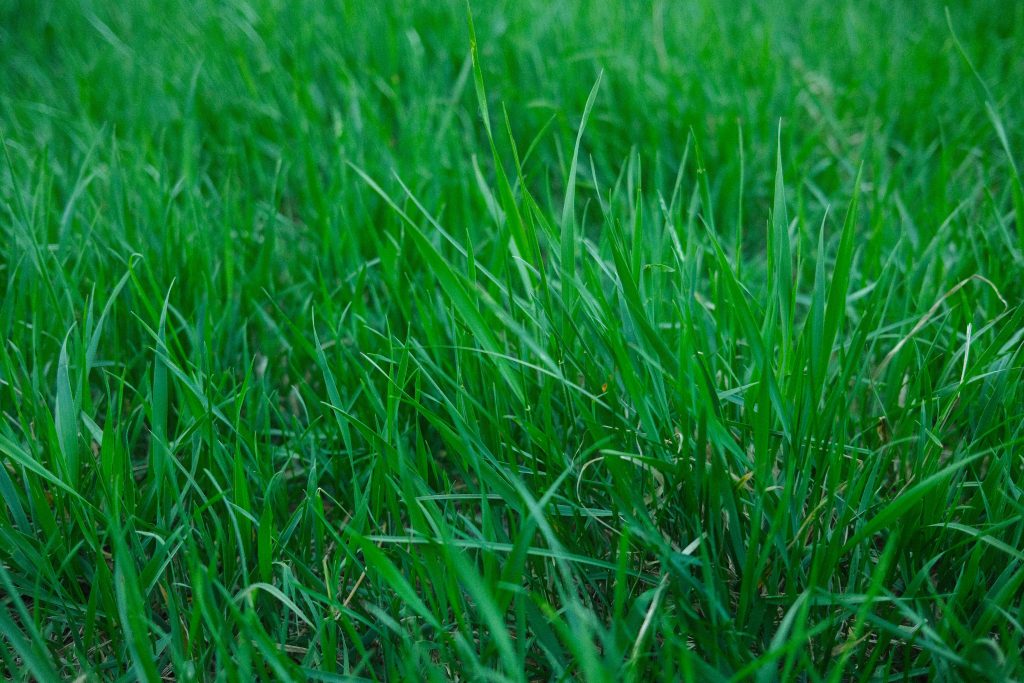
Winter feed cost is often determined months before winter begins.
A producer who waits until hay feeding starts has fewer options than a producer who begins building standing forage in August. Tall fescue is particularly well suited to stockpiling because it produces strong fall growth and holds quality better into winter than many other cool-season grasses.
The method is straightforward: select suitable paddocks, remove livestock, supply needed fertility, allow fall growth to accumulate, and graze the forage later with controlled access.
The details determine whether the field produces a valuable winter feed source or simply becomes an ungrazed pasture.
Begin with the right field
A stockpiling field should have a productive stand of tall fescue.
Thin, weedy, compacted, or poorly drained fields may not respond enough to justify fertilizer. Fields with a good leaf base, healthy crowns, and reasonable soil fertility have a better chance of producing dense fall growth.
University of Missouri Extension recommends beginning with approximately 3 to 6 inches of leaf, removing cattle in mid-August, and allowing the pasture to rest.
Choose fields with practical winter access.
Consider water availability, fencing, shelter, slope, mud risk, and distance from handling facilities. A productive field that cannot be grazed efficiently during wet or frozen weather may not be the best choice.
Remove livestock completely
Stockpiling depends on uninterrupted regrowth.
Leaving a few animals in the field or allowing occasional access can remove the most valuable new leaves. Livestock selectively graze fresh growth, forcing plants to replace tissue repeatedly instead of accumulating forage.
Close the gate.
Use other pasture, annual forage, crop residue, or stored feed during the accumulation period. The cost of resting the field is part of the stockpiling investment.
Missouri guidance recommends keeping cattle off until growth stops and beginning controlled grazing later in the year.
Mid-August balances yield and quality
Starting date influences both total forage and nutritive value.
Beginning earlier can produce more growth, but the oldest leaves may weather and lose quality before grazing. Starting later tends to produce higher-quality forage but less total dry matter.
Mid-August is a common target in much of the Fescue Belt because it provides enough growing time while maintaining usable quality into winter.
Regional timing varies.
Northern producers may need to begin earlier. Southern areas may have a longer accumulation period. Elevation, drought, planting history, and average frost dates also matter.
Use local extension recommendations and actual field conditions rather than copying a date from another state.
Moisture controls the nitrogen response
Nitrogen cannot produce grass without water.
A field with adequate soil moisture or a favorable rain outlook can respond quickly to August nitrogen. A severely droughted field may show little fall growth until rain returns.
Applying nitrogen to dry soil is not necessarily lost immediately, but the economic return becomes less predictable. Heavy rain after application can also move nitrogen or create runoff, depending on source, soil, slope, and placement.
Check the soil profile and short-term forecast.
The field needs enough moisture to restart active growth, not merely wet the leaf surface.
Decide whether nitrogen is needed
Pure or grass-dominant tall fescue generally responds to nitrogen.
Fields containing a substantial stand of productive legumes may require less fertilizer nitrogen because clover and other legumes contribute nitrogen to the system. The amount available to companion grass varies with legume percentage, growth, grazing, and season.
Missouri Extension commonly recommends approximately 40 to 60 pounds of nitrogen per acre for stockpiling tall fescue.
That range should not be treated as a national prescription.
Adjust for soil type, yield potential, legume content, previous manure, residual nitrogen, rainfall, fertilizer price, and endophyte considerations.
A lower rate may produce the best economic return where moisture is uncertain.
Where ammonium sulfate fits
Supply Solutions Ammonium Sulfate 21-0-0 with 24% Sulfur provides nitrogen in the ammonium form along with sulfur. The product is water soluble and has an acidifying effect over time.
It may fit a stockpiling program where both nitrogen and sulfur are appropriate.
Why it is used: Nitrogen stimulates fall tillering and leaf growth in a responsive grass stand. Sulfur supports protein formation and may be useful in soils testing low or in situations where sulfur supply is limited.
When it should be applied: Near the beginning of the stockpiling period, after livestock are removed and when soil moisture can support regrowth.
What problem it solves: It addresses nitrogen-limited fall forage production and, where verified, sulfur deficiency. It does not correct drought, overgrazing, poor stand density, low phosphorus, low potassium, or inadequate soil pH.
At 21% nitrogen, supplying 40 pounds of actual nitrogen requires approximately 190 pounds of product per acre. Supplying 60 pounds requires about 286 pounds per acre. Other nitrogen sources, manure credits, field conditions, and local recommendations must be included before selecting a rate.
Do not apply the lawn or garden rate shown on a retail product page to agricultural pasture acreage. Base field rates on actual nutrient analysis and an agronomic recommendation.
Consider soil pH
Ammonium sulfate has a stronger acidifying effect than several other common nitrogen sources.
That can be useful in alkaline situations, but repeated application can lower pH. Tall fescue tolerates moderately acidic soil, yet very low pH reduces nutrient availability, root growth, and legume persistence.
Review the soil test and liming history.
Nitrogen should not be selected independently of pH. A low-cost nitrogen response can be undermined by long-term soil acidity.
Where lime is needed, apply according to the laboratory recommendation and allow enough time for reaction.
Do not ignore potassium and phosphorus
Nitrogen determines much of the immediate fall response, but stand persistence depends on broader fertility.
Potassium supports water regulation, root function, disease tolerance, winter survival, and recovery. Phosphorus supports roots and energy transfer.
A field that receives nitrogen year after year while potassium is removed through grazing or hay can gradually weaken.
Grazing returns many nutrients through manure and urine, but distribution is uneven. Areas near shade, water, and feeders often accumulate nutrients while distant portions receive less.
Soil sample representative management zones.
Applying a balanced fertilizer simply because it contains nitrogen may add unnecessary phosphorus while failing to supply enough of the nutrient actually limiting the field.
Endophyte-infected tall fescue requires caution
Much of the traditional Kentucky 31 tall fescue in the Fescue Belt contains a toxic endophyte.
The endophyte improves plant persistence but produces ergot alkaloids that reduce animal performance and create heat stress, poor circulation, reproductive problems, and other health concerns.
Nitrogen can increase forage yield, but research and extension guidance indicate that higher nitrogen may also increase toxic alkaloid concentrations in infected stands. Missouri Extension advises judicious nitrogen use and notes a general recommendation to limit annual fertilizer nitrogen on toxic tall fescue in order to reduce toxicosis risk.
Know what type of fescue is in the field.
Novel-endophyte and endophyte-free varieties require different risk considerations from infected Kentucky 31. Stockpiled toxic fescue generally becomes safer later in winter as alkaloid concentrations decline, but livestock class and condition still matter.
Pregnant mares should not graze toxic endophyte-infected fescue.
Work with a local livestock specialist or veterinarian where animal risk is significant.
Let the forage accumulate
Once fertility is applied, the main job is patience.
Avoid clipping unless weeds or seed heads create a specific need. Tall fescue stockpiling focuses on leaf growth, and unnecessary mowing removes material the field is meant to store.
Monitor weeds, insects, moisture, and stand response.
Estimate forage before grazing begins. A pasture stick or clipped samples can provide a better estimate than looking across the field.
Missouri Extension notes that dense fescue stands can hold several hundred pounds of forage per acre for each inch of growth, although actual amounts vary widely with density and measurement method.
Use a conservative estimate when planning livestock days.
Begin grazing after growth stops or forage is needed
Many producers begin using stockpiled fescue after frost or when other pasture is exhausted.
The exact date depends on location, forage supply, livestock needs, and field conditions.
Later grazing generally improves the use of autumn growth for winter and can reduce endophyte risk. Waiting too long without controlled grazing may allow weathering and trampling losses.
Start in the field or strip nearest the water source where practical. This reduces travel across ungrazed forage.
Strip grazing increases utilization
Turning cattle into the entire field allows selective grazing and trampling.
Temporary electric fence can allocate one to three days of forage at a time. Animals consume a larger share before moving forward.
A back fence can prevent access to previously grazed areas, especially where plants may begin regrowing during mild weather.
Missouri Extension recommends strip grazing and moving the fence every one to three days to improve utilization.
Calculate the strip size from herd demand, forage estimate, desired utilization, and number of grazing days.
Do not assume all standing forage will be consumed.
Protect soil during wet weather
Winter grazing can damage soil if animals remain too long in one location.
Move water, mineral, and supplemental feed where possible. Avoid feeding repeatedly in the same muddy area. Use stable lanes or temporary access routes.
Frozen soil may carry livestock well in the morning and become vulnerable after thawing.
Adjust strip size and movement frequency to conditions. Preserving the stand is part of the economic return.
Monitor forage quality
Stockpiled tall fescue generally retains quality well, but protein and energy decline with time and weather exposure.
Test representative forage, especially for high-demand livestock. Dry cows in midgestation have different requirements from lactating cows, growing calves, or replacement heifers.
Supplement based on forage analysis and animal need rather than habit.
Quality may vary between early- and late-stockpiled fields, fertilized and unfertilized areas, and exposed and sheltered slopes.
Measure the economic result
Record fertilizer, application, fencing, labor, water, and supplemental feed costs.
Estimate grazing days gained and hay avoided. Do not value stockpiled forage only by its production cost; compare it with the delivered cost of hay and the labor, machinery, storage loss, and manure concentration associated with feeding.
A successful program may reduce hay use, tractor hours, bedding, and manure handling.
It may also improve nutrient distribution because animals deposit manure across the field rather than around a hay ring.
Use the first year to improve the next
Stockpiling performance changes with weather.
A dry fall may produce less forage, while a moist, mild fall may exceed expectations. Record starting date, nitrogen rate, rainfall, initial height, final yield, grazing days, and animal performance.
Compare fields.
One paddock may respond better because of stand density, pH, potassium, soil depth, or drainage. Those differences help identify the best stockpiling acres.
Supply Solutions can help producers match ammonium sulfate or another nitrogen source to soil-test results, sulfur need, pH, and acreage. Contact the company before setting a field rate. Properly used fertilizer supports fall regrowth, but the savings come from combining that fertility with timely rest, controlled grazing, and a healthy tall fescue stand.