
Uncategorized
Tomatoes and Peppers in August: Why More Nitrogen Can Mean Fewer Fruits
By August, tomatoes and peppers have usually reached a very different stage from the plants gardeners were managing in May or June. The root systems
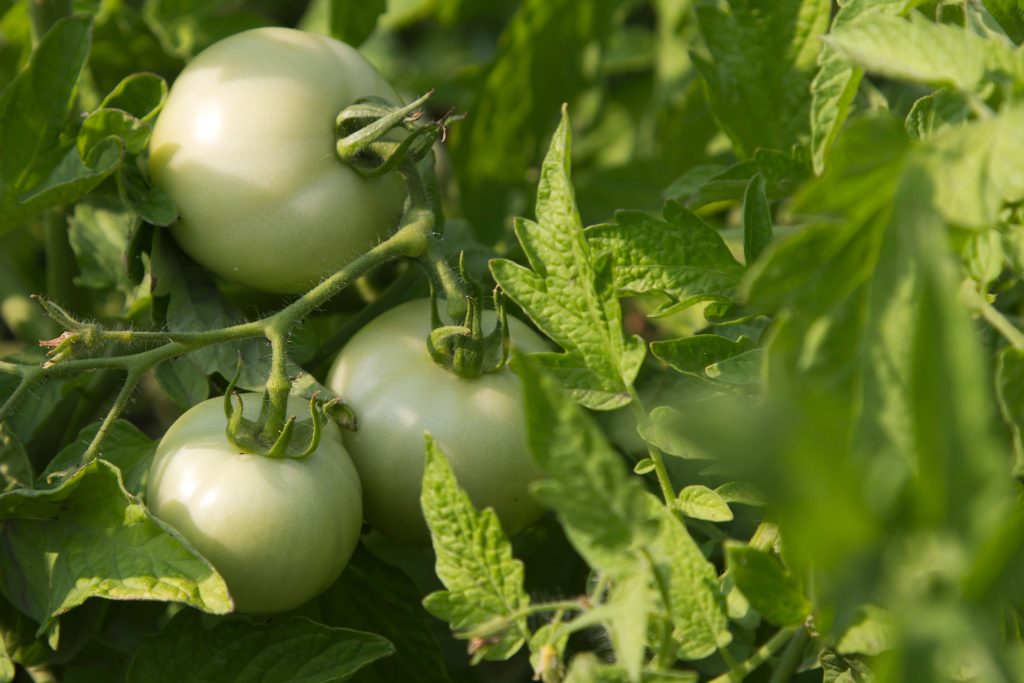
By August, tomatoes and peppers have usually reached a very different stage from the plants gardeners were managing in May or June. The root systems are established, vines and branches have filled much of their space, and many plants are carrying flowers, green fruit, and ripening fruit at the same time. At this point, fertilizer decisions should change with the crop.
A young tomato transplant needs enough nitrogen to build leaves, stems, and roots. An established tomato plant already filling a cage with foliage does not necessarily benefit from continuing the same nitrogen-heavy program. When nitrogen supply exceeds what the plant needs, tomatoes can continue investing heavily in vegetative growth instead of maintaining the balance needed for flowering and fruit production. University of Georgia guidance specifically warns that excessive nitrogen can produce vigorous tomato shoot growth while reducing blooms and fruit production.
Peppers require a little more nuance. It is common to blame poor pepper fruit set on excessive nitrogen, but University of Minnesota Extension reported in its August 6, 2026 vegetable update that the relationship is not as simple as many gardeners assume. Minnesota specialists noted that peppers can respond well to relatively high nitrogen rates and that widespread low pepper yields during summer 2026 appeared more closely associated with heat stress and bacterial leaf spot than with nitrogen alone.
That distinction is important because tomatoes and peppers may be growing beside each other in the same garden while responding differently to fertilizer and weather. Neither crop benefits from careless overfertilization, but a gardener should not diagnose every August fruiting problem as “too much nitrogen.”
In late summer, heat, soil moisture, root health, potassium supply, crop load, disease pressure, and the amount of growing season remaining can matter just as much as the fertilizer analysis.
During early establishment, vigorous vegetative growth is valuable. A tomato or pepper plant needs enough leaves to intercept sunlight, enough roots to explore the soil, and enough stems to support future flowers and fruit.
Once fruiting is underway, the plant has several competing demands.
New shoots are still growing, but flowers require resources. Developing fruit are strong sinks for carbohydrates, water, potassium, calcium, and other nutrients. Existing leaves must remain healthy enough to continue photosynthesis. Roots need adequate oxygen and moisture to supply the canopy.
Nitrogen remains essential throughout that process. The mistake is assuming that because nitrogen is essential, continually increasing N will automatically increase harvest.
Fertilizer response does not work that way.
Once nitrogen supply is adequate, additional nitrogen may primarily increase foliage. In tomatoes, UGA specifically identifies excessive N as a contributor to excessive vegetative growth and poor flowering or fruit performance.
That can produce one of the most frustrating garden situations: a large, dark-green tomato plant that looks exceptionally healthy from ten feet away but carries surprisingly few tomatoes.
The plant is growing. It just is not allocating growth in the direction the gardener wants.
Before changing fertilizer in August, look at temperature.
Tomato flowers are unusually sensitive to high temperatures. UGA reports that nighttime temperatures above roughly 70°F can interfere with tomato fruit set and that temperatures above about 90°F can disrupt normal seed development and pollination.
University of Minnesota’s June 2026 heat guidance reports the same broader response. Tomatoes and peppers can shed flowers around 90°F, while very warm nights can further reduce reproductive performance. Plants may continue producing leaves while flower set slows or temporarily stops.
That matters tremendously in August because poor fruit set following a heat wave can look like a fertility failure.
The gardener sees plenty of green growth but few new fruits and decides the plants need fertilizer. If the real problem is pollen viability or flower abortion caused by heat, adding more nitrogen cannot restore flowers that have already dropped.
In fact, pushing additional shoot growth while the plant is heat stressed may increase water demand without addressing the reproductive problem.
The better response is often to maintain consistent moisture, protect root health, keep plants otherwise adequately nourished, and allow cooler weather to restore normal flowering.
UGA garden guidance notes that tomatoes and peppers often resume fruit set after extreme heat passes.
Late summer 2026 provides a good example of why gardeners should distinguish weather stress from nutrient shortage.
University of Minnesota reported on August 6 that pepper yields were poor in many locations after summer heat and widespread bacterial leaf spot, while tomato plants were beginning to produce more strongly after July heat waves. The lingering effects of high temperatures were still visible in tomato fruit quality, particularly in larger slicing types.
In Georgia, Extension reported another period of extreme heat during mid-August 2026, with daytime temperatures approaching or exceeding 100°F in some locations and depleted soil moisture increasing crop stress. Although that update focused primarily on commercial field crops, the same atmospheric conditions place significant evaporative demand on vegetable gardens.
Those reports illustrate how different parts of the United States can experience the same basic August challenge at different times: plants may have adequate fertilizer but still struggle because reproduction and water balance are being disrupted by heat.
Fertilizer cannot lower the nighttime temperature.
That is why diagnosing August fruiting problems should begin with weather history rather than automatically reaching for another high-nitrogen product.
Tomatoes can make excessive nitrogen relatively easy to suspect when several symptoms occur together.
The plant may have long, rapidly growing shoots, very large dark-green leaves, substantial foliage density, and relatively few flowers or fruit compared with the size of the plant. The canopy may become so thick that airflow declines and inner leaves remain shaded.
UGA warns that frequent use of soluble fertilizer can easily provide excessive nitrogen and produce vigorous tomato vegetation without corresponding bloom and fruit production.
This is different from a tomato that is simply healthy and vigorous.
Indeterminate tomatoes are naturally strong vegetative growers. They continue producing new stems and leaves while flowering and fruiting, often until frost. A large plant is not automatically overfertilized.
The concern is imbalance.
If vegetative growth is accelerating while flowering remains poor, especially after repeated nitrogen applications, compost additions, manure, or regular liquid feeding, the fertilizer program deserves review.
Do not correct that situation by applying still more fertilizer because the plant “isn’t producing.”
Peppers are frequently included in advice that says excessive nitrogen causes leaves instead of fruit. That statement can become too simplistic.
University of Minnesota’s August 2026 vegetable update specifically challenged the widespread assumption that high nitrogen is the primary cause of reduced pepper fruit set. Extension specialists pointed toward heat stress and disease as more important explanations for the poor pepper yields they were seeing that season.
This does not mean unlimited nitrogen is appropriate for peppers.
Excessive fertilizer can still create overly vigorous growth, increase salt concentration around roots, complicate calcium nutrition, and waste money. UGA research on blossom-end rot in peppers and tomatoes also identifies excessive N and K fertilization during early bloom and fruiting as a factor that can encourage excessive shoot growth and interfere with calcium movement into developing fruit.
The point is that a pepper dropping flowers during a run of 95°F days should not automatically be diagnosed as nitrogen toxicity.
Temperature may be the more important problem.
Good fertilizer management requires enough restraint to allow those two explanations to remain separate.
Once tomatoes and peppers begin carrying a significant fruit load, potassium deserves attention.
Potassium is involved in water regulation, enzyme function, photosynthesis, carbohydrate movement, and numerous other plant processes. Fruiting crops require adequate K to support normal development.
Penn State’s current vegetable guidance identifies potassium as especially important to tomato fruit development and notes that a suitable soil-solution pH helps tomatoes and peppers access potassium efficiently.
This does not mean August tomatoes should automatically receive a high-potassium fertilizer.
The field or garden still needs a reason for the application.
If the soil already contains adequate K, applying substantially more can provide little benefit. UGA’s blossom-end-rot guidance also cautions that excessive potassium can compete with calcium and magnesium uptake. When excessive K is combined with heavy nitrogen and rapid shoot growth, calcium movement into developing tomato and pepper fruit can become more difficult.
That is why switching from “too much nitrogen” to “as much potassium as possible” is not an improvement.
The objective is balanced nutrition.
A plant can struggle with nutrient uptake even when the garden contains enough fertilizer.
Penn State notes that tomatoes, peppers, and eggplants generally perform well with soil solution around pH 6.2 to 6.5. As pH moves away from the desirable range, nutrient uptake can become less efficient, including potassium availability.
This is one reason gardeners who fertilize heavily every summer can still experience disappointing fruit quality.
The issue may not be the amount of fertilizer in the soil.
The root environment may be limiting the plant’s ability to use it.
A soil test becomes particularly valuable in a garden that has received years of compost, manure, balanced fertilizer, or specialty plant foods. Nutrients can accumulate over time, especially phosphorus, while pH can move gradually in one direction or another.
Adding another fertilizer without testing can increase nutrient imbalance rather than correct it.
August is also a useful time to make notes for the next season. A severely incorrect pH is usually better addressed through a planned soil amendment program than through repeated attempts to change soil chemistry around a fruiting plant in the middle of summer.
A dark, sunken area on the blossom end of a tomato or pepper often causes gardeners to reach immediately for calcium.
The disorder is associated with insufficient calcium reaching the developing fruit, but that does not necessarily mean the soil lacks calcium.
UGA explains that blossom-end rot frequently occurs when environmental or cultural conditions interfere with calcium movement into developing fruit. Drought followed by excessive moisture is a common trigger because changing water availability disrupts calcium uptake and transport.
Excessive shoot growth can make the problem worse.
Calcium moves largely with water through the plant. Rapidly transpiring new leaves can receive a substantial share of that flow, while developing fruit may receive less. UGA therefore recommends reducing excessive N and K fertilization when unusually strong top growth is occurring during bloom and fruit development.
The practical response is to maintain even soil moisture rather than repeatedly allowing plants to wilt and then soaking them heavily.
Adding more fertilizer to a plant already experiencing blossom-end rot can make the situation worse if the fertilizer increases salt stress or excessive vegetative growth.
Nutrient management and irrigation cannot be separated in August.
Roots obtain dissolved nutrients from soil water. Potassium movement toward roots slows as soil becomes dry. Calcium movement through the plant depends heavily on transpiration and a functioning water supply. Nitrogen uptake also declines when roots are inactive because the soil is too dry.
University of Minnesota’s June 2026 garden guidance recommends deep watering during heat rather than repeated shallow sprinkling and identifies early morning as a useful irrigation period.
UGA recommends approximately one to two inches of water per week for tomatoes depending on soil conditions, with mulch used to moderate moisture fluctuations and evaporation.
Those numbers are guidelines rather than automatic irrigation schedules.
A sandy garden may need water more frequently than a high-organic-matter loam. Raised beds dry faster than surrounding ground. Containers can require daily irrigation during intense heat because their root volume is limited.
The important part is consistency.
Fruit development usually benefits more from stable soil moisture than from a cycle of severe drying, emergency irrigation, and another round of fertilizer.
Mulch is one of the most useful late-summer tools because it addresses the root-zone environment rather than simply adding another input.
A layer of clean organic mulch reduces direct evaporation from the soil surface, moderates soil temperature, suppresses weeds, and reduces the speed at which the root zone cycles between wet and dry.
UGA recommends mulching tomatoes specifically to conserve moisture and reduce fluctuations that contribute to blossom-end rot and other stress.
That moisture stability can improve the plant’s ability to use nutrients already present.
In an August garden, that can have more value than another fertilizer application.
The plant does not benefit from nutrients it cannot reach.
Another common late-summer mistake is interpreting slower shoot growth as a deficiency when the plant is simply carrying a large crop.
A tomato plant ripening multiple clusters at once is distributing photosynthate and nutrients into those fruits. A pepper loaded with developing fruit is doing the same.
Vegetative growth may slow compared with early summer.
That is not necessarily a problem.
A gardener who responds by aggressively increasing nitrogen may alter the balance again, encouraging new foliage when the plant is already supporting a valuable reproductive load.
Evaluate the whole plant.
Healthy green leaves, continued flowering under suitable temperatures, developing fruit, and reasonable new growth generally indicate that the crop is functioning normally.
The goal is not to maintain June-level vegetative expansion throughout August.
The goal is to keep enough healthy foliage to support the existing and future fruit.
Once gardeners hear that excessive vegetative growth can reduce tomato productivity, another mistake sometimes follows: excessive pruning.
Leaves are the plant’s photosynthetic machinery.
They produce the carbohydrates that size fruit, support roots, and power continued flowering. They also shade developing tomatoes from intense sunlight.
Removing diseased lower leaves or improving airflow in an extremely dense canopy can be useful. Stripping large amounts of healthy foliage from a fruiting tomato during August heat can expose tomatoes to sunscald and reduce the leaf area available to support fruit development.
UGA describes sunscald as a common fruit problem where tomatoes are exposed to intense sunlight, producing pale or papery damaged areas.
The goal is balance again.
Do not use fertilizer to produce an unnecessarily dense canopy, but do not respond by removing the healthy canopy the crop still needs.
The message that excessive nitrogen can interfere with tomato fruiting should not become an argument against nitrogen.
Tomatoes and peppers remain living, actively growing crops in August. Nitrogen deficiency can reduce leaf area, chlorophyll production, and the plant’s ability to support continued harvest.
A genuinely nitrogen-deficient plant often becomes progressively pale, with older leaves losing green color first as the mobile nutrient is redistributed toward younger growth.
The important distinction is between correcting a deficiency and forcing additional growth from an adequately supplied plant.
A soil test, fertilizer history, plant vigor, crop load, and in commercial production appropriately interpreted tissue analysis can help make that distinction.
Penn State reported in a 2026 tomato case study that tissue nitrogen declined as the crop moved through fruiting, and supplemental N was appropriate after testing confirmed that N had fallen below the desired range.
That is exactly how nitrogen should be managed.
Apply it because evidence says the crop needs it, not because the plant has fruit on it and fertilizer seems like the next maintenance task.
There are situations where an established fruiting crop has plenty of nitrogen but soil testing or production history indicates that potassium is the nutrient requiring correction.
In that situation, applying another balanced or high-nitrogen fertilizer forces the gardener to purchase nutrients the plant may not need.
Supply Solutions Sulfate of Potash 0-0-50 provides a concentrated potassium source without adding nitrogen or phosphorus. Supply Solutions identifies the product as a 0-0-50 fertilizer intended for situations where potassium is the primary nutrient being supplied.
The reason to use a product like this on tomatoes or peppers is specific: the crop is actively fruiting, potassium supply has been identified as inadequate or likely limiting, and additional nitrogen is not wanted.
The timing should coincide with active root growth and adequate soil moisture so the fertilizer can dissolve and move into the active root zone. Because 0-0-50 is concentrated, it should be applied according to the product label and the actual K requirement rather than used as a routine weekly fruiting treatment.
The problem it solves is inadequate potassium.
It does not correct heat-induced blossom drop, restore fruit already damaged by high temperatures, fix irrigation inconsistency, or cure blossom-end rot caused by disrupted calcium movement.
Those limitations are important.
Removing nitrogen from the analysis solves only one part of the nutrient-balance question.
A 0-0-50 product contains a high concentration of potassium. If the soil does not need K, repeatedly applying it can create an unnecessary nutrient buildup.
UGA notes that potassium, magnesium, calcium, and ammonium can compete during uptake and specifically warns that excessive K fertilization can contribute to conditions associated with blossom-end rot when fruit are developing.
This is why Sulfate of Potash should be used as a targeted fertilizer rather than as an automatic “fruit booster.”
Potassium is essential to fruiting crops.
Excess potassium is not the same thing as optimum potassium.
A soil test should remain the foundation whenever significant rates are being considered.
Gardeners sometimes insist they have not fertilized heavily because they have not used much bagged fertilizer.
The garden may still contain a substantial nutrient supply.
Compost, poultry litter, livestock manure, purchased garden soil, organic fertilizer, and previous applications can all contribute nutrients over time.
Penn State warns that manure use in vegetable gardens needs to be considered carefully because nutrient composition is variable and repeated additions can supply nutrients in ratios that do not match the crop’s changing requirement. Tomatoes entering fruit set generally need less emphasis on vegetative nitrogen than they did during establishment.
This can explain why some gardens grow enormous tomato plants even though the gardener has not recently added synthetic nitrogen.
The fertility was already there.
Before adding another August feeding, review what was incorporated before planting and what has been added since.
Container production creates a different nutrient environment.
The root volume is limited, irrigation is frequent, and soluble nutrients can move out of the pot with drainage water. A container plant may therefore require more frequent nutrient replacement than the same crop growing in well-fertilized garden soil.
That does not mean every irrigation should carry a strong fertilizer solution.
High salt concentration can damage roots, especially during hot weather when containers dry rapidly. Repeated high-nitrogen feeding can also encourage excessive tomato foliage within an already limited growing space.
A container fertilizer program usually works better when nutrients are supplied in modest, consistent amounts according to the product label, plant vigor, and growing medium rather than through occasional heavy applications.
Moisture deserves even more attention because container plants can move from adequately watered to severely wilted within hours on a hot August afternoon.
In that situation, water management is often the first problem to solve.
August does not mean the same crop stage everywhere in the United States.
In northern regions, gardeners may be trying to finish an established spring tomato crop before autumn temperatures arrive.
In the South, August can also be a planting period for fall tomatoes and peppers.
UGA’s commercial tomato guidance lists roughly July 15 through August 15 as a fall transplanting period in south Georgia and recommends heat-set varieties because high temperatures can interfere with fruit set.
A newly transplanted fall tomato has a different fertilizer requirement from a six-foot spring-planted tomato already carrying dozens of fruit.
The young transplant still needs to establish roots and canopy before reproductive growth dominates. Nitrogen should not be withheld simply because excessive N can cause problems in older fruiting plants.
Crop stage has to remain part of the recommendation.
“Less nitrogen in August” is therefore no more universally correct than “more nitrogen in August.”
Late summer is also a period when tomato and pepper foliage may be under considerable disease pressure.
Early blight, Septoria leaf spot, bacterial diseases, and other problems can reduce photosynthetic area and weaken plants. Minnesota’s August 2026 report identified widespread bacterial leaf spot as one of the likely contributors to poor pepper performance.
A diseased plant can look nutritionally weak because leaves yellow, drop, or fail to maintain normal growth.
Fertilizer does not cure bacterial leaf spot.
Increasing nitrogen may produce some new growth if the roots are healthy, but the disease remains.
Whenever a plant changes rapidly, examine the leaves carefully before changing the fertilizer program.
Nutrient deficiency generally develops in recognizable patterns associated with nutrient mobility and plant age. Disease often creates lesions, spots, marginal injury, or patchy symptoms that follow a different pattern.
Diagnosis prevents fertilizer from being used as a treatment for something it cannot solve.
When temperatures are extreme, plants often reduce growth as a protective response.
Leaves may curl. Flowers may abort. Fruit set slows. The plant may wilt temporarily during the afternoon even when soil moisture is reasonable because water loss from the leaves exceeds what the roots can supply at that moment.
University of Minnesota’s 2026 heat guidance describes all of those responses in garden vegetables.
That is not the ideal moment to force rapid growth with a heavy fertilizer application.
Maintain the root zone. Keep moisture consistent. Protect leaf area. Harvest ripe fruit so plants are not carrying unnecessary mature crop load. Continue normal pest and disease scouting.
When temperatures moderate, the plant can resume more normal reproductive growth.
Fertilizer can support that growth if a real nutrient shortage exists.
It cannot remove heat stress while the heat is still occurring.
Gardeners also need to consider how much season remains.
An indeterminate tomato in Georgia or another long-season region may have plenty of time to continue flowering and setting fruit.
The same plant in Minnesota, Wisconsin, or northern New England has a much shorter remaining period before frost.
Continually fertilizing for new vegetative growth late in the season may produce stems and flowers that never have enough time to mature fruit.
In those climates, the better priority may be maintaining the existing canopy and ripening the fruit already present.
This is another reason August fertilizer advice must remain regional.
The correct nutrient application depends not only on what the plant needs physiologically but also on whether enough growing time remains for that response to have value.
The most useful way to manage August tomatoes and peppers is to stop thinking of fertilizer as something that must be applied on a fixed calendar.
Look at the plant’s stage and vigor.
If a tomato has become excessively leafy after repeated nitrogen feeding and is carrying relatively few flowers, another N application is difficult to justify. If the plant is pale, growth is weak, and fertility history suggests nitrogen supply has been exhausted, a modest N application may still be appropriate.
If a pepper has dropped flowers during a heat wave, do not assume nitrogen caused the problem simply because that explanation is common. Current 2026 Minnesota Extension observations show that heat and disease can be much more important causes of poor pepper yield.
If potassium is genuinely deficient, correct it.
If potassium is adequate, do not add more just because the plant is fruiting.
If blossom-end rot appears, focus closely on moisture consistency, root health, soil pH, and excessive fertility before assuming the plant simply needs more calcium.
That is what balanced fertility looks like in a real garden.
By August, tomatoes and peppers have already told the gardener a great deal. The amount of foliage shows how aggressively the crop has been growing. Fruit load shows how successfully flowers have set. Heat damage reveals whether temperature has interrupted reproduction. Soil moisture patterns expose irrigation problems, and a soil test can show whether additional phosphorus or potassium is actually justified.
Where an actively fruiting tomato or pepper crop has adequate nitrogen but a documented potassium shortage, Supply Solutions Sulfate of Potash 0-0-50 provides a way to address K without adding more nitrogen or phosphorus. That makes it useful when potassium is specifically the nutrient the crop needs during fruit development, but its concentrated analysis also means it should be applied carefully rather than treated as a universal fruiting fertilizer.
The goal is not to stop feeding tomatoes and peppers once August arrives. It is to stop feeding them by habit. More nitrogen can create more tomato foliage without creating more tomatoes, while poor pepper fruit set may have much more to do with heat than with excessive N. Potassium can support fruiting when K is deficient, but excessive K creates its own nutrient-balance problems. Water can determine whether calcium reaches fruit even when the soil contains plenty of calcium.
Supply Solutions can help growers and gardeners choose a fertilizer once the nutrient requirement is understood, but late-summer fruit production depends on getting the whole system right. In August, the best fertilizer decision is often the one that supports the crop already on the plant instead of simply asking the plant to grow more.
By August, tomatoes and peppers have usually reached a very different stage from the plants gardeners were managing in May or June. The root systems

Late summer can be one of the most confusing times to fertilize warm-season turf. Bermudagrass, zoysiagrass, and St. Augustinegrass may still be green and actively
Give us a call or visit our store, and we’ll help you find the right solution for your business.