
Uncategorized
How to Read a Fertilizer Grade: What N-P-K Numbers Actually Tell You
Walk into a fertilizer warehouse, farm supply store, greenhouse, or garden center and the first thing most people notice on a fertilizer bag is a
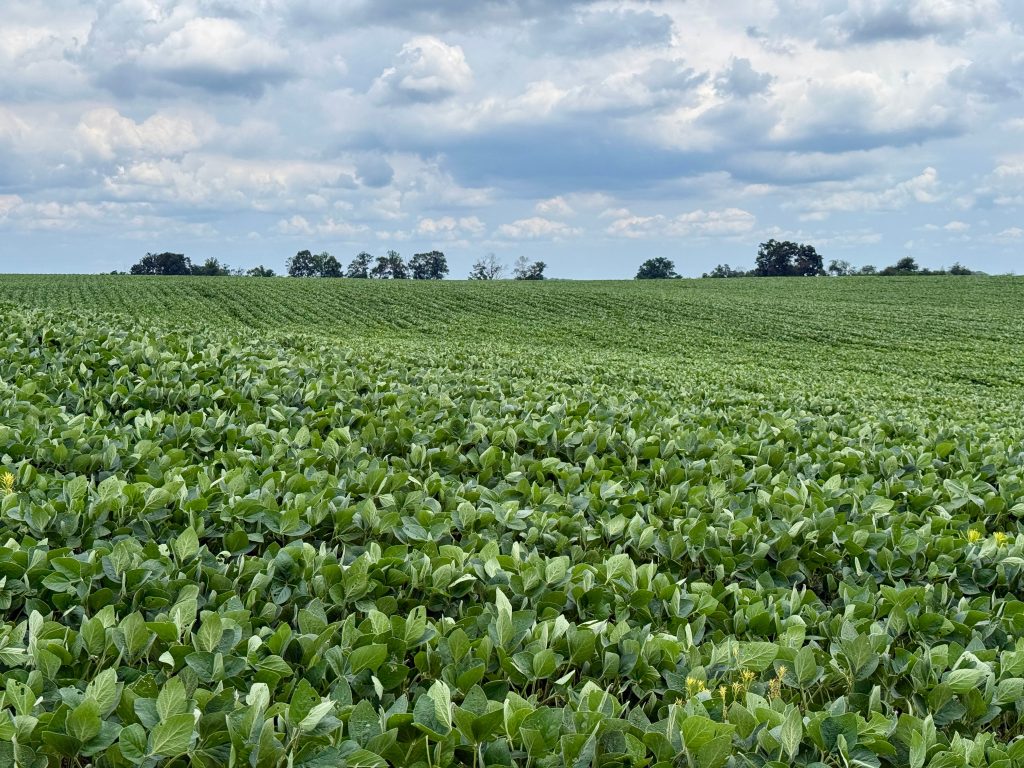
By August, scouting changes purpose.
Earlier in the growing season, most scouting is focused on finding problems while there is still time to correct them. Growers check stands, weeds, early nutrient deficiencies, insects, and diseases because timely treatment can protect yield.
Late-season scouting is still about protecting yield, but it also becomes an opportunity to understand what happened during the entire growing season.
August is when shallow roots become obvious under drought.
Nitrogen-loss zones show themselves.
Potassium deficiencies become easier to see.
Diseases develop enough expression to identify.
Late weed escapes rise above the canopy.
Weak corn stalks begin losing integrity.
Soybean pods reveal how well the crop is filling seed.
Storm damage becomes easier to evaluate in terms of harvestability.
Many of those problems may be too late to correct directly, but they can still change harvest order and improve the next fertility, drainage, weed-control, or hybrid decision.
That makes August scouting one of the most valuable management jobs remaining before harvest.
The need is especially apparent during 2026. Iowa State Extension’s August reports have described highly variable rainfall, late-season weed flushes, rootworm beetles, diseases, storm damage, dry areas, and corn advancing through dough and dent while soybeans move through pod and seed development.
Those conditions provide plenty to look for before the combine removes much of the evidence.
Crop stage gives context to everything else you see.
In corn, determine whether the field is in milk, dough, dent, or approaching physiological maturity.
In soybeans, determine whether plants are at R5, R6, or beginning the transition toward R7.
Two fields scouted on the same August afternoon can require different decisions if one was planted several weeks later than the other.
Crop stage influences remaining water use, treatment windows, harvest timing, and whether yellowing represents premature senescence or normal maturity.
USDA defines corn dough and dent based on kernel development and soybean reproductive progress through pod development and leaf drop, emphasizing that phenological stage rather than calendar date should guide interpretation.
Do not judge a field from the road.
The first rows experience different light, wind, weed pressure, animal feeding, compaction, and spray patterns from the interior.
Walk into representative areas.
Then intentionally visit areas that historically behave differently.
Check low spots.
Check ridges.
Walk compacted headlands.
Visit sandy soils.
Look at zones with unusual yield history.
Use satellite imagery, drone imagery, yield maps, or soil maps when available to help select those areas.
The goal is not to find one average plant.
The goal is to understand how different parts of the field are finishing.
A tall corn crop can carry disappointing ears.
A shorter field can sometimes have excellent kernel set.
Pull ears from representative plants.
Look at pollination success.
Check kernel number.
Evaluate tip-back.
Compare ear development between stressed and healthy areas.
Then look at grain-fill progress.
Break kernels and assess milk-line movement where appropriate.
The point is not to produce a perfect yield estimate from a handful of ears.
The point is to determine whether drought, pollination stress, hail, or another problem changed reproductive development in certain portions of the field.
A field can establish good kernel number and still lose yield if grain fill ends prematurely.
Evaluate how much green leaf area remains.
Look for lower-leaf senescence and determine whether it appears normal for the crop stage.
Pay closer attention when the canopy is dying rapidly well before maturity.
Premature senescence can result from drought, nitrogen deficiency, potassium deficiency, severe disease, root damage, or other stress.
The cause matters because it influences both current harvest risk and next year’s management.
Soybeans should also be opened and examined.
Look at pod number and seed development.
Check whether pods contain the expected number of seeds.
Compare seed size between stressed and healthy areas.
Look for aborted pods or missing seeds.
Current Minnesota Extension reporting from August 2026 has described pod and seed abortion in moisture-stressed soybeans, showing why looking inside pods is important even when the canopy appears reasonably good.
A soybean field may remain green and tall while reproductive stress has already reduced yield.
When you find yellow corn or soybeans, stop long enough to understand the pattern.
Corn nitrogen deficiency normally begins on lower leaves with yellowing progressing down the midrib in a V shape.
Potassium deficiency usually begins along leaf margins.
Soybeans can also show marginal K symptoms, including upper-canopy symptoms late in reproductive development under low-K or droughty conditions.
However, the leaf symptom is only the beginning.
Look at the field pattern.
Check soil moisture.
Dig roots.
Review soil-test history.
Consider disease.
Map the location for later sampling.
A leaf tells you what the plant is experiencing. The rest of the field tells you why.
Roots can explain differences that are impossible to understand above ground.
Dig both normal and stressed plants.
Compare root depth, mass, and distribution.
Look for rootworm feeding in corn.
Inspect for disease.
Check whether roots are flattened along a compacted layer.
Evaluate soil moisture below the surface.
Compaction can reduce potassium uptake and limit root development, which is one reason nutrient symptoms sometimes appear even where soil-test fertility is adequate.
Drought often makes those restricted zones obvious because shallow roots run out of usable moisture first.
Late-season corn scouting needs to include stalk quality.
Fields that experienced drought, soil saturation, foliar disease, hail, insect injury, or nutrient stress deserve particular attention.
Use the pinch test by squeezing the lowest aboveground internodes.
A stalk that collapses easily has likely lost internal strength.
Use the push test by pushing plants away from vertical and observing whether they recover.
Split questionable stalks lengthwise and inspect internal tissue.
Iowa State recommends checking stalk condition approximately 40 to 60 days after silking and sampling at least 100 plants across the field when assessing lodging risk.
This is not just a diagnostic exercise.
The results can change harvest order.
When stalks are deteriorating, waiting for ideal grain moisture can become expensive.
Wind can turn a manageable field into a difficult harvest within hours.
Down corn slows the combine, increases mechanical loss, and makes it harder for the header to gather ears.
Iowa State notes that harvest losses increase substantially as lodging becomes more severe and recommends earlier harvest consideration where stalk rot is widespread.
The drying bill from harvesting slightly wetter grain may be cheaper than the yield loss from leaving a fragile field standing too long.
Late-season scouting should include foliar and stem diseases in corn and soybeans.
Some fields may be beyond the economic window for fungicide treatment, but identifying the disease still has value.
Disease history can influence hybrid and variety selection.
It can affect rotation planning.
It can change residue management.
It helps explain premature senescence and lodging.
Iowa State’s August 2026 reports have noted that some corn and soybean fields were already advanced enough that additional fungicide treatment was unlikely to provide a return even though disease scouting remained useful.
Scouting and spraying are not the same activity.
A good scout gathers information even when the correct treatment is no treatment.
August makes weed failures visible.
Waterhemp, Palmer amaranth, ragweed, grasses, and other escapes can rise above the canopy.
Those weeds can add significant seed to the soil seedbank and increase next year’s management difficulty.
Record where they occur.
Determine whether the pattern suggests an application miss, late emergence, poor residual activity, inadequate canopy competition, or possible herbicide resistance.
Avoid off-label late-season applications simply because the weeds have become noticeable.
The useful management response may involve resistance testing, different residual chemistry, altered application timing, crop rotation, or other integrated weed-management practices next year.
Insect pressure does not disappear just because August has arrived.
Soybean insects can remain economically important in less mature fields.
Dry conditions can also favor certain pest problems.
Minnesota Extension’s August 2026 field observations discussed spider mites and aphids in the context of stressed soybean fields.
Treatment decisions should be based on current populations, economic thresholds, crop stage, and label requirements.
Calendar date alone should not determine whether an insect application is justified.
August drought frequently makes potassium problems easier to see.
Corn or soybean areas with marginal leaf yellowing and necrosis should be marked.
Record whether those symptoms correspond with slopes, compacted areas, particular soil types, or known low-testing zones.
After harvest, collect soil samples from the affected and unaffected areas separately.
If the affected zone tests low in K and produces lower yield, the case for potassium correction becomes much stronger.
If soil K remains adequate but the area has poor roots and compaction, fertilizer may not be the primary solution.
When August observations and postharvest soil testing confirm inadequate potassium, Supply Solutions Sulfate of Potash 0-0-50 provides a targeted K source without supplying nitrogen or phosphorus.
The reason to use it is to correct a documented potassium shortage.
The appropriate timing should follow soil-test recommendations and provide a good opportunity for the nutrient to become available before the next crop reaches peak K demand.
The problem it solves is inadequate potassium fertility.
The scouting process comes first because it identifies where the product is actually needed instead of treating the entire field based on a few stressed plants.
Yellow corn areas can reveal valuable information about nitrogen management.
Wet depressions may indicate where denitrification repeatedly occurs.
Sandy areas may show where nitrate movement and water supply differ.
Striped patterns may indicate application issues.
Compacted areas may show symptoms because shallow roots cannot access available N.
Map those areas and compare them with harvest yield.
If the underlying problem is a true nitrogen shortage that should be corrected in a future crop, Supply Solutions Urea 46-0-0 Nitrogen Fertilizer provides a concentrated nitrogen source.
The reason to use it is a confirmed crop nitrogen requirement.
The timing should be planned around crop demand, soil conditions, and moisture so that more of the applied N can be captured by the crop.
The problem it solves is insufficient nitrogen supply rather than every form of late-season yellowing.
A wet season can identify poorly drained acres with remarkable clarity.
Take photographs after major rainfall events.
Record how long water remains.
Note whether ponding follows topography, compaction, or damaged drainage structures.
Compare those areas with crop color and yield later.
Repeated saturation contributes to root stress, nitrogen loss, disease, and delayed field operations.
A drainage improvement may provide more long-term value than repeatedly increasing fertilizer rates in the same wet zones.
Dry seasons reveal a different map.
Watch which corn areas roll first during the day.
Look for soybean leaves flipping in specific zones.
Note where potassium symptoms become severe.
Dig roots in those areas.
Evaluate soil depth and texture.
Some drought-prone areas are limited by naturally shallow soil or low water-holding capacity.
Others are limited by compaction, low organic matter, poor root structure, or fertility.
Knowing the difference helps determine whether the problem can be improved economically.
Take both close-up and wide-angle photographs.
A close-up documents the leaf symptom.
A wider photograph documents the field pattern.
Include the date and crop stage.
Record the location.
If possible, mark the spot in a field-management platform or GPS system.
Months later, when soil-test and yield data are available, those photographs can help reconstruct what was happening when the crop was still standing.
The yield monitor provides economic context for August observations.
Did the potassium-deficient zone actually lose yield?
Did the wet depression finish poorly?
Did the drought-prone ridge have lighter corn kernels?
Did a disease patch correspond with premature senescence?
Did weak stalks lodge before harvest?
Did one soil type outperform another under the season’s weather?
These comparisons help prioritize management.
Not every visible symptom justifies a major investment.
Yield impact helps identify which problems are costing enough money to address first.
August is a good time to decide where postharvest samples should be collected.
Do not wait until the soil sampler is standing in the field.
Use crop symptoms, historical yields, soil maps, elevation, management zones, and previous test results to determine where separate samples would provide useful information.
Consistency matters.
Keep sampling depth standardized.
Use similar timing from one sampling cycle to the next.
Separate obviously different problem zones rather than averaging them into one number whenever the management system allows that level of precision.
The objective is to make soil testing answer questions raised by the crop.
August crop scouting is not simply a search for one more product to apply before harvest. It is the point in the season when farmers can see the combined effects of weather, soil, fertility, roots, pests, and management across the entire year. Weak stalks can change harvest order. Potassium symptoms can improve fall sampling. Nitrogen patterns can reveal drainage or timing problems. Weed escapes can reshape next year’s control program. Supply Solutions fertilizers such as Sulfate of Potash 0-0-50 and Urea 46-0-0 have clear roles when that scouting and testing process identifies a real nutrient need. Before the combine removes the crop and many of those clues disappear, walk the field carefully and record what it has been trying to tell you all season. Supply Solutions can help turn those observations into an appropriate fertilizer plan once the actual nutrient needs are clear.
Walk into a fertilizer warehouse, farm supply store, greenhouse, or garden center and the first thing most people notice on a fertilizer bag is a
When fertilizer prices are high, farmers naturally want every pound of nutrient they purchase to contribute as much as possible to crop production. That makes
Give us a call or visit our store, and we’ll help you find the right solution for your business.