

Uncategorized
How to Read a Fertilizer Grade: What N-P-K Numbers Actually Tell You
Walk into a fertilizer warehouse, farm supply store, greenhouse, or garden center and the first thing most people notice on a fertilizer bag is a
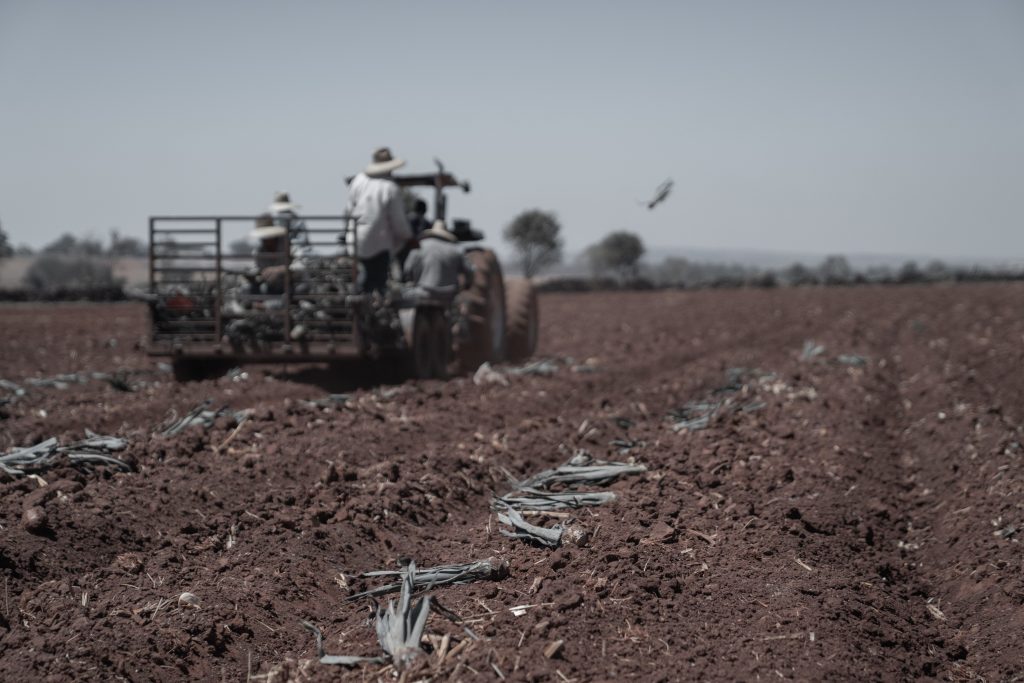
A soil-test potassium number looks precise when it comes back from the laboratory. The report may show a specific concentration, assign the field to a low, optimum, or high category, and provide a fertilizer recommendation that appears straightforward. After a dry summer, however, that number may deserve more interpretation than it would following a season with normal rainfall.
Potassium is particularly sensitive to the relationship among soil moisture, crop uptake, plant residue, clay minerals, and the different pools of K held within the soil. Prolonged dryness can affect all of those relationships. It can also make the physical act of collecting a representative soil sample more difficult, especially when the surface is hard, powdery, or strongly stratified.
This matters in August 2026 because dry conditions remain a significant issue in parts of U.S. crop country. University of Minnesota Extension reported on August 24 that portions of Minnesota were still dry or very dry after a hot growing season with limited rainfall, while the U.S. Drought Monitor continues to show drought across multiple agricultural regions.
For farmers preparing to soil sample after harvest, the practical lesson is not that a fall potassium test following drought is unreliable or should be ignored. The lesson is that the result needs to be evaluated alongside sampling conditions, previous soil tests, crop yield, nutrient removal, field symptoms, soil type, and rainfall between crop maturity and sampling.
A surprisingly low potassium result may indicate that the field truly needs more K. It may also be partly influenced by the unusually dry conditions under which the crop finished and the soil was sampled. Knowing the difference can prevent both under-fertilization and an unnecessarily aggressive potassium application.
One reason potassium tests can be confusing is that the number on the laboratory report does not represent every pound of potassium contained in the soil.
Soils contain potassium in several forms. A relatively small amount is dissolved in the soil solution, where it is immediately available for root uptake. Another portion is held on exchange sites associated with clay and organic matter and can replenish the soil solution as plants remove K. Additional potassium can be held more tightly within clay minerals, while a much larger quantity may be structurally bound inside minerals and unavailable to crops over normal production timeframes.
Routine soil tests are designed to estimate the portion of the soil K supply that has been correlated through field research with crop response to fertilizer. They are not measurements of total potassium contained in the soil.
This distinction matters after drought because the balance among those potassium pools changes with moisture. During active crop growth, roots continually remove K from the more available pools. Under normal moisture conditions, potassium can move among soil pools and through the soil toward roots. As soil becomes extremely dry, those processes slow and the readily measured pool may not recover in the same way it would under wetter conditions.
Iowa State University Extension explains that crops act somewhat like pumps, withdrawing phosphorus and potassium from the available soil pools during growth. When normal moisture is present, less-available pools help replenish the readily available pool as crop uptake slows. Drought interferes with that replenishment, and the effect is generally more important for potassium than for phosphorus.
As a result, a laboratory may measure less extractable K than a grower would have expected based on previous tests and fertilizer history.
That does not make the laboratory wrong. It means the soil was sampled while potassium was distributed differently among its various pools.
Potassium behaves differently from nutrients that are incorporated heavily into organic compounds within plant tissue. Much of the K contained in crop residue remains in relatively soluble forms and can move back into the soil after plant tissue dies and receives rainfall.
This recycling can be significant after physiological maturity and harvest.
When normal late-summer and fall rainfall wets leaves, stalks, stems, and residue, potassium can be leached from that plant material back into the soil. If the period from crop maturity until soil sampling remains unusually dry, less of that recycling takes place before the sample is collected.
Iowa State has identified this as one of the major reasons fall soil-test K values may appear lower after dry conditions. Below-normal rainfall following physiological maturity means less K is washed from mature plant tissue and residue into the soil before sampling.
This effect can create a situation that initially seems contradictory. A drought-damaged field may have produced a smaller crop and therefore removed less potassium in harvested grain, which would normally suggest that more K should remain in the field. At the same time, dry conditions can reduce residue recycling and slow replenishment of the readily extractable soil K pool, pushing the measured soil-test result in the opposite direction.
Both processes can occur in the same field.
That is why one unusually low fall K test following drought should be interpreted in the context of what happened during the season rather than treated as an isolated number.
Crop removal adds another layer to the interpretation.
A drought-reduced corn or soybean crop usually removes less phosphorus and potassium in harvested grain than the higher-yield crop the farmer originally expected. If a fertility program was based on replacing estimated nutrient removal, the actual maintenance requirement may therefore be lower than planned.
Iowa State specifically recommends considering actual yield and estimated P and K removal when evaluating maintenance fertilizer rates after a drought-affected crop.
However, the timing and severity of the drought determine how much this matters. If rainfall became limited only late in August and final yield was only modestly reduced, nutrient removal may not be substantially lower. If drought sharply reduced grain production over a longer portion of the growing season, the reduction in crop removal may be considerably larger.
Farmers with reliable yield-monitor data have an advantage here because field-average yield may hide major differences among management zones. A sandy ridge may have yielded far below normal while deeper ground produced a respectable crop. Treating both areas as though they removed the same amount of potassium can make the fertility plan less precise.
This is another reason the soil test should be evaluated together with yield data rather than separately. Soil-test level indicates the likelihood of response to fertilizer, while actual harvested yield helps explain how much nutrient left the field.
Visible crop symptoms can add useful information, but they also need careful interpretation.
Corn suffering from potassium deficiency typically develops yellowing and eventual browning along older leaf margins. Soybeans can show similar marginal chlorosis and necrosis. Under severe conditions, affected areas may be obvious from across the field.
A farmer who sees those symptoms in August may reasonably expect the fall soil test to confirm low K.
Sometimes it does.
In other cases, dry soil rather than inadequate total K supply was the main reason the crop could not obtain enough potassium.
Potassium movement toward roots depends heavily on diffusion through soil water. As the soil dries, that movement becomes slower. Root growth and root activity can also decline in the dry portion of the profile, reducing the amount of soil from which the crop can obtain nutrients.
Iowa State has documented potassium-deficiency symptoms in both corn and soybeans where preplant fertilization and soil-test K were adequate. In those situations, dry topsoil, compaction, root injury, or other factors limiting water and root activity restricted potassium uptake enough to produce visible deficiency symptoms.
This means an August symptom and a fall soil-test result need to be interpreted together carefully.
If a field had a history of low-testing potassium, received limited K fertilizer, showed strong deficiency symptoms, and tests low again after harvest, the evidence points fairly consistently toward a real fertility shortage.
If a field had historically adequate potassium, received a sound fertility program, developed symptoms only during severe drought, and then produces one unexpectedly low fall test collected from extremely dry soil, the situation deserves more scrutiny before a large fertilizer-rate change is made.
The objective is not to find an excuse to avoid applying potassium. The objective is to distinguish a genuine soil shortage from a temporary drought-driven disruption in potassium availability and measurement.
Dry weather does not affect only soil chemistry. It also makes good sampling technique harder.
A soil probe should collect a complete core to a consistent depth. When soil becomes extremely hard, getting the probe to the full sampling depth can be difficult. When the surface becomes powdery, part of the upper portion of the core can fall out before reaching the collection bucket.
Either problem changes the sample sent to the laboratory.
Losing surface soil can be particularly important in no-till fields, pastures, and other systems where phosphorus and potassium have become stratified near the soil surface. If the upper inch contains greater nutrient concentrations than the soil below it, losing that material from the sample can reduce the measured P and K result.
Sampling too shallow can create the opposite type of distortion by overrepresenting nutrient-rich surface soil.
Iowa State warns that controlling sampling depth and collecting the complete soil core become more difficult during very dry conditions. The risk is particularly significant where nutrients are strongly stratified with depth.
A farmer may therefore receive an unexpectedly low potassium value because of actual drought effects on soil K, sampling error, or a combination of the two.
Careful field technique cannot eliminate the chemical effects of drought, but it can prevent poor sampling from adding unnecessary uncertainty.
When harvest occurs under extremely dry conditions, there is often no need to rush immediately behind the combine with a soil probe.
Iowa State recommends considering a delay until meaningful rainfall has wetted the full sampling depth. Its guidance suggests waiting about a week after sufficient rainfall has moistened the sampling zone before collecting samples when practical.
The amount of rain required cannot be reduced to one universal number because soil texture, initial dryness, residue, infiltration, and rainfall intensity all influence how deeply water moves.
The important point is that a small shower that dampens the residue and top half-inch of soil is not the same as rainfall that re-wets the full sampling depth.
Allowing the soil to rehydrate helps in two ways. Physically, the probe can collect a more complete and consistently deep core. Chemically, moisture allows some of the normal potassium recycling and redistribution processes to resume.
Waiting does not guarantee that every drought effect disappears. It simply improves the likelihood that the sample provides a more representative basis for making a fertilizer decision.
This can be particularly important when a field is close to the boundary between soil-test interpretation categories. A modest change in measured K may influence whether the recommendation calls for building fertility, maintaining it, or reducing application.
Nutrient stratification deserves particular attention in long-term no-till.
Phosphorus and potassium applied to the soil surface tend to become concentrated in the upper portion of the profile because they do not move rapidly downward under most conditions. Crop residue also returns nutrients to the surface.
As a result, a difference of only an inch in sampling depth can meaningfully affect the laboratory result.
If historical samples were collected consistently to the locally recommended depth but drought makes this year’s cores several inches shallower or causes the surface portion to fall away, comparisons with previous tests become weaker.
The same principle applies outside no-till. Chisel-plowed and disked soils can also exhibit nutrient stratification, although the pattern may be less pronounced depending on tillage depth and mixing.
The sampling depth used should follow the university recommendation and laboratory calibration appropriate for the state and soil-test method. Growers should resist changing depth simply because hard soil makes the usual protocol difficult.
A sample collected at the correct time and depth several weeks later is more valuable than a rushed sample that cannot be compared confidently with the farm’s historical records.
One of the best safeguards against overreacting to a drought-affected potassium test is having a history.
Suppose a field tested comfortably in the optimum range four years ago and again two years ago. Fertilizer was applied according to the farm’s established program, yields were normal until the current dry season, and no major K deficiency had been observed previously.
If the postharvest result suddenly falls far below the historical trend, that change deserves investigation.
The new number may be accurate. Several years of high yield could have removed enough potassium to move the field into a lower category. Fertilizer rates may not have kept pace with crop removal, or some zones may have been lower than the old field average suggested.
However, if the result was collected during extreme dryness, drought-related testing effects should also be considered.
The farmer can compare actual yield, potassium removal, fertilizer records, August symptoms, rainfall after physiological maturity, sampling depth, and soil moisture at sampling. If the new value still seems inconsistent with the larger body of evidence, confirming the result with another sample after soil moisture improves may be more defensible than making an unusually large fertilizer adjustment from one test.
Long-term trends are one reason consistent sampling methods matter so much. A series of comparable tests allows growers to distinguish a gradual fertility decline from an unusual one-year fluctuation.
A dry summer often reveals field variability that is much less obvious in a favorable year.
Corn may show marginal K symptoms on an eroded slope while deeper soil remains healthy. Soybeans may develop deficiency symptoms in compacted headlands. Sandy areas may dry sooner and show nutrient stress weeks before heavier soil.
Those differences should not automatically be blended into one composite sample.
If an affected area can be identified clearly, sample it separately from a nearby healthy area with similar crop stage and management. Comparing the two results can help determine whether soil K itself contributed to the symptom.
If the stressed zone tests substantially lower in potassium than the healthy zone, the fertility explanation becomes stronger.
If both areas test similarly and within an adequate range, the farmer should look more closely at soil moisture, rooting depth, compaction, insects, disease, or other factors affecting potassium uptake.
This paired approach is particularly useful when a crop displayed potassium symptoms during drought because visual symptoms alone cannot distinguish inadequate soil K from an induced deficiency caused by restricted uptake.
August scouting therefore adds value to fall soil testing. Farmers who record symptom locations while the crop is standing can return to the same zones after harvest instead of trying to reconstruct the pattern after residue covers the field.
Another source of confusion is the difference between soil-test potassium and fertilizer grade.
A laboratory may report soil K in parts per million, pounds per acre, or an interpretation category based on a particular extraction method. Fertilizer, on the other hand, expresses potassium in the guaranteed analysis as potassium oxide equivalent, or K₂O.
That is why a fertilizer labeled 0-0-60 does not mean that 60 percent of the bag is elemental potassium. The third number represents 60 percent K₂O equivalent, which is the standard fertilizer-label convention used in the United States.
Farmers should therefore avoid trying to convert a soil-test number directly into fertilizer pounds without using the recommendation system associated with that laboratory and region.
Soil-test calibration research connects a particular extraction method and soil-test level with the probability of crop response to fertilizer. Different states may use different extraction procedures, interpretation categories, or critical values because soils and calibration research differ.
A soil-test potassium concentration that is considered optimum under one recommendation system should not automatically be interpreted using a table from another state.
This becomes particularly important when drought already adds uncertainty. The best response is to stay within the calibrated soil-testing system rather than introduce additional uncertainty through incompatible interpretation methods.
One of the most important economic principles in potassium management is that crop need and fertilizer need are not always the same thing.
Corn and soybeans require potassium regardless of soil-test level. A high-testing soil can supply that requirement from existing fertility without necessarily responding to additional fertilizer.
That means drought alone is not a reason to apply potash.
A crop may have experienced severe water stress, rolled leaves, reduced grain fill, and even drought-induced K symptoms while growing in soil that already contains adequate potassium. If the soil remains in a category where fertilizer response is unlikely, adding more K simply because the season was stressful may provide little economic return.
This is why potassium recommendations are built around calibrated soil tests.
For example, Mississippi State Extension notes that potassium fertilizer is not generally recommended where its soil-test index is already high or very high, with crop-specific exceptions. The broader principle is that rates should follow the calibrated probability of response rather than the assumption that more K always improves crop resilience.
Adequate potassium nutrition matters during stress, but the goal is to maintain adequate fertility before stress occurs rather than repeatedly fertilize soils that already contain enough K.
The opposite mistake is equally risky.
Once farmers learn that dry conditions can produce lower-than-expected soil-test K results, it can be tempting to dismiss every low potassium test following drought as an artifact.
That is not what the research says.
Drought can influence the result, but a low-testing field may still be genuinely low.
If previous soil tests were already trending downward, the field has removed substantial potassium through several high-yield crops, August deficiency symptoms were severe, and the new soil test confirms low K, there is little reason to assume the entire result is caused by dryness.
In that situation, failing to correct potassium could leave the next crop entering the growing season with a preventable nutrient limitation.
The goal is not to explain away the soil test. The goal is to determine whether the new result fits the rest of the field evidence.
When several independent pieces of information point toward a potassium shortage, the fertilizer program should respond accordingly.
Where soil testing confirms that potassium needs to be built or maintained, one option available from Supply Solutions is Muriate of Potash 0-0-60. This is a concentrated potassium chloride fertilizer that supplies K without adding nitrogen or phosphorus.
The agronomic reason to use Muriate of Potash is straightforward: the soil-test recommendation indicates that potassium is needed, and the cropping system is suitable for a chloride-containing K source. Potassium chloride is the most commonly used K fertilizer in broad-acre agriculture because of its high K concentration and generally favorable cost per unit of nutrient. Penn State Extension identifies KCl as the most common fertilizer K source, while other Extension guidance likewise describes it as a standard option for crop production.
The application timing should follow regional recommendations, soil texture, crop rotation, and loss risk. On soils with reasonable nutrient-holding capacity, fall application can fit many row-crop systems. On coarse, low-CEC soils where overwinter potassium loss is a greater concern, closer-to-planting application may be more appropriate. Mississippi State, for example, cautions that fall K can be more vulnerable to loss on sandy soils with low cation-exchange capacity.
The problem Muriate of Potash solves is inadequate potassium fertility. It should not be applied because a dry summer made crops look stressed if the soil test and field history indicate that K is already sufficient.
Source selection also matters. Because Muriate of Potash supplies chloride along with potassium and has a relatively high salt index, it requires more caution with chloride-sensitive crops, salt-sensitive production systems, or situations where substantial chloride is already present. Extension sources recommend considering sulfate-based potassium fertilizers where chloride sensitivity or salt concerns make KCl a less appropriate fit.
Where potassium is needed but the crop or production system calls for a lower-chloride source, Supply Solutions Sulfate of Potash 0-0-50 provides another option. The product supplies potassium without nitrogen or phosphorus and can fit situations where a sulfate-based source is preferred.
Sulfate of potash is commonly used when chloride sensitivity, salinity concerns, or a simultaneous sulfur need makes potassium sulfate a better fit than potassium chloride. Mississippi State Extension describes potassium sulfate as approximately 50 percent K₂O with sulfur and notes its usefulness for chloride-sensitive crops and situations where chloride buildup is a concern.
The important distinction is that the choice between Muriate of Potash and Sulfate of Potash should be made after the potassium requirement has been established.
The soil test answers whether additional K is likely to be needed. Crop sensitivity, soil characteristics, sulfur requirement, chloride considerations, application timing, and economics help determine which potassium source is the better choice.
Selecting the product before answering the first question reverses the process.
Some fall soil tests reveal more than one fertility concern.
If a field genuinely requires potassium and magnesium, potassium-magnesium sulfate can provide both nutrients while also supplying sulfur. Mississippi State Extension identifies potassium-magnesium sulfate as an appropriate K source where magnesium is also needed.
The key word is needed.
A farmer should not automatically choose a multi-nutrient product because it seems more complete. If magnesium already tests adequately and no crop or regional evidence indicates a sulfur limitation, supplying additional nutrients may not improve the response.
Potassium-only products are often more logical when K is the only deficiency. A combined fertilizer becomes useful when the field’s nutrient requirements actually match its analysis.
This is one more reason careful interpretation of a drought-season soil test matters. The goal is not to find the fertilizer containing the greatest number of nutrients. The goal is to identify the nutrient or nutrients most likely to limit the next crop and correct them efficiently.
No single piece of information provides a perfect potassium recommendation after a dry summer.
The soil test is essential because fertilizer recommendations are calibrated around soil-test levels and probability of crop response. Yield data helps estimate how much potassium left the field with harvest. August crop symptoms identify areas where K uptake may have been limited. Soil moisture and rainfall history help explain whether drought may have influenced the soil-test value. Previous tests show whether the new result continues a long-term trend or represents an abrupt change.
Taken together, those pieces create a much stronger fertility decision than any one of them alone.
Consider a field that tested optimum several years ago but has produced several strong crops since then. This summer, marginal leaf symptoms appeared on the highest-yielding areas and the postharvest test shows potassium moving into a lower category. Even after allowing for drought effects, the overall evidence may support increasing K fertilizer.
Now consider a neighboring field that historically tests high, received adequate K fertilizer, and only developed mild symptoms after the root zone became severely dry. If a single dry-soil sample comes back unexpectedly low, confirming that result after moisture conditions improve may be more reasonable before making a major fertility change.
Both fields experienced drought.
They should not automatically receive the same potassium recommendation.
Harvest creates pressure to move quickly. Fertilizer prices, dealer schedules, field conditions, and the approaching winter can make it tempting to take one soil sample, read one number, and get the spreader moving.
After a dry summer, a little additional interpretation can be worth considerably more than speed.
If soil remains extremely dry, allow meaningful rainfall to wet the sampling depth when the schedule permits. Collect complete cores at the proper depth. Compare new K results with previous testing rather than looking at them in isolation. Use actual yield instead of preseason yield expectations when crop removal is part of the recommendation. Return to the potassium-deficiency areas identified during August and sample them separately from normal portions of the field.
Most importantly, treat an unusually low result as information that needs context rather than as either unquestionable truth or something to dismiss because drought occurred.
Potassium is too important to manage casually, but fertilizer dollars are also too expensive to spend correcting a shortage that does not actually exist.
When the evidence confirms that soil K needs to be raised or maintained, Supply Solutions offers potassium sources that can be matched to the cropping system. Muriate of Potash 0-0-60 provides a concentrated potassium source for appropriate broad-acre and other applications where chloride is acceptable, while Sulfate of Potash 0-0-50 can fit situations where a sulfate-based, lower-chloride source is more appropriate. The correct choice begins with an accurately collected soil sample and an interpretation that accounts for what the dry summer did to the crop and the soil.
A drought year can make potassium management more complicated, but it can also make the weak areas of a fertility program easier to see. Farmers who combine fall testing with August field observations, sampling conditions, previous soil-test trends, and actual harvest results can separate a genuine K shortage from the temporary effects of dry soil much more confidently. Supply Solutions can help growers select the appropriate potassium source once that need has been established, allowing the fertilizer application to solve a documented fertility problem rather than simply react to an unusual number on a dry-season soil test.
Walk into a fertilizer warehouse, farm supply store, greenhouse, or garden center and the first thing most people notice on a fertilizer bag is a

When fertilizer prices are high, farmers naturally want every pound of nutrient they purchase to contribute as much as possible to crop production. That makes
Give us a call or visit our store, and we’ll help you find the right solution for your business.