
Uncategorized
How to Read a Fertilizer Grade: What N-P-K Numbers Actually Tell You
Walk into a fertilizer warehouse, farm supply store, greenhouse, or garden center and the first thing most people notice on a fertilizer bag is a
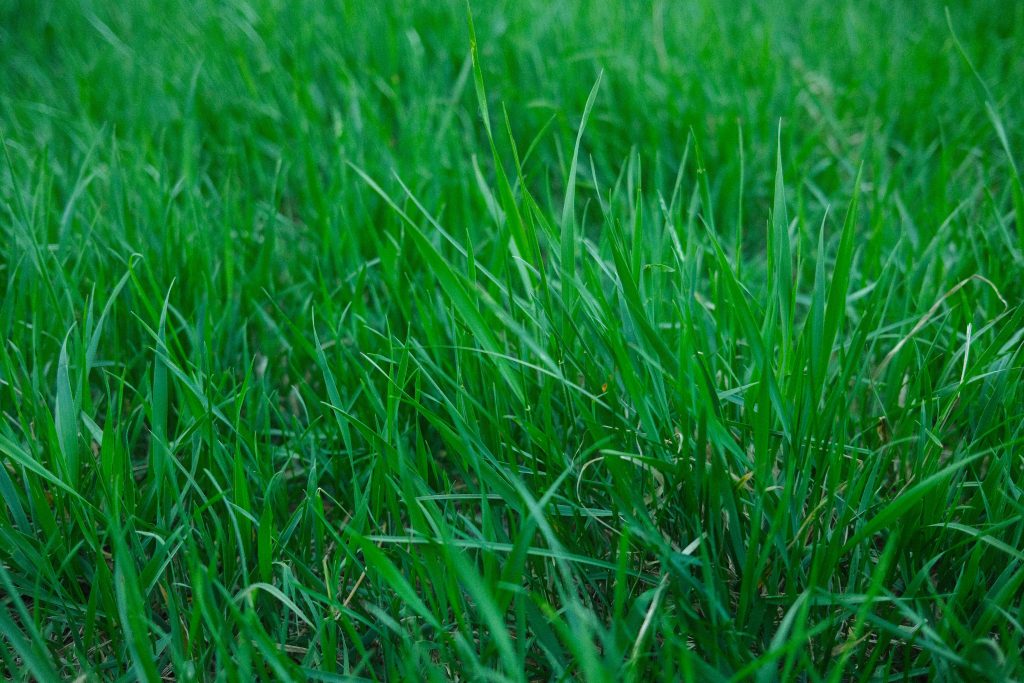
By August, a productive bermudagrass hayfield may already have sent several cuttings through the baler. With adequate moisture and fertility, another cutting may still be developing, especially across the southern United States where bermudagrass can remain productive well into late summer and early fall. At that point in the season, most fertilizer conversations naturally turn toward nitrogen because nitrogen has such a visible effect on regrowth, forage yield, and crude protein.
Nitrogen deserves that attention, but it is not the only nutrient leaving the field.
Every bermudagrass bale also removes potassium, and repeated hay harvest can export enough K to change soil fertility much faster than many producers expect. Unlike a grazed pasture, where livestock return much of the potassium they consume through manure and urine, a hayfield loses those nutrients every time the forage is baled and hauled somewhere else.
That difference can become substantial in an intensively managed field. Oklahoma State University Extension estimates that a five-ton bermudagrass hay crop can remove roughly 216 pounds of K₂O per acre. UGA Cooperative Extension provides a similar picture, estimating that six tons of bermudagrass hay can remove approximately 252 pounds of K₂O per acre.
Those numbers explain why potassium should receive more attention as the summer progresses. A hayfield may continue responding to nitrogen while gradually drawing down soil K. Eventually, adding more nitrogen without correcting a potassium shortage can become an expensive way to ask the field for production it no longer has the fertility to support.
August is therefore a useful time to look beyond the next cutting and ask whether the potassium budget is keeping pace with what the hay operation is removing.
The difference between hay and grazing is one of the most important concepts in bermudagrass fertility.
When cattle graze a pasture, they remove forage temporarily, but much of the potassium in that forage eventually returns to the same general area through manure and especially urine. Nutrient distribution is not perfectly uniform, and animals can concentrate nutrients around water, shade, mineral feeders, and loafing areas, but relatively little potassium permanently leaves the farm in the animal itself.
Hay production changes that cycle.
The entire aboveground portion of the harvested forage is removed, baled, loaded, and transported away. The potassium contained in those leaves and stems leaves with it. Oklahoma State provides a striking comparison: under one example grazing system, less than one pound of K₂O per acre was permanently removed, while a five-ton bermudagrass hay crop removed more than 200 pounds of K₂O per acre.
That is why a bermudagrass pasture and a bermudagrass hayfield cannot be managed with the same potassium assumptions.
A grazed field may maintain soil-test K for years with relatively modest fertilizer additions if the soil began with an adequate reserve. A heavily harvested hayfield can move toward deficiency much faster because each cutting represents another export of nutrients.
This becomes especially important when hay is sold off the farm. A producer is not only selling dry matter, protein, and energy. The sale also transfers nitrogen, phosphorus, potassium, calcium, magnesium, sulfur, and other nutrients that were originally supplied by the soil and fertilizer program.
If those nutrient exports are ignored when hay prices are calculated, the operation can gradually sell soil fertility without accounting for the cost of replacing it.
Bermudagrass is capable of producing large amounts of dry matter under good management. That productivity is one of the reasons it is such a valuable hay crop across the South, but high production also creates substantial nutrient demand.
Oklahoma State describes actively growing bermudagrass as removing nitrogen, phosphate, and potash in an approximate ratio of 4:1:3. Its fertility guidance notes that for each 100 pounds of nitrogen associated with bermudagrass production, nutrient removal can correspond to roughly 25 pounds of P₂O₅ and 75 pounds of K₂O.
That relationship helps explain why a nitrogen-only fertility program eventually runs into trouble.
Nitrogen may stimulate additional grass growth, but producing that additional forage also increases the amount of potassium incorporated into plant tissue. When the hay is harvested, the K leaves the field.
A field that receives repeated nitrogen applications while potassium removal is ignored can therefore become increasingly unbalanced.
Potassium is involved in water regulation, enzyme activation, movement of carbohydrates, stomatal function, and many other plant processes. A bermudagrass plant that is truly K deficient has less capacity to perform normally even if nitrogen is abundant.
The field may continue producing forage for a while, particularly if the soil initially contained a substantial potassium reserve. Eventually, however, soil-test K can fall into a range where crop response becomes more likely.
At that point, another nitrogen application cannot replace the missing potassium.
One of the more important lessons from bermudagrass fertility research is that nutrients do not work independently.
If potassium becomes deficient, nitrogen-use efficiency can decline because the grass cannot convert the additional nitrogen into its full potential amount of forage.
Oklahoma State has demonstrated this interaction in bermudagrass research. Its fertility guidance shows that inadequate phosphorus or potassium can reduce forage yield and reduce the efficiency of nitrogen that was already applied. When more than one nutrient is deficient, the limitations can compound each other rather than simply adding together.
For a hay producer, this matters economically.
Suppose nitrogen is purchased and applied after each cutting with the expectation of producing strong regrowth. If soil potassium has fallen below the level needed to support that growth, part of the nitrogen investment may produce less forage than expected.
The temptation is sometimes to respond by increasing nitrogen again.
That can make the problem worse economically because the nutrient that is already limiting production has not changed. More nitrogen cannot substitute for inadequate potassium any more than potassium can substitute for lack of rainfall.
Balanced fertility does not mean applying equal amounts of every nutrient. It means ensuring that no essential nutrient becomes limiting relative to the production goal.
The first hay cutting of the year begins removing potassium, but the cumulative effect becomes more important as the season progresses.
By August, a productive field may have gone through two, three, or more harvest cycles depending on location, variety, rainfall, cutting interval, and management intensity. Each cutting has removed another portion of the potassium contained in the forage.
A field that began spring with marginal soil-test K may therefore be in a much different position by late summer.
This does not mean the soil becomes completely depleted after a few cuttings. Potassium exists in several soil pools, and some soils can supply meaningful K beyond what a routine soil test measures as immediately available. However, repeated high removal puts pressure on the exchangeable potassium pool that crops depend on most directly.
The practical question is whether the existing soil reserve and fertilizer program are keeping soil-test K in the range recommended for productive bermudagrass.
Annual soil testing is particularly useful in intensively managed hay systems. Oklahoma State recommends annual soil testing for heavily managed bermudagrass hayfields so producers can monitor pH, phosphorus, and potassium rather than waiting until visible deficiency develops.
That is a stronger approach than trying to diagnose fertility entirely from crop appearance.
Potassium deficiency in grasses commonly appears as yellowing or browning beginning on older leaf tissue, often around leaf margins or tips. Under more severe conditions, growth can slow and the stand may lose vigor.
The difficulty is that late-summer bermudagrass can look weak for many other reasons.
Drought can reduce growth dramatically. Fall armyworms or other insects can remove leaf area. Rust or other diseases may discolor the canopy. Compaction can limit rooting. Low soil pH can restrict nutrient availability and root activity. A field simply approaching the end of its productive warm-season window will also behave differently from one growing actively in June.
This is why visual diagnosis should be paired with soil testing and field history.
A thin or pale bermudagrass field does not automatically need potassium, and applying K without confirming the need can waste money. Oklahoma State specifically cautions that bermudagrass is capable of taking up potassium in excess of its immediate physiological requirement when K is abundant, a behavior often called luxury consumption. For that reason, the university advises against applying more potassium than soil-test recommendations support.
That point is especially important for hay producers who see how much potassium the crop can remove and conclude that every pound should automatically be replaced.
Crop removal provides useful context, but the soil test still determines whether a corrective or maintenance application is justified.
If five tons of hay remove more than 200 pounds of K₂O per acre, it can seem logical to replace exactly that amount every year.
Real soil fertility is more complicated.
A field testing high in potassium may already contain enough available K to support production for some time without immediate pound-for-pound replacement. A low-testing field may need more attention than simple crop removal would indicate because the objective is not only to replace this year’s export but also to avoid allowing a deficient soil to limit future production.
Different states also use different soil-test interpretation systems and recommendation philosophies.
The important point is that removal figures should help producers understand the scale of nutrient export, while soil testing should guide the actual fertilizer rate.
This distinction becomes more valuable when fertilizer prices are high. If soil K remains high, automatically replacing a large removal number may produce little immediate return. If soil K is low, however, withholding potassium simply because fertilizer is expensive can reduce hay production and make nitrogen applications less efficient.
The best fertility budget connects crop removal with soil-test status instead of allowing either one to make the entire decision.
A field producing three tons of hay does not export the same amount of potassium as one producing seven tons.
That sounds obvious, but hay yield is often estimated loosely. Producers may know how many bales came off a field without knowing average bale weight accurately enough to calculate tons of dry matter removed.
For nutrient budgeting, getting closer to actual tonnage is useful.
Representative bales can be weighed rather than relying entirely on assumed weights. Moisture should also be considered because a 1,200-pound bale does not contain 1,200 pounds of dry matter.
The objective does not need to be laboratory precision. The producer simply needs a reasonable estimate of how much forage left the field.
This becomes particularly important when comparing years. If drought cut production in half, potassium removal likely declined as well. If favorable rain produced an exceptional hay year, nutrient export increased.
During 2026, southern forage conditions have been variable. UGA Extension reported that drought created a difficult start to the hay season in portions of Georgia before later rainfall improved pasture and hayfield growth. Oklahoma State’s August 2026 forage guidance similarly emphasizes that late-season bermudagrass production remains strongly dependent on August and September rainfall, particularly in western parts of the state.
That variability is another reason not to apply the same removal estimate automatically every year.
Use the crop that was actually harvested.
Late-summer potassium diagnosis becomes more difficult under drought.
Potassium moves toward plant roots largely through diffusion in soil water. When the soil dries, that movement slows. Root growth and activity also decline in the driest parts of the soil profile.
A bermudagrass plant can therefore experience reduced K uptake even when the soil contains a reasonable potassium supply.
At the same time, lack of water dramatically reduces forage growth. UGA’s revised 2026 drought guidance notes that bermudagrass growth can slow sharply or stop altogether as drought intensifies, particularly on soils with limited water-holding capacity.
In that situation, fertilizer cannot replace rainfall.
Applying potassium to a severely drought-stressed field may be appropriate if the soil test shows that K genuinely needs correction, but the producer should not expect a dry field to immediately convert that application into additional hay.
The same principle applies to nitrogen.
A balanced fertilizer program positions the field to respond when moisture is available. It does not eliminate the dependence of bermudagrass production on water.
This is why August fertilizer decisions should account for the current root-zone moisture and rainfall outlook, especially when another hay cutting is expected before fall.
Potassium fertilizers need soil moisture before plants can use them effectively.
Unlike urea, potassium fertilizers are not primarily managed around ammonia volatilization. Their movement and availability are instead influenced by dissolution, soil exchange capacity, rainfall, soil texture, and root activity.
On medium- and fine-textured soils, potassium is attracted to negatively charged exchange sites on clay and organic matter. That reduces its mobility compared with nitrate.
Sandy soils have fewer exchange sites and usually lower cation-exchange capacity, so potassium can be more vulnerable to movement below the most active root zone under heavy rainfall or irrigation.
This means the best application timing can differ among fields.
A heavier-textured hayfield with low soil-test K may provide flexibility for applying potassium between cuttings or as part of a broader annual program. A coarse sandy field may benefit from more attention to application timing and possibly dividing larger K needs so that the nutrient is not placed far ahead of crop demand.
Local Extension recommendations should guide the final rate and timing because southern bermudagrass regions include a wide range of soils, from deep clays to very sandy Coastal Plain ground.
The field’s ability to hold potassium should be part of the fertility plan.
Bermudagrass hay management is different from fertilizing a crop that receives one preplant application and then grows until harvest.
Multiple harvest cycles create multiple periods of regrowth.
Nitrogen is commonly split during the season because each cutting is followed by another period of vegetative growth. Potassium management can also deserve attention through the season where soil-test K is low and removal is high.
This does not mean potassium needs to be applied after every cutting.
The appropriate strategy depends on soil-test level, total recommended K rate, soil texture, rainfall, yield expectation, and local guidelines. In some intensive hay systems, splitting a substantial potassium requirement can help keep K available through repeated harvest cycles while reducing the amount applied at any single time.
The important part is that potassium is present when the plant needs it.
Waiting until the stand has already weakened after several high-yield cuttings is less desirable than maintaining adequate soil fertility from the beginning.
August soil and plant observations can help determine whether the spring program is holding up or whether the field needs a different strategy in the future.
When soil testing confirms that a bermudagrass hayfield needs potassium and additional nitrogen or phosphorus is not required in the same application, Supply Solutions Muriate of Potash 0-0-60 provides a concentrated potassium source. Supply Solutions identifies the product as a 0-0-60 fertilizer, meaning potassium is the primary guaranteed plant nutrient supplied.
The reason to use a product like Muriate of Potash in a bermudagrass hayfield is straightforward: repeated hay harvest has created a documented potassium requirement, and soil testing shows that existing K fertility is not sufficient to maintain the desired production level.
The appropriate application window depends on soil conditions and management. On a productive field with active regrowth and adequate moisture, potassium can be incorporated into the fertility program so that the grass has access to K during subsequent growth. Where annual soil-test recommendations call for a substantial amount, producers should follow local Extension guidance regarding whether the rate should be applied at once or divided during the season.
The problem this fertilizer solves is inadequate potassium fertility caused by soil supply that cannot keep pace with crop demand and removal.
It does not replace nitrogen where nitrogen is deficient, and it cannot make drought-stressed bermudagrass continue producing hay without moisture.
Those limits are important because a product recommendation should correspond to a specific field problem rather than become a general claim that more potassium will always produce more forage.
Bermudagrass can take up potassium beyond the amount required for maximum growth when K is abundant.
That luxury consumption may increase potassium concentration in the harvested forage without producing a proportional increase in yield. In a hay system, the producer then removes and sells additional potassium that had little effect on forage production.
Oklahoma State specifically warns that excessive K application is rarely economical and recommends following soil-test rates rather than applying more potassium simply because bermudagrass is capable of using it.
This has another implication for livestock producers.
Very high forage potassium can interfere with magnesium utilization in ruminants under certain circumstances. That issue is particularly well recognized in cool-season grazing systems, but it reinforces the broader point that potassium should be adequate rather than excessive.
A fertilizer program should support hay production without intentionally driving forage K concentration higher than necessary.
This is why a soil test is more valuable than a generic recommendation based solely on tons of hay.
A farmer who confirms low K still needs to look at the rest of the soil test.
Bermudagrass performs best when soil acidity is managed appropriately. UGA notes that bermudagrass generally performs well around pH 5.5 to 6.5, while repeated nitrogen fertilization can gradually increase soil acidity and create a greater need for lime over time.
Oklahoma State likewise identifies low pH, inadequate nitrogen, insufficient phosphorus, and low potassium as common fertility limitations in bermudagrass systems.
If soil pH has fallen substantially below the recommended level, another potassium application will not correct that acidity.
If phosphorus is also deficient, correcting K alone may not allow the field to reach its production potential.
This is why annual soil testing is so useful on intensive hay ground. It keeps the fertilizer conversation from becoming focused on whichever nutrient produced the most obvious symptom.
The producer needs to know whether potassium is the only limitation or one of several.
Bermudagrass hay quality generally declines as the crop matures because stems increase and digestibility falls. Producers often harvest on relatively short intervals when the objective is higher-quality forage.
UGA recommends approximately four- to five-week cutting intervals as a general compromise between forage yield and quality for well-managed bermudagrass hay.
More frequent harvest means more production cycles during the season.
Those cuttings do not necessarily increase total annual potassium removal unless they also increase annual dry-matter yield, but they make the nutrient-management schedule more visible because fertilizer decisions occur repeatedly between harvests.
Frequent cutting can also stress the stand if inadequate stubble remains or if drought limits recovery.
The fertility program should therefore be matched to the harvest system. A field cut aggressively for high-quality horse or dairy hay requires different management attention from a lower-input field harvested only a few times for mature beef-cow hay.
Potassium replacement should follow the actual intensity of production.
Late-summer stand thinning deserves careful diagnosis because nitrogen is often blamed first.
A thin field may indeed be underfertilized with N. It may also be low in potassium, acidic, compacted, poorly drained, drought stressed, damaged by insects, weakened by disease, or harvested too closely and too frequently.
Oklahoma State identifies inadequate fertility and poor harvest management among important causes of weak bermudagrass stands and emphasizes that soil testing is necessary to determine whether phosphorus or potassium needs supplementation.
A field that has received aggressive nitrogen for several seasons but continues losing vigor should prompt a broader investigation.
Look at the soil test. Examine rooting depth. Review cutting height and intervals. Consider how many tons of hay have left the field. Check whether the stand is being asked to regrow during repeated dry periods.
If potassium has been drawn down, increasing nitrogen again may worsen the nutrient imbalance by stimulating demand that the soil cannot support.
That is why K removal is not simply a fertilizer-accounting issue. It can become part of stand persistence.
As summer begins moving toward fall, bermudagrass growth potential declines.
Shorter days, cooler nights, rainfall patterns, and eventually frost reduce the amount of regrowth available before dormancy.
That changes fertilizer economics.
An aggressive nitrogen application that made sense after an early summer cutting may not provide the same return after a late-season harvest if there are not enough growing days or adequate moisture remaining.
Potassium has a somewhat different role because correcting low soil-test K can support longer-term soil fertility rather than only the immediate cutting.
Even so, the farmer should distinguish between fertilizer intended to produce another hay harvest and fertilizer intended to correct or maintain the soil for future production.
That distinction keeps late-season decisions realistic.
If another cutting is unlikely, there is little reason to apply nitrogen solely to generate vegetative growth that will not be harvested or grazed effectively. If soil testing confirms low potassium, however, addressing that deficiency may still belong in the broader fertility program according to regional recommendations.
The nutrient, timing, and objective should all match.
A producer does not need to know the exact potassium concentration of every bale to improve nutrient management.
Start with reasonable hay-yield records. Compare those yields with recent soil-test potassium. Review how much K fertilizer has been applied and whether soil-test values are trending upward, downward, or remaining stable.
If a five- or six-ton bermudagrass system has received little potassium for several years, the removal numbers should make a declining soil test unsurprising.
If the field remains high in K despite heavy harvest, the soil reserve may still be supplying much of the crop’s requirement. Continue monitoring rather than automatically adding a large replacement rate.
If the field is low in K and yield is declining despite adequate nitrogen and rainfall, potassium deserves much more attention.
August is particularly useful because several cuttings have already occurred and the producer has a realistic picture of the season’s production. The field may also be showing whether regrowth remains vigorous or is beginning to weaken.
Use that information before fertilizer decisions become automatic.
Hay economics need to account for nutrients leaving the field.
When bermudagrass is sold, the price should cover more than mowing, conditioning, raking, baling, twine or net wrap, equipment depreciation, labor, storage, and transportation. Long-term fertility replacement is part of producing the next ton.
Oklahoma State’s hay-cost work emphasizes that phosphorus and potassium removed in hay have real replacement value where soils require those nutrients.
The dollar amount changes with current fertilizer prices and soil-test need, so one fixed nutrient cost should not be added to every bale forever.
The concept is more important than the exact number.
If hay sales repeatedly remove potassium from a low-testing field and the selling price does not cover the fertility required to maintain production, the enterprise can appear profitable while the soil becomes progressively less productive.
That is not a sustainable hay business.
The goal of bermudagrass fertility management is not to apply the greatest possible amount of nitrogen and potassium.
The goal is to provide enough of each nutrient to support the yield the field can realistically produce under its soil and moisture conditions.
A six-ton hayfield needs a very different nutrient budget from a drought-limited field that produces two tons. A deep loam can support production differently from shallow or sandy ground. A high-testing K field should not be managed like one that is already deficient.
Those differences are why soil testing, yield records, weather, and cutting history belong in the same conversation.
Potassium removal deserves particular attention because hay physically exports so much of it. A field can receive adequate nitrogen, look productive for several years, and still be moving steadily toward a K limitation underneath the surface.
By August, that cumulative removal is no longer theoretical. The bales have already left the field.
If soil testing confirms that potassium is becoming limiting, Supply Solutions Muriate of Potash 0-0-60 offers a concentrated K source that can be incorporated into a soil-test-based hay fertility program. It should be applied because the field needs potassium to replace or correct a documented shortage, at a timing and rate consistent with soil type, moisture, regional recommendations, and realistic forage production.
Bermudagrass is capable of producing tremendous amounts of forage, but every additional ton carries nutrients away when it leaves as hay. Farmers who track those removals, monitor soil-test trends, and correct potassium before the stand becomes severely deficient are in a much better position to keep nitrogen efficient and hay production consistent from one season to the next. Supply Solutions can help producers select an appropriate potassium source, but the best starting point remains a recent soil test and an honest accounting of how many tons of fertility have already left the field in this year’s bales.
Walk into a fertilizer warehouse, farm supply store, greenhouse, or garden center and the first thing most people notice on a fertilizer bag is a
When fertilizer prices are high, farmers naturally want every pound of nutrient they purchase to contribute as much as possible to crop production. That makes
Give us a call or visit our store, and we’ll help you find the right solution for your business.