
Uncategorized
How to Read a Fertilizer Grade: What N-P-K Numbers Actually Tell You
Walk into a fertilizer warehouse, farm supply store, greenhouse, or garden center and the first thing most people notice on a fertilizer bag is a
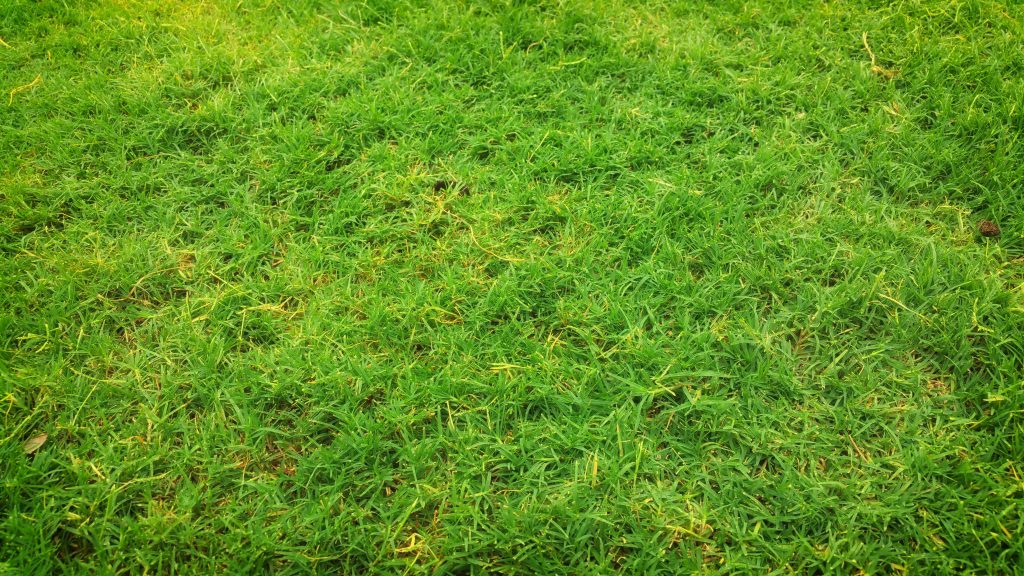
A bermudagrass field that begins thinning in August often creates the same first reaction: it probably needs more nitrogen.
That conclusion is understandable. Bermudagrass is highly responsive to nitrogen, and a healthy stand can produce substantial forage when N, moisture, temperature, and the rest of the fertility program are in balance. When a hayfield loses color or fails to recover quickly after cutting, nitrogen is one of the first nutrients most producers think about.
The problem is that thin bermudagrass is not a diagnosis.
A stand can decline because nitrogen is inadequate, but it can also decline because potassium has been mined out of the soil, soil pH has fallen too low, repeated cuttings have left too little stubble, drought has limited root activity, compaction has restricted rooting, insects have removed leaf area, disease has weakened susceptible varieties, weeds have taken advantage of open ground, or several of those stresses have occurred together.
Oklahoma State University Extension describes weak bermudagrass stands as a problem often associated with inadequate fertility and poor harvest management, while emphasizing that inadequate fertility can involve low pH, nitrogen, phosphorus, potassium, or a combination of several deficiencies. OSU recommends annual soil testing in intensively managed bermudagrass hayfields because visual appearance alone cannot identify which nutrient is actually short.
University of Georgia Extension reaches a similar conclusion. Its bermudagrass guidance notes that many stands decline gradually over several years, allowing weeds to move into the openings as the sod loses vigor. One factor that appears repeatedly in those declining fields is inadequate potassium, especially where large nitrogen applications have supported high hay yields while potassium removed in the hay has not been adequately replaced.
That is why another nitrogen application should come after diagnosis rather than before it.
Nitrogen is central to bermudagrass production because it drives vegetative growth, leaf development, and forage yield. In a healthy, actively growing stand with suitable soil moisture, additional N can produce a clear response.
OSU notes that dryland bermudagrass yield often increases substantially as nitrogen rate increases, with nitrogen-use efficiency generally strongest within a moderate production range rather than at unlimited rates. Sustained moderate-to-high production requires meaningful seasonal N inputs, particularly in hay systems where the objective is repeated harvest.
That response can make nitrogen seem like the universal cure whenever production slows.
However, a plant can only convert additional nitrogen into forage if the rest of the production system is capable of supporting that growth. A stand that is low in potassium cannot make full use of a large N rate. Roots restricted by compaction cannot explore enough soil for water and nutrients. Grass that has been cut too closely may not retain enough active leaf area and stored reserves for rapid recovery. Severe drought can reduce growth even when soil fertility is excellent.
In those situations, applying more nitrogen may increase cost without fixing the factor that is actually limiting the stand.
This is particularly important in August because bermudagrass has already been through months of production pressure. Several hay cuttings may have removed substantial nutrients. Heavy machinery may have crossed the same field multiple times. Hot weather and uneven rainfall may have stressed roots. Insects and foliar diseases can also become more visible late in summer.
A field that performed well in May but looks weak in August may be showing the accumulated effects of the entire season rather than one simple nitrogen shortage.
Potassium deserves close attention whenever an established bermudagrass stand gradually loses density.
Bermudagrass hay removes large amounts of K because potassium is present throughout the harvested leaves and stems. Unlike a grazed pasture, where much of the nutrient consumed by cattle returns through manure and urine, a hayfield loses potassium every time bales are removed.
UGA specifically identifies low potassium as a recurring factor in bermudagrass decline. Its Extension guidance explains that high nitrogen rates increase forage production and therefore increase potassium removal. When K fertilizer does not keep pace, the soil is gradually mined and the stand can lose vigor.
UGA also notes that potassium-deficient bermudagrass can become less winter-hardy and more prone to stand thinning. That means the effect of low K may extend beyond the immediate summer cutting and influence whether the sod remains dense enough to enter the following growing season in good condition.
Potassium has important physiological roles in water regulation, enzyme function, carbohydrate movement, stomatal activity, and plant stress response. UGA Forage Extension notes that severe K deficiency can contribute to yellowing of lower leaves, leaf-tip dieback, reduced stress tolerance, and eventual stand thinning.
The key management point is that low K may exist underneath a nitrogen-responsive crop.
A producer can continue applying N and still see declining stands if every additional ton of hay accelerates potassium removal from a soil that is already marginal.
That is why August is an appropriate time to compare the current stand with recent soil-test potassium and actual hay production.
One of the most useful ways to think about bermudagrass fertility is that increasing nitrogen raises the crop’s ability to produce biomass, but producing that biomass also increases the demand for other nutrients.
OSU estimates that actively growing bermudagrass removes nitrogen, phosphate, and potash in an approximate 4:1:3 ratio. In practical terms, a production system that receives 100 pounds of N can remove approximately 75 pounds of K₂O through the associated forage production.
The exact relationship varies with yield, soil supply, variety, environment, and forage composition, but the principle is important.
More nitrogen can create more potassium removal.
If the K program does not keep pace, nitrogen eventually becomes less efficient because potassium is limiting the crop’s ability to respond.
UGA’s bermudagrass recommendations illustrate how important that interaction can become in hay production. Potassium recommendations increase as nitrogen rate and expected production increase, particularly when soil-test K is low or medium. UGA also recommends multiple K applications in heavily managed systems rather than treating potassium as a one-time concern at spring green-up.
This does not mean farmers should automatically apply potassium at a fixed ratio to nitrogen regardless of soil testing.
It means that a high-nitrogen hay system should be monitored carefully because its potassium budget is under considerable pressure.
When bermudagrass is thin, soil testing provides one of the fastest ways to narrow the list of possible causes.
OSU states that a soil test is the appropriate way to determine whether supplemental phosphorus or potassium is needed and recommends annual testing for intensively managed bermudagrass hayfields.
The report should be reviewed as a whole rather than looking only at potassium.
If soil-test K is low, that may explain part of the decline.
If phosphorus is also low, root development and overall productivity may be restricted.
If soil pH has fallen below the recommended range, correcting individual fertilizer nutrients without addressing acidity may produce a weaker response than expected.
The most useful question is not whether the field could respond to nitrogen. Bermudagrass commonly responds to nitrogen.
The question is whether nitrogen remains the nutrient most likely to limit production after the rest of the soil test is considered.
A field that is low in K and strongly acidic has a different problem from a field with adequate pH, phosphorus, and potassium but low seasonal nitrogen supply.
Those two fields may look similarly weak from the road, but they should not receive the same fertilizer recommendation.
Repeated nitrogen fertilization can gradually acidify many soils, especially where ammonium-forming fertilizers are used year after year and lime applications do not keep pace.
As pH falls, the soil environment around roots changes.
UGA Extension explains that low pH can increase the availability of aluminum to damaging levels while reducing the availability or effective uptake of several important nutrients, including phosphorus, potassium, magnesium, and calcium. Fine roots can be affected, which limits the plant’s ability to obtain both water and nutrients.
OSU recommends considering lime according to soil-test recommendations before bermudagrass soil pH falls substantially below about 5.5.
This is a critical point for producers who have relied heavily on nitrogen for several years.
If the field has become increasingly acidic, adding another N application may continue driving yield temporarily where moisture is favorable, but it does not correct the declining root environment.
A soil test showing low pH should therefore move lime planning higher on the priority list.
Lime takes time to react, so an August diagnosis may be more useful for preparing a fall or postharvest amendment program than trying to force an immediate response before the warm-season growing period ends.
Hayfields experience traffic.
Tractors, mower-conditioners, rakes, balers, bale wagons, trucks, and other equipment may cross the same ground several times during each harvest cycle. If those trips occur when soil is wet, compaction can gradually become severe enough to restrict rooting and water movement.
UGA identifies soil compaction as one of the factors associated with bermudagrass decline, particularly on soils naturally low in organic matter. Compacted layers reduce the movement of air and water and create a physical barrier that roots have difficulty penetrating.
The result may look like a fertility problem.
Grass over compacted areas may be shorter, lighter in color, more drought sensitive, and slower to recover after cutting. Because roots are restricted, the plants may also struggle to absorb fertilizer that is technically present in the soil.
A pattern following traffic lanes or headlands should therefore prompt a shovel inspection before another fertilizer application.
Dig in both the weak area and a healthy portion of the field. Compare root depth, density, soil structure, and moisture. A dense horizontal root system sitting above a compacted layer tells a different story from a deep root system in soil testing low in nitrogen or potassium.
Fertilizer cannot mechanically loosen a compacted layer.
That does not mean fertility can be ignored in compacted areas, but it means the physical restriction needs to become part of the long-term solution.
Soil depth and water-holding capacity also determine how much forage a bermudagrass field can realistically produce.
OSU notes that weak or slow-growing bermudagrass may result from soils that are too shallow, sandy, or otherwise physically limited. Its fertility guidance explains that most soils can store a finite amount of water per foot of depth, and fields with very shallow topsoil simply cannot hold the same reserve as deeper profiles.
This becomes very important during dry August weather.
A shallow field may receive the same rainfall and fertilizer rate as a deeper neighboring field but stop growing days or weeks earlier because its stored soil moisture disappears more quickly.
Applying more nitrogen does not increase soil depth.
It also does not give a sandy soil the water-holding capacity of a silt loam.
Farmers should therefore separate realistic yield potential from fertilizer response. A lower-yielding soil can still benefit from balanced fertility, but pushing nitrogen rates beyond the field’s dependable water supply may reduce nitrogen-use efficiency.
The production target should match the soil.
The 2026 hay season has already provided examples of how strongly bermudagrass responds to changing moisture.
UGA Extension reported in June that parts of Georgia had experienced an extremely dry start to the hay season before later rainfall produced a strong improvement in pasture and hayfield growth. Some Tifton 85 establishment failures were attributed to drought combined with weed competition rather than simply to inadequate fertilizer.
That experience is a reminder that bermudagrass can change appearance dramatically once moisture returns.
A dry August field may be thin because some plants have genuinely died, or it may simply have little active top growth because the root zone lacks moisture.
Digging crowns and rhizomes helps distinguish those conditions.
If viable rhizomes and stolons remain throughout the stand, rainfall may allow significant recovery. If large areas contain dead crowns and open soil, the stand has suffered a more permanent loss and may require rehabilitation or re-establishment.
Nitrogen should not be used to make that distinction.
Inspect the plants first.
Applying urea to drought-dormant bermudagrass without enough moisture for regrowth can leave the nitrogen exposed while producing little immediate forage response.
Bermudagrass tolerates close defoliation better than many forage grasses, but that does not mean it benefits from being repeatedly scalped.
After cutting, the plant needs enough remaining leaf area and stored carbohydrates to rebuild the canopy. Removing too much tissue repeatedly forces the stand to rely more heavily on reserves in crowns, stolons, and rhizomes.
OSU’s current 2026 forage guidance emphasizes leaving approximately two to three inches of stubble for good bermudagrass regrowth in both hay and grazing systems.
Its pasture-management recommendations similarly caution against allowing bermudagrass residue height to remain excessively low because heavy grazing reduces productivity and increases weed pressure.
A thin hayfield should therefore prompt a review of cutting height as well as fertilizer rate.
If the mower is consistently running close enough to scalp uneven ground, the plants may be losing too much photosynthetic tissue at every harvest.
The problem can become worse during drought because the grass has fewer resources available for recovery.
Adding more nitrogen may stimulate some regrowth when rain returns, but the stand can remain under unnecessary stress if harvest management does not change.
Cutting interval also affects stand persistence.
Producers chasing maximum forage quality often shorten the harvest interval because younger bermudagrass generally contains more digestible tissue and less stem. That can be appropriate within a well-managed hay system, but the plants still need enough time between cuttings to rebuild leaf area and energy reserves.
OSU notes that bermudagrass hay is commonly harvested at roughly four to five weeks of growth when properly fertilized, while actual timing should reflect variety, temperature, rainfall, and forage-quality goals.
During hot, dry periods, regrowth may slow enough that the calendar no longer represents the plant’s recovery.
Cutting a drought-stressed stand simply because four weeks have passed can remove limited new growth before the plant has restored sufficient reserves.
The field may then become progressively thinner even though fertilizer rates appear adequate on paper.
Harvest timing should follow actual plant growth and weather conditions rather than one fixed schedule throughout the season.
Open ground creates opportunities for weeds.
As bermudagrass density declines, sunlight reaches the soil surface and previously suppressed weeds can establish. Those weeds then compete with the remaining bermudagrass for water, nutrients, and light, accelerating the decline.
UGA describes weed encroachment as a common consequence of thinning bermudagrass stands.
OSU also emphasizes that a competitive bermudagrass sod is itself an important part of weed suppression. Maintaining soil fertility, appropriate stocking or cutting height, and adequate stand vigor helps the grass occupy space that weeds would otherwise use.
This matters because herbicide treatment alone may not solve a declining stand.
A producer can remove weeds and still end up with the same open soil if potassium remains low, pH remains poor, or cutting management continues weakening the bermudagrass.
The better approach is to identify why the weeds gained an opportunity in the first place.
Weed control may still be necessary, but it should support stand recovery rather than substitute for fertility and management correction.
Late summer is also a period when bermudagrass producers need to watch for insects.
UGA identifies fall armyworms, grasshoppers, and grubs among pests capable of causing serious forage damage, particularly when pest pressure occurs on top of drought or poor fertility.
A field hit by armyworms can lose green leaf area very quickly. From a distance, the result may look like a stand that stopped responding to nitrogen.
Applying more fertilizer while insects continue feeding does not protect the new growth.
The canopy should be inspected carefully whenever a previously healthy field changes rapidly over only a few days.
Look for caterpillars, feeding injury, frass, and the boundary between damaged and healthy areas. Sudden changes usually point toward a different problem than the slow, multi-year thinning often associated with declining fertility.
The speed of symptom development is useful diagnostic information.
Disease deserves particular attention in 2026 because UGA Extension reported leaf rust in Georgia bermudagrass fields during late July and early August. Rust tends to become more common under warm, humid conditions, and heavy infections can reduce both forage yield and quality.
UGA notes that there are currently no fungicides labeled for foliar disease management in bermudagrass hay production. Management instead relies on resistant varieties, adequate soil fertility, irrigation management, thatch reduction, and timely harvest.
That makes diagnosis even more important.
A rust-affected field can lose green leaf area and appear weak even though nitrogen is not the main limiting factor.
Potassium status deserves attention because UGA has repeatedly linked low K fertility with greater susceptibility to leaf spot and related foliar disease problems in bermudagrass.
This does not mean potassium fertilizer cures rust.
Maintaining adequate K supports overall plant function and reduces one source of stress, but disease management still depends on variety, moisture, harvest timing, and other cultural practices.
The distinction should remain clear: correcting low potassium can improve the stand’s fertility foundation, while applying K to an already adequate field is not a fungicide treatment.
Many bermudagrass fields are overseeded with ryegrass or another cool-season forage to provide additional winter and spring grazing.
That system can be productive, but an unusually strong cool-season stand can delay bermudagrass recovery in spring.
UGA notes that heavy ryegrass growth can compete with emerging bermudagrass for light, water, and nutrients. Productive ryegrass can also remove substantial potassium, leaving less available when bermudagrass begins active growth.
If bermudagrass enters summer already weakened by extended competition, repeated hay cuttings and drought can make the stand look much worse by August.
In that situation, simply increasing summer nitrogen does not correct the management sequence that created the problem.
Producers using overseeded systems should evaluate when the cool-season forage was terminated, whether bermudagrass green-up was delayed, and how soil potassium changed after the winter forage was removed.
The entire annual forage system influences the warm-season stand.
When soil testing confirms that potassium has fallen below the desired range, the fertility program should correct that shortage rather than trying to compensate with additional nitrogen.
For a field requiring potassium without additional nitrogen or phosphorus in the same application, Supply Solutions Sulfate of Potash 0-0-50 provides a concentrated potassium source.
The reason to use it is that the bermudagrass stand has a documented K requirement. This is particularly relevant in hay systems where repeated cuttings have removed large amounts of potassium and soil testing shows that the existing reserve is no longer sufficient.
Application timing should follow soil-test recommendations, soil texture, expected remaining growth, rainfall, and local Extension guidance. UGA recommends managing substantial bermudagrass K needs through multiple applications in heavily harvested systems because potassium can be used more efficiently when it is supplied through the production season rather than treated as an afterthought after severe decline has developed.
The problem Sulfate of Potash solves is inadequate potassium fertility.
It does not correct compaction, kill armyworms, restore soil moisture, or repair a stand that has been repeatedly scalped.
Those other limitations need their own management responses.
The message that more nitrogen is not always the answer should not be misunderstood as an argument against nitrogen fertilization.
Bermudagrass requires substantial N to support high forage production, and a healthy stand that is adequately supplied with phosphorus, potassium, lime, and moisture can respond strongly to nitrogen.
When the soil and stand evaluation indicates that nitrogen truly is the primary nutrient shortage, Supply Solutions Urea 46-0-0 Nitrogen Fertilizer provides a concentrated nitrogen source.
The reason to use Urea 46-0-0 is to supply actual nitrogen needed for active bermudagrass growth. The best timing is when sufficient warm-season growing time remains and soil moisture or forecast rainfall gives the grass a realistic opportunity to use the N. Surface-applied urea also needs attention to volatilization risk, particularly during hot August weather.
The problem it solves is inadequate nitrogen supply.
If soil testing reveals low potassium or low pH, or if the stand is thin because of severe drought or physical root restriction, nitrogen should not be expected to correct those problems.
Using Urea 46-0-0 after those other limitations are addressed is very different from using it automatically whenever the pasture looks weak.
There is also a point where a bermudagrass stand has declined far enough that fertilizer alone may not restore acceptable productivity quickly.
Large bare areas, heavy weed invasion, extensive dead crowns, and poor rhizome coverage can indicate that the stand has lost too much density to recover rapidly through fertility changes alone.
In those situations, producers need to evaluate whether existing bermudagrass can spread back into the open areas or whether renovation or re-establishment is more economical.
Current 2026 UGA observations from southeast Georgia showed that drought and weed competition contributed to failed Tifton 85 establishment in some fields. UGA also emphasized that late planting can reduce the time available for rhizome development before winter, making establishment timing important.
That seasonal timing matters in an August rehabilitation decision.
A producer should not assume that every thin field can simply be resprigged late in the season and enter winter with a strong root and rhizome system.
If re-establishment is needed, local recommendations for variety, planting date, seedbed preparation, weed control, soil pH, phosphorus, potassium, and initial nitrogen should all be followed.
A rushed rescue attempt can be more expensive than planning a proper renovation window.
One of the best diagnostic tools is simply walking enough of the field to see how the problem is distributed.
Uniform weak growth across the entire hayfield may support a broad fertility, weather, or variety issue.
Decline concentrated on sandy ridges may indicate water-holding limitations.
Thin wheel tracks and headlands point more strongly toward compaction.
Low areas may reflect drainage problems.
Patches developing quickly during late summer may indicate insects or disease.
Areas repeatedly cut too low because of uneven ground may show chronic scalping.
Weeds concentrated where bermudagrass is weakest suggest that the sod lost competitiveness before the weeds became dominant.
These patterns should influence where soil and tissue samples are collected.
A whole-field composite can hide an important difference if one management zone is severely low in K and another is adequate.
Paired samples from weak and healthy areas often provide more useful information than one field-average sample.
There are situations where a bermudagrass field shows what appears to be potassium-related stress even though the soil test does not recommend additional K.
UGA has documented cases where soil-test potassium appeared adequate while plant tissue analysis indicated insufficient K in the forage. Its bermudagrass disease guidance recommends tissue testing when leaf spot or related problems are occurring and the soil test does not explain the apparent potassium limitation.
This discrepancy can occur because nutrient uptake depends on more than the total amount measured in a routine soil test.
Dry soil, root restriction, nutrient stratification, soil texture, and other factors can influence what actually reaches the plant.
Tissue analysis should therefore be used as additional evidence rather than as a replacement for soil testing.
The strongest diagnosis is usually one where crop symptoms, soil tests, tissue analysis, management history, and field pattern point toward the same cause.
Late-summer bermudagrass management should also consider what happens after the final hay cutting.
A producer focused only on squeezing one more ton from the field can overlook the need for the plant to enter dormancy with enough reserves and a healthy rhizome system.
Potassium becomes particularly important in this discussion because UGA associates K deficiency with reduced stand persistence and weaker winter hardiness.
Repeated close cutting, drought, disease, low potassium, and late aggressive nitrogen can all influence how the stand finishes the year.
The appropriate late-season strategy depends on location because the remaining warm-season growth period is much longer in southern Georgia than in northern Oklahoma or the upper edge of the bermudagrass region.
Local frost dates and Extension recommendations should guide the last cutting and fertilizer timing.
The broader principle is consistent: August management should support next year’s stand as well as this year’s final bale.
Nitrogen remains one of the most important inputs in productive bermudagrass systems, but a thin stand should not automatically receive more N simply because bermudagrass is known to respond to nitrogen.
The field may be telling a different story.
Years of hay removal may have drawn potassium into a deficient range. Repeated nitrogen applications may have contributed to falling soil pH. Equipment traffic may have created compaction. Drought may have limited growth regardless of fertilizer supply. Cutting too closely may have weakened crowns and rhizomes. Weeds may be exploiting openings created by poor stand vigor. Armyworms can remove foliage quickly, and current 2026 observations show that foliar rust is another late-summer issue in parts of the Southeast.
Those problems require different responses.
The most useful August walk through a thin bermudagrass field should therefore include more than an estimate of how many pounds of nitrogen were last applied. Review recent soil tests, examine potassium and pH, dig roots in both healthy and weak areas, check stubble height and cutting interval, inspect for insects and disease, and consider whether moisture and soil depth can support the yield being expected from the field.
When potassium testing confirms that K is limiting stand vigor, Supply Solutions Sulfate of Potash 0-0-50 provides a targeted source that can be incorporated into the fertility program at an appropriate soil-test-based rate. When nitrogen is truly the missing nutrient and the stand has adequate moisture and remaining growth potential, Supply Solutions Urea 46-0-0 can supply the N needed for productive regrowth.
The important part is choosing the product after identifying the problem.
A bermudagrass hayfield can remain productive for many years when fertility, cutting management, roots, moisture, and pest pressure are kept in balance. Supply Solutions can help producers select the appropriate fertilizer source once soil testing and field scouting identify the nutrient requirement, but another nitrogen application should never be expected to solve a stand problem that began somewhere else.
Walk into a fertilizer warehouse, farm supply store, greenhouse, or garden center and the first thing most people notice on a fertilizer bag is a
When fertilizer prices are high, farmers naturally want every pound of nutrient they purchase to contribute as much as possible to crop production. That makes
Give us a call or visit our store, and we’ll help you find the right solution for your business.