

Uncategorized
How to Read a Fertilizer Grade: What N-P-K Numbers Actually Tell You
Walk into a fertilizer warehouse, farm supply store, greenhouse, or garden center and the first thing most people notice on a fertilizer bag is a
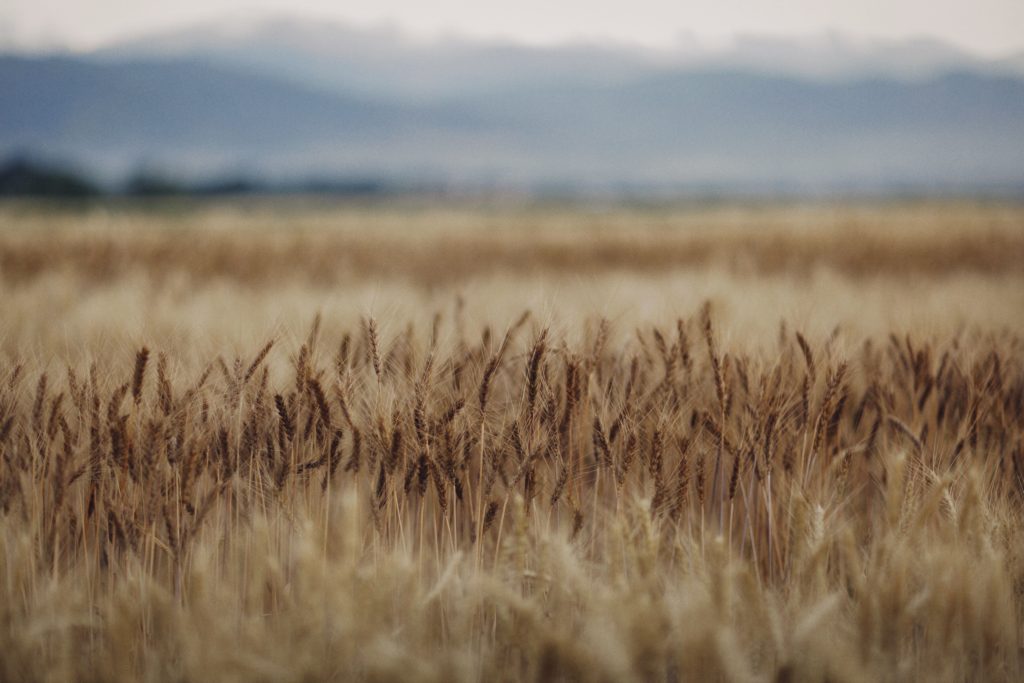
Late August can feel early to start thinking seriously about winter wheat when the drill may still be several weeks away. In reality, this is when many of the fertility decisions that determine fall establishment should already be taking shape.
Wheat planted into a well-prepared field has a better opportunity to emerge evenly, produce fall tillers, develop a strong crown and root system, and enter winter with enough growth to resume quickly in spring. Wheat planted into an acidic, phosphorus-deficient, potassium-deficient, compacted, or poorly prepared field begins the season trying to overcome problems that would have been easier to correct before seeding.
That is why late-summer wheat preparation should be about more than ordering seed and watching planting dates. It is the period for evaluating the soil environment the wheat will depend on from emergence through spring green-up.
The specific fertility program varies across the U.S. winter-wheat region. A producer in western Kansas is managing different soils and rainfall than a grower in Pennsylvania or the Southeast. Grain-only wheat also has different nitrogen priorities from dual-purpose wheat that will be grazed during fall and winter. Local soil-test calibrations and Extension recommendations should therefore determine actual rates.
The underlying principles are much more consistent. Wheat responds strongly to correcting serious soil acidity, needs adequate phosphorus for fall growth and tillering, requires potassium where soil tests show a deficiency, and generally benefits from dividing nitrogen according to crop need rather than loading the entire seasonal requirement into the fall.
Late summer is the time to get those pieces in order.
A wheat fertility plan should begin with current soil information rather than last year’s fertilizer blend.
That sounds basic, but routine fertilizer programs can continue for years without checking whether the soil has moved into a different fertility category. High-yielding crops may have drawn phosphorus or potassium down. Repeated nitrogen applications may have acidified the surface soil. Manure may have raised phosphorus substantially. A drought-limited crop may have removed far fewer nutrients than originally expected.
Without a soil test, all of those fields can end up receiving essentially the same fall program.
Oklahoma State’s wheat management calendar places soil sampling and lime evaluation among the first nutrient-management tasks ahead of fall planting. OSU specifically identifies soil acidity as a widespread yield-limiting issue in wheat production and recommends applying lime where the soil test indicates a need.
Penn State follows the same basic approach, recommending that lime, phosphorus, and potassium needs for winter wheat be determined from a soil test before planting.
A useful soil test should tell the farmer more than whether one nutrient is technically present. It should help answer whether the field has enough available P and K to support the crop, whether soil acidity needs correction, and whether there are other limitations that deserve attention before the drill enters the field.
Sampling should represent the management zone being fertilized. If low areas, eroded slopes, manure-history zones, or long-term yield zones behave differently, one whole-field average may hide important fertility differences.
The purpose of sampling is not to generate a fertilizer order as quickly as possible. It is to avoid spending money on nutrients the wheat already has while protecting the acres where a real deficiency could reduce establishment and yield.
Wheat can tolerate somewhat more acidity than crops such as alfalfa, but that does not make soil pH unimportant.
OSU identifies an optimum wheat soil-pH range of roughly 5.5 to 7.0 and notes that many wheat fields with pH below about 5.5 experience root restrictions associated with soluble aluminum.
Georgia guidance generally targets a somewhat higher range of about 6.0 to 6.5 for wheat production. Those differences are exactly why growers should use their regional recommendation rather than applying one national pH target to every soil.
The important part is understanding what excessive acidity does.
As pH falls, aluminum becomes more soluble in many soils. Toxic aluminum can restrict root elongation, which reduces the volume of soil wheat roots can explore for moisture and nutrients. A plant with a restricted root system may look like it has several fertilizer deficiencies because it cannot reach enough water, phosphorus, potassium, or nitrogen efficiently.
That is a fundamentally different problem from simply needing more fertilizer.
OSU research on acid wheat soils has shown that low pH can sharply reduce fall forage production and early crop growth, even though wheat varieties differ somewhat in their tolerance.
The worst management response is to keep adding fertilizer while ignoring a strongly acidic root zone.
Agricultural lime does not correct acidity overnight.
OSU notes that even with adequate soil moisture, measurable soil-pH change may take roughly three to six months after lime application. The university therefore recommends applying lime for wheat as soon as practical after the previous crop is harvested.
That makes late summer an important window.
If soil sampling in August shows that a wheat field requires lime, applying it before planting allows the reaction to begin before fall root development. Where tillage is already planned, incorporating lime into the surface soil can improve contact with the acidic soil that needs neutralization.
Dry weather can slow that reaction because lime requires water to react.
A grower working with powder-dry soil in late August should therefore understand that the pH may not change immediately even after the correct lime rate has been applied. That is not a reason to ignore the recommendation. It is another reason to identify the problem as early as possible.
The rate should come from the laboratory’s buffer-pH or regional lime-requirement system rather than from soil pH alone. Two soils with the same measured pH can require very different amounts of lime because their buffering capacities differ.
Late-summer liming is therefore a soil-correction decision, not a fixed tons-per-acre habit.
When acidic soil is discovered close to planting, quick-fix approaches become tempting.
OSU has evaluated in-furrow pelletized lime in acidic wheat soils and found that it did not raise overall soil pH the way properly applied broadcast agricultural lime did.
That does not mean every pelletized-lime product has no place in agriculture. It means that a small amount placed near the seed should not be treated as equivalent to correcting acidity throughout the root zone.
A wheat seedling eventually needs roots well beyond the fertilizer band.
If the surrounding soil remains strongly acidic and aluminum-toxic, the plant still encounters the same root restriction as it grows away from the row.
Where the soil test calls for lime, the long-term answer is to neutralize the acidity at an agronomically appropriate rate.
Phosphorus deserves close attention before winter wheat is planted because wheat is particularly sensitive to P shortage during establishment.
Kansas State guidance notes that severe phosphorus deficiency reduces tillering and can leave plants more susceptible to winter injury. Oklahoma State makes the same point in its dual-purpose wheat recommendations, emphasizing the importance of phosphorus to fall tiller development and forage production.
That is important because productive fall tillers often contribute heavily to final grain yield.
Phosphorus is involved in energy transfer and root development, and early wheat roots need access to adequate P while the crop establishes its crown and tiller system.
Cool soil complicates the situation because phosphorus movement toward roots slows as temperatures decline. A field that is already marginal in P may therefore show the problem more strongly as fall progresses.
The best time to correct a known low phosphorus soil is before or at planting rather than waiting until spring after tillering has already been affected.
Wheat responds not only to phosphorus supply but also to where the nutrient is placed.
Kansas State notes that preplant-injected or planting-time banded phosphorus can be more efficient than broadcasting, particularly where fertilizer rates are modest or soils are acidic and low in available P. Broadcast phosphorus can still work well, especially when it is incorporated into the rooting zone.
Oklahoma State also reports strong fall-growth responses to banded phosphorus in wheat and notes that band placement can be particularly useful in moderately acidic soils.
The reason is root access.
Phosphorus does not move freely through soil the way nitrate does. Keeping a portion of the fertilizer in a concentrated zone near developing roots can improve early-season access.
That does not mean every wheat acre requires a starter.
If soil-test phosphorus is already high, another substantial P application may offer little return. If the field is low, however, the combination of correcting soil fertility and placing part of the P where seedlings can access it can be particularly valuable.
The soil test determines whether phosphorus is needed. Placement helps determine how efficiently the crop can use what is applied.
There is an interesting exception in acid wheat soils that can create confusion.
OSU research has shown that banded phosphorus can sometimes improve wheat performance on moderately acidic ground even where soil-test P is not low. One explanation is that concentrated phosphate near the seed can reduce some of the aluminum toxicity affecting early roots.
That can be useful on leased land or when an acidity problem is discovered too close to planting for lime to react fully.
It is still not the same as correcting soil pH.
OSU specifically cautions that the underlying soil continues becoming acidic if the problem is not addressed.
A temporary phosphorus strategy may help establish one wheat crop. It should not become a reason to leave an acid root zone uncorrected indefinitely.
Potassium does not receive as much attention in wheat as nitrogen or phosphorus, partly because many major wheat-growing soils contain adequate K reserves.
That should not turn into an assumption that wheat never needs potassium.
Kansas State identifies the soil test as the best guide for wheat K decisions and notes that deficiencies are more likely on sandy soils and in areas where inherent soil potassium is lower. Oklahoma State makes the same recommendation for both grain and dual-purpose wheat.
Potassium contributes to water regulation, enzyme activity, carbohydrate movement, and general stress tolerance. A deficient wheat plant enters winter with one more limitation working against it.
The important word again is deficient.
If soil-test K is already high, applying additional potash simply because fertilizer is being spread before wheat may produce little economic return.
If the soil is low, especially after years of grain, straw, or forage removal, potassium deserves correction.
Wheat grain removes nutrients, but straw harvest changes the fertility budget further.
UGA notes that when wheat straw is removed rather than left in the field, additional phosphorus, potassium, and sulfur leave with it and need to be considered in the fertility program for the rotation.
Potassium is particularly important because a substantial portion of the K taken up by wheat remains in vegetative tissue rather than grain.
If straw is returned to the field, much of that potassium can eventually recycle to the soil.
If the straw is baled and sold, the potassium leaves.
A farmer who regularly sells wheat straw should therefore expect a different long-term soil-test K trend from a neighboring producer who leaves all residue in place.
This is another reason field history belongs beside the current soil test.
Where soil testing shows that potassium is below the desired range and the field requires K without additional nitrogen or phosphorus in the same application, Supply Solutions Muriate of Potash 0-0-60 provides a concentrated potassium fertilizer. Supply Solutions lists the product as a 0-0-60 material containing 60 percent potash analysis.
The reason to use Muriate of Potash before winter wheat is that the soil test has identified potassium as an actual fertility limitation. It allows the grower to address K without automatically adding phosphorus or nitrogen that may already be adequately supplied.
Kansas State notes that potassium for wheat can be broadcast and incorporated ahead of planting or supplied as part of a planting-time starter program.
The timing should follow soil texture, local recommendations, and the overall fertilizer program. Preplant broadcast application can fit many wheat systems because the nutrient is placed before fall root development begins.
The problem the product solves is inadequate potassium fertility.
It should not be applied simply because wheat benefits from potassium physiologically. A high-testing soil already has the nutrient supply needed to perform that physiological work.
Starter fertilizer can be valuable, but more is not always better when fertilizer is placed in direct contact with the seed.
Salt concentration and ammonia-producing fertilizer materials can damage germinating wheat if too much N or K is placed in the seed row.
Penn State recommends limiting in-row winter-wheat fertilizer to no more than about 15 pounds of nitrogen per acre or 30 pounds per acre of combined N plus K₂O. Kansas State provides similar caution about limiting nitrogen plus potash in seed contact.
Actual safe rates depend on row spacing, fertilizer source, soil moisture, seedbed conditions, and equipment.
Dry fall soil deserves particular caution because less moisture is available to dilute salts around the seed.
If a large phosphorus or potassium correction is required, broadcasting and incorporating the bulk of the recommendation while using only a modest starter rate is often safer than trying to place the entire fertility program in the row.
Nitrogen is necessary for fall wheat growth, but the amount that belongs before planting depends heavily on the production system.
Grain-only wheat generally requires enough available N to establish a healthy stand and produce adequate fall tillers, but that does not necessarily mean applying most of the season’s nitrogen in late summer or fall.
Penn State recommends only modest fall N for grain wheat, with up to about 20 pounds per acre before planting under its system.
Missouri research has similarly found that many fields already contain enough residual N to support fall growth, with only a minority responding strongly to additional fall nitrogen.
By contrast, wheat being grown for fall and winter grazing has a much greater demand for fall biomass and can justify additional nitrogen.
Kansas State’s wheat-pasture guidance notes that grazing systems often warrant approximately 30 to 50 additional pounds of N per acre because forage is being removed and additional vegetative growth has direct economic value.
Those systems should not be confused.
A fertilizer rate designed to produce enough wheat forage for cattle can be unnecessarily aggressive for grain-only wheat planted at the normal date.
If some fall nitrogen helps wheat grow, it can be tempting to assume that more will create an even stronger crop.
That is not always a good trade.
Excessive fall N can produce lush vegetative growth that is more vulnerable to certain diseases, lodging later in the crop cycle, and winter injury under some conditions.
UGA specifically cautions against excessive fall nitrogen because overly vigorous fall growth can increase winter-injury risk.
Large fall nitrogen applications also increase the period during which fertilizer N is exposed to potential loss before spring demand accelerates.
On coarse soils, nitrate can leach. On poorly drained soils, nitrate can be lost through denitrification when soils become saturated.
Kansas State’s wheat guidance notes that split applications can improve nitrogen efficiency on both sandy soils vulnerable to leaching and heavy soils vulnerable to waterlogging and denitrification.
This is why the nitrogen program should be designed across the whole growing season.
Fall is for establishment.
Spring is often when the crop’s largest N requirement should be reassessed according to stand, yield potential, soil supply, and regional recommendations.
Oklahoma State’s 2026 wheat variety trials provide a practical example of this timing approach.
At the Lahoma standard-management trial, wheat received only a small amount of nitrogen at planting through starter fertilizer, followed by the main N application as urea in February.
In the intensive-management comparison, both treatments again received only a small planting-time N amount, while much larger nitrogen applications were made during late winter or early spring.
Those research treatments should not be copied as universal fertilizer recommendations. Their rates were designed for those soils, rotations, yield goals, and research objectives.
What they demonstrate is the continuing agronomic logic of keeping a large share of wheat nitrogen closer to the period of major crop demand rather than assuming all N belongs in the fall.
That gives the grower an opportunity to evaluate stand condition before spending the entire seasonal nitrogen budget.
The crop grown before wheat can influence how much nitrogen is available during establishment.
Wheat planted after a legume may enter the fall with more residual or mineralizable N than wheat following a high-residue cereal crop.
Manure history also matters.
A field receiving poultry litter or livestock manure should not automatically receive a full commercial N, P, and K program on top of those nutrients.
UGA specifically recommends nutrient analysis when poultry litter is being used so that commercial fertilizer rates can be adjusted for the N, P, and K supplied by the manure.
This becomes increasingly important when fertilizer prices are high.
The objective is to supply the crop’s requirement, not to purchase the same nutrient twice.
Sulfur has become more important in wheat fertility programs as atmospheric deposition has declined, but it should still be targeted rather than applied indiscriminately.
Kansas State notes that sulfur deficiency is more likely on sandy, low-organic-matter soils. Oklahoma State similarly identifies low-organic-matter soils as more likely to benefit from S fertilization.
UGA recommends sulfur particularly where sandy soil profiles provide little storage and notes that applying S with topdress nitrogen can be advantageous because sulfate is mobile.
This illustrates an important timing principle.
A nutrient can be necessary without needing to be applied in August.
Where sulfur loss is a concern, moving part or all of the S application closer to spring crop demand may be more efficient than applying it several months ahead of use.
Late-summer planning should therefore identify the need even if the actual fertilizer application will come later.
A perfect soil test cannot compensate for severe physical limitations.
Compaction, poor drainage, uneven residue distribution, heavy weed pressure, and a rough seedbed can all reduce establishment.
UGA’s wheat production guidance emphasizes well-drained fields and a smooth, firm, weed-free seedbed.
OSU’s fall management calendar also emphasizes controlling volunteer wheat ahead of planting because volunteer plants can act as a “green bridge” that allows mites, aphids, and diseases to survive from one wheat crop into the next.
In the Great Plains, destroying volunteer wheat well ahead of planting can be particularly important for reducing wheat-streak mosaic virus risk.
That is not a fertilizer issue, but it belongs in the same preplant planning window.
A producer can invest heavily in phosphorus and potassium and still lose yield if volunteer wheat carries pests into the new stand.
Late-summer field preparation should create flexibility, not pressure the producer into planting before the recommended date.
Planting too early can expose wheat to greater disease and insect pressure and can produce excessive fall growth.
Planting too late creates the opposite problem: fewer fall tillers, weaker crown development, and greater winter-injury risk.
UGA documents substantial yield penalties where wheat planting moves several weeks beyond its recommended regional window. University of Minnesota also notes that late-planted winter wheat enters winter with smaller seedlings and greater winter-injury risk, making winter-hardy varieties especially important when planting is delayed.
The correct planting date varies greatly across the United States.
The objective in August is to have lime, soil tests, fertilizer decisions, weed control, seed, and equipment ready so planting can occur during the locally recommended window rather than being delayed by jobs that could have been completed earlier.
August moisture conditions deserve attention when preparing wheat ground.
Lime reacts slowly in dry soil. Surface-applied fertilizer may remain where it was placed until rainfall moves it. Tillage in extremely dry soil can create clods and an uneven seedbed.
On the other hand, waiting until immediately before planting to complete every field operation can create problems if September rain suddenly makes the ground too wet to work.
This is why preplant preparation should be sequenced rather than rushed.
Collect soil tests first. Apply lime as soon as possible where needed. Correct broadcast phosphorus and potassium according to recommendations. Leave starter fertilizer decisions for planting. Reserve the larger nitrogen decisions for the appropriate crop stage.
That sequence gives each input a purpose rather than combining everything into one pass simply because the spreader is already in the field.
Successful winter wheat establishment is not measured by how much fertilizer was applied before planting.
It is measured by whether the crop develops a healthy root system, adequate fall tillers, and a strong crown before dormancy.
A low-pH field may need lime more urgently than another nutrient. A low-phosphorus field may benefit strongly from preplant and banded P. A low-potassium field may need potash before planting. A grain-only field with adequate residual nitrogen may need very little fall N, while a dual-purpose grazing system may justify considerably more.
Those are different agronomic situations, even though all of them will eventually be planted to wheat.
That is why late-summer soil testing has so much value. It turns fertilizer from a routine expense into a set of specific corrections.
Where potassium testing confirms a real deficiency, Supply Solutions Muriate of Potash 0-0-60 provides a concentrated K source that can fit a preplant wheat program without forcing additional nitrogen or phosphorus into the application. Where K is already adequate, there is no reason to apply it simply because wheat uses potassium.
The same discipline should guide every other nutrient.
Correct acidity before roots encounter it. Supply phosphorus where the soil cannot support strong establishment and tillering. Apply potassium where testing shows a response is likely. Keep fall nitrogen aligned with the wheat’s actual production objective, and leave enough flexibility to adjust spring N after the stand and yield potential are clearer.
A productive wheat crop begins long before heading and grain fill. It begins in the soil conditions the seed encounters during its first several weeks of growth. Farmers who use late summer to correct the root-zone problems that can be fixed before planting give the crop a better chance to establish evenly, survive winter, and use spring fertilizer efficiently. Supply Solutions can help growers select an appropriate fertilizer source once soil testing identifies the nutrient need, but the strongest wheat fertility program starts with knowing what the field requires before the drill moves across it.
Walk into a fertilizer warehouse, farm supply store, greenhouse, or garden center and the first thing most people notice on a fertilizer bag is a
When fertilizer prices are high, farmers naturally want every pound of nutrient they purchase to contribute as much as possible to crop production. That makes
Give us a call or visit our store, and we’ll help you find the right solution for your business.