
Uncategorized
How to Read a Fertilizer Grade: What N-P-K Numbers Actually Tell You
Walk into a fertilizer warehouse, farm supply store, greenhouse, or garden center and the first thing most people notice on a fertilizer bag is a
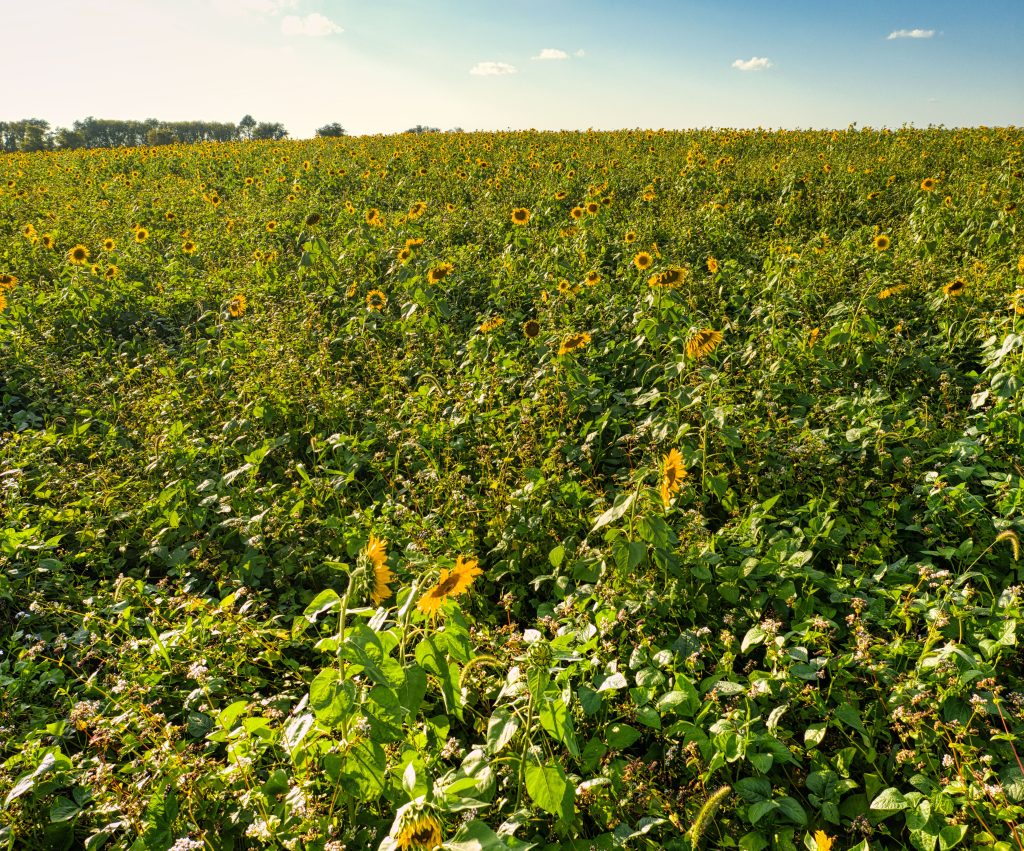
Wheat harvest opens one of the best cover-crop windows available in a typical U.S. grain rotation. Instead of waiting until corn or soybean harvest leaves only a few weeks of fall growth, wheat ground can often be seeded during July or August while soil temperatures are warm, days are still long, and several months of growing season remain.
That extra time creates options.
A farmer can establish a fast-growing summer species to suppress weeds and produce biomass, plant a cool-season mixture that will continue growing into fall, include legumes with the goal of fixing nitrogen, grow forage for livestock, or build a winter-killed cover that leaves relatively simple planting conditions the following spring. Penn State Extension’s July 2026 guidance specifically highlights the flexibility available after wheat and other small grains, including nitrogen-fixing legumes, weed-suppressing covers, fall forage, and mixtures designed to improve soil protection before the next cash crop.
The fertility question is where management often becomes less clear.
Cover crops require nutrients just like cash crops, but that does not mean they should automatically receive a conventional fertilizer program. A cover crop being grown primarily to capture residual nitrogen should not necessarily receive another large nitrogen application. A legume intended to fix atmospheric nitrogen should not be treated like a grass forage crop. A mixture intended for cattle grazing may justify more fertility than a low-cost cover being planted only to protect the soil through winter.
The first question should therefore be why the cover crop is being planted. Once that objective is clear, species selection and fertility become much easier to align.
The length of the growing window is one of the biggest advantages of planting after wheat.
In a corn-soybean rotation, cover crops are frequently seeded in September, October, or even later, depending on harvest. That can work very well for winter-hardy species such as cereal rye, but the late start limits the amount of fall biomass that can develop.
Wheat changes the situation because harvest can leave July, August, September, and part of October available for cover-crop growth in many regions.
Penn State’s current 2026 recommendations point out that the period after barley, rye, wheat, oats, or other early-harvested crops provides more species options than the narrow window following corn and soybeans. Missouri Extension likewise describes the months between wheat harvest and the following spring crop as an unusually long opportunity for establishing diverse cover-crop mixtures, especially where grazing is part of the farm system.
That additional growing time matters because most cover-crop benefits are produced by actual plant growth.
A seed lying in the soil is not scavenging nitrogen, feeding soil organisms, shading weeds, protecting against erosion, or adding roots to the profile. The earlier a suitable species is established successfully, the more opportunity it has to perform those functions.
The challenge is choosing a species adapted to the temperatures and growing conditions present when it is planted.
A cover crop planted immediately after an early July wheat harvest faces different conditions from one planted in the second half of August.
Warm-season species such as sorghum-sudangrass, pearl millet, and buckwheat perform best when enough summer heat remains. They can develop substantial biomass quickly under good moisture conditions, making them useful for weed suppression, soil cover, and, in the case of appropriate forage species, grazing.
As August advances, cool-season species become increasingly attractive.
University of Minnesota Extension notes that oats and other cool-season cereals are useful options by mid-August, particularly for fall forage. Brassicas such as turnips, forage rape, and radish also fit late-July and August establishment well and can maintain forage quality into cooler weather.
Cereal rye offers another advantage because it can survive winter across much of the country and resume growth in spring. Oats, by contrast, will winterkill in many northern and central U.S. regions. That difference can be used intentionally.
A farmer who wants a living spring cover and significant spring residue may prefer cereal rye. A producer who wants fall soil cover but relatively simple spring planting conditions may prefer oats or another winter-killed species where winter temperatures are cold enough to terminate it reliably.
The choice should follow the next cash crop and management objective rather than the popularity of a particular cover species.
One of the most important distinctions is whether the cover crop will simply remain in the field or whether it will be harvested or grazed.
A soil-protection cover may only need enough growth to cover the surface, develop roots, capture nutrients, and suppress weeds. In that situation, applying significant fertilizer simply to maximize biomass may undermine the economics of the cover crop.
A forage cover is different.
If cattle will graze the field or the crop will be harvested for feed, greater biomass has direct economic value. The producer is turning the cover crop into feed rather than relying entirely on indirect soil benefits.
Missouri Extension identifies wheat-following cover-crop mixtures containing crops such as sorghum-sudangrass, cowpeas, oats, turnips, and other species as useful grazing systems. The long period after wheat allows warm-season species to provide summer and early-fall forage while cooler-season components can take over as temperatures decline.
That kind of system may justify more fertilizer investment because the additional forage can replace hay or extend the grazing season.
The fertility plan should therefore begin with the intended return.
A cover crop being planted simply to protect the soil may need little or no additional nitrogen. A forage crop being asked to produce several thousand pounds of dry matter could have a legitimate N requirement.
Cover crops are often described as nutrient recyclers, and that description is accurate. It is important, however, to understand what recycling means.
A cover crop can take up phosphorus and potassium from the soil, hold those nutrients temporarily in plant tissue, and return much of them to the upper soil profile as the cover decomposes.
It does not create new phosphorus or potassium.
If a field is deficient in K before the cover crop is planted, planting radish, rye, oats, or another cover does not eliminate the deficiency. The plants are simply competing for the potassium that is already present.
This is different from a legume’s relationship with nitrogen. Properly nodulated legumes can obtain additional N from the atmosphere through biological fixation. There is no comparable biological process that manufactures new soil phosphorus or potassium.
For that reason, fall soil testing remains important on wheat ground that will return to corn, soybeans, forage, or another cash crop.
If phosphorus and potassium already test adequately, there may be little reason to fertilize the cover specifically with those nutrients. If the field genuinely needs P or K for the rotation, the normal soil-test-based fertility program can be maintained regardless of whether a cover crop is present.
The cover crop can help cycle those nutrients, but it does not replace soil fertility management.
Nitrogen is where cover-crop fertility becomes especially interesting.
A grass cover such as rye, oats, wheat, or annual ryegrass can capture nitrate remaining in the soil after the previous crop. This is one reason cereal covers are commonly used where reducing nitrate loss is an important goal.
Adding a large nitrogen application immediately before a nitrogen-scavenging cover can work against that objective.
If the field already contains unused nitrate after wheat, the cover crop has something to capture. Fertilizing heavily with additional N simply increases the amount of nitrogen in the system.
That may be justified if the cover is being grown as forage and the additional biomass has enough value. It is much harder to justify when the only objective is nitrate scavenging and erosion protection.
Penn State’s cover-crop guidance shows that cereals can take up substantial amounts of nitrogen when they produce large biomass, but it also notes that heavy fertilizer applications are not as essential for a crop grown strictly as a cover as they are when the crop is being managed for grain or high biomass.
The question is therefore not whether grass cover crops respond to nitrogen. They often do.
The question is whether buying that additional growth produces enough value to justify supplying the N.
Wheat does not always use every pound of plant-available nitrogen remaining in the soil, and the amount left after harvest depends on yield, fertilizer history, soil organic matter, rainfall, previous crops, and other factors.
A cover crop planted promptly can capture some of that residual nutrient before it moves deeper in the profile or is otherwise lost.
This is one of the agronomic reasons to avoid leaving wheat stubble bare through the remainder of summer and fall.
Roots growing in August and September provide a biological nutrient-capture system during a period when no cash crop would otherwise be present.
However, farmers should not assume that every pound of nitrogen captured by a cover crop will become available to the following cash crop immediately.
When grass residues decompose, their carbon-to-nitrogen ratio influences whether soil microorganisms temporarily immobilize nitrogen or release it.
University of Minnesota’s recent cover-crop nutrient discussions note that nitrogen scavenged by covers can sometimes become temporarily tied up and that the exact effect on the following corn crop is not predictable enough to justify simple, universal fertilizer credits.
This is especially relevant with mature cereal rye.
A large, carbon-rich rye cover terminated late in spring may temporarily immobilize nitrogen as microbes break down the residue. That does not mean the nitrogen has permanently disappeared. It means the timing of nutrient release may not match young corn demand.
Management of the following crop still matters.
Legumes such as crimson clover, cowpeas, winter peas, hairy vetch, and other species can fix atmospheric nitrogen when they form an effective relationship with the correct Rhizobia bacteria.
This makes legumes attractive following wheat because the earlier seeding window provides more time for them to establish and fix N than they would have following a late corn harvest.
University of Minnesota notes that late-summer legumes can contribute nitrogen when they have enough growing time, although the amount is variable enough that growers should be cautious about assuming a large, fixed nitrogen credit for the following crop.
Species selection becomes important here because not every legume fits every rotation.
Missouri Extension, for example, cautions that hairy vetch can become troublesome in rotations that include wheat because hard seed may persist and reappear in future wheat crops, creating contamination and management problems. It also notes that cereal rye deserves additional thought in wheat rotations because volunteer rye can become difficult to manage where wheat grain purity matters.
A cover crop should therefore be selected not only for what it does this fall, but also for how it fits several years of the rotation.
Oats are one of the most useful late-summer cover crops in areas where winter temperatures are cold enough to terminate them naturally.
They establish rapidly, produce fibrous roots, compete reasonably well with late weeds when seeded into moisture, and can produce useful fall forage.
University of Minnesota research has shown good biomass potential from summer-seeded oats, although performance depends heavily on planting date and weather.
The main advantage for many corn and soybean growers is spring simplicity.
A winter-killed oat cover does not require spring herbicide termination. The residue protects the soil over winter and can create a relatively manageable seedbed as it breaks down.
The tradeoff is that oats provide little or no living cover during spring in climates where they winterkill.
If the primary objective is capturing spring nitrate, producing large spring biomass, suppressing early spring weeds, or maintaining living roots into planting season, winter-hardy cereal rye may be more appropriate.
The farmer should decide whether spring growth is a benefit or a management burden.
Forage radish, turnips, and related brassicas are popular after wheat because August provides an excellent establishment window in many regions.
Their taproots can penetrate the soil and create channels that future roots may use. They can also take up substantial nutrients and provide high-quality fall grazing.
University of Minnesota research has shown that forage radish can produce significant late-season biomass when summer seeding is successful.
It is common to describe radishes as “breaking compaction,” but that claim deserves some restraint.
A biological root channel is not the same as mechanically removing a severe traffic pan or correcting chronic soil compaction. Radish roots will exploit weaknesses in the soil and can improve porosity over time as part of a broader soil-health system. They cannot guarantee correction of dense subsoil created by years of traffic on wet ground.
The stronger reason to use a brassica is that it adds a different rooting pattern, takes up nutrients, contributes to cover-crop diversity, and can provide high-quality forage.
Those are significant benefits without needing to turn the crop into a substitute for every form of tillage.
A mixture makes the most sense when each species has a clear job.
A grass can provide rapid soil cover and capture residual nitrogen. A legume can contribute biological nitrogen fixation. A brassica adds a different root architecture and can improve grazing quality. A warm-season species can generate biomass during August while a cool-season species becomes more active as temperatures fall.
Penn State and Missouri both highlight the flexibility of mixtures after small-grain harvest because there is enough growing season for more than one functional group to contribute.
That does not mean a 10- or 12-species mixture is automatically better than a two- or three-species blend.
Complex mixtures cost more, can be harder to seed uniformly because seeds differ in size and planting depth, and may contain species that contribute very little under a particular planting date.
A simple mixture built around the actual goals of the field often provides more predictable value.
If the goal is fall grazing and easy spring planting, oats with a brassica may make sense in a winterkill region.
If the goal is nitrogen fixation plus soil cover ahead of a non-legume cash crop, a grass-legume combination may be appropriate.
If maximum spring biomass is the objective, an overwintering cereal may deserve most of the seeding rate.
The mixture should be designed by function rather than by the number of species on the seed tag.
Cover crops need water before they can use fertilizer.
This becomes particularly important after wheat because the soil surface may be dry following summer heat and grain harvest.
Planting into a dry seedbed can result in uneven emergence or complete establishment failure if small showers germinate seeds without providing enough moisture for seedlings to survive.
University of Minnesota cover-crop trials during drought have demonstrated how strongly establishment and biomass depend on rainfall shortly after planting. Different species responded differently, with some warm-season grasses establishing better than slower-growing species under dry conditions.
This should influence fertilizer decisions.
Applying a significant nitrogen rate to a cover crop that has not established because the top several inches of soil are dry does not create a stand.
If drought is severe, waiting for moisture or choosing a species better adapted to the remaining window may be more valuable than increasing fertility.
The same principle applies after emergence. A cover grown primarily for forage will only convert nitrogen into economically useful biomass when water and temperature support growth.
Fertilizer cannot replace August rainfall.
There are situations where additional nitrogen after wheat is agronomically reasonable.
A non-legume cover intended to produce substantial fall forage may respond economically to N where soil nitrogen supply is low. Oats, annual ryegrass, small grains, and warm-season grass covers can all increase biomass when nitrogen is limiting.
University of Minnesota notes that cool-season grasses and annual ryegrass may benefit from nitrogen when they are being grown for substantial forage production.
The important part is matching the N rate to the objective.
If the field is simply being covered for erosion control and nitrogen capture, a large N application often defeats part of the purpose.
If cattle will graze enough additional forage to replace purchased hay, the economic calculation changes.
The farmer should consider expected biomass response, fertilizer cost, grazing utilization, available soil moisture, days of growth remaining, and the value of alternative feed.
That creates an actual economic reason for the fertilizer rather than assuming every grass cover should be fertilized.
Where an established non-legume cover crop has a genuine nitrogen requirement and the objective is enough additional biomass or forage to justify the expense, Supply Solutions Urea 46-0-0 Nitrogen Fertilizer provides a concentrated nitrogen source.
The reason to use Urea 46-0-0 in this situation is that nitrogen is limiting the growth of a grass cover being managed for forage or high biomass. It should be applied while enough warm growing weather remains for the crop to respond and when soil moisture or forecast rainfall is sufficient to support active growth.
The problem it solves is inadequate nitrogen supply.
It should not be applied automatically to a cereal cover whose main purpose is to scavenge residual N from the soil. It also should not be used to force growth from a cover crop sitting in severely dry soil or to replace nitrogen fixation in a well-established legume.
Because urea is commonly surface-applied to established covers, volatilization also deserves attention. A meaningful rainfall or irrigation following application helps move the fertilizer into the soil. During hot August weather without dependable rainfall, delaying the application or using an appropriately protected urea source may be more efficient than leaving untreated fertilizer exposed at the surface.
The decision should begin with the value of producing more biomass, not with the availability of fertilizer.
Cover crops take up phosphorus and potassium, but much of those nutrients will eventually cycle back into the field if the cover is terminated and left in place.
That makes a cover crop different from hay.
When cover biomass remains on the field, P and K are temporarily held in plant tissue rather than permanently exported. As the residue decomposes, those nutrients re-enter soil pools that can contribute to future crop nutrition.
If the cover is grazed, much of the nutrient will also return through manure and urine, although distribution will be uneven.
If the cover crop is harvested and hauled away as hay or baleage, however, nutrient removal becomes much more important.
The fertility plan should therefore consider what happens to the biomass.
A low-testing potassium field still needs K correction according to local recommendations, regardless of whether a cover is planted. A high-testing field should not receive additional potassium simply because the cover crop is using some temporarily.
This is another example of why nutrient cycling should not be confused with nutrient creation or permanent removal.
Wheat harvest creates a useful manure-application opportunity on livestock farms.
The growing cover crop can capture some nutrients from manure rather than leaving the field bare. Roots and surface cover can also contribute to erosion control and soil structure.
However, manure should still be treated as fertilizer.
Its nitrogen, phosphorus, potassium, and other nutrient contributions need to be accounted for using a manure analysis and local nutrient-management recommendations.
Applying manure and then adding a full commercial fertilizer rate because the cover crop is growing can result in double application.
The next cash crop also matters because some manure nutrients will remain available beyond the cover-crop period.
A cover crop is a valuable nutrient-management partner, but it does not make excessive nutrient application harmless.
Wheat fields may contain residual herbicides from weed control earlier in the season, and those products can influence which cover crops can be established successfully.
This becomes especially important with broadleaf covers such as clovers, radish, and turnips.
Penn State’s guidance advises growers to consider residual activity and rotation restrictions before early-fall cover seeding. University of Minnesota similarly notes that cereal rye, wheat, and oats often tolerate many common residual programs better than broadleaf cover species, although actual risk depends on herbicide chemistry, rate, soil conditions, and the interval since application.
The label must guide the decision.
A cover grown only for soil-health purposes may be treated differently under some labels from a crop that will be grazed or harvested for feed. Once livestock will consume the cover, plant-back intervals, rotational restrictions, and feed or grazing restrictions become especially important.
University of Minnesota’s 2025 guidance emphasizes that producers planning to graze a cover crop should review both plant-back intervals and rotational restrictions because forage entering the livestock food chain must comply with the pesticide label.
This should be checked before seed is ordered, not after the stand is growing.
A farmer planting cover crops after wheat should already be thinking about what will be planted next spring.
A heavy cereal rye cover ahead of soybeans can fit very well because soybeans tolerate later rye termination relatively well in many systems and do not depend on early-season fertilizer nitrogen in the same way corn does.
Rye ahead of corn requires more nitrogen-management attention because high-carbon residue can temporarily immobilize N and can create cooler, wetter planting conditions.
A legume-rich cover may be more attractive ahead of corn because biological nitrogen fixation can contribute N to the system, although the amount should not be assumed without regional guidance.
If the field will return to wheat later in the rotation, species that can become difficult volunteer contaminants deserve additional thought.
The cover crop should therefore be treated as part of the rotation rather than as an isolated crop occupying empty ground.
Cover crops become much easier to justify economically when livestock can harvest them.
Instead of depending only on long-term soil-health benefits, the producer receives feed during the same season.
Missouri Extension identifies grazing as one of the strongest ways to improve cover-crop economics and recommends several small grains and mixed species for extending the grazing season.
The pasture principles still apply.
Livestock should not be turned onto a newly established cover before enough root development has occurred to prevent plants from being pulled from the soil. Grazing should leave enough residual growth to maintain soil cover. Wet conditions may require moving cattle before pugging and compaction damage offset the soil-health benefit the cover was supposed to provide.
Nitrate accumulation and prussic-acid risks also deserve attention with certain forage species, particularly sorghum-sudangrass and related warm-season crops under drought, frost, or heavy nitrogen conditions. Local livestock and forage guidance should be followed before grazing.
A cover crop intended for feed is a forage crop as well as a soil-management tool.
One of the easiest mistakes in cover-crop management is judging success entirely by aboveground biomass.
A six-foot cover looks impressive, but biomass is only valuable if it supports the goals of the system.
If the objective is erosion control, a shorter dense cover may perform perfectly well.
If the objective is nitrate scavenging, the cover should obtain much of its N from the soil rather than from a newly purchased fertilizer application.
If the objective is grazing, greater biomass has direct feed value and deserves a different economic calculation.
If the cover will be terminated early the following spring, spending heavily to maximize fall growth may provide little additional return.
Cover-crop fertility should therefore be managed around function, not appearance.
For farmers new to cover crops, wheat acres offer a forgiving place to begin.
The early harvest provides time to establish the stand. More species are available. The farmer can watch how grasses, legumes, and brassicas behave through several months rather than relying on a few weeks of late-fall growth.
Current Illinois Extension programming in 2026 continues to emphasize practical cover-crop management, establishment, termination, and learning from farmer experience rather than expecting the practice to work identically on every farm in the first year.
That practical approach matters.
Start with a clear objective. Use a manageable number of acres. Choose species that fit the planting date and next crop. Keep records of planting date, rainfall, stand establishment, biomass, grazing days where applicable, spring termination, and cash-crop performance.
Those observations will be more useful for refining next year’s cover system than simply comparing seed mixtures by price.
Cover crops planted after wheat can do a great deal of useful work. They can capture nutrients, protect soil, suppress weeds, add living roots, provide fall and winter forage, contribute nitrogen through legumes, and extend the biological growing season long after the wheat combine leaves the field.
Those benefits do not require treating every cover crop like another high-input cash crop.
A cereal planted primarily to scavenge nitrate may need little supplemental nitrogen because capturing residual N is part of its job. A legume mixture should be allowed to obtain nitrogen biologically when establishment conditions support fixation. A grass cover being grown aggressively for fall grazing may justify nitrogen because additional biomass has a measurable feed value. Phosphorus and potassium should remain tied to soil-test needs and the fertility requirements of the rotation rather than being applied simply because another crop is growing.
Where nitrogen is genuinely limiting a non-legume cover being managed for economically useful forage or high biomass, Supply Solutions Urea 46-0-0 can provide a concentrated N source at an appropriate rate and weather window. The application makes sense when the additional growth is worth purchasing and when moisture is available for the cover to use it. It does not make sense merely to make a nitrogen-scavenging cover greener.
The long planting window after wheat is valuable because it gives farmers choices. Use those choices deliberately. Match the species to the August planting date, build the mixture around a clear objective, account for herbicide restrictions, consider what crop comes next, and fertilize according to what the cover is actually being asked to accomplish. Supply Solutions can help growers select an appropriate fertilizer when a genuine nutrient need exists, but successful cover cropping begins by letting the plants perform the jobs they were planted to do rather than automatically adding another fertilizer program to the rotation.
Walk into a fertilizer warehouse, farm supply store, greenhouse, or garden center and the first thing most people notice on a fertilizer bag is a
When fertilizer prices are high, farmers naturally want every pound of nutrient they purchase to contribute as much as possible to crop production. That makes
Give us a call or visit our store, and we’ll help you find the right solution for your business.