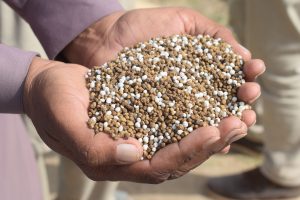
Water is the lifeblood of early-season crops. In spring, proper irrigation is critical to support seedling establishment, root development, and nutrient uptake. Even with a well-designed fertilizer program, crops cannot access nutrients efficiently without adequate soil moisture. Early-season irrigation strategies help growers maximize the value of fertilizers, reduce stress, and ensure uniform growth.
Crops absorb nutrients like nitrogen, phosphorus, potassium, and micronutrients more effectively when soil moisture is consistent. Products such as Supply Solutions 10-10-10 Complete Fertilizer and Supply Solutions 7-0-0 Nitrogen Calcium Fertilizer perform best when applied in soils with adequate moisture, allowing roots to take up nutrients quickly and efficiently.
Understanding irrigation strategies and integrating them with fertilizer programs helps farmers and gardeners establish strong crops early in the season and improve overall yield potential.
The Role of Irrigation in Early-Season Fertility
Adequate soil moisture enhances nutrient solubility and movement to plant roots. Without sufficient water, fertilizers remain in the soil but are inaccessible to plants, limiting early growth. Proper irrigation ensures:
- Nutrients are dissolved and available in the root zone
- Seedlings and transplants establish quickly
- Root systems develop deeply and evenly
- Crops are less vulnerable to environmental stress
Inconsistent moisture can cause nutrient deficiencies even when fertilizers are applied correctly. Combining irrigation with targeted fertilizer application maximizes efficiency and crop performance.
Early Spring Irrigation Techniques
Several irrigation techniques support early-season crop establishment:
- Drip Irrigation – Provides precise water delivery to the root zone, reducing runoff and water waste
- Overhead Sprinklers – Suitable for seedling establishment and even soil moisture distribution
- Soaker Hoses – Slow-release irrigation that maintains consistent soil moisture
- Flood or Furrow Irrigation – Used for larger field crops with well-leveled soil, ensuring uniform water coverage
Choosing the right method depends on crop type, soil texture, field layout, and water availability. Regardless of method, the goal is to maintain consistent moisture in the root zone to support nutrient uptake.
Irrigation and Fertilizer Efficiency
Irrigation enhances fertilizer efficiency by helping nutrients move to the root zone. Fertilizers like Supply Solutions 10-10-10 Complete Fertilizer and Supply Solutions 7-0-0 Nitrogen Calcium Fertilizer are more effective when soil moisture allows roots to absorb nutrients quickly.
Water also aids in the activation of slow-release fertilizers, micronutrients, and amendments. For example, early-season micronutrients like boron, zinc, and iron become more available to roots when the soil is adequately hydrated.
Proper irrigation timing and frequency ensure that crops use applied fertilizers efficiently, reducing waste and supporting early-season vigor.
Timing and Frequency of Early Irrigation
- Apply water during early morning or late afternoon to minimize evaporation
- Maintain consistent moisture without waterlogging
- Monitor soil texture and weather to adjust frequency
- Use soil moisture sensors or simple tactile methods to guide irrigation
Early irrigation supports seedling establishment, encourages uniform root development, and ensures fertilizers are absorbed effectively. Overwatering or prolonged dry periods can both reduce nutrient availability and limit growth.
Crops That Benefit From Early Irrigation
Virtually all crops rely on proper early-season irrigation, but some are particularly sensitive:
- Vegetables: Tomatoes, peppers, cucumbers, and leafy greens require consistent soil moisture for early root growth and nutrient uptake
- Fruit Crops: Strawberries, blueberries, and orchard trees benefit from even moisture to support early flowering and fruit set
- Field Crops: Corn, wheat, and small grains establish more uniform stands and vigorous roots when irrigation maintains optimal soil moisture
Combining irrigation with balanced fertilizer programs supports crop establishment and reduces stress during the critical early growth stages.
Integrating Irrigation With Fertility Programs
Early-season irrigation should be coordinated with fertilizer applications to maximize efficiency:
- Apply water shortly after fertilizer incorporation to move nutrients into the root zone
- Use drip or fertigation systems to deliver water and soluble fertilizers simultaneously
- Monitor plant response and adjust irrigation based on soil and weather conditions
Using fertilizers like Supply Solutions 10-10-10 Complete Fertilizer or Supply Solutions 7-0-0 Nitrogen Calcium Fertilizer in combination with proper irrigation ensures that crops access nutrients when they need them most, promoting strong early growth.
Building Strong Early-Season Crops
Effective early-season irrigation is a key component of crop management. Providing consistent soil moisture enhances nutrient uptake, supports root development, and reduces early stress.
By integrating irrigation strategies with targeted fertilizers from Supply Solutions, growers give crops the best start for vigorous growth, healthy foliage, and strong yields. Proper water and nutrient management in early spring ensures that crops are resilient, productive, and ready to thrive throughout the growing season.
Supply Solutions
Supply Solutions provides dependable agricultural products designed to support farmers, gardeners, and land managers throughout the growing season. Our goal is to offer practical fertilizer solutions that help crops thrive while supporting responsible soil management.
Explore our full range of agricultural fertilizers and supplies at
https://www.mysolutionssupply.com
For product questions or application guidance, contact Supply Solutions or consult the product label for detailed instructions.