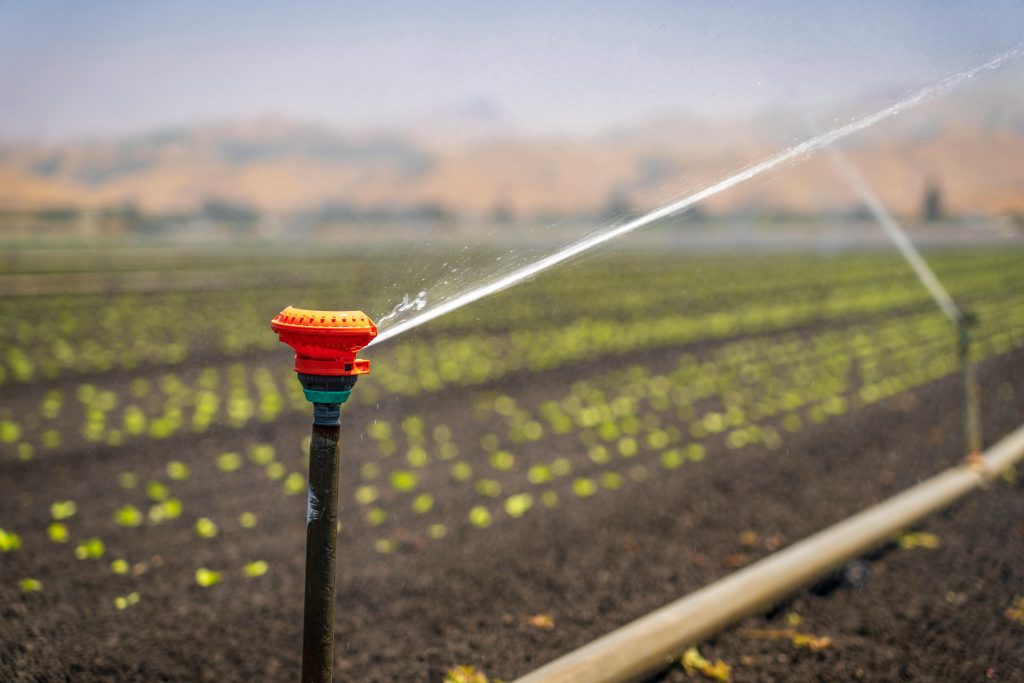
Early spring is a critical stage for establishing healthy, vigorous crops. During this period, young plants require both consistent moisture and adequate nutrients to support rapid leaf expansion, root growth, and flower initiation. Coordinating irrigation with fertilization ensures that crops absorb nutrients efficiently, reduces stress, and maximizes early-season growth potential.
Products such as Supply Solutions 10-10-10 Complete Fertilizer, Supply Solutions 7-0-0 Nitrogen Calcium Fertilizer, and Supply Solutions Micronutrient Spray can be integrated into irrigation programs to deliver nutrients directly to the root zone while supporting tissue strength and early growth.
This blog explores strategies for combining irrigation and fertilization, crop-specific recommendations, timing and monitoring best practices, and the benefits of an integrated early spring water-nutrient program.
Why Coordinating Irrigation and Fertilization Matters
- Improved Nutrient Uptake: Adequate soil moisture allows nutrients to dissolve and move toward roots efficiently.
- Stress Reduction: Proper water management prevents drought or waterlogging, which can inhibit nutrient absorption.
- Enhanced Root Development: Coordinated irrigation supports deeper, more robust root systems.
- Optimized Growth: Young plants can grow rapidly with both sufficient water and balanced nutrients.
Ignoring water-nutrient coordination can result in nutrient deficiencies, stunted growth, uneven canopy development, and reduced early-season yields.
Fertilizer Products Compatible With Irrigation Programs
Soil-Applied Fertilizers
Foliar and Supplemental Fertilizers
- Supply Solutions Micronutrient Spray supplies boron, zinc, iron, and manganese for rapid correction of early deficiencies.
- Foliar applications support young leaves and developing fruits when soil uptake is limited due to cold or uneven moisture.
Combining soil and foliar applications with irrigation allows nutrients to be available when and where the crop needs them most.
Crop-Specific Irrigation and Fertilization Practices
Leafy Greens
- Frequent, light irrigation maintains soil moisture without saturating roots.
- Split applications of Supply Solutions 10-10-10 Complete Fertilizer support rapid leaf expansion.
- Foliar micronutrients ensure uniform chlorophyll development and leaf quality.
Tomatoes and Peppers
Cucurbits
- Irrigation supports early vine growth and fruit development.
- Balanced nutrient application via irrigation ensures consistent potassium and nitrogen availability for root and leaf growth.
- Foliar applications correct deficiencies in boron, zinc, or manganese that affect fruit quality.
Berries
- Maintain consistent soil moisture to support early flower and fruit development.
- Foliar micronutrients improve berry size, sugar content, and overall quality.
- Coordinated fertilization enhances root vigor and nutrient absorption efficiency.
Orchard Crops
- Irrigation promotes uniform bud break and canopy growth.
- Early NPK and calcium applications support root and leaf development.
- Foliar micronutrients applied in conjunction with irrigation ensure even nutrient distribution.
Timing and Best Practices
- Schedule irrigation based on soil moisture monitoring and crop water demand.
- Deliver fertilizers through irrigation (fertigation) to maximize nutrient uptake efficiency.
- Use split applications of nitrogen and potassium to prevent over-fertilization and nutrient leaching.
- Apply foliar micronutrients during early morning or late afternoon for optimal absorption.
- Coordinate irrigation with soil-applied fertilizers to maintain moisture consistency and nutrient availability.
Monitoring and Adjustment
- Observe leaf color, canopy uniformity, and root development to gauge nutrient absorption.
- Adjust irrigation volume based on rainfall, soil type, and crop growth stage.
- Conduct tissue and soil tests to ensure nutrients delivered via irrigation are effectively absorbed.
- Keep detailed records of water and fertilizer applications to refine future programs.
Benefits of Integrated Irrigation and Fertilization
- Stronger, deeper root systems for efficient nutrient and water uptake.
- Rapid, uniform vegetative growth across all crop types.
- Enhanced stress tolerance to temperature fluctuations and early pests.
- Increased fertilizer efficiency and reduced nutrient waste.
- Optimized yield and crop quality during early growth stages.
Integrating irrigation and fertilization allows crops to develop with minimal stress and maximal nutrient use efficiency, establishing a strong foundation for the rest of the growing season.
Building a Strong Foundation for Early Spring Growth
Coordinating irrigation with nutrient management using Supply Solutions 10-10-10 Complete Fertilizer, Supply Solutions 7-0-0 Nitrogen Calcium Fertilizer, and Supply Solutions Micronutrient Spray ensures that early spring crops achieve uniform, vigorous growth.
Properly managed irrigation supports nutrient uptake, enhances root development, and maximizes early leaf expansion, providing a head start for high-value crops throughout the season.
Supply Solutions
Supply Solutions provides dependable agricultural products designed to support farmers, gardeners, and land managers throughout the growing season. Our goal is to offer practical fertilizer solutions that help crops thrive while supporting responsible soil management.
Explore our full range of agricultural fertilizers and supplies at
https://www.mysolutionssupply.com
For product questions or application guidance, contact Supply Solutions or consult the product label for detailed instructions.