

Uncategorized
Hydrangeas, Roses, And Ornamentals In June Heat
June can make ornamental plants look better and worse at the same time. Hydrangeas may be forming buds, opening blooms, or pushing soft new growth.
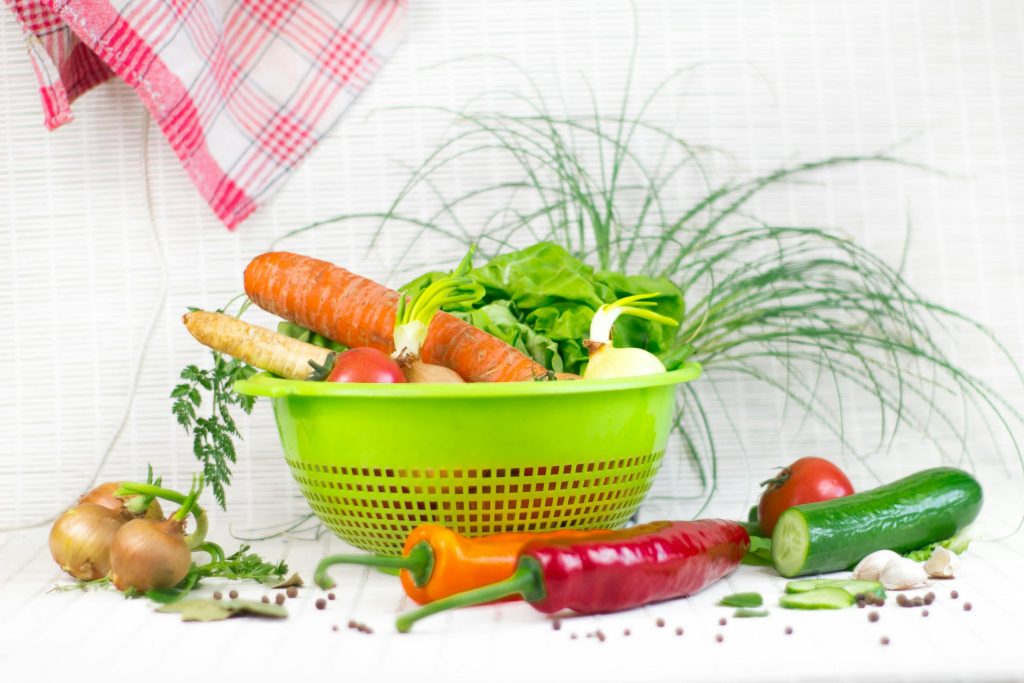
Early vegetable plantings have a way of exposing small problems quickly.
Unlike row crops that have more time to recover, vegetables tend to respond immediately to early-season conditions. Emergence, leaf color, and initial growth all reflect what’s happening in the soil within the first couple of weeks. April planting, in particular, tends to highlight imbalances because soils are still transitioning while crops are already expected to perform.
That gap between soil readiness and crop demand is where balanced fertilization becomes more important than it might seem at first.
Vegetable crops are less forgiving in early stages.
They rely on consistent access to nutrients from the moment roots begin to develop. Any delay in availability, or imbalance between nutrients, often shows up as uneven growth, slow establishment, or early stress symptoms that carry forward through the season.
In April, those risks increase.
Soils are warming, but not uniformly. Moisture levels can shift quickly depending on rainfall patterns. Microbial activity is increasing, but not yet consistent across the field or bed. Nutrients may be present, but availability is uneven.
Trying to correct those conditions with a single nutrient often leads to partial results.
Applying nitrogen alone may increase leaf growth, but without sufficient phosphorus, root development may lag. Adding phosphorus without enough potassium may limit how well plants regulate water under fluctuating moisture conditions.
This is where balanced fertilizers begin to provide stability.
Using a product like Supply Solutions Premium 14-14-14 Fertilizer at planting helps ensure that all three primary nutrients are available together as vegetables begin establishing.
In practical terms, that balance supports early development in several ways:
Rather than forcing rapid growth, this combination supports steady, uniform establishment, which is critical in vegetable production where timing and consistency matter.
But even with balanced fertilization, early-season soils don’t always respond evenly.
That’s where supporting inputs begin to play a role.
In vegetable systems, especially raised beds or intensively managed plots, biological activity can vary depending on how the soil was managed prior to planting. Organic matter levels, previous crop residue, and moisture conditions all influence how quickly nutrients become available.
Products like Supply Solutions Pacific Bounty Fish Fertilizer are often used during this stage to support that transition.
Fish-based fertilizers provide:
In April conditions, where soils are still becoming biologically active, this type of input helps create a more responsive environment for both roots and nutrients.
It does not replace a base fertilizer program. It supports it.
This is particularly useful in vegetable production where early growth needs to be consistent across the entire planting.
Uneven early growth in vegetables often leads to uneven harvest timing, which can affect both yield and quality.
Another layer to consider is nutrient availability within the soil.
Even when fertilizers are applied, not all nutrients are immediately accessible. Soil conditions influence how nutrients bind, release, and move within the root zone.
This is where soil-conditioning inputs can improve efficiency.
Materials like Supply Solutions Humic Acid Soil Conditioner are used to enhance how nutrients interact with the soil.
They help:
In vegetable systems, where root zones are often shallow and highly managed, improving nutrient availability can have a direct effect on early crop performance.
This becomes especially important in April when soil conditions are still stabilizing.
Balanced fertilization, combined with improved nutrient availability, creates a more consistent environment for early growth.
As the crop begins to establish, nutrient demand starts to shift.
Vegetables, depending on the crop, often move quickly into active growth once conditions improve. Nitrogen demand increases, and plants begin to respond more visibly to available nutrients.
This is where timing becomes more important than quantity.
Applying large amounts of nitrogen too early, especially from sources like Supply Solutions Urea 46-0-0 Fertilizer, can reduce efficiency:
Waiting until the crop has established and begins active growth allows nitrogen to be used more effectively.
At that stage:
This staged approach aligns fertilizer use with crop demand rather than trying to meet all needs at once.
In vegetable production, this alignment often determines how uniform the crop becomes.
Field and bed variability also influence how fertilizers perform.
Using a balanced fertilizer as a foundation helps buffer those differences, while supporting inputs improve how nutrients are accessed across varying conditions.
This creates a more stable system during a period when variability is naturally high.
Over time, this approach reduces the need for corrective inputs.
Crops that establish evenly tend to maintain that uniformity, responding more consistently to later fertilizer applications and producing more predictable yields.
April is where that consistency begins.
Using a combination of balanced nutrition and supporting inputs allows vegetable crops to move through early stages without the setbacks that often come from uneven nutrient availability.
Applying Supply Solutions Premium 14-14-14 Fertilizer at planting provides a stable nutrient base, while supporting soil activity with Supply Solutions Pacific Bounty Fish Fertilizer and improving nutrient availability with Supply Solutions Humic Acid Soil Conditioner helps ensure those nutrients are actually used. Following up with nitrogen from Supply Solutions Urea 46-0-0 Fertilizer as the crop begins active growth completes that sequence.
Supply Solutions works with growers to align fertilizer programs with the specific demands of early-season vegetable production, focusing on timing, balance, and soil conditions rather than one-size-fits-all approaches.
As you move through April planting, focus on creating a system where nutrients are not only present, but available and properly timed. Review product labels carefully, and if you need guidance on structuring your fertilizer program for vegetables this season, reaching out to Supply Solutions can help ensure your crop establishes evenly and performs consistently from the start.
June can make ornamental plants look better and worse at the same time. Hydrangeas may be forming buds, opening blooms, or pushing soft new growth.

The summer solstice is a useful checkpoint in the garden because it arrives when the season starts to change tone. Spring establishment is mostly behind
Give us a call or visit our store, and we’ll help you find the right solution for your business.
© Supply Solutions LLC 2026