

Uncategorized
Summer Solstice Garden Check: What To Correct Before July
The summer solstice is a useful checkpoint in the garden because it arrives when the season starts to change tone. Spring establishment is mostly behind

April rarely follows a steady pattern.
One stretch of warm days can make it feel like the season has fully started, only to be followed by cooler temperatures or unexpected rainfall. These swings don’t just affect planting schedules. They directly impact how fertilizer behaves and how crops respond.
The challenge is that most fertilizer plans are built with a general timeline in mind, but April doesn’t always follow that timeline.
Adjusting your approach as conditions change is what keeps fertilizer working efficiently.
Early in the season, the biggest issue is mismatch.
Nutrients may be available before crops can use them, or crops may begin growing before nutrients are fully accessible. Weather is usually the factor that creates that gap.
Temperature is often the first signal.
When soil temperatures rise, root activity increases. Nutrient uptake becomes more consistent, and crops begin to respond more visibly. But if temperatures drop again, that activity slows.
Applying fertilizer during a warm window can seem like the right move, but if cooler conditions follow, uptake may not keep pace with availability.
This is where balanced fertilizers help maintain stability.
Using a product like Supply Solutions Premium 14-14-14 Fertilizer provides nutrients in proportion, allowing the crop to draw from what it needs as conditions shift rather than relying on a single nutrient to drive growth.
It doesn’t eliminate the effect of temperature changes, but it reduces the risk of imbalance when those changes occur.
Moisture variability is the next factor.
Rainfall can improve fertilizer performance by incorporating nutrients into the soil, but too much rain can move nutrients beyond the root zone.
Dry periods create the opposite problem.
These swings are common in April, which is why flexibility in timing matters.
Instead of applying all fertilizer at once, adjusting applications based on short-term forecasts improves efficiency.
Applying ahead of moderate rainfall helps position nutrients correctly. Holding off before heavy rainfall reduces the risk of loss.
Nitrogen management is where weather changes have the biggest impact.
Nitrogen is highly mobile and closely tied to moisture conditions. Applying it too early, especially when weather is unpredictable, often leads to reduced efficiency.
Using products like Supply Solutions Urea 46-0-0 Fertilizer requires timing that aligns with both crop growth and weather stability.
When applied during active growth under stable conditions:
When applied too early under changing conditions:
This is why delaying nitrogen until the crop shows consistent growth often produces better results.
Soil condition also shifts with weather.
These changes affect how fertilizer interacts with the soil.
Improving how nutrients are retained and accessed helps stabilize performance under these conditions.
Inputs like Supply Solutions Humic Acid Soil Conditioner support nutrient availability and soil structure.
They help:
This creates a buffer against changing weather conditions.
Biological activity is also influenced by temperature and moisture.
As soils warm, microbial processes increase, improving nutrient cycling. When conditions cool or become too wet, that activity slows.
Supporting this system helps maintain consistency.
Products like Supply Solutions Pacific Bounty Fish Fertilizer contribute organic compounds that stimulate microbial activity.
This supports:
In April, where conditions fluctuate, this helps fertilizer continue working even as the environment changes.
Field variability becomes more noticeable under shifting weather.
A single fertilizer plan applied uniformly may produce uneven results under these conditions.
Adjusting timing, rather than increasing rates, often improves consistency.
Splitting applications is one of the most effective ways to adapt.
This allows fertilizer use to follow the season as it develops, rather than trying to predict it all at once.
Weather in April doesn’t require a completely different fertilizer program.
It requires a more responsive one.
Using Supply Solutions Premium 14-14-14 Fertilizer early provides a stable nutrient base, while improving nutrient retention with Supply Solutions Humic Acid Soil Conditioner and supporting soil activity with Supply Solutions Pacific Bounty Fish Fertilizer helps maintain consistency as conditions shift. Bringing in nitrogen later with Supply Solutions Urea 46-0-0 Fertilizer allows nutrient supply to match actual crop demand rather than expected timing.
Supply Solutions works with growers to adapt fertilizer programs to real-time field conditions, helping ensure that changing weather doesn’t reduce efficiency. As the season moves forward, staying responsive to those changes often makes more difference than any single application decision.
The summer solstice is a useful checkpoint in the garden because it arrives when the season starts to change tone. Spring establishment is mostly behind
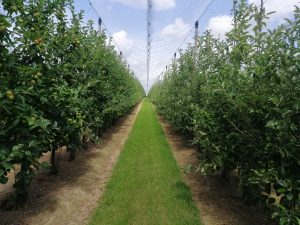
June is when many fruiting crops begin asking a different question. In spring, the question was often whether the plant could get established. Could the
Give us a call or visit our store, and we’ll help you find the right solution for your business.
© Supply Solutions LLC 2026