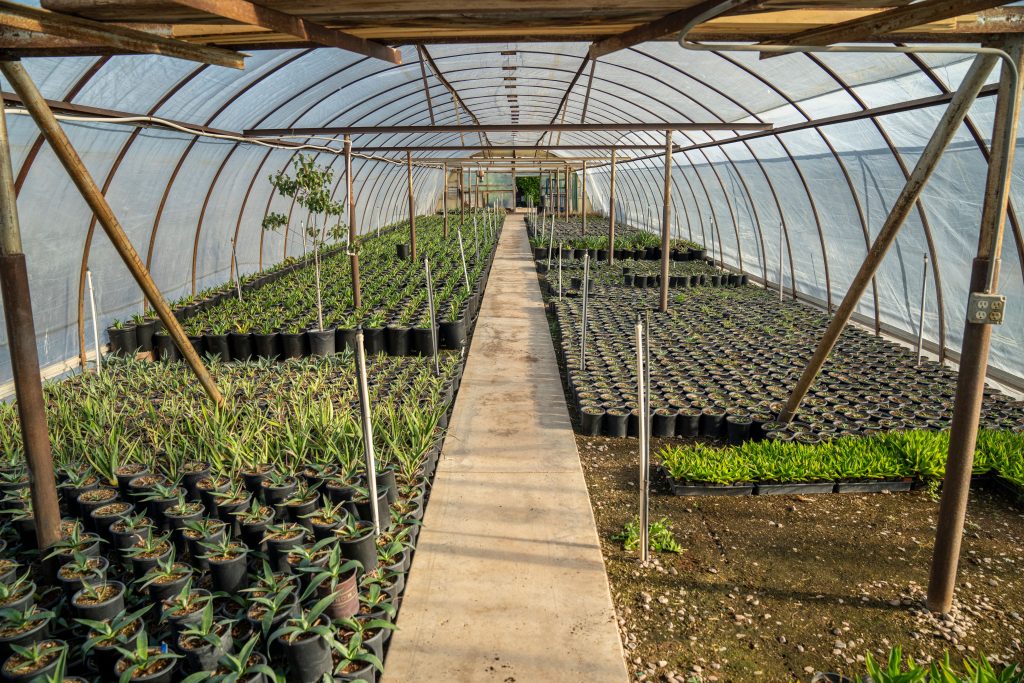
The first 90 days after planting decide more than most people realize.
A nursery liner, annual flat, perennial plug, container shrub, balled-and-burlapped tree, hanging basket, or freshly installed landscape bed may look finished on planting day. The bed is edged. Mulch is down. Plants are upright. Irrigation has run. The job looks complete.
But the plant does not see it that way.
For the plant, the first 90 days are a transition period. Roots have to leave the protected environment they came from and begin working in a new soil or growing mix. Water patterns change. Light changes. Wind changes. Root temperature changes. Fertility changes. A shrub that was watered every day in a nursery container now has to establish in landscape soil. A greenhouse crop that was grown in peat-lite media may need precise soluble feeding because that mix has limited nutrient reserve. A flower bed planted in May has to root quickly before summer heat arrives.
That is why nursery and landscape nutrition should not be treated as a one-time fertilizer event.
The first 90 days are about establishment. Fertilizer matters, but it has to support the root system instead of forcing top growth the plant cannot sustain.
Establishment is different from growth
A plant can grow and still not be established.
That distinction matters in May. Warm weather can push leaves, flowers, and shoots quickly. A newly installed annual bed may bloom within days. A shrub may flush leaves after planting. A container crop may look full in the greenhouse. Those signs are encouraging, but they do not always mean the root system has fully adjusted.
Establishment means roots are expanding into the surrounding soil or media and beginning to support the plant under real site conditions.
For a landscape shrub, that means roots are moving out of the original root ball and into native soil. For a tree, it means the plant is beginning to rebuild the root system disturbed during digging, shipping, or transplanting. For annuals and perennials, it means roots are crossing from plug or pot media into the bed. For greenhouse and nursery containers, it means roots are actively filling the media and receiving enough oxygen, water, and nutrients without salt buildup.
During the first 90 days, the goal is not simply to make the top look bigger. The goal is to help the plant connect with its new root zone.
That is why strong fertilizer is not always the first answer.
If roots are stressed, fertilizer can sometimes push foliage faster than the root system can support. University of Georgia Extension cautions against applying fertilizer in the planting hole for new trees because it can damage young, tender roots, and recommends beginning fertilization later according to soil test recommendations.
That does not mean every new planting should go unfed. It means the type, placement, timing, and rate of fertilizer should match the plant and setting.
The root ball and the surrounding soil are not the same environment
One of the biggest challenges in landscape establishment is the difference between the root ball and the soil around it.
A container shrub may come from a bark-based nursery mix that drains quickly. It may be planted into clay soil that holds water longer. The root ball can dry out while the surrounding soil is still moist, or the surrounding soil can stay saturated while the root ball drains. Either situation stresses roots.
A balled-and-burlapped tree may have a dense clay root ball installed into looser amended soil. A perennial plug may sit in peat-based media surrounded by heavier garden soil. A greenhouse plant may be moved into a container mix with a different pH, nutrient charge, and water-holding pattern.
Fertilizer does not erase that transition.
Water management, planting depth, root ball preparation, mulch, drainage, and soil contact all matter. If the root ball is dry, fertilizer cannot move properly. If the planting hole is saturated, roots cannot breathe. If the plant is installed too deep, roots may struggle no matter what fertilizer is used.
Minnesota Extension notes that newly planted trees and shrubs need regular, consistent watering until root systems establish, and that proper mulching helps regulate soil moisture and temperature while reducing weed pressure.
That is the foundation for the first 90 days. Fertility supports establishment only when water and oxygen are also right.
Controlled-release feeding fits ornamental plantings when roots are ready
Ornamental landscapes and nursery stock often benefit from steady feeding instead of a hard fertilizer push.
That is where 12-6-6 Ornamental Booster fits naturally. Supply Solutions describes this product as a controlled-release fertilizer for ornamental plants, nurseries, and landscapes that provides steady nutrients for up to three months and supports strong roots, foliage, and blooms.
That three-month window lines up well with the first 90 days after planting.
The 12-6-6 analysis gives ornamentals a moderate nitrogen supply, phosphorus for root and plant development where the soil calls for it, and potassium for plant strength and stress tolerance. The controlled-release nature is important because nursery and landscape plants often need consistency more than intensity.
The problem it helps solve is uneven feeding during establishment. A newly planted bed may start well, then fade because roots are still limited and nutrients are not consistently available. A nursery block may need a predictable topdress program. A landscape installation may need feeding that carries annuals, perennials, or ornamentals through the early season without repeated applications every week.
The timing depends on the plant. For annuals, perennials, and established ornamentals, it may fit early in the planting or active growth window. For newly planted trees and shrubs, especially larger material, use more caution. The first goal is root establishment, and fertilizer should not be concentrated in the planting hole or against tender roots.
The best use is a properly placed topdress or soil-surface application according to directions, followed by watering in. Keep it off foliage when possible, avoid piling it against stems or trunks, and do not treat controlled-release fertilizer as permission to ignore irrigation.
Steady feeding works only if roots have steady moisture.
HumiPro(K) WSP supports the soil side of establishment
Not every establishment problem is a straight NPK problem.
Sometimes the plant needs better root-zone conditions. Soil may be compacted, low in organic activity, tight after construction, slow to accept water, or inconsistent from bed to bed. Container and nursery media may need help with nutrient movement and root activity. A new planting may need a soil-conditioning product that supports roots without simply adding more nitrogen.
That is where HumiPro(K) WSP fits.
Supply Solutions describes HumiPro(K) WSP as a humic and fulvic acid powder that enriches soil, strengthens roots, and promotes growth for plants and lawns. The product page lists soil nourishment, root development, and long-lasting improvement to plant health and vitality among its benefits.
In the first 90 days, this matters because roots are the main project.
HumiPro(K) WSP is not a replacement for fertilizer. It does not replace nitrogen, phosphorus, potassium, calcium, magnesium, or micronutrients when those nutrients are deficient. Its role is different. It supports the soil environment and root-zone activity so plants can make better use of the growing conditions around them.
The problem it helps solve is weak root-zone performance. In May landscapes, that can mean new beds built over disturbed soil, lawns and ornamentals growing in compacted areas, nursery stock trying to move from container media into native soil, or plants that need better nutrient movement during active establishment.
The timing is early in active growth. Supply Solutions lists fall and early spring soil applications with up to four applications per growing season, along with mixing instructions and a note to jar test before large-scale mixing, especially where water quality may affect compatibility.
For May plantings, that means HumiPro(K) WSP can be used as part of a root-zone support program while plants are actively establishing. It is especially useful where the manager is trying to build soil function, not simply push more top growth.
The caution is to keep expectations realistic. Humic and fulvic products support the system. They do not fix poor drainage, deep planting, dead roots, severe compaction, or irrigation failure by themselves.
Peat-lite greenhouse crops need a different fertilizer approach
Greenhouse and nursery containers are not the same as field soil or landscape beds.
Peat-lite mixes are designed for container production. They hold water and air differently than mineral soil. They often have limited nutrient reserve unless fertilizer is added. Nutrients can leach with frequent irrigation. pH and electrical conductivity can change quickly. That means greenhouse plants often require a more precise soluble fertilizer program than landscape plants growing in the ground.
Jack’s Professional 20-10-20 Peat Lite fits that setting. Supply Solutions describes it as a 20-10-20 Peat-Lite formula with a 2:1:2 balanced ratio, a 60% nitrate to 40% ammoniacal nitrogen balance, and approximately twice the micronutrient level of the general-purpose formulation. It is listed for greenhouse plants grown in peat-lite mixes and for growers who want an acidic formula with added micronutrients.
That is a specific use case.
This product is not the same as a landscape topdress. It is a water-soluble fertilizer designed for greenhouse and container production where nutrients are delivered through irrigation or hand watering. The problem it helps solve is nutrient supply in peat-lite media that lacks enough reserve fertility for sustained growth.
The timing is during active container growth, especially when plants are rooted enough to feed consistently and are being managed under greenhouse or nursery conditions. It fits bedding plants, ornamentals, foliage crops, and other greenhouse plants grown in peat-lite mixes.
The caution is monitoring. Supply Solutions notes that electrical conductivity is the best method to determine fertilizer strength and that injector settings should be checked before use.
That matters because container plants can be injured by excess salts. A plant in the ground has more soil volume to buffer mistakes. A plant in a pot does not. In peat-lite production, fertility should be measured, not guessed.
The first 30 days are about water and root contact
The first month after planting is often the most sensitive.
Roots have been disturbed. The plant is adapting to a new environment. Weather may swing from cool rain to hot wind. In May, a landscape planting can go from too wet to too dry in a few days. Nursery containers can dry quickly under warm days. Greenhouse crops can shift fast as light levels rise.
During this first stage, water management usually matters more than fertilizer intensity.
The soil or media should be moist enough for root growth but not saturated. Mulch should protect the soil surface without being piled against stems. Root balls should be checked directly, not assumed moist because the surrounding soil looks damp. Irrigation should wet the actual root zone.
Fertilizer during this stage should be gentle and well placed.
For greenhouse plants in peat-lite mixes, Jack’s Professional 20-10-20 Peat Lite may be used as part of a measured soluble feeding program once roots are active and media moisture is being managed properly.
For landscape beds and ornamentals, 12-6-6 Ornamental Booster may fit when plants are ready for steady feeding and the application can be placed safely away from tender crowns or stems.
For root-zone support, HumiPro(K) WSP can fit early where soil conditioning and root development are priorities.
The biggest mistake in the first 30 days is trying to fertilize a plant out of transplant stress. If roots are not functioning, fertilizer response will be limited.
Days 30 to 60 are when feeding demand begins to show
By the second month, the plant starts telling you more clearly whether it is establishing.
Annuals should be rooting and filling. Perennials should be pushing new growth. Shrubs should be holding color and beginning to extend roots. Greenhouse crops may be growing fast enough to need consistent soluble feeding. Container nursery stock may be entering a stronger nutrient demand period.
This is when fertility often becomes more important.
If the plant is rooted, watered properly, and growing, steady feeding can support momentum. 12-6-6 Ornamental Booster is useful in this window because its controlled-release pattern can provide nutrients over the same period when ornamental beds and nursery material are building structure.
If the root-zone environment still seems weak, HumiPro(K) WSP can remain part of the program, especially where soil conditioning, root growth, and nutrient movement are ongoing priorities.
If greenhouse crops are in peat-lite mixes, Jack’s Professional 20-10-20 Peat Lite can continue to support active growth through measured feeding. This is the stage where checking EC, pH, leaching fraction, and crop response becomes especially important.
The key is not to feed everything the same. A rooted petunia crop, a newly planted oak, a row of container hydrangeas, and a commercial landscape bed do not all need the same fertilizer strategy.
Days 60 to 90 prepare the plant for summer stress
By the third month, May plantings are often approaching summer pressure.
Temperatures rise. Irrigation demand increases. Root zones dry faster. Containers heat up. Landscape beds near pavement experience reflected heat. Nursery blocks need consistent watering. Annual color begins carrying more flowers. Shrubs and trees begin relying more heavily on the roots they have established since planting.
Fertilizer decisions at this stage should support durability.
This is where potassium, controlled release, root-zone conditioning, and steady water management become important. Pushing soft growth with excessive nitrogen can make plants more vulnerable to heat and drought stress. Underfeeding can leave them pale, weak, and unable to maintain growth.
12-6-6 Ornamental Booster fits this period because its two- to three-month feeding window can carry ornamentals through establishment without relying on frequent quick applications. It should still be used according to label directions and plant need.
HumiPro(K) WSP fits where soil and root-zone performance need support before heat exposes weak rooting.
Jack’s Professional 20-10-20 Peat Lite fits greenhouse and nursery container plants in peat-lite media where active growth continues and nutrition must be supplied through soluble feeding.
By days 60 to 90, the question is no longer only, “Is the plant growing?”
The better question is, “Is the plant strong enough for the next weather pattern?”
Annual beds need steady establishment feeding
Annual color beds are often expected to deliver immediate impact. Landscapers and homeowners want color fast, especially in May.
But annuals still need roots.
A bed of petunias, begonias, marigolds, zinnias, impatiens, salvia, coleus, or vinca may bloom soon after planting, but those flowers will not hold through summer if roots stay shallow. Fertilizer should help annuals establish, fill, and bloom without pushing excessive soft growth.
12-6-6 Ornamental Booster fits annual beds because it is designed for ornamentals and provides controlled-release nutrition. The nitrogen supports growth and color, phosphorus supports roots and flowering where needed, potassium supports plant strength, and the controlled-release pattern reduces the need for constant reapplication.
HumiPro(K) WSP can fit annual beds where soil conditioning and root-zone support are priorities, especially in beds that have been replanted repeatedly, compacted by foot traffic, or disturbed during installation.
The first 90 days of annual beds often cover the most important part of the display. Feed early enough to support growth, but keep watering and soil contact right. Fertilizer should be placed where roots can use it, not left sitting in mulch or washed off hard surfaces.
Perennials need patience in the first season
Perennials are different from annuals because they are expected to return and improve over time.
A newly planted perennial may not show its full top growth in the first 90 days. That is normal. Some perennials spend more energy building crowns and roots than producing flowers immediately. If fertility pushes too much top growth too quickly, the plant may not establish as well as it should.
For perennials, moderate, steady feeding is usually better than heavy feeding.
12-6-6 Ornamental Booster can fit perennial beds where a controlled-release ornamental fertilizer is needed. It should be placed carefully and watered in.
HumiPro(K) WSP can fit perennial installations where the soil needs support for root development and nutrient movement. This is especially useful in beds where perennials are expected to build over several seasons.
Perennials should not be judged only by first-season bloom. A perennial that roots well in the first 90 days is usually more valuable than one forced into a short display and weakened before summer.
Shrubs and trees need a lighter hand
Woody plants often need the most restraint.
Trees and shrubs have larger root systems to rebuild after planting. They may take months or years to fully establish depending on size, species, soil, climate, and planting technique. Pushing top growth too early can increase water demand before roots are ready.
This is why newly installed woody plants should be handled differently than annual color or greenhouse crops.
For new trees and shrubs, start with planting depth, root flare, root ball preparation, backfill, water, and mulch. Do not place granular fertilizer in the planting hole. University of Georgia Extension notes that granular general-purpose fertilizers can damage tender roots and that growers should wait until plants are established before applying granular general-purpose fertilizer.
That does not mean woody plants never need nutrition. Established shrubs and trees may benefit from feeding when soil tests or growth patterns show need. A landscape bed with actively growing ornamentals may use 12-6-6 Ornamental Booster carefully as a surface-applied ornamental fertilizer, but the timing and placement should respect root sensitivity.
HumiPro(K) WSP can be useful around woody plantings where the goal is root-zone support rather than a strong NPK push.
For trees and shrubs, first-year success usually comes from steady moisture, correct planting depth, mulch, and patience.
Nursery containers need fertility monitoring, not just feeding
Container-grown nursery stock can grow quickly in May, but containers also create risk.
Roots are confined. Water and nutrients move through the media faster. Salts can build if fertilizer is too strong or leaching is poor. Nutrients can leach if watering is too heavy. Media pH can drift. Micronutrient deficiencies can show up quickly, especially in peat-lite mixes.
This is why nursery container fertility should be monitored.
For greenhouse plants grown in peat-lite mixes, Jack’s Professional 20-10-20 Peat Lite fits because it is designed for that media type and provides an acidic formula with elevated micronutrients. It supports active growth in controlled production systems where fertilizer strength can be managed through injector settings and EC checks.
For outdoor nursery containers or ornamental stock where controlled-release feeding is desired, 12-6-6 Ornamental Booster may fit as a topdress option, depending on crop, container size, irrigation, and production goals.
HumiPro(K) WSP can fit container programs where root development and nutrient movement are priorities, but compatibility and water quality should be checked before large mixes.
Nursery fertility is not just about the product. It is about irrigation volume, media temperature, pH, EC, crop stage, and uniform application.
Avoid fertilizer against stems, crowns, and trunks
Placement mistakes cause many first-90-day problems.
Fertilizer piled against stems can burn tissue. Granules trapped in crowns can injure plants. Fertilizer placed directly against tender roots can cause stress. Fertilizer left on foliage can spot or burn leaves. Fertilizer sitting on mulch may not reach the soil evenly.
For landscape beds, pull mulch back before applying fertilizer. Apply to the soil surface or root zone according to directions. Water it in. Replace mulch while keeping it away from stems and trunks.
For container crops, distribute fertilizer evenly. Avoid concentrated piles near the crown. For soluble feeds, make sure the mix is correct and the media is not bone dry before feeding.
For trees and shrubs, keep fertilizer away from the trunk and apply broadly where active roots are likely to grow, when feeding is appropriate.
The first 90 days are not the time for sloppy placement. Tender roots and new plantings have less margin for mistakes.
Watering makes or breaks the fertilizer program
Fertilizer only works when water is managed correctly.
Too little water means nutrients do not move into the root zone and roots cannot take them up. Too much water removes oxygen and can leach nutrients through container media. In landscapes, overwatering can create shallow roots, root rot, and weak establishment. In greenhouse crops, overwatering can lower oxygen and change EC patterns.
May watering should be checked by root zone, not by habit.
A newly planted shrub may need water in the original root ball even if surrounding soil is moist. A hanging basket may dry out daily. A landscape bed in clay may need less frequent watering than a sandy bed. A greenhouse bench may have uneven drying from airflow and sun exposure.
Minnesota Extension emphasizes regular and consistent watering for newly planted trees and shrubs until roots establish. That principle applies broadly across nursery and landscape work.
Before adding more fertilizer, check moisture. Many plants that look hungry are actually dry, waterlogged, or root-stressed.
Read the plant response before adjusting
The first 90 days are full of signals.
Pale leaves may indicate low nitrogen, poor roots, high pH, low iron availability, overwatering, or cold soil. Burned tips may indicate fertilizer concentration, drought stress, salt buildup, or wind. Wilting may indicate dry root balls, damaged roots, heat, or saturated soil. No new growth may mean transplant shock, cold soil, poor planting depth, or low fertility.
Do not respond to every symptom with another fertilizer application.
Look at the whole site. Check roots, water, soil, mulch, planting depth, light, and recent weather. Compare plants in the same bed. If one plant is weak and the rest are strong, the issue may be planting depth, root damage, or irrigation coverage. If the whole bed is pale, fertility or pH may be more likely. If container crops show uniform edge burn, soluble salts or fertilizer strength should be checked.
Fertilizer adjustments should be based on what the plant is actually showing, not on fear that the plant needs more.
A practical first-90-day nutrition rhythm
The first 30 days should focus on planting quality, moisture, and root contact. Use fertilizer gently and only where the crop and system support it.
Days 30 to 60 are usually when steady feeding begins to matter more. Annuals and perennials may need stronger ornamental support. Nursery containers may require regular soluble feeding. Shrubs and trees should still be handled carefully.
Days 60 to 90 should prepare plants for heat, traffic, flowering, and continued growth. Fertility should support durability, not soft growth.
Use 12-6-6 Ornamental Booster when ornamentals, nursery stock, and landscape beds need controlled-release feeding for steady growth, roots, foliage, and blooms over a two- to three-month window.
Use HumiPro(K) WSP when the root-zone environment needs support through humic and fulvic acids, especially where soil conditioning, root development, and nutrient movement are priorities.
Use Jack’s Professional 20-10-20 Peat Lite for greenhouse plants grown in peat-lite mixes where a soluble acidic formula with added micronutrients fits the production system.
Those three products serve different jobs. One supports controlled-release ornamental feeding. One supports the soil and root zone. One supports soluble greenhouse nutrition in peat-lite media. The best first-90-day programs know the difference.
The first 90 days should build confidence, not just growth
A strong landscape or nursery crop is not built by forcing the top to look good for a few weeks.
It is built by helping roots establish, keeping moisture steady, choosing the right fertilizer form, avoiding placement mistakes, and adjusting based on plant response. May is an important window because plants are active, but summer stress is close. The plants that root well in May and early summer are usually the plants that hold up when heat, traffic, bloom load, and irrigation demand increase.
Supply Solutions offers products that fit different parts of that establishment window. 12-6-6 Ornamental Booster supports steady ornamental feeding in nurseries and landscapes. HumiPro(K) WSP supports soil conditioning and root-zone development. Jack’s Professional 20-10-20 Peat Lite supports greenhouse plants grown in peat-lite mixes where soluble feeding and micronutrient supply need to be managed closely. Used at the right time and matched to the plant’s environment, these products help the first 90 days do what they should: establish roots, support steady growth, and prepare plants for the season ahead. Contact Supply Solutions for help choosing the right nursery or landscape nutrition program for your crops, beds, containers, and growing conditions.