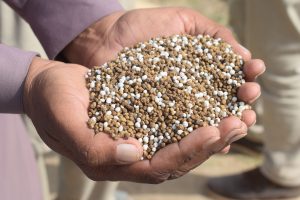
A long growing season is not built from one hard fertilizer push.
It is built from steady nutrition, active roots, good soil moisture, and soil biology that keeps working after the first flush of spring growth has passed. That is especially true in May, when gardens, lawns, flower beds, orchards, and small farm plantings are moving from establishment into stronger seasonal demand.
May is the point where organic feeding starts to make more sense in many soils. The ground is warming. Roots are expanding. Microbial activity is increasing. Plants are no longer just waking up; they are beginning to use nutrients at a faster pace.
But organic fertilizers do not work like highly soluble fertilizers.
They usually feed through the soil system. Microbes break down organic materials, nutrients are released over time, and roots take them up as conditions allow. Penn State Extension explains that nutrient release from organic sources depends on mineralization, and that this process is affected by soil temperature, moisture, oxygen, soil organisms, timing, placement, and the composition of the material. Mineralization is slower when soils are cold, dry, or waterlogged.
That is the practical reason slow-release organic feeding fits May so well. The soil is active enough to begin using these materials, but the season is still early enough for the release pattern to support plants through a longer window.
For growers, gardeners, and landscapers, the goal is not just to feed what the plant needs today. The goal is to build a root zone that keeps feeding after the easy spring weather is gone.
Slow-release does not mean slow-thinking
Some people hear “slow-release” and assume the fertilizer can be applied anytime, anywhere, with the same result.
That is not how it works.
Slow-release organic feeding still depends on timing. It needs soil contact. It needs moisture. It needs oxygen. It needs soil temperature warm enough for biology to work. It needs to be applied at a rate the crop can use. It should be placed where roots can reach it as they grow.
When those pieces line up, slow-release organic fertilizers can help smooth the feeding curve. Instead of a sharp push followed by a drop-off, the plant receives nutrients more gradually. That can be useful for vegetables, fruiting crops, lawns, perennials, flower beds, trees, shrubs, and long-season garden crops that need support beyond early establishment.
When those pieces do not line up, slow-release fertilizer can disappoint.
If the soil is cold, nutrient release may be too slow. If the soil is saturated, roots and microbes may lack oxygen. If the soil is dry, the breakdown process slows and nutrients do not move well. If the product is left sitting on top of dry mulch, roots may not access it efficiently. If it is overapplied, organic fertilizer can still create imbalance or root stress.
Organic feeding is not guesswork. It is a soil-based feeding strategy.
May is when organic feeding starts to build momentum
In early spring, organic fertilizers may sit longer before plants respond. Soil biology is still waking up. Roots are small. Nights may be cold. Heavy rain may limit oxygen. In many parts of the United States, April applications can feel slow because the soil is not yet fully ready to process organic materials.
By May, that changes.
Soil temperatures rise. Day length increases. Roots grow more actively. Garden beds are planted. Lawns are being mowed. Fruit trees are leafed out. Flower beds are filling. Tomatoes, peppers, squash, cucumbers, corn, beans, herbs, and annuals are entering stronger demand. Microbes have better conditions for breaking down organic materials.
That does not make organic fertilizers instant. It makes them timely.
A slow-release organic product applied in May can begin supporting the plant before summer pressure builds. It can feed as roots expand, as flowers begin forming, as fruit set starts, as lawns thicken, and as perennials move into active growth.
That timing matters because June and July are harder months. Heat rises. Water demand increases. Roots are tested. Container plants dry faster. Lawns face traffic and mowing stress. Vegetable crops begin carrying fruit. Flower beds need to keep blooming. Perennials and shrubs need enough root strength to avoid wilting through hot stretches.
The feeding pattern built in May can help carry the plant into that heavier demand.
Crab meal fits soil-building and calcium support
Organic Crab Meal Fertilizer 4-2-0 + 18% Calcium is a useful slow-release organic option when the goal is steady nutrition, soil support, and calcium contribution.
Supply Solutions describes this product as an all-natural crab meal fertilizer sourced from North American crab shells, with a 4-2-0 analysis and 18% calcium. The product page notes that it supports long-term soil health, beneficial microbial activity, soil structure, nutrient uptake, roots, foliage, blooms, and plant resilience, with use in gardens, lawns, flower beds, tomatoes, peppers, fruit trees, roses, leafy greens, and corn.
That nutrient profile gives crab meal a specific May role.
The nitrogen level is moderate. It supports growth without being a hard push. The phosphorus helps root development and early plant energy where the soil needs it. The high calcium content supports cell wall strength, fruit quality, and overall plant structure. The organic shell material feeds gradually as soil organisms break it down.
The problem Organic Crab Meal Fertilizer helps solve is weak long-season soil support where plants need more than a quick nitrogen response. It is useful when the grower wants a slow-release organic amendment that contributes calcium and helps maintain a healthier root-zone environment.
The timing is planting, bed preparation, or top-dressing during the growing season. In May, that means it can be worked into vegetable beds before planting, used around tomatoes and peppers before fruit problems show up, applied to flower beds as plants establish, or used as a lawn and garden amendment where a moderate organic feed is appropriate.
The caution is placement and rate. Crab meal should be applied according to directions and watered in. It should not be piled directly against stems or tender roots. Organic products still contain real nutrients, and calcium is not helpful if the plant cannot move water properly.
Shrimp fertilizer fits roots, flowering, calcium, and soil biology
Organic Shrimp Fertilizer 6-8-0 + 13% Calcium fits a slightly different role.
Supply Solutions describes this product as a 6-8-0 organic fertilizer made from wild-caught Pacific shrimp, with 13% calcium. The product page positions it for tomatoes, peppers, squash, flowering plants, transplants, containers, trees, shrubs, and row crops, and notes that it supplies natural phosphorus and calcium, supports deep roots, strong stems, flowering, fruit development, and beneficial soil microbes through chitin from shrimp shells.
That makes it especially relevant for May plantings that need root and flower support.
Compared with crab meal, shrimp fertilizer has more phosphorus and nitrogen. That makes it a strong fit for crops and beds where early root development, flowering potential, and calcium support are priorities. Tomatoes, peppers, squash, flowers, perennials, and mixed vegetable beds can all benefit when the soil and crop stage call for this type of feeding.
The problem Organic Shrimp Fertilizer helps solve is weak establishment in crops that need phosphorus, calcium, and steady organic nutrient release. It also fits growers who want to support soil microbial activity while feeding the crop.
The timing is May planting, transplanting, or early top-dressing. Supply Solutions lists uses such as mixing into the top few inches of soil for vegetable gardens and flower beds, adding small amounts per transplant hole, and side-dressing established plants monthly according to plant size and need.
This is important because shrimp fertilizer should be in the root zone early enough to matter. A tomato or pepper that already has fruit damage from calcium movement problems cannot be fixed backward. A flowering plant that has struggled for weeks in poor soil may not respond instantly. Shrimp fertilizer belongs in the early support window, where roots can grow into it and soil biology can begin processing it.
The caution is not to confuse slow-release with no-risk. This product contains nitrogen and phosphorus. It should be applied thoughtfully, especially in garden beds that already have high phosphorus from years of compost, manure, or bone meal.
Nutri-Proganic Pellet fits steady, balanced organic feeding
For a broader moderate organic feed, 4-3-2 Nutri-Proganic Pellet fits May programs where the goal is regular nourishment without overloading the plant.
Supply Solutions describes Nutri-Proganic Pellet as an organic chicken manure fertilizer with a 4-3-2 analysis, designed to nourish plants, support foliage, flowering, root strength, plant resilience, soil moisture, drainage, soil quality, pH balance, and regular plant nourishment.
That kind of product is useful when the crop does not need a heavy single-nutrient correction.
The nitrogen supports steady leaf growth. The phosphorus supports roots and flowering where needed. The potassium supports plant strength, water use, and resilience. The organic manure base gives the product a soil-feeding role rather than only a plant-feeding role.
The problem 4-3-2 Nutri-Proganic Pellet helps solve is low background fertility in gardens, lawns, food crops, and ornamental beds that need moderate, steady feeding. It is especially useful where a grower wants to avoid the flush-and-crash pattern that can come from too much fast nitrogen.
The timing is May bed preparation, early-season feeding, or top-dressing during active growth when soil is warm enough and moisture is balanced. It fits vegetables, flowers, lawns, and mixed plantings that need a stable organic nutrient source as the season lengthens.
The caution is moisture. Chicken manure-based organic fertilizers need water and soil contact to work well. If pellets are left dry on the surface, response will be slower. If applied to saturated soil, roots may not be able to use the nutrients properly. If applied too heavily, they can still overfeed the crop.
Moderate organic feeding is still feeding. It should be managed with care.
Organic feeding works best before plants are desperate
Slow-release organic products are strongest when used preventively.
They are not ideal as last-minute rescue products for crops that are already severely deficient. If a vegetable plant is pale and stunted from a strong nitrogen shortage, a slow-release organic product may help over time, but it may not correct the problem quickly enough on its own. If a tomato already has blossom end rot, crab meal or shrimp fertilizer may help the ongoing calcium program, but damaged fruit will not heal. If a lawn is yellow because the roots are sitting in saturated soil, organic feeding will not restore oxygen.
That does not make these products less valuable. It means they should be used at the right stage.
In May, the crop is often early enough for slow-release feeding to matter. Transplants are establishing. roots are growing. lawns are actively feeding. flowers are building the structure they need for summer. fruiting crops are moving toward bloom and fruit set.
This is the window to build reserves and steady release.
Use Organic Crab Meal Fertilizer where calcium and long-term organic soil support are part of the plan. Use Organic Shrimp Fertilizer where roots, flowering, phosphorus, calcium, and microbial support are priorities. Use 4-3-2 Nutri-Proganic Pellet where the bed, lawn, or crop needs moderate organic nourishment over time.
Apply before the crop is in crisis. That is where slow-release feeding earns its place.
Soil moisture controls release and uptake
Organic fertilizer needs moisture, but not too much.
This is one of the most important May management points. Dry soil slows breakdown and nutrient movement. Saturated soil limits oxygen and root function. The best organic feeding happens when soil is moist, warm, and breathing.
That is why watering in matters.
Granular or pelletized organic products should not be left sitting dry on the surface. Water helps settle them into the soil, soften materials, support microbial activity, and move nutrients toward the root zone. In gardens and flower beds, light incorporation can also help, as long as roots are not damaged. In lawns, even spreading and watering in are important. In containers, mixing into the media at planting gives better contact than leaving everything on top.
At the same time, do not apply organic fertilizer into mud and expect good performance. If the soil is saturated, wait until it drains and roots can function.
A good May habit is to check moisture before feeding. Dig an inch or two into the soil. If it is dry below the surface, water first or time the application ahead of gentle irrigation. If it smears and stays wet, wait. If it crumbles and feels evenly moist, the soil is usually closer to ready.
Slow-release organic feeding is only as good as the root-zone conditions around it.
Organic fertilizers still need soil testing
Organic does not mean unlimited.
Crab meal, shrimp fertilizer, chicken manure, fish products, bone meal, compost, and other organic materials all contain nutrients. Those nutrients add up over time. In gardens that receive organic fertilizer every year, phosphorus can build. In beds where compost and manure are used heavily, nutrient levels may be higher than expected. In lawns and landscapes, repeated applications can change the soil fertility pattern.
Soil testing is still useful.
A soil test helps determine whether phosphorus is needed, whether potassium is low, whether pH is limiting nutrient availability, and whether a crop needs a balanced feed or a more targeted product. That matters because Organic Shrimp Fertilizer and Organic Crab Meal Fertilizer both supply phosphorus, while 4-3-2 Nutri-Proganic Pellet supplies nitrogen, phosphorus, and potassium.
If phosphorus is already high, a grower may need to be more careful with phosphorus-containing organic products. If calcium is low or fruiting crops need calcium support, crab or shrimp-based products may fit better. If a bed needs moderate broad feeding, Nutri-Proganic may be the more practical choice.
Organic fertility should still be based on crop need and soil condition.
Vegetables need different slow-release support by crop stage
Not every vegetable should be fed the same way.
Tomatoes, peppers, squash, cucumbers, melons, and eggplant benefit from early root support, calcium, potassium, and steady growth. They need enough nitrogen, but too much nitrogen can push foliage at the expense of fruiting balance. For these crops, Organic Shrimp Fertilizer 6-8-0 + 13% Calcium fits well at planting or early establishment because it supports roots, flowering, calcium, and gradual release. Organic Crab Meal Fertilizer 4-2-0 + 18% Calcium also fits when calcium and soil-building are priorities.
Leafy greens, herbs, brassicas, and mixed vegetable beds may benefit from more moderate all-around feeding. 4-3-2 Nutri-Proganic Pellet fits those situations because it supplies steady NPK without turning the program into an aggressive push.
Root crops need careful feeding. They need roots and leaves, but excess nitrogen can create too much top growth. Shrimp fertilizer or crab meal may fit if phosphorus and calcium are needed early, but rates should be moderate. Nutri-Proganic can fit mixed beds, but do not overapply around carrots, beets, onions, or garlic.
Sweet corn and heavy feeders may need more nitrogen than these products provide alone, depending on the soil. Slow-release organic feeding can be part of the program, but crop color and growth stage should be watched closely.
The key is to match the organic product to the vegetable’s demand curve. May feeding should support the next stage of growth, not force every crop in the same direction.
Flower beds need organic support before heat pressure
May flower beds often look good because weather is still moderate.
The real test comes later. Heat, dry wind, bloom load, irrigation gaps, and shallow rooting can expose weak establishment. Slow-release organic fertility can help flowers build a steadier foundation before that pressure arrives.
Organic Shrimp Fertilizer fits flower beds that need root and bloom support from phosphorus, nitrogen, and calcium. It works well at planting or early establishment, especially for annuals and flowering plants that need a strong start.
Organic Crab Meal Fertilizer fits flower beds where calcium, soil structure, microbial support, and moderate long-term feeding are important. It is especially useful where the grower wants to build the bed, not just feed the bloom.
4-3-2 Nutri-Proganic Pellet fits mixed ornamental beds that need steady general feeding through the first stretch of the season.
The timing is May planting or early growth. Apply before the bed fades. Water in well. Keep fertilizer away from stems and crowns. If mulch is present, pull it back so the product reaches the soil.
A flower bed that receives slow, steady feeding in May is often easier to maintain when summer arrives.
Lawns can use organic feeding, but expectations should be realistic
Organic lawn feeding is different from fast synthetic green-up.
A lawn may respond more gradually because organic nutrient release depends on soil biology and moisture. That slower response is not a problem if the goal is steady turf improvement rather than an instant color change.
4-3-2 Nutri-Proganic Pellet fits lawns that need moderate organic feeding and soil support. It can help maintain regular nourishment without forcing a hard nitrogen flush.
Organic Crab Meal Fertilizer can also fit lawns where a calcium-rich organic amendment is useful as part of a broader soil-building program. Supply Solutions lists lawn application guidance for crab meal as a broadcast-and-water-in use.
The problem these products help solve in lawns is low organic fertility and weak soil support. They are not substitutes for correcting compaction, poor mowing height, drought stress, or irrigation problems.
May is a useful window because turf is actively growing. Organic feeding can support density and root activity before summer stress increases. But if a lawn needs immediate color correction, an organic slow-release product may not act as quickly as a soluble nitrogen source.
For homeowners and landscapers who want a steadier, soil-minded lawn program, organic feeding belongs in May. Just keep the expectation realistic: build the lawn, do not force it.
Trees, shrubs, and perennials benefit from steady root-zone support
Perennial plants reward long-term thinking.
Trees, shrubs, berries, vines, roses, and perennial flowers do not need a short nutrient burst as much as they need a stable root environment. They stay in the same soil for years. That means soil structure, organic matter, calcium, microbial activity, pH, moisture, and steady feeding all matter.
Organic Crab Meal Fertilizer fits perennial beds and woody plantings where calcium and slow-release organic soil support are part of the program. It can be used around fruit trees, roses, shrubs, and long-season beds according to directions.
Organic Shrimp Fertilizer fits flowering shrubs, fruiting plants, and transplants that need roots, phosphorus, calcium, and steady organic feeding early in the season.
4-3-2 Nutri-Proganic Pellet fits perennial beds and mixed plantings that need broad moderate feeding.
The caution with woody plants is placement. Do not pile fertilizer against trunks. Apply broadly around the root zone and water it in. For new plantings, be careful with rates and avoid concentrated fertilizer in the planting hole. Roots need to establish before top growth is pushed too hard.
Perennials and woody plants are best managed with patience. Slow-release organic feeding fits that patience.
Containers need smaller, more consistent feeding
Containers are a special case.
A container has limited soil volume. Nutrients can leach with frequent watering. Roots fill the pot quickly. Organic fertilizers can work well, but they need moisture, microbial activity, and good distribution in the media.
Organic Shrimp Fertilizer is useful in containers because Supply Solutions lists container applications for new and established plantings. It can support tomatoes, peppers, flowers, and mixed containers where phosphorus and calcium matter.
4-3-2 Nutri-Proganic Pellet can fit larger containers and patio planters where moderate organic feeding is needed.
Crab meal can also fit container mixes where calcium and slow-release organic feeding are desired, but it should be used carefully and mixed well. Too much concentrated organic fertilizer in a small container can create odor, uneven nutrient release, or root stress.
Containers need more frequent observation than garden beds. Check moisture before feeding. Do not apply organic fertilizer to a bone-dry pot and expect roots to respond well. Water the container evenly and make sure drainage works.
In containers, slow-release feeding helps, but it does not replace regular watering and monitoring.
Do not bury organic fertilizer under thick mulch without soil contact
Mulch is useful, but it can interfere with fertilizer if used carelessly.
A thick layer of straw, bark, wood chips, leaves, or decorative mulch can block dry organic fertilizer from reaching the soil. The product may sit in the mulch layer instead of the active root zone. It may dry out, break down unevenly, or become less available than expected.
For slow-release organic products, soil contact matters.
In vegetable beds, pull mulch back, apply the fertilizer to the soil, lightly incorporate if appropriate, water it in, and replace the mulch. In flower beds, avoid dropping fertilizer into crowns or against stems. In landscapes, apply around the root zone, not against trunks. In lawns, broadcast evenly and water in.
This is especially important with products like Organic Crab Meal Fertilizer, Organic Shrimp Fertilizer, and 4-3-2 Nutri-Proganic Pellet. They need the soil system to work on them.
Organic feeding should be placed where roots and microbes are active.
Slow-release organic feeding does not replace water management
A slow-release fertilizer cannot overcome poor moisture habits.
If the soil dries out repeatedly, nutrient release slows and roots struggle. If the soil stays saturated, oxygen is limited and roots cannot function well. If irrigation is shallow, roots stay near the surface and the plant becomes less resilient. If water runs off compacted soil, fertilizer response becomes patchy.
May is the time to set good watering patterns.
Vegetable beds should be watered deeply enough to encourage roots. Flower beds should be checked beneath mulch. Lawns should be watered according to soil and grass need, not habit. Containers should be checked daily as weather warms. Newly planted trees and shrubs should be monitored at the root ball, not just the surrounding soil.
Organic feeding and water management work together. One without the other is incomplete.
A product may be slow-release, but it still needs moisture to begin working. The plant may be well fed, but roots still need oxygen. Long-season performance depends on both.
Slow-release organic products should be rotated by purpose
It is easy to fall in love with one product and use it everywhere.
That is not always the best plan.
Organic Crab Meal Fertilizer is strongest where calcium-rich, slow-release, shell-based organic support is useful. It fits tomatoes, peppers, fruit trees, roses, lawns, gardens, and flower beds where long-term soil health and calcium support matter.
Organic Shrimp Fertilizer is strongest where phosphorus, calcium, roots, flowering, transplants, and fruiting plants need support. It fits tomatoes, peppers, squash, flowers, containers, and young plants that need a strong start.
4-3-2 Nutri-Proganic Pellet is strongest where broad, moderate organic feeding is needed. It fits gardens, lawns, food crops, and ornamental plantings that need steady nourishment without overloading the crop.
Those are different uses.
A tomato bed may use shrimp fertilizer at planting and crab meal as part of a calcium-minded soil program. A flower bed may use Nutri-Proganic for steady feeding and shrimp fertilizer where bloom and root establishment need extra support. A lawn may use Nutri-Proganic or crab meal depending on the soil goal. A fruit tree may benefit from crab meal where calcium and long-term soil support are priorities.
The product should follow the need, not the habit.
Watch the plant response through June
Slow-release organic feeding requires observation.
A good May application should lead to steady growth, better color, stronger roots, and fewer sharp growth swings. Plants should not become overly lush, burned, or stalled. Lawns should thicken gradually. Flower beds should hold color and fill evenly. Vegetables should keep moving into the next stage without sudden surges or crashes.
If plants remain pale, ask why before adding more fertilizer.
Is the soil too cold? Is it too wet? Is it too dry? Is pH limiting availability? Is the crop a heavy feeder that needs more nitrogen than the organic product can supply quickly? Is phosphorus already high but nitrogen low? Are roots damaged? Is compaction restricting growth?
If plants become too lush, reduce nitrogen pressure. If tomatoes are all leaves and few flowers, adjust the program. If root crops grow too much top and not enough root, lighten the feeding. If flowers are leafy but not blooming, check nitrogen, sunlight, and crop stage.
Slow-release does not mean set-and-forget. It means feed steadily and keep watching.
The longer season belongs to the better root zone
May is the right month to think past the first flush of growth.
The plants that perform longest are usually not the ones pushed hardest in spring. They are the ones that establish roots, receive steady nutrition, avoid moisture extremes, and keep soil biology working. Slow-release organic feeding supports that kind of season.
It fits the way plants actually grow. They do not need one dramatic meal. They need an active root zone with nutrients becoming available as demand increases.
Organic Crab Meal Fertilizer 4-2-0 + 18% Calcium fits calcium-rich soil support and long-term organic feeding. Organic Shrimp Fertilizer 6-8-0 + 13% Calcium fits root, flowering, phosphorus, calcium, and microbial support during planting and early growth. 4-3-2 Nutri-Proganic Pellet fits steady, balanced organic feeding for gardens, lawns, food crops, and ornamentals.
Used correctly, these products help solve real May problems: plants that need more than a quick push, soils that need organic support, roots that need gradual feeding, and crops that must keep growing after spring conditions fade. Match the product to the crop stage, keep moisture steady, place fertilizer where roots can use it, and give the soil time to work. Supply Solutions can help farmers, gardeners, and landscapers choose the right slow-release organic fertilizer for May applications that support a longer, stronger growing season.