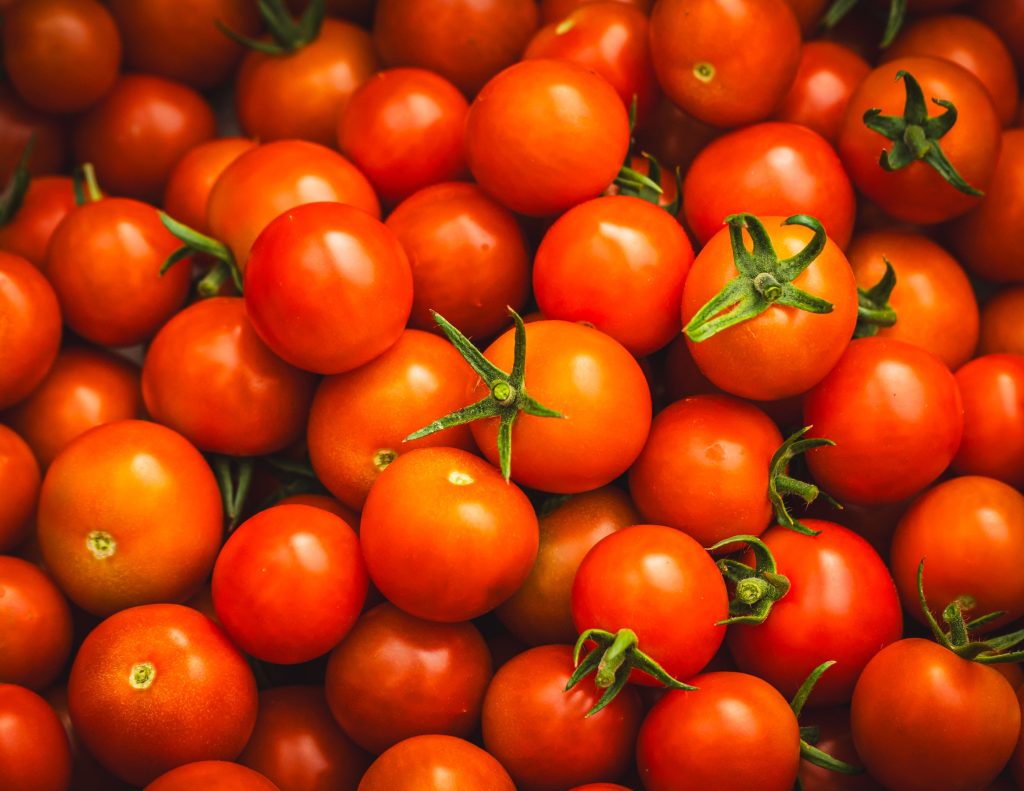
June is when tomato plants start showing what kind of season they are going to have.
In May, most of the work is about getting plants established. The goal is to help transplants settle into the soil, push new roots, adjust to outdoor weather, and start growing steadily. By June, that changes. The plant is no longer just trying to get started. It is preparing to flower, set fruit, size fruit, and handle longer days, stronger sun, warmer nights, and higher water demand.
That shift matters for fertilizer.
A tomato plant in June does not need to be pushed the same way it might have been pushed at transplanting. Too much nitrogen can create a big, dark green plant that looks impressive but sets poorly, drops blossoms, or becomes harder to manage in heat. At the same time, a tomato plant cannot be starved. It needs enough nitrogen to keep healthy leaves, enough potassium to support flowering and fruit development, enough calcium to protect fruit quality, and enough root activity to move water and nutrients consistently.
The hard part is balance.
A good tomato feeding program in June should support fruit set without forcing excessive leaf growth. It should protect calcium movement before blossom end rot appears. It should build potassium support before the plant carries a heavy fruit load. It should help roots stay active through warm soil and uneven rainfall. It should also account for whether the tomatoes are growing in the ground, raised beds, high tunnels, containers, or market garden rows.
Tomatoes are forgiving in some ways, but they do not forgive inconsistent water and careless fertility for long.
June tomatoes are shifting from establishment to production
A tomato plant has different needs at different stages.
Right after transplanting, the plant needs root establishment. It needs enough nutrients to recover from transplant stress, but not so much fertilizer that tender roots are burned or top growth outruns the root system. Early feeding is usually about helping the plant settle in.
By June, many tomato plants are entering a new phase. They are producing new leaves, thickening stems, flowering, and setting the first clusters. Roots are expanding quickly. The plant is using more water every day. Nutrient demand increases, but the kind of demand changes.
This is where growers can get into trouble.
If a tomato plant gets too much nitrogen during this shift, it may grow lush and leafy. The plant may look healthy from a distance, but flower production and fruit set can suffer. Dense foliage can also reduce airflow, hold humidity, and make disease management more difficult. A plant that is too vegetative may require more pruning, staking, and water.
If the plant does not receive enough fertility, the opposite problem appears. Leaves become pale. Growth slows. Flower clusters may be weak. Fruit sizing may be poor. The plant may not have enough leaf area to support production.
The goal is not to hold the plant back. The goal is to feed the right kind of growth.
In June, tomatoes need steady, balanced support that keeps the plant productive rather than just large.
Fruit set depends on more than fertilizer
Tomato fruit set is influenced by weather, water, plant health, pollen movement, variety, fertility, and stress.
When daytime temperatures are moderate and nights are suitable, flowers usually set more easily. When heat rises, humidity swings, or nights become too warm, fruit set can become less reliable. If the plant is drought-stressed, overwatered, or pushed too hard with nitrogen, flowers may drop. If roots are weak, nutrient movement becomes inconsistent. If potassium is low, the plant may struggle to support fruiting. If calcium movement is uneven, fruit quality problems can appear later.
Fertilizer helps, but it does not override every stress.
A tomato plant with good nutrition can still drop blossoms during a heat wave. A plant with calcium in the soil can still develop blossom end rot if moisture swings sharply. A plant with enough nitrogen can still look weak if roots are sitting in saturated soil. A container tomato can be fertilized correctly and still suffer if the pot dries out every afternoon.
That is why June tomato feeding should always be tied to observation.
Look at the plant’s growth pattern. Is it dark green and leafy, or pale and slow? Are flowers forming? Are the first fruits setting? Are lower leaves yellowing? Is the plant wilting every afternoon? Is the soil evenly moist below the surface? Are roots expanding beyond the transplant hole? Is the plant in a large enough container?
The right fertilizer decision comes after those questions.
Calcium needs to be in place before blossom end rot appears
Blossom end rot is one of the most frustrating tomato problems because it often appears after the mistake has already happened.
The fruit may look fine at first. Then a dark, sunken area develops at the blossom end. Once that tissue is damaged, the fruit will not heal. The grower can only improve conditions for the next fruit.
Calcium is central to this problem, but the issue is usually not as simple as “there is no calcium in the soil.”
Calcium has to move into the plant through the water stream. It has to reach developing fruit at the right time. If soil moisture is inconsistent, calcium movement becomes uneven. If roots dry out, uptake slows. If roots sit in waterlogged soil, uptake also slows. If the plant is pushed with too much nitrogen, rapid vegetative growth can compete with fruit for water and nutrients. If potassium or magnesium is excessive, calcium uptake can become less reliable in some soils.
That is why June is a key calcium window.
Do not wait until several fruits show blossom end rot before thinking about calcium. The better approach is to support calcium availability and moisture consistency as plants begin flowering and setting the first clusters.
Calcium Nitrate 15.5-0-0 + 19% Ca fits this stage when tomatoes need a fast, water-soluble calcium source during active growth. It supplies calcium along with nitrate nitrogen, which can support healthy growth while helping meet the plant’s calcium demand.
The problem it helps solve is active calcium need during flowering, early fruit set, and fruit sizing. It is especially useful when tomato plants are growing strongly and beginning to carry fruit, but calcium movement needs support.
The timing is June, once plants are established and actively growing. Apply before blossom end rot becomes widespread, not after the fruit is already damaged. It should be used according to directions and paired with steady watering.
The caution is nitrogen. Calcium nitrate contains nitrogen, so it should not be used as a heavy, repeated push on tomatoes that are already dark green and overly leafy. It is best when the plant needs both calcium and a measured amount of nitrate nitrogen.
Potassium becomes more important as fruit load builds
Tomatoes need potassium before they are loaded with fruit.
Potassium supports water regulation, plant strength, flowering, fruit development, and stress tolerance. As June progresses, tomato plants begin shifting more energy into flowers and fruit. Potassium demand rises with that shift.
A potassium shortage may not always show immediately. The plant may look acceptable early, then struggle as fruit load increases. Leaves may show marginal yellowing or scorching. Fruit sizing may be weak. Plants may wilt more easily in heat. Overall performance may feel uneven.
This is where 7-0-26 Organic Fertilizer fits very well for June tomatoes.
This product supplies strong potassium with a modest nitrogen contribution. That balance matters because a tomato in June usually still needs some nitrogen, but it should not be pushed into excessive leaf growth. The 7-0-26 analysis gives growers a way to support fruiting demand without turning the fertility program into a high-nitrogen approach.
The problem 7-0-26 helps solve is the need for potassium support as tomatoes move into flowering and fruiting. It supports water movement, plant resilience, roots, blooms, and fruit quality while still providing enough nitrogen to maintain active growth.
The timing is after plants are established and beginning to flower or set fruit. It fits raised beds, in-ground gardens, small farms, organic programs, and tomato plantings where potassium demand is increasing.
The caution is that it still contains nitrogen. If tomato plants are already lush, sprawling, and slow to flower, do not assume more fertilizer is the answer. Check water, pruning, variety, weather, and nitrogen history. The goal is to support productive growth, not create more foliage than the roots and trellis can handle.
Gentle organic support fits tomatoes that are still settling in
Not every June tomato needs a strong granular correction.
Some plants need gentle support while roots continue expanding. This is common in newly planted gardens, containers, raised beds, and patio tomato systems where plants are growing but not yet fully established. It also applies to gardeners who prefer an organic liquid feeding approach and want to avoid pushing hard vegetative growth.
Pacific Bounty Liquid Fish Fertilizer fits that role.
Pacific Bounty provides a gentle organic liquid feed that can support tomatoes during active growth, transplant recovery, root development, flowering, and fruiting. It is useful when the plant needs encouragement rather than a heavy push.
The problem Pacific Bounty helps solve is mild nutrient need or transplant lag where tomatoes are active but not ready for aggressive feeding. It also fits container tomatoes, patio plants, young plants, and gardeners who want an organic liquid option for steady support.
The timing is June during active growth, especially after transplant establishment or as plants begin moving into stronger root and flower development. It can be used as part of a regular feeding rhythm according to directions.
The caution is that Pacific Bounty is not the same as a high-potassium fruiting fertilizer or a fast calcium correction. If a tomato plant has clear potassium demand, 7-0-26 may fit better. If calcium support is the main issue, Calcium Nitrate may be more direct. Pacific Bounty is best as a gentle organic feed within a broader tomato fertility plan.
Too much leaf can be a warning sign
A tomato plant can look almost too healthy.
Dark green leaves. Thick stems. Fast growth. Heavy canopy. Few flowers. Delayed fruit set. Lots of suckers. More vine than production.
That usually points toward too much vegetative push.
The cause may be high nitrogen fertilizer, rich compost, manure history, overfeeding, variety habit, shade, or warm conditions. Indeterminate tomatoes naturally grow large, but even they need a balance between vine growth and fruiting.
If a tomato plant is already too leafy in June, avoid adding more nitrogen-heavy fertilizer. More nitrogen may make the plant larger, but not more productive. Dense foliage can also create a humid canopy that makes leaf disease harder to manage. It can shade flowers and reduce air movement. It can make staking and harvesting more difficult.
This is where product choice matters.
7-0-26 Organic Fertilizer may be a better fit than a high-nitrogen product when the plant needs potassium support but not a strong nitrogen push. Calcium Nitrate should be used carefully because it supplies nitrogen along with calcium. Pacific Bounty can support plants gently, but even gentle feeding should be timed to the plant’s actual need.
A tomato plant should be vigorous, not rank. June feeding should help it fruit, not just vine.
Pale tomatoes need a different read
A pale tomato plant tells a different story.
If leaves are light green or yellow, growth is slow, and the plant looks weak, the plant may need nitrogen. But pale leaves can also come from wet roots, cold soil, compacted soil, transplant shock, pH issues, magnesium deficiency, disease, herbicide injury, or water stress.
Before feeding, check the soil.
If the soil is saturated, roots may not be taking up nutrients well. Feeding into wet, oxygen-poor soil may not help. If the soil is dry, nutrients may not be moving to the roots. If the plant is newly transplanted, old lower leaves may yellow while new growth remains healthy. If the new growth is pale with green veins, pH or micronutrient availability may be involved.
If the plant is actively growing and mildly pale after establishment, Pacific Bounty can offer gentle support. If the plant also needs calcium and a measured nitrogen source, Calcium Nitrate may fit. If the plant is entering fruiting and potassium is part of the need, 7-0-26 may fit better.
The point is to match the symptom to the root cause. Yellow leaves are not a fertilizer order by themselves.
Water consistency is part of tomato feeding
Tomatoes need steady moisture in June.
That does not mean constantly wet soil. It means avoiding sharp swings from dry to soaked. Those swings are hard on roots, calcium movement, flower retention, and fruit quality.
A tomato plant that dries out hard, then receives heavy water, then dries out again, is more likely to show stress. Blossom end rot becomes more common under inconsistent moisture. Fruit cracking can also increase when water suddenly becomes abundant after dry periods. Wilt, leaf curl, and blossom drop are often tied to moisture stress.
Fertilizer depends on water, too.
Calcium nitrate works through water movement. Potassium has to move into the root zone. Organic liquid feeding needs moisture and active roots. If the soil is dry, nutrients may sit unused or concentrate near roots. If soil is saturated, roots may not have enough oxygen to take up nutrients.
Before applying any June tomato fertilizer, check moisture below the surface. Do not judge only by the top inch. In mulched beds, the surface may look dry while the root zone is moist. In raised beds, the surface may look fine while the lower root zone is drying. In containers, the outside edge may be wet while the root ball is dry.
Water deeply and evenly. Then feed when roots are functioning.
Mulch can help, but it must be managed
Mulch is one of the best tools for June tomatoes when used correctly.
It helps reduce moisture swings, moderate soil temperature, reduce splashing soil, and limit weeds. Those benefits support calcium movement and nutrient uptake because the root zone stays more consistent.
But mulch can also create problems if applied too early, too thick, or against the stem.
If heavy mulch is placed over cold spring soil, it can slow warming. If mulch is piled against tomato stems, it can hold moisture around the crown. If fertilizer is applied on top of thick mulch, nutrients may not reach the soil evenly. If dry soil is mulched without watering first, mulch may protect dryness rather than moisture.
For June tomatoes, mulch should protect the root zone without smothering the stem.
When applying 7-0-26 or other granular products, pull mulch back, apply to the soil where feeder roots can access it, water in, and replace mulch lightly. When applying Pacific Bounty as a liquid feed, make sure the solution reaches the soil and root zone, not just the mulch surface.
Mulch and fertility work best when they are managed together.
Containers need a tighter tomato feeding rhythm
Container tomatoes are more demanding than in-ground tomatoes.
They have limited root volume. They dry faster. Nutrients leach with watering. The root zone heats up quickly. A tomato in a container may need water every day once June heat builds. If the pot is too small, the plant may never have enough moisture buffer to move calcium consistently.
This is why blossom end rot often shows up in container tomatoes.
The soil mix may contain calcium, and the fertilizer program may look reasonable, but the pot dries out too often. Calcium movement becomes inconsistent. The first fruit cluster may show damage.
For container tomatoes, use a large enough pot, keep drainage open, water evenly, and feed lightly but consistently.
Calcium Nitrate can fit container tomatoes where soluble calcium and nitrate nitrogen are needed during active growth. It should be mixed and applied carefully according to directions because containers are less forgiving.
7-0-26 Organic Fertilizer can fit container tomatoes that need potassium support as fruiting begins, but rates must be handled carefully because the root zone is small.
Pacific Bounty can fit container tomato programs as a gentle organic liquid feed, especially when plants need steady support without a strong push.
Do not feed a dry, wilted container heavily. Water first. Let the plant recover. Then feed at the correct rate.
Raised beds dry faster than many growers expect
Raised beds are useful because they warm quickly and drain well.
That also means they can dry faster in June.
A tomato in a raised bed may look strong in the morning and stressed by late afternoon, especially if the bed is shallow, exposed, sandy, or heavily planted. The edges of raised beds dry faster than the center. Plants near the corners often show stress first.
Nutrient leaching can also be more noticeable in raised beds with loose, highly organic mixes. Frequent watering moves soluble nutrients through the bed. Tomatoes may need more consistent feeding than they would in heavier ground soil.
For raised beds, June fertility should focus on steady plant function.
Pacific Bounty can support young or actively growing tomato plants gently. 7-0-26 can support potassium demand as fruiting begins. Calcium Nitrate can supply soluble calcium when plants are established and moving into fruit set.
Water deeply before feeding. Mulch once soil is warm. Avoid letting raised beds cycle between very dry and very wet.
High tunnels and greenhouses need careful nitrogen control
Tomatoes under cover often grow faster and heavier than field-grown tomatoes.
High tunnels and greenhouses protect plants from rain and can create a warmer environment. That can help growth and early production, but it also means irrigation and fertility are fully in the grower’s hands. If moisture is inconsistent, calcium problems can appear quickly. If nitrogen is too high, plants can become overly vegetative. If potassium is low, fruiting performance can suffer.
June greenhouse and tunnel tomatoes need balance.
Calcium Nitrate fits these systems because soluble calcium and nitrate nitrogen are often useful during active growth. But nitrogen should be monitored carefully. A tunnel tomato that is already vigorous may not need more nitrogen as often as the grower thinks.
7-0-26 can fit organic or soil-based systems where potassium support is needed as plants move into fruiting. Pacific Bounty can fit gentle organic feeding in tunnel or greenhouse systems where that approach matches the crop plan.
Ventilation, pruning, trellising, watering, and fertility all interact. Fertilizer alone cannot correct a dense, humid, overgrown tomato canopy.
Pruning and feeding should support each other
Tomato pruning affects fertility demand.
A heavily pruned plant has less leaf area but may have better airflow and more directed growth. An unpruned plant has more leaf area, more suckers, more fruiting sites, and more water demand. Determinate tomatoes should be pruned differently than indeterminate tomatoes. Processing, slicing, cherry, and heirloom types can also behave differently.
Feeding should match the plant structure.
If a tomato is heavily vegetative, pruning may help restore balance, but avoid pairing that with a strong nitrogen push. If a plant is pruned, actively flowering, and setting fruit, potassium and calcium support may be more important than more foliage. If lower leaves are removed for airflow, the remaining canopy needs to stay healthy and functional.
7-0-26 fits fruiting support after plants are established and structured for production. Calcium Nitrate fits calcium support during active growth, but should be used with attention to plant vigor. Pacific Bounty can support plants gently after pruning stress if roots are active and moisture is steady.
The plant’s shape tells you something about how it should be fed.
Do not confuse heat stress with hunger
Tomatoes often wilt or curl leaves in June heat.
That does not always mean they need fertilizer.
Leaf curl can be a normal response to heat, sun, wind, or water stress. Afternoon wilt may occur when leaves are losing water faster than roots can supply it. Blossom drop may occur during high heat even when fertility is adequate. A plant may look stressed at 3 p.m. and normal the next morning.
Before fertilizing, check the timing and pattern.
If the plant wilts in the afternoon but recovers overnight, check soil moisture and root depth. If the plant stays wilted in moist soil, roots may be damaged or diseased. If the plant is pale and slow all day, fertility may be part of the problem. If fruit shows blossom end rot, review water consistency and calcium movement.
Heat stress is not solved by simply adding more fertilizer.
In fact, feeding a dry, wilted plant during heat can make stress worse. Water first. Restore root function. Then feed based on crop stage and need.
A practical June tomato feeding approach
A good June tomato program starts with the plant’s stage.
If the plant is newly transplanted or still settling in, focus on water consistency and gentle support. Pacific Bounty Liquid Fish Fertilizer can fit this window because it supports active growth without a hard fertilizer push.
If the plant is established, flowering, and beginning fruit set, review calcium. Calcium Nitrate 15.5-0-0 + 19% Ca can fit when soluble calcium and nitrate nitrogen are needed. Use it before fruit quality problems are widespread and pair it with steady moisture.
If the plant is moving into fruiting and needs potassium support, 7-0-26 Organic Fertilizer can fit. It supplies strong potassium with modest nitrogen, helping support fruiting, water movement, resilience, and productive growth without forcing excessive foliage.
Throughout the month, keep water consistent. Mulch after soil warms. Avoid overfeeding nitrogen. Prune for airflow where appropriate. Stake or trellis before plants collapse. Watch the first fruit clusters closely. Adjust before problems become severe.
Tomatoes reward steady management
Tomatoes do not need complicated care, but they do need steady care.
The plant should not be starved, and it should not be pushed too hard. It should not dry out severely, and it should not sit in saturated soil. It needs enough leaf area to support fruit, but not so much dense growth that airflow and fruit set suffer. It needs calcium before fruit damage appears. It needs potassium before fruit load and heat stress increase.
June is the month to make that balance visible.
A tomato plant that is fed only for green growth may disappoint when fruiting begins. A plant that is supported with calcium, potassium, gentle organic feeding, and steady moisture is better prepared to set fruit, size fruit, and keep producing through the first stretches of summer heat.
Supply Solutions offers several products that fit this June tomato window. Calcium Nitrate 15.5-0-0 + 19% Ca supports soluble calcium and nitrate nitrogen during active growth and early fruit set. 7-0-26 Organic Fertilizer supports potassium demand as tomatoes move toward flowering, fruiting, and summer stress. Pacific Bounty Liquid Fish Fertilizer provides gentle organic liquid support for tomatoes that need steady feeding without a hard push. Used with consistent watering, proper timing, and attention to plant stage, these products help tomato growers move from leafy growth into productive fruit set with fewer midseason surprises. Contact Supply Solutions for help choosing the right tomato fertility approach for gardens, raised beds, containers, high tunnels, or small farm production.