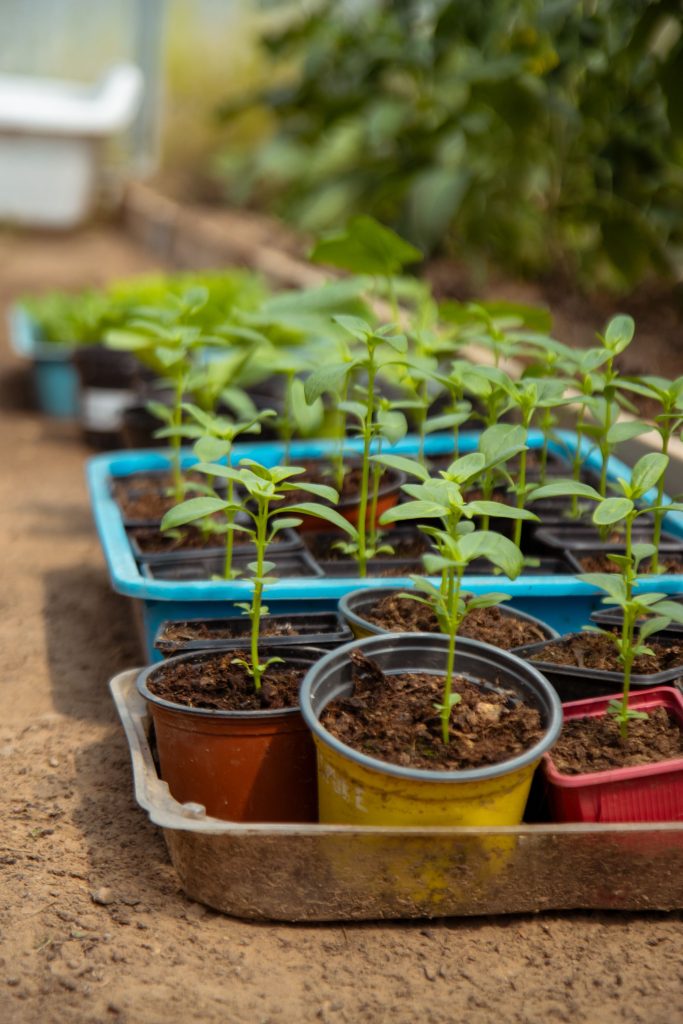
Containers make plant nutrition visible faster than almost any other growing system.
A raised bed may take a while to show depletion. A field row has more soil volume to buffer moisture and nutrients. A landscape bed may draw from a wider root zone. But a container has limits. The roots can only explore the media inside the pot, basket, planter, or grow bag. Every watering changes that small system. Every hot afternoon tests it. Every leaching event removes something. Every missed watering has a cost.
That is why container plants can look excellent in late May and begin fading by late June.
The hanging basket that was full at purchase starts thinning in the center. Petunias lose color. Calibrachoa becomes pale at the tips. Patio tomatoes wilt every afternoon. Peppers stall even though they are flowering. Herbs become weak after repeated cutting. Mixed planters become unbalanced, with one plant taking over while another fades. A citrus tree pushes yellow new leaves. A strawberry planter gives a few early berries and then slows. The grower waters more often, but the plant still seems hungry.
The common response is to feed harder.
That is usually the wrong direction.
June containers rarely need one heavy rescue feeding. They usually need smaller, more consistent feeding that matches the way containers behave. Potting media dries and leaches quickly. Roots are concentrated. Nutrient uptake changes with moisture. Fertilizer salts can build if the mix is too strong or drainage is poor. A dry container should be watered before it is fertilized. A saturated container should be allowed to drain before more nutrients are added. The plant needs regular support, but it does not need to be shocked.
In June, container care becomes a rhythm.
Water deeply enough to wet the full root ball. Let drainage work. Feed lightly and consistently when roots are active. Match the fertilizer to the crop. Watch new growth. Adjust before plants collapse. Avoid mixing stronger just because the plant looks tired. Many tired containers are not starving as much as they are swinging between dry and wet, overfed and underfed, hot and stressed.
For this June container-feeding window, three Supply Solutions products fit naturally: Jack’s Classic 20-20-20 All Purpose Water-Soluble Fertilizer, Pacific Bounty Liquid Fish Fertilizer, and Jack’s Classic 20-6-22 Petunia Feed Water-Soluble Fertilizer. Jack’s 20-20-20 fits broad, balanced feeding for many containers. Pacific Bounty fits gentle organic liquid support when plants need steady feeding without a harsh push. Jack’s Petunia Feed fits petunias, calibrachoa, and similar iron-hungry annuals that fade quickly under frequent watering.
The value of these products comes from using them at the right strength, at the right time, on the right plants.
Containers Have Less Room For Mistakes
A container is a limited root zone.
That simple fact explains most container problems. Roots cannot chase water deeper in the soil. They cannot spread far enough to find another nutrient pocket. They cannot escape a hot pot wall. They cannot avoid fertilizer salts if the entire container is overmixed. They cannot function properly if the bottom of the pot stays saturated.
In the ground, soil volume gives plants some forgiveness. In containers, the grower supplies the forgiveness through management.
A large patio pot has more buffer than a small hanging basket. A grow bag may breathe differently than a plastic container. A clay pot dries faster than a glazed pot. A dark container in full sun heats more than a light-colored one. A planter on concrete dries and heats differently than one sitting on soil or mulch. A basket exposed to wind loses water faster than a pot protected near a wall.
By June, these differences become obvious.
A container that held moisture for two days in spring may now dry in one afternoon. A plant that had enough starter fertility at planting may now depend on the grower’s feeding program. A basket that was watered lightly may have dry pockets in the root ball. A pot that was fertilized heavily may show brown leaf edges from salt buildup.
Container care has to be steady because the system changes quickly.
Frequent Watering Leaches Nutrients
June containers are watered often.
That keeps plants alive, but it also moves nutrients out of the root zone. Water-soluble nutrients can leave through drainage holes. Potting media does not hold nutrients the same way a mineral soil can. When a hanging basket or patio planter is watered daily, the fertility that came with the plant may not last long.
This is why containers fade even when they are watered.
Water alone prevents drought, but it does not replace nutrients removed by growth and leaching. A petunia basket may become pale. A tomato pot may slow. A pepper may stall. A mixed planter may lose bloom strength. Herbs may become thin after repeated cutting. The grower may increase water, but the plant still lacks enough nutrition to keep growing well.
Smaller, consistent feeding solves this better than occasional heavy feeding.
A steady program replaces nutrients gradually as the plant uses and loses them. It keeps roots supplied without creating a high-salt shock. It also lets the grower adjust based on plant response.
This is where water-soluble and liquid fertilizers are valuable. They can be used in measured amounts during active growth and frequent watering, provided the root zone is moist and drainage is working.
Jack’s 20-20-20 Fits General Container Feeding
Jack’s Classic 20-20-20 All Purpose Water-Soluble Fertilizer fits containers that need balanced nutrition.
Its 20-20-20 analysis supplies nitrogen, phosphorus, and potassium evenly. That makes it useful for mixed containers, patio vegetables, herbs that need regrowth support, greenhouse crops, nursery plants, annual planters, and container plants that are generally depleted from frequent watering.
The problem Jack’s 20-20-20 helps solve is broad nutrient drawdown. A container may not be showing one specific deficiency. It may simply be running low across the board after weeks of growth and irrigation. The plant may look pale, slow, thin, or less vigorous. New leaves may be smaller. Bloom may soften. Growth may not recover after watering the way it did earlier.
The timing is June when container plants are actively growing and roots can take up nutrients. It fits after plants have established in the container, after the initial fertility has faded, or when regular watering has begun leaching the media.
The caution is that 20-20-20 is not a light product by nature. It supplies meaningful nitrogen, so it should be mixed and applied according to directions. A stronger mix is not better. Too much nitrogen can push soft growth, especially in heat. Too much fertilizer in a small container can stress roots.
Jack’s 20-20-20 works best as part of a steady, measured feeding rhythm.
Pacific Bounty Fits Gentle Organic Liquid Feeding
Pacific Bounty Liquid Fish Fertilizer fits container plants that need gentle organic support.
It is useful when plants are active but should not be pushed too hard. Many containers in June need exactly that kind of support. They are not failing, but they are being watered often. They are using nutrients. They may have been recently trimmed, harvested, or stressed by heat. A gentle liquid feed can support growth without the sharper push of a strong soluble fertilizer.
The problem Pacific Bounty helps solve is mild to moderate nutrient demand in containers where steady support is more appropriate than aggressive correction. It fits herbs, patio vegetables, citrus, berries, strawberries, mixed edible containers, young ornamental containers, and plants recovering from light stress.
The timing is June during active growth, after the root system is established and the container is draining properly. It can be especially useful after cutting herbs, after harvesting strawberries, after transplant recovery, or during regular maintenance feeding when the grower wants an organic liquid option.
The caution is that Pacific Bounty is not the answer to every container problem. It is not a targeted feed for iron-hungry petunias and calibrachoa. It is not a high-potassium fruiting correction by itself. It is not a fix for dry roots, saturated media, poor drainage, or a pot that is too small.
Pacific Bounty is valuable when the plant needs gentle, consistent feeding and the root zone is healthy enough to use it.
Jack’s Petunia Feed Fits Iron-Hungry Annuals
Petunias, calibrachoa, and similar annuals often fade quickly in June.
They are heavy bloomers and heavy feeders. They are commonly grown in hanging baskets and containers that dry fast. They are watered often, which leaches nutrients. They can become pale when media pH rises or iron becomes less available. The newest growth may turn light green or yellow while the rest of the plant looks tired. Blooms may become smaller. Stems may stretch. The center of the basket may open up.
Jack’s Classic 20-6-22 Petunia Feed Water-Soluble Fertilizer fits this situation because it is designed for petunias and other iron-hungry annuals.
The problem Petunia Feed helps solve is fading color, pale new growth, and declining performance in petunias, calibrachoa, and similar container annuals during active growth and frequent watering. Its formula supports these crops more specifically than a general-purpose feed.
The timing is June when baskets are actively growing and blooming, but before they are badly exhausted. A basket that is beginning to pale can respond better than one that has dried hard repeatedly, lost leaves, and become severely root-bound.
The caution is the same as with all container fertilizers: do not apply it to a dry, wilted basket first. Rehydrate the root ball. Make sure drainage is open. Trim leggy growth if needed. Then feed properly.
Petunia Feed works best as a regular support tool, not a last-minute rescue after weeks of stress.
Smaller Feeding Matches Container Roots
Container roots live close to the fertilizer.
In a field or garden bed, fertilizer can be spread through a wider soil volume. In a container, there is nowhere for excess concentration to go except through the root zone or out the drainage holes. This is why smaller feedings are safer and often more effective.
A heavy fertilizer application can create salt stress, especially if the media is dry or drainage is poor. Roots may burn. Leaf edges may brown. Plants may wilt even when watered. Growth may stall. The grower may think the plant is still hungry and apply more, making the problem worse.
Smaller feedings reduce that risk.
They supply nutrients in amounts roots can use. They let the grower respond to plant stage and weather. They are easier to adjust if the plant is growing too fast, blooming heavily, paling, or slowing down.
This principle applies whether using Jack’s 20-20-20, Pacific Bounty, or Jack’s Petunia Feed.
A container plant needs steady access, not sudden excess.
Dry Containers Should Be Watered First
Never make fertilizer the first response to a dry, wilted container.
When potting media dries hard, it can shrink away from the container wall. Water may run down the sides and out the bottom without wetting the root ball. Fertilizer solution can do the same thing, leaving some roots dry and other areas exposed to concentrated salts. Dry roots are also more vulnerable to injury.
A wilted container needs water first.
Water slowly and thoroughly. If the media sheds water, water in stages. Let the plant recover. Once the root zone is evenly moist and the plant is no longer under immediate drought stress, feeding can be considered.
This is especially important for hanging baskets, small patio pots, grow bags, and containers in full sun. In June, those containers can dry quickly even when they were watered earlier in the day.
Apply Jack’s 20-20-20, Pacific Bounty, or Jack’s Petunia Feed only when roots are moist enough to use the nutrients safely.
Water first. Feed second.
Saturated Containers Should Not Be Fed Hard
A wet container can look hungry.
Leaves may yellow. Growth may slow. New shoots may look weak. The grower may assume the plant needs fertilizer, but the real issue may be oxygen shortage. Roots cannot feed properly when the potting media stays saturated. A container sitting in a saucer of water may have nutrients present but roots unable to use them.
Feeding a saturated container usually disappoints.
The plant cannot take up nutrients well. Additional fertilizer may increase root stress. If drainage is poor, salts may accumulate. The container may smell sour or stay wet for days. Leaves may continue yellowing.
Before feeding, check drainage.
Does the pot have drainage holes? Is water trapped in an outer decorative pot? Is the saucer always full? Is the media too heavy? Is the container too large for the plant, leaving unused wet media around the root system? Is irrigation too frequent for the weather?
Let saturated containers drain and recover before feeding.
All three products in this program need a functioning root zone. Jack’s 20-20-20 cannot fix oxygen-starved roots. Pacific Bounty should not be poured repeatedly into a wet, stagnant pot. Jack’s Petunia Feed will not save a basket whose roots are rotting from poor drainage.
Drainage is part of fertility.
Hanging Baskets Need A Regular Rhythm
Hanging baskets are some of the most demanding containers in June.
They are exposed to sun, wind, and heat from all sides. They usually contain heavy-blooming plants with limited root volume. They dry faster than large patio pots. They are often watered daily, which leaches nutrients. By late June, many baskets are root-filled and depend almost entirely on the grower’s watering and feeding program.
This is why baskets fade so quickly when feeding becomes irregular.
Petunias and calibrachoa may need Jack’s Petunia Feed because they are iron-hungry and commonly pale during frequent watering. Mixed baskets may need Jack’s 20-20-20 when broad balanced nutrition is required. Baskets with edible plants or softer feeding needs may fit Pacific Bounty where gentle organic support is appropriate.
Feeding alone is not enough.
Baskets should be watered thoroughly until the full root ball is moist. Leggy plants may need trimming. Spent blooms and dead material should be removed where appropriate. Severe dry-down should be avoided. If a basket dries hard every day, it may need a larger container, more shade during peak heat, or a more careful watering schedule.
The best basket program is consistent, not dramatic.
Mixed Planters Need Careful Product Choice
Mixed planters are popular because they look full and varied.
They also complicate feeding.
A single planter may contain petunias, calibrachoa, coleus, geraniums, verbena, sweet potato vine, ornamental grasses, herbs, salvia, lobelia, or trailing foliage. These plants may not grow at the same speed or need the same feeding. Some are aggressive. Some are heavy feeders. Some stretch with too much nitrogen. Some fade without steady nutrition.
A balanced fertilizer such as Jack’s 20-20-20 often fits mixed planters that need general support.
If petunias or calibrachoa are the main feature and pale new growth is the issue, Jack’s Petunia Feed may fit better.
If the planter contains herbs, edible flowers, or plants that need gentler organic feeding, Pacific Bounty may be useful.
The grower should also prune and manage competition. Fertilizer can make an aggressive plant even more aggressive. If sweet potato vine is overwhelming the planter, feeding harder may make the imbalance worse. If petunias are paling while coleus is vigorous, product choice and trimming matter.
A mixed planter should be managed as a small community of plants.
Patio Vegetables Need Stage-Based Feeding
Container vegetables need steady feeding, but not all vegetables need the same formula at the same stage.
Tomatoes, peppers, cucumbers, eggplant, herbs, lettuce, strawberries, and beans all behave differently. A young tomato may need balanced nutrition to build growth. A fruiting tomato may need more attention to potassium and calcium than nitrogen. A pepper that is pale and slow may need broad feeding. A pepper that is leafy but not fruiting may not need more nitrogen. Herbs after cutting may need mild support. Lettuce in June heat may bolt regardless of feeding.
Jack’s 20-20-20 fits container vegetables that need balanced nutrition during active growth, especially when frequent watering has depleted the potting mix.
Pacific Bounty fits patio vegetables where a gentle organic liquid feed is preferred, especially for steady maintenance, recovery after harvest, or moderate support.
Jack’s Petunia Feed is not the main choice for most vegetables. It belongs with petunias, calibrachoa, and other iron-hungry annuals.
Container vegetables also need enough pot size. A tomato in a small container may not perform well no matter how carefully it is fed. Fertility cannot replace root volume.
Herbs Often Need Lighter Feeding
Herbs are often overfed in containers.
Basil, parsley, and chives may respond well to regular feeding after harvest. Mint can grow aggressively with moisture and nutrition. Cilantro may bolt when heat arrives regardless of feeding. Rosemary, thyme, oregano, sage, and lavender usually prefer sharper drainage and more restrained fertility.
This means herb containers need a lighter hand than heavy-blooming baskets.
Pacific Bounty can be a good fit for herbs that need gentle organic liquid support, especially after cutting or during steady growth.
Jack’s 20-20-20 can fit herbs that are clearly depleted and actively growing, but it should be used carefully so growth does not become soft and weak.
Jack’s Petunia Feed is generally not the right product for herb containers unless the herb is part of a mixed ornamental planter dominated by petunia-type plants.
Herbs should be fed for useful, flavorful growth, not forced softness.
Container Fruit Needs Steady Support
Container fruit plants have long-term needs.
Citrus, blueberries, strawberries, figs, dwarf fruit trees, patio grapes, raspberries, and blackberries may all be grown in containers. By June, many are flowering, fruiting, sizing fruit, or pushing new growth. They need water consistency and careful feeding because fruit load increases demand.
Pacific Bounty fits container fruit when gentle organic liquid support is appropriate. It can be useful for citrus, strawberries, figs, and patio fruit plants that need maintenance feeding without a hard push.
Jack’s 20-20-20 fits container fruit that needs broader balanced nutrition, especially after frequent watering has depleted the media.
Jack’s Petunia Feed is not normally the main choice for fruit crops because it is designed for petunias and iron-hungry annuals, not fruiting plant nutrition.
Container fruit also depends heavily on pH, drainage, and pot size. Blueberries need acidic root-zone conditions. Citrus dislikes severe dry-down and waterlogging. Figs need enough root volume. Strawberries in small planters need light, consistent feeding.
Fruit plants in containers should be fed steadily enough to support growth, but not pushed into excessive soft shoots at the expense of fruit and root health.
New Growth Tells The Truth
After feeding containers, watch new growth.
Old damaged leaves may not fully recover. A scorched leaf edge will stay brown. A pale leaf may improve slightly but may not become perfect. Spent blooms will not return. The more useful sign is what the plant does next.
Healthy response shows in stronger new leaves, better color at growing tips, steadier bloom, improved regrowth after trimming, stronger stems, and better recovery after watering.
If new growth remains pale after using Jack’s Petunia Feed on petunias or calibrachoa, check media pH, water quality, root stress, and salt buildup.
If plants do not respond to Jack’s 20-20-20, check moisture, drainage, pot size, pests, heat exposure, and whether the crop needs a more specific nutrient program.
If plants do not respond to Pacific Bounty, consider whether the plant needs a stronger balanced feed, a targeted formula, or root-zone correction rather than gentle maintenance.
The plant’s next flush of growth tells whether the feeding program is working.
Salt Buildup Can Make Plants Look Hungry
Salt buildup is common in containers that are fertilized regularly.
It can come from fertilizer, irrigation water, and insufficient leaching. When salts accumulate, roots become stressed. Plants may wilt even when the media is moist. Leaf edges may brown. Growth may slow. The grower may assume the plant is underfed and apply more fertilizer, which makes the problem worse.
This is why smaller feeding matters.
Correctly diluted, regular feeding reduces the risk of sudden salt concentration. Containers should also be watered thoroughly enough at times to allow some leaching, provided drainage is good. Runoff should not sit in saucers. Decorative outer pots should be checked for trapped water.
White crust on the media surface or pot edge can be a warning sign. Brown leaf margins can also suggest salt stress, though they may come from drought, heat, or root damage as well.
When salt buildup is suspected, plain water may be needed before more fertilizer. Let the container drain. Then resume feeding at a proper strength only when roots are active.
Even good products like Jack’s 20-20-20, Pacific Bounty, and Jack’s Petunia Feed must be used with drainage and dilution in mind.
Heat Exposure Changes Feeding Response
A container in full sun on a patio is not growing in the same conditions as a container in morning sun on mulch.
Heat exposure changes everything. Pots on concrete, asphalt, brick, decks, and stone surfaces heat quickly. Dark containers absorb more heat. Small containers heat faster than large ones. Hanging baskets dry from the sides and bottom. Containers near walls may receive reflected heat.
Hot roots do not feed as steadily.
A plant may wilt, even with nutrients in the media. Fertilizer salts may become more concentrated as water is used. Roots near the pot wall may stress. Water demand increases. Feeding a heat-stressed plant too strongly can add pressure.
In high-heat locations, smaller and more consistent feeding becomes even more important.
Use Pacific Bounty where gentle support fits. Use Jack’s 20-20-20 carefully for balanced feeding when the plant is active. Use Jack’s Petunia Feed for petunia-type plants before they fade too far.
Consider moving containers away from reflected heat, using larger pots, mulching the surface lightly, or grouping pots to reduce exposure. Fertility works better when the root zone is not overheated every afternoon.
Water Quality Can Affect Container Color
Water is not just water in container production.
Irrigation water can affect media pH and nutrient availability. High-alkalinity water can gradually raise media pH, which can make iron less available to sensitive plants. Petunias and calibrachoa often show this as pale new growth. Citrus and blueberries can also be sensitive to pH-related nutrient availability.
A grower may be feeding regularly and still see pale tips if pH has drifted.
This is one reason Jack’s Petunia Feed is useful for petunias, calibrachoa, and other iron-hungry annuals. It is designed for plants that commonly struggle under container and water-quality conditions.
Jack’s 20-20-20 provides balanced nutrition, but persistent pale new growth may still require pH and water review.
Pacific Bounty can support plants gently, but it does not replace pH management for crops that require a specific root-zone range.
When container color problems repeat every year, water quality deserves attention.
Product Rotation Should Follow Plant Need
Using the same fertilizer on every container is convenient, but it is not always the best approach.
A large mixed planter may need balanced feeding with Jack’s 20-20-20. A herb pot may need gentler support from Pacific Bounty. A petunia basket may need Jack’s Petunia Feed. A tomato container may need a stage-specific program beyond these products as fruiting develops. A cactus or succulent planter may need very little feeding and sharp drainage.
The plant decides the product.
This does not mean the program has to be complicated. It means the grower should group containers by need. Heavy-blooming annual baskets can be managed together. Mixed patio planters can be managed together. Edible containers can be managed together. Herbs can be managed separately. Fruit containers can be watched by crop stage.
This prevents overfeeding some plants while underfeeding others.
A good container feeding program is organized around plant behavior, not shelf convenience.
Trimming Often Makes Feeding Work Better
Many June containers need trimming before feeding.
A leggy basket with long stems, few leaves in the center, and spent blooms may not respond well to fertilizer alone. The plant may need to be cut back so it can push fresh growth from healthier nodes. A mixed planter may need aggressive plants trimmed so weaker plants can recover. Herbs may need harvesting or shaping. Petunias may need dead material removed before feeding.
Trimming reduces the amount of weak growth the plant is trying to support.
After trimming, smaller consistent feeding can help the plant rebuild. Jack’s Petunia Feed fits trimmed petunia and calibrachoa baskets that are still healthy enough to regrow. Jack’s 20-20-20 fits mixed containers needing balanced regrowth. Pacific Bounty fits containers needing gentler support after light trimming or harvest.
Do not trim severely and then let the container dry out. Regrowth needs moisture and steady nutrition.
Feeding works better when the plant structure is managed.
Pest Pressure Can Mimic Fertility Problems
Pests can make containers look underfed.
Aphids, spider mites, thrips, whiteflies, fungus gnats, caterpillars, and other pests can reduce vigor, distort new growth, yellow leaves, and weaken bloom. Mites are especially common in hot, dry conditions. A petunia basket that looks pale may have feeding issues, but it may also have pests. A herb pot that looks weak may be stressed by insects. A patio vegetable that stalls may have root or leaf pest pressure.
Before increasing fertilizer, inspect the plant.
Look under leaves. Check new growth. Look for webbing, stippling, sticky residue, distorted tips, holes, or insects. Check the soil surface for fungus gnats if media stays too wet. Look at stems and crowns.
Fertilizer helps healthy plants grow. It does not remove pests. In some cases, excess nitrogen can create soft growth that pests prefer.
Use Jack’s 20-20-20, Pacific Bounty, or Jack’s Petunia Feed after the plant’s actual stress factors are understood.
Do not feed pests and call it plant care.
Containers Need Morning Attention
Morning is the best time to read containers.
A plant that wilted in afternoon heat but recovered overnight may be managing stress. A plant that is still wilted in the morning is in more trouble. Morning checks show whether the root zone has enough moisture, whether leaves recovered, and whether the plant is ready to feed.
Feeding during cooler parts of the day is usually safer than feeding during peak heat.
The roots are less stressed. The plant is not losing water as rapidly. The grower can water properly and avoid applying fertilizer solution to a severely wilted plant. For baskets and small containers, morning watering also gives plants moisture before the hottest part of the day.
In June, a quick morning check can prevent many problems.
Lift baskets to feel weight. Check container moisture below the surface. Look at new growth color. Empty saucers. Groom spent flowers. Notice which containers dry first. Group plants with similar water needs. Feed only those that are ready.
Consistent morning attention makes smaller feeding more effective.
A Practical June Container Feeding Check
Start with moisture.
Is the container evenly moist, dry, or saturated? Does water run through without soaking? Does the potting mix pull away from the sides? Does the plant recover overnight? Is the container drying every day?
Then check drainage.
Does the pot have open drainage holes? Is water trapped in a saucer or decorative outer pot? Is the media staying wet too long? Is the container too large or too small for the plant?
Then check plant type.
Is it a petunia or calibrachoa basket? A mixed planter? A herb pot? A patio vegetable? A container fruit plant? A young transplant? A flowering annual? The product should match the plant.
Then check growth stage.
Is the plant establishing, blooming, fruiting, regrowing after trimming, recovering after harvest, or fading from neglect? A plant in recovery may need gentler feeding than a plant in full active growth.
Then match the product.
Use Jack’s Classic 20-20-20 All Purpose Water-Soluble Fertilizer when containers need balanced nutrition for general growth, vigor, leaf color, and recovery after nutrients have been depleted by frequent watering.
Use Pacific Bounty Liquid Fish Fertilizer when container plants need gentle organic liquid support during active growth, after light harvest, after trimming, or during steady maintenance feeding.
Use Jack’s Classic 20-6-22 Petunia Feed Water-Soluble Fertilizer when petunias, calibrachoa, and similar iron-hungry annuals are fading, paling, or losing performance under frequent June watering.
Apply to moist media. Use proper dilution. Avoid feeding dry or saturated roots. Let containers drain. Watch new growth for response.
Steady Feeding Keeps Containers From Crashing
June containers do not usually fail all at once.
They fade in stages. First the watering demand increases. Then nutrients begin leaching. Then roots fill the pot. Then heat adds pressure. Then new growth becomes pale. Then blooms slow. Then the plant dries too hard once or twice. Then the grower tries to rescue it with a heavy feeding.
The better approach is to avoid the crash.
Smaller, consistent feeding keeps nutrients available without overloading the root zone. It matches the limited size of the container. It works with frequent watering instead of fighting it. It lets the grower adjust based on the plant’s stage and condition.
A good June container program is steady enough that plants do not swing between hunger and stress.
Supply Solutions offers practical products for this kind of container care. Jack’s Classic 20-20-20 All Purpose Water-Soluble Fertilizer fits containers that need balanced nutrition after frequent watering has drawn down fertility. Pacific Bounty Liquid Fish Fertilizer fits containers that need gentle organic liquid support without a harsh push. Jack’s Classic 20-6-22 Petunia Feed Water-Soluble Fertilizer fits petunias, calibrachoa, hanging baskets, and iron-hungry annuals that commonly pale and fade as June watering increases. Used with moist roots, open drainage, proper dilution, trimming, water-quality awareness, and daily observation, these products help gardeners, greenhouse growers, landscapers, nurseries, and patio growers keep containers productive and attractive through summer heat. Contact Supply Solutions for help choosing the right container-feeding program for hanging baskets, annual planters, herbs, vegetables, patio fruit, greenhouse crops, or mixed containers.