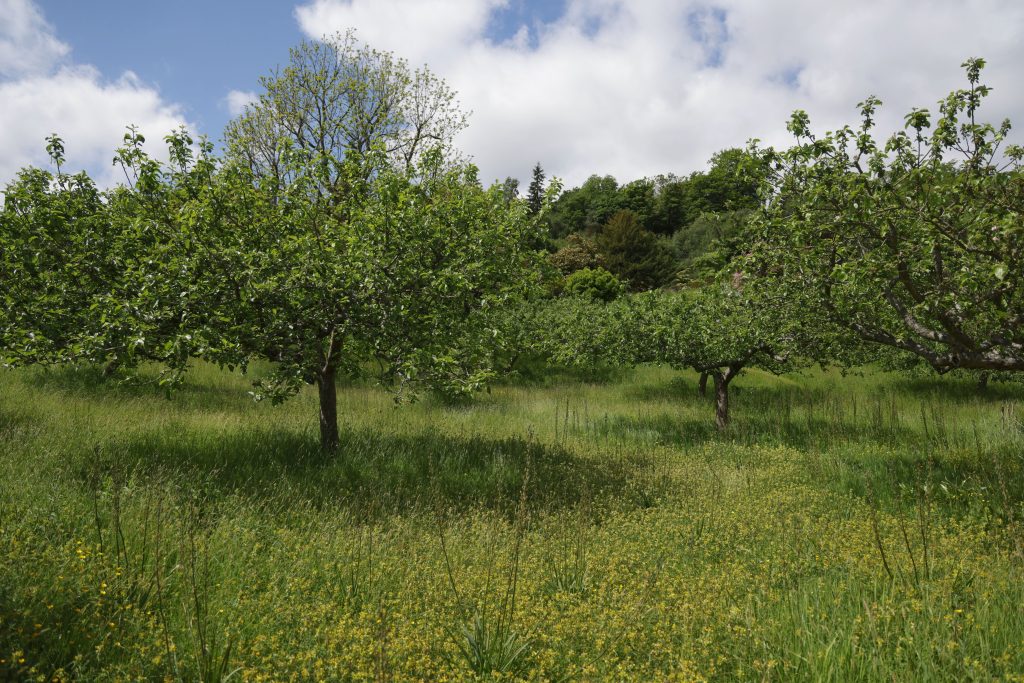
An orchard can look finished after the bins leave the row.
The crop is harvested, irrigation demand begins to decline, and the urgency of the season appears to ease.
Yet the trees continue storing carbohydrates, maintaining roots, developing buds, and preparing woody tissue for dormancy.
That makes late summer an important period for orchard observation.
It does not make it a good time for a routine fertilizer application.
Fruit trees are perennial systems.
Nutrients applied in one season can influence shoot growth, fruit quality, bud development, and tree condition for more than one year.
Excess late nitrogen may delay hardening.
Unneeded potassium can increase salt concentration or compete with magnesium.
Foliar micronutrients can injure leaves when diagnosis and concentration are wrong.
Leaf analysis provides a more reliable foundation than tree color or fertilizer habit.
Soil Tests and Leaf Tests Answer Different Questions
A soil test measures the nutrient condition and chemistry of the root zone.
It can provide information about:
- pH
- Organic matter
- Phosphorus
- Potassium
- Calcium
- Magnesium
- Sulfur
- Salinity
A leaf test measures what the tree actually absorbed.
Both are valuable because a nutrient can be present in the soil while remaining unavailable to the tree.
Dry soil, waterlogging, high pH, root disease, compaction, nutrient competition, and poor irrigation distribution can all restrict uptake.
A low leaf concentration with a low soil test strongly supports a supply problem.
A low leaf concentration with an adequate soil test points toward root access, water management, crop load, sampling error, or nutrient interactions.
Relying on one test alone can lead to the wrong correction.
August Is a Useful Sampling Period for Many Perennial Crops
The correct tissue-sampling window varies by fruit species, region, and laboratory.
For many tree-fruit and vineyard systems, mid- to late summer is useful because current-season leaves are mature and nutrient concentrations can be compared with established standards.
Do not assume that the same date, leaf position, or sufficiency range applies to:
- Apples
- Peaches
- Cherries
- Pears
- Citrus
- Grapes
- Nuts
Use the laboratory and extension protocol for the crop.
Sample the Correct Leaves
Tissue results can change substantially with leaf age and position.
Collect the recommended leaf or leaf-and-petiole combination from the specified part of the shoot.
Sample enough trees to represent the block.
Avoid:
- Border trees
- Dust-covered leaves
- Diseased leaves
- Leaves damaged by insects
- Water sprouts
- Extremely weak trees unless they are being tested separately
- Leaves recently sprayed with nutrient products
- Mixed cultivars or rootstocks in one sample
Keep healthy and problem areas separate.
Record:
- Cultivar
- Rootstock
- Crop load
- Planting age
- Irrigation system
- Recent fertilizer
- Harvest status
A result without block information is difficult to use.
Crop Load Changes Nutrient Interpretation
A heavily cropped tree distributes nutrients differently from a lightly cropped tree.
Fruit acts as a strong sink for potassium, nitrogen, calcium, and carbohydrates.
A large crop may reduce shoot growth and lower leaf concentrations without indicating that the tree should receive an immediate fertilizer application.
A light crop can produce vigorous shoots and high leaf nutrient concentrations.
This is particularly important in a frost year or after poor pollination.
Trees carrying little fruit may appear lush and nutrient-rich because less material is being exported into the crop.
Interpret tissue results with crop load and shoot growth.
Shoot Growth Tells Part of the Story
Annual shoot length is a practical indicator of tree vigor.
Very short growth can result from:
- Drought
- Heavy crop load
- Weak roots
- Disease
- Age
- Poor pruning
- Nutrient shortage
Excessively long, soft shoots often reflect:
- High nitrogen
- Low crop load
- Heavy pruning
- Excessive water
The desired growth differs by species, rootstock, tree age, training system, and orchard objective.
Measure representative shoots rather than judging the most vigorous watersprout.
A tree producing excessive shoots should not receive more nitrogen simply because lower leaves have lost some color after harvest.
Nitrogen Does Not Stay Where It Is Applied
Nitrogen applied late in the season may be:
- Absorbed by roots
- Left in the soil
- Leached
- Volatilized
- Lost through denitrification
The outcome depends on source, irrigation, rainfall, soil texture, temperature, and root activity.
Trees can store absorbed nitrogen for the following spring, but late nitrogen can also prolong vegetative growth and delay cold acclimation.
Normal seasonal leaf nitrogen decline should not automatically trigger a late application.
Where postharvest nitrogen is part of a regional production program, timing and rate should be matched to:
- Harvest date
- Season length
- Tree status
- Anticipated uptake
Potassium Supports Fruit and Tree Function
Potassium regulates:
- Water movement
- Enzyme activity
- Stomatal function
- Carbohydrate transport
- Fruit development
Deficient orchards may show:
- Marginal leaf scorch
- Poor shoot growth
- Reduced fruit size
- Uneven ripening
- Weak stress tolerance
Adequate potassium can support fruit color and quality where deficiency exists.
Potassium does not create red color on its own.
Light exposure, cultivar, temperature, crop load, canopy density, maturity, and other factors influence fruit color.
Applying potash to a high-testing orchard will not compensate for a shaded canopy.
Calcium Management Requires a Different Strategy
Calcium disorders in apples and other fruit crops create pressure for late applications.
The relationship between soil calcium and fruit calcium is not simple.
Fruit receives calcium mainly through xylem flow early in development.
Vigorous shoots compete strongly for calcium, and calcium moves poorly from leaves into fruit later in the season.
A soil calcium application may not correct a fruit-quality disorder during the current season.
Orchard calcium programs often rely on:
- Repeated crop-specific foliar applications
- Balanced nitrogen
- Crop-load management
- Irrigation
- Harvest and storage decisions
Do not mix a general potassium or nitrogen application into a calcium strategy without considering nutrient interactions.
Boron Has a Narrow Safety Range
Boron supports:
- Flowering
- Pollen-tube growth
- Cell walls
- Reproductive development
Deficiency can reduce fruit set and tree function.
Excess boron is toxic.
A small measurement error can become a large orchard problem.
Use soil and tissue testing, crop-specific recommendations, and accurate application equipment.
Do not apply boron because fruit set was poor without considering:
- Frost
- Pollination
- Bee activity
- Weather
- Bloom disease
Root-Zone Moisture Controls Late Uptake
A dry orchard cannot use surface-applied nutrients effectively.
Fine roots may remain active after harvest, but they need moisture and oxygen.
A tree on droughted soil may show low leaf potassium or nitrogen even where the soil supply is reasonable.
Continue irrigation according to tree demand and soil moisture rather than stopping immediately after harvest.
Demand declines as fruit is removed and leaves age, but roots should not be allowed to desiccate.
Overwatering creates the opposite problem.
Saturated soil damages roots, encourages root disease, and increases nitrogen loss.
Check the profile at several depths and locations.
Irrigation Distribution Matters Across the Row
A drip emitter wets only part of the orchard floor.
Roots concentrate in the wetted zone, making nutrient placement important.
Dry fertilizer broadcast outside that zone may remain unavailable.
Check emitter output from the beginning, middle, and end of representative lines.
Look for:
- Plugged emitters
- Pressure variation
- Leaks
- Narrow wetting bulbs
Microsprinklers provide a wider wetting pattern but may increase evaporation and weed growth.
Fertigation can deliver nutrients efficiently, but concentration and compatibility must be managed carefully.
Salinity Can Resemble Nutrient Deficiency
Repeated irrigation and fertilizer can increase root-zone salts.
Trees may show:
- Marginal burn
- Reduced shoot growth
- Leaf drop
- Poor water use
These symptoms are easily mistaken for potassium deficiency.
Test soil electrical conductivity and irrigation water where salt accumulation is possible.
Chloride and sodium deserve separate attention.
Some fruit crops are more sensitive than others, and damage may develop gradually over several seasons.
Applying additional potassium chloride to a chloride-sensitive or saline orchard can worsen the problem even when potassium is needed.
Where Sulfate of Potash May Fit
Supply Solutions Sulfate of Potash 0-0-50 is a concentrated potassium fertilizer.
Its correct orchard fit depends on the product label, soil test, tissue analysis, crop sensitivity, and existing sulfur or chloride conditions.
Why it is used: It supplies potassium without adding nitrogen, making it useful where potassium is limiting but additional vegetative growth is not desired.
When it should be applied: It fits a soil- and tissue-test-based orchard program where potassium is below the desired range and active roots, irrigation, and placement allow uptake. Timing may be postharvest, fall, preplant, or spring depending on soil, crop, and regional recommendations.
What problem it solves: It addresses a confirmed potassium shortage that may be limiting water regulation, carbohydrate movement, tree vigor, or fruit performance. It does not correct poor color caused by shading, small fruit caused by inadequate thinning, drought, root disease, or excessive crop load.
Do Not Apply Potassium by Tree Appearance Alone
Marginal scorch can result from:
- Drought
- Salinity
- Chloride
- Mites
- Leaf disease
- Root injury
- Potassium shortage
Paired soil and tissue samples are useful.
Collect samples from affected and healthy areas with similar cultivar, rootstock, and crop load.
Examine irrigation distribution and roots.
A late potassium application may not restore damaged leaves.
Improvement should be evaluated through:
- Future tissue status
- Shoot growth
- Fruit quality
- Soil-test trends
The objective is long-term correction, not immediate greening.
Consider Crop Removal
Fruit harvest exports nutrients.
The amount depends on yield and crop species.
A heavily cropped orchard removes more potassium than a lightly cropped block.
Removal estimates can help maintain soil-test levels, but they should not replace actual testing.
Soil mineralogy, fixation, leaching, irrigation, and historical applications all influence the amount of fertilizer required.
Use removal as one part of the calculation.
Avoid Routine Fall Phosphorus
Phosphorus moves slowly in most soils and is often adequate in established orchards.
Applying a complete fertilizer to supply potassium may add unnecessary phosphorus.
High soil phosphorus can create environmental risk and contribute to nutrient imbalance.
Use a potassium-only material when potassium is needed but phosphorus is not.
New orchard establishment is the better time to incorporate phosphorus deeply when a soil test calls for it.
Separate Current-Season Rescue From Future-Season Correction
By late summer, much of the current fruit crop has already been determined.
A nutrient application may improve future soil status without changing the present harvest.
That can still be worthwhile, but expectations should be clear.
Use immediate foliar or fertigation treatments only where crop-specific research supports them and the response window remains open.
Use soil-applied amendments to build a stable fertility program over time.
Do not judge a successful soil correction by whether existing damaged leaves become green.
Build a Block-by-Block Record
Maintain records for each orchard block:
- Soil-test results
- Tissue analysis
- Cultivar and rootstock
- Tree age
- Crop load
- Yield
- Fruit size and quality
- Shoot growth
- Irrigation volume
- Fertilizer source and rate
- Pruning severity
- Disease and pest pressure
Trends over several seasons are more valuable than one isolated test.
Supply Solutions can help orchard managers compare soil and tissue results with Sulfate of Potash and other nutrient sources.
Contact the company before making a late-summer application where crop load, root activity, salinity, or tissue-sampling timing creates uncertainty.
Orchard fertility is most reliable when the tree’s actual nutrient status—not the date or a standard annual habit—determines the product.