

Uncategorized
How to Read a Fertilizer Grade: What N-P-K Numbers Actually Tell You
Walk into a fertilizer warehouse, farm supply store, greenhouse, or garden center and the first thing most people notice on a fertilizer bag is a
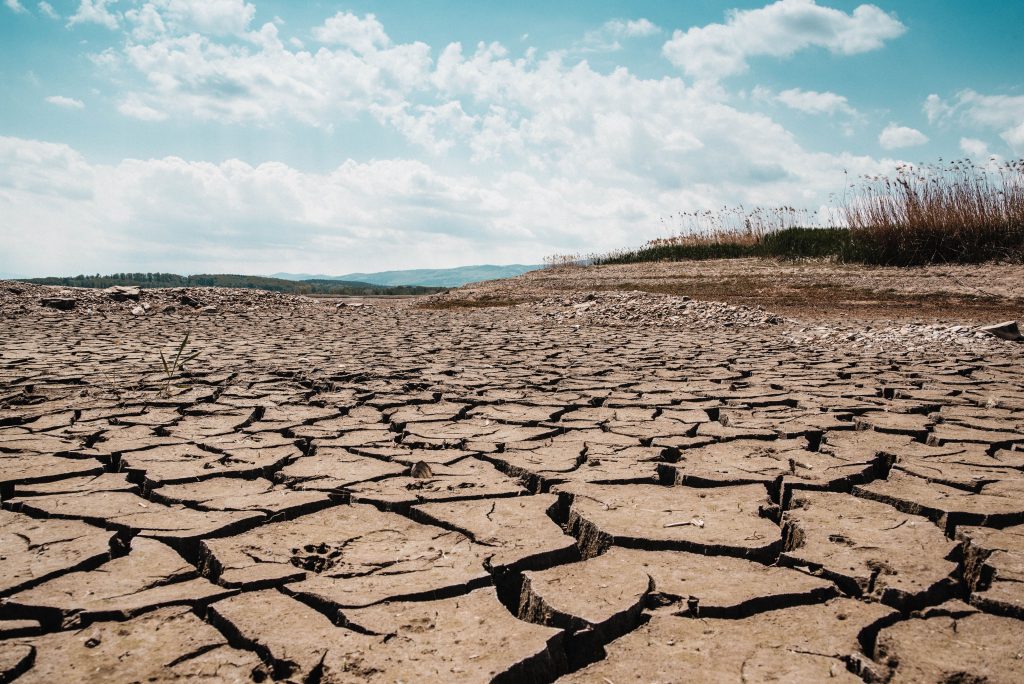
A drought-stressed crop is easy to recognize from the road. Corn leaves roll, soybean leaves flip, canopies lose their deep green appearance, and growth slows as the plants attempt to conserve water.
The more important changes are happening below ground.
Dry soil changes the way nutrients move. It reduces root activity in the driest parts of the profile. It slows microbial processes responsible for releasing nutrients from organic matter. It can make a well-fertilized crop look nutrient deficient even though the soil contains adequate fertility.
That is why drought should change the way farmers interpret August nutrient symptoms.
The question is no longer simply whether the plant contains enough nitrogen, potassium, sulfur, or another nutrient. The question is whether the soil-root-water system can deliver that nutrient to the crop.
During August 2026, that distinction has been particularly relevant in parts of the northern Corn Belt. Minnesota Extension reported late in the month that some areas remained dry or very dry and that corn and soybeans still had meaningful water requirements before maturity.
A crop that still has yield to finish but lacks sufficient soil moisture faces both a water problem and a nutrient-uptake problem at the same time.
Plant roots obtain nutrients through several processes.
Some nutrients move toward roots with water as plants transpire. Others move short distances through diffusion from areas of greater concentration toward areas where roots have removed nutrients.
Both processes depend heavily on soil moisture.
As soil dries, movement slows.
Potassium is particularly sensitive because diffusion is responsible for much of the K reaching plant roots.
Nitrogen uptake also declines when roots cannot access enough water carrying nitrate through the soil profile.
Iowa State Extension explains that drought reduces water uptake, nutrient availability, nutrient transport, and overall plant growth in both corn and soybeans.
This means a drought-stressed plant can become nutritionally limited even in a field that received an appropriate fertilizer program.
Potassium deficiency is commonly reported during dry weather because K movement toward roots becomes strongly restricted.
Corn typically develops yellowing and browning along older leaf margins.
Soybeans can show marginal yellowing and necrosis, sometimes progressing higher in the canopy during reproductive development.
Iowa State has documented potassium symptoms appearing in droughty fields where soil-test K and preplant fertilizer were otherwise adequate.
That observation is important because it changes the fertilizer decision.
If the soil itself is low in potassium, the fertility program needs correction.
If the soil tests adequately and the plant cannot access K because the root zone is dry, another potassium application may not correct the immediate problem.
Potassium is often associated with plant water regulation, and appropriately so.
Adequate K is necessary for normal stomatal function, enzyme activation, carbohydrate transport, and many other physiological processes. A plant suffering from true potassium deficiency may handle environmental stress less effectively than a crop with adequate K nutrition.
That does not mean potassium fertilizer makes a crop drought proof.
When soil-test K is already adequate and drought is preventing uptake, broadcasting more potassium onto dry soil does not restore the missing water pathway.
Iowa State Extension specifically cautions that potassium fertilization during drought may not improve plant K uptake or correct drought-induced symptoms.
The better long-term strategy is to maintain adequate soil-test potassium before stressful weather arrives.
Corn continues using nitrogen during reproductive development, but roots still need water to obtain it.
As the root zone dries, nitrate movement toward the plant declines.
A corn crop may begin firing lower leaves even when some nitrate remains in the soil profile.
This is particularly likely when rooting depth is limited.
A deeply rooted plant can draw moisture and nutrients from a much larger soil volume than a plant confined to the upper foot of soil.
That is why drought frequently exposes root problems created earlier in the season.
A field can suffer from drought in August because it received too much water in May or June.
When surface soil remains wet for extended periods early in the season, root systems may stay relatively shallow because adequate water and oxygen conditions are concentrated near the surface.
If summer then becomes dry, those roots may not have enough depth to follow moisture downward.
Compaction can produce a similar result.
Roots encounter dense soil and grow horizontally rather than penetrating deeper layers.
The crop may look excellent while rainfall remains frequent, only to deteriorate quickly when the surface dries.
This is why digging roots during drought is so valuable.
The dry weather often reveals a root-zone problem that would otherwise remain hidden.
Compacted soil restricts roots and can also reduce infiltration.
Instead of rainfall entering the profile efficiently, more water may run off the surface.
The crop then begins the next dry period with less stored soil water.
Iowa State notes that compaction can cause poor root establishment, reduced potassium uptake, ponding, runoff, and other symptoms that influence crop performance.
Adding fertilizer does not loosen compacted soil.
When drought symptoms consistently appear first in headlands, equipment lanes, or other traffic-heavy areas, soil structure needs to become part of the fertility conversation.
Soil fertility is not supplied only by fertilizer bags.
Organic matter contains nitrogen, sulfur, and other nutrients that are released through microbial activity.
Those microorganisms need suitable moisture.
When soil becomes excessively dry, microbial processes slow.
Mineralization declines, which can reduce the supply of nutrients becoming plant available during a period when the crop is still growing.
This effect can make nitrogen and sulfur availability lower than expected even when the soil contains significant organic nutrient reserves.
When rainfall returns, microbial activity can increase again.
That changing biological supply is one reason crop appearance can improve after moisture returns without another fertilizer application.
Soybeans rely heavily on biological nitrogen fixation.
Bacteria within root nodules convert atmospheric nitrogen into forms the plant can use.
That process depends on healthy roots, active nodules, and adequate plant energy.
Drought reduces photosynthesis and root activity, and nodule function can decline accordingly.
Iowa State reports that drought can substantially reduce nitrogen fixation in soybeans, although fixation may resume when moisture returns if the stress has not caused severe permanent damage.
A pale soybean field in August therefore should not automatically receive commercial nitrogen.
The better first step is to inspect moisture, roots, nodules, disease pressure, and crop stage.
Corn and soybeans remain sensitive to water stress well into reproductive development.
Corn that has already established kernel number can still lose kernel weight if drought shortens grain fill.
Soybeans can abort pods or seeds and produce smaller seed when drought occurs during the critical reproductive period.
Minnesota Extension reported in August 2026 that moisture-stressed soybeans were experiencing pod and seed abortion in some areas, emphasizing that the R4-to-R7 period remains important for final yield.
This is why August rain can still be valuable even when a crop appears nearly finished from the road.
Where irrigation is available, the correct decision depends on how much water remains in the profile and how much the crop still needs.
Minnesota Extension’s late-August 2026 guidance emphasizes three questions: how much water remains in the root zone, what growth stage the crop has reached, and how much water use remains before maturity.
That approach is more precise than irrigating according to the calendar.
A soybean crop at R5 has more remaining water demand than one nearing R7.
Corn at early dent has more yield to finish than corn nearing black layer.
The objective is to supply enough water to protect economically important grain fill without wasting water or creating saturated soil.
Drought should encourage growers to investigate potassium status because genuine low-K fertility can become particularly visible under stressful conditions.
When soil testing confirms that potassium is below the desired range, Supply Solutions Sulfate of Potash 0-0-50 provides a focused source of potassium without adding nitrogen or phosphorus.
The reason to apply it is to correct an actual soil potassium shortage.
For a severely droughted August corn or soybean crop, the best timing may not be an immediate surface application onto dry soil. Depending on the crop and local recommendations, postharvest or preplant correction may provide a better opportunity to build soil fertility before the next period of peak crop demand.
The problem the fertilizer solves is inadequate K fertility.
It does not solve drought, and making that distinction prevents unrealistic expectations.
Drought-prone soils are not automatically deficient in magnesium or sulfur, but some fields do have multiple nutrient needs.
When soil or tissue testing indicates that potassium, magnesium, and sulfur are all deficient, Supply Solutions 0-0-22 Pro-Mag Trio offers those nutrients together without supplying nitrogen or phosphorus.
The reason to use the product is the combined nutrient requirement.
The best timing is when soil moisture and crop planning allow those nutrients to become available to roots.
The problem it addresses is an identified K-Mg-S fertility shortage rather than generalized drought stress.
If only potassium is deficient, a potassium-only source may be more appropriate. Product selection should follow what the field actually needs.
Tissue analysis can provide useful evidence, but drought complicates interpretation.
A crop that has stopped growing may accumulate some nutrients at higher concentrations simply because biomass production has slowed.
Other nutrients may test low because uptake has been restricted.
This can make a tissue concentration look more definitive than it really is.
Iowa State Extension cautions growers to interpret plant tissue tests carefully under drought conditions and to combine them with soil-test information and visual field observations.
When comparing affected and healthy areas, sample the same plant part at the same growth stage.
A paired comparison can reveal whether the stressed zone is behaving differently from the rest of the field.
A rain event can provide useful diagnostic evidence.
If an adequately fertilized field had developed potassium symptoms largely because of dry soil, new growth may function more normally after moisture improves.
Existing dead tissue will remain damaged, so growers should not expect brown leaf margins to become green again.
Instead, observe whether symptoms continue progressing.
If they stop after rainfall, moisture limitation was probably an important part of the problem.
If deficiency continues despite improved root-zone moisture, low soil fertility, root disease, compaction, or another limitation becomes more likely.
Difficult seasons often provide some of the best diagnostic information.
Record which portions of the field rolled corn leaves first.
Mark areas where soybeans flipped leaves during the hottest part of the day.
Map potassium symptoms.
Dig roots in early-stressed and late-stressed areas.
Compare soil depth and texture.
Evaluate compaction.
After harvest, overlay those observations with yield maps and soil tests.
The goal is to understand why one portion of the field ran out of usable water and nutrients before another.
Some differences may not be economically fixable, especially where shallow soils naturally have limited water-holding capacity.
Others can be improved through fertility correction, reduced compaction, improved residue management, better infiltration, drainage adjustments, irrigation, or other practices.
Drought changes nutrient uptake because plants, roots, soil moisture, and soil biology are all connected. A crop cannot take full advantage of nitrogen or potassium when the root zone is too dry to deliver those nutrients. Maintaining adequate fertility before drought arrives is still important, because a crop should not face both water stress and a preventable nutrient shortage at the same time. Supply Solutions Sulfate of Potash 0-0-50 and Pro-Mag Trio can address confirmed nutrient needs, but the fertilizer recommendation should remain tied to what testing shows rather than to drought symptoms alone. Farmers who want help choosing a potassium, magnesium, sulfur, or other nutrient source can contact Supply Solutions after the soil and crop have identified the limitation that fertilizer can actually correct.
Walk into a fertilizer warehouse, farm supply store, greenhouse, or garden center and the first thing most people notice on a fertilizer bag is a
When fertilizer prices are high, farmers naturally want every pound of nutrient they purchase to contribute as much as possible to crop production. That makes
Give us a call or visit our store, and we’ll help you find the right solution for your business.