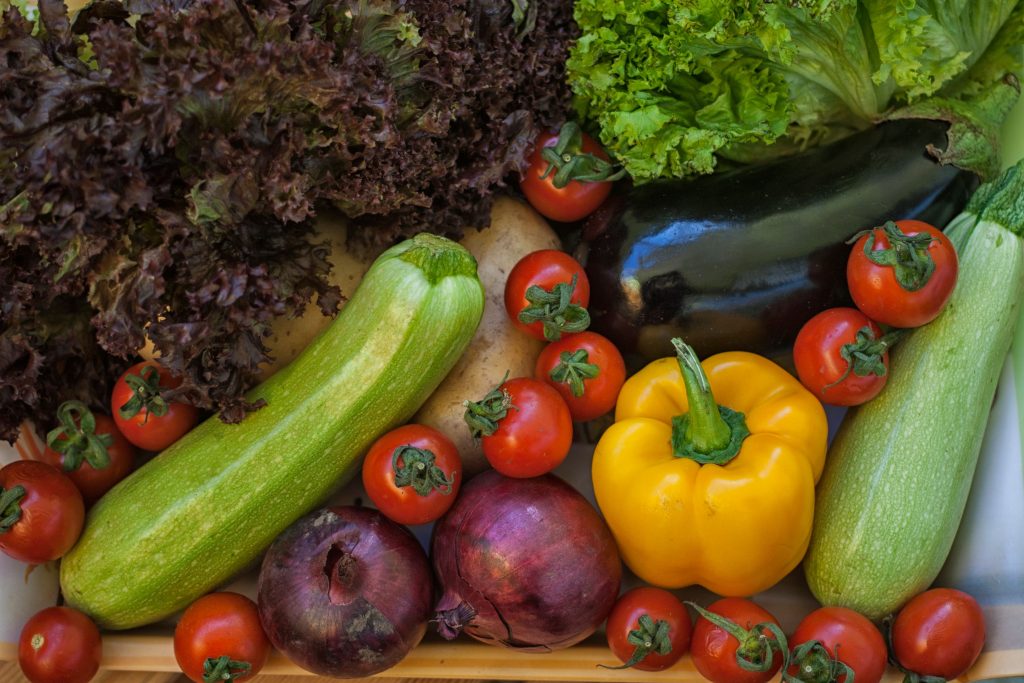
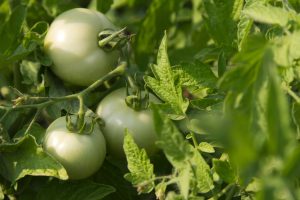
By late August, a vegetable garden rarely behaves like one uniform crop. Tomatoes and peppers may still be carrying fruit from spring planting. Cucumbers and summer squash may be producing heavily or declining from disease and heat. Okra can still be growing aggressively in the South, while northern gardeners may already be replacing finished summer vegetables with lettuce, spinach, carrots, beets, kale, broccoli, and other cool-season crops.
Those plants should not all receive the same fertilizer treatment.
That is one of the most common mistakes in late-summer garden fertility. A gardener sees that August has been hard on the garden, spreads another general-purpose fertilizer across the entire plot, and assumes everything will benefit. Some plants may respond. Others may produce unnecessary foliage, receive phosphorus or potassium they do not need, or be fertilized only weeks before they are going to be removed.
The better approach is to decide which vegetables still have enough productive growing season left to justify feeding, which crops are entering a new fall growth cycle, and which plants should simply be allowed to finish.
That distinction is especially relevant in late August 2026. Penn State’s current August garden guidance notes that harvested onions, garlic, potatoes, cabbage, and other crops may have opened space for fall vegetables such as salad greens, broccoli, carrots, and beets. Meanwhile, current UGA garden calendars for the South place several cool-season vegetables into an August-to-September planting window while some warm-season crops can still produce or even be replanted where frost comes later.
Late-summer fertility should follow that changing garden rather than the calendar alone.
Start by Separating Plants That Are Still Producing From Plants That Are Finished
The simplest way to improve an August fertilizer decision is to walk through the garden before opening the fertilizer bag.
Some vegetables still have considerable productive potential. Healthy peppers may continue flowering and setting fruit as temperatures moderate. Indeterminate tomatoes can continue producing until frost if disease pressure remains manageable. Cucumbers, squash, okra, and beans may still provide worthwhile harvests where enough warm growing weather remains.
Other plants may have reached the end of their useful life.
A cucumber vine that has lost most of its leaves to disease, a determinate tomato that has already completed the majority of its crop, or a squash plant severely damaged by insects is unlikely to become productive again simply because more nutrients are added.
UGA’s August garden recommendations specifically advise removing vegetable plants once they have finished producing rather than continuing to carry exhausted or badly damaged plants through the garden. Harvesting productive squash, okra, and cucumbers regularly can encourage continued production, but finished plants are better removed so the space can be prepared for fall crops.
That is an important fertilizer-saving opportunity.
Do not spend nutrients maintaining plants you are likely to remove within the next few weeks.
Late-Summer Fertility Should Follow Crop Stage, Not Habit
Vegetables need different nutrient balances at different stages of growth.
A newly transplanted broccoli plant needs to build a large leaf canopy before heading. Lettuce and collards are harvested largely for vegetative tissue, so adequate nitrogen supports the part of the plant the gardener intends to eat.
A mature tomato already carrying several clusters of fruit has a different priority. It still requires nitrogen, but excessive N can encourage foliage at the expense of reproductive balance.
Carrots and beets need enough fertility to develop a healthy canopy and root system, but excessive readily available nitrogen can encourage excessive top growth or undesirable root development. University of Minnesota, for example, cautions that excessive readily available nitrogen can contribute to branching in root crops such as rutabagas, while turnips often require little additional fertilizer beyond an appropriate preplant application.
These crops may all be growing in the same garden during August.
That does not make them the same fertility problem.
Tomatoes and Peppers May Still Need Nutrients, but They Usually Do Not Need to Be Pushed
Established tomatoes and peppers can remain productive well into fall, especially in longer-season areas.
A plant carrying a heavy fruit load is still using nutrients. Nitrogen supports healthy leaves, potassium participates in water regulation and carbohydrate movement, and phosphorus remains involved in energy transfer and other plant functions.
The question is whether the existing soil fertility is already supplying those needs.
UGA recommends sidedressing tomatoes and peppers after fruit set where additional fertility is needed, but also stresses that fertilizer rates depend on crop and soil fertility. Its general garden recommendations classify tomatoes among heavier-feeding vegetables and peppers among medium feeders, while emphasizing that soil-test results should guide actual fertilizer use.
That last part becomes especially important in August.
A tomato plant with healthy green foliage, continuing fruit development, and adequate new growth may not need another feeding simply because several weeks have passed since the previous one.
If the plant is pale, productive growth is continuing, and the known fertility program has been modest, a carefully sized sidedress may still be justified.
If the tomato is already excessively leafy with little fruit, adding more nitrogen is unlikely to improve the balance.
Late-summer fertilizer should support continued production rather than restart the plant’s vegetative phase.
Cucumbers and Squash Can Respond to Feeding When They Still Have a Real Harvest Window
Cucumbers and summer squash grow rapidly and can produce substantial amounts of fruit over a relatively short period.
Where the vines remain healthy and enough warm weather remains, additional fertility can support continued production. UGA includes cucumbers and squash among vegetables that may receive supplemental nitrogen as a sidedress where soil fertility warrants it.
In parts of Georgia, UGA’s garden calendar allows cucumbers and squash to be planted as late as August 31, although appropriate disease-resistant varieties and local frost timing need to be considered.
That provides a good example of why geography matters.
A gardener in the Southeast may still be establishing a new squash crop in late August. A gardener in northern Minnesota is thinking about a completely different set of vegetables because frost may arrive long before a newly planted warm-season vine could mature.
Fertilizer should follow the crop that can realistically finish in the local season.
Okra Can Still Be a Heavy Feeder in a Long Southern Growing Season
Okra thrives in heat and can remain productive later than many other garden vegetables across the South.
Where plants remain healthy, August is not necessarily the end of their production period. Continued harvest encourages more pod production, and moderate supplemental nitrogen may still be useful where soil fertility is inadequate.
UGA includes okra among vegetables that may benefit from nitrogen sidedressing based on soil fertility.
However, another fertilizer application should still have a reason.
A tall, vigorous okra plant already producing heavily is not automatically nitrogen deficient. If the leaves are healthy and pods continue forming, maintaining moisture and harvesting frequently may be more important than feeding again.
When fertilizer is used, it should extend productive growth rather than simply make an already vigorous plant taller.
Beans Require More Nuance Because They Are Legumes
Beans are often treated like any other vegetable when fertilizer is spread across a mixed garden.
They deserve additional consideration because they are legumes.
With effective root nodulation, beans can obtain nitrogen through biological fixation. That means heavy nitrogen fertilization can be unnecessary, particularly once plants are established and nodules are functioning.
UGA’s general garden guidance includes beans among medium feeders and allows supplemental nitrogen under some conditions, but the actual requirement depends heavily on soil fertility and plant condition.
The useful approach is to avoid assuming that beans need the same nitrogen rate as nearby cabbage or lettuce.
If bean plants are healthy, green, nodulated, and producing, another heavy N feeding may offer little value.
This is one reason broad applications over a mixed garden become less precise as the season progresses.
Fall Greens Are a Different Fertility Story
As summer crops finish, leafy fall vegetables begin taking their place.
Collards, kale, mustard, lettuce, spinach, and other greens are grown primarily for vegetative tissue. Their value comes from producing healthy leaves rather than fruit or seed.
Adequate nitrogen therefore has a more direct relationship with the harvested portion of the crop.
UGA’s fall-garden guidance places crops such as collards, kale, mustard, spinach, broccoli, cabbage, and radishes into late-summer and fall planting windows. UGA also notes that many cool-season garden vegetables are relatively heavy feeders and recommends beginning with a soil test so that pH and fertilizer can be adjusted for the fall crop rather than inherited blindly from the summer garden.
This is a key point.
A bed that grew tomatoes all summer does not automatically have the right fertility for September broccoli.
The previous crop may have removed substantial nutrients. It may also have received repeated compost and fertilizer applications that left more fertility behind than expected.
Testing or at least reviewing the entire season’s amendment history helps prevent both underfertilization and unnecessary additions.
Broccoli, Cabbage, Kale, and Collards Need Enough Nutrition to Build a Canopy Quickly
Brassicas planted for fall face a limited period of favorable growth before shorter days and colder temperatures slow development.
They need to establish quickly.
Broccoli and cabbage must build enough leaf area to support head development. Kale and collards need strong vegetative growth because the leaves themselves are the harvested product.
Penn State’s current August 2026 garden guidance recommends broccoli and kale transplants during this period while salad greens and root crops can often be direct-seeded.
These young brassicas are a more logical place for late-summer fertility than an exhausted summer plant that is almost ready for removal.
However, fertility still should not be exaggerated.
Heavy nitrogen can produce overly soft growth and should not be applied at rates beyond local recommendations. The objective is rapid, balanced establishment.
Adequate moisture is equally important because newly transplanted brassicas cannot use fertilizer efficiently if their small root systems are sitting in dry August soil.
Lettuce and Spinach Need Nitrogen, but Heat May Be the Bigger Limitation
Leaf lettuce and spinach respond to adequate nitrogen because vegetative tissue is the crop.
The temptation in August is to assume slow growth means inadequate fertilizer.
Temperature may be more important.
Cool-season greens germinate and grow best under cooler conditions than tomatoes or squash. Very warm soil can reduce germination, particularly for spinach and lettuce.
Penn State identifies leafy greens such as lettuce, arugula, and spinach as useful fall crops but emphasizes their cool-season nature and the importance of timing them for fall conditions.
If lettuce seedlings are struggling during a period of extreme heat, more nitrogen does not lower soil temperature.
Shade cloth, careful watering, mulch around established plants, and waiting for a more suitable planting window can matter more than increasing the fertilizer rate.
Nutrition works best when the crop’s environmental requirements are also being met.
Root Crops Need Enough Fertility Without Being Forced Into Excessive Top Growth
Carrots, beets, radishes, turnips, and other root crops become important as gardens shift toward fall.
They still need nitrogen.
The misconception is that root crops should receive no nitrogen because gardeners want roots rather than leaves. The plant needs leaves to photosynthesize and supply carbohydrates to the developing storage root.
The issue is excess.
Too much readily available nitrogen can encourage excessive vegetative growth and, in certain root crops, contribute to undesirable root shape. University of Minnesota specifically cautions about high readily available N with turnips and rutabagas and notes that turnips may need no additional fertilizer after a proper preplant application.
This is another reason not to side-dress the entire fall garden with the same nitrogen rate.
Broccoli, lettuce, carrots, and turnips may all be cool-season crops, but their fertilizer responses are not identical.
The Summer Garden May Have More Residual Fertility Than You Think
A garden that has been intensively managed since spring may already contain substantial nutrient reserves.
Compost, manure, granular fertilizer, liquid plant foods, and repeated sidedressing all contribute nutrients. Some are taken up by crops. Some are lost. Others remain in the soil.
Phosphorus in particular can accumulate because it is less mobile than nitrate and is commonly included in complete garden fertilizers.
Potassium can also remain available depending on soil type, rainfall, irrigation, and crop removal.
That is why a fresh blanket application of balanced fertilizer before every fall crop can be unnecessary.
UGA’s home-garden guidance repeatedly emphasizes using soil testing to determine fertilizer and lime requirements rather than relying solely on standard fertilizer schedules.
If the garden has received heavy compost or manure for years, testing becomes even more important.
The fact that organic materials were used does not mean nutrient accumulation is impossible.
Soil pH Still Determines How Efficiently the Fall Crop Uses Fertilizer
Late-summer fertility is not only about N-P-K.
Soil pH influences nutrient availability, root growth, and microbial activity. UGA’s fall garden recommendations emphasize checking pH before planting because applying fertilizer cannot fully compensate for a soil environment outside the crop’s productive range.
This is particularly useful when a portion of the summer garden has already been cleared.
Rather than immediately planting the next vegetable, collect a soil sample if testing is due. The resulting recommendation can help determine whether lime or another amendment belongs in the fall plan.
Large pH corrections take time.
That makes the transition between summer and fall crops a useful opportunity to identify problems, even if some amendments will provide more benefit to later crops than to seedlings planted immediately.
A Balanced Fertilizer Can Make Sense When the Soil Actually Needs a Balanced Application
Mixed vegetable beds can sometimes have legitimate nitrogen, phosphorus, and potassium requirements at the same time.
When the soil test supports all three nutrients, Supply Solutions 10-10-10 Complete Lawn & Garden Granular Fertilizer with Micronutrients provides equal percentages of nitrogen, phosphate, and potash. Supply Solutions lists the product as 10-10-10 and provides a vegetable-garden application rate on its product page.
The agronomic reason to use a 10-10-10 product is that the garden needs all three primary nutrients in approximately equal proportions or the recommended rate makes that analysis a reasonable fit. It can be particularly practical when preparing a new fall bed where current soil information shows a mixed nutrient need.
The appropriate timing is before or during active crop establishment, according to soil-test need and product directions. Working an appropriate amount into the soil before planting fall vegetables can distribute nutrients through the developing root zone rather than leaving concentrated fertilizer against tender stems.
The problem it solves is a balanced N-P-K shortage.
It should not be used automatically in an established garden that already tests high in phosphorus or potassium simply because 10-10-10 is familiar.
A complete fertilizer is only complete when its analysis fits the field.
Do Not Put Granular Fertilizer Against Seeds, Stems, or Young Roots
Late-summer seedlings often face enough stress from heat without adding fertilizer injury.
Concentrated fertilizer salts placed directly against germinating seed or tender roots can interfere with water uptake and damage developing tissue.
The safer approach is to follow label directions for preplant incorporation or sidedressing and keep concentrated material away from plant crowns and stems.
Watering after application can help move soluble nutrients into the soil, but fertilizer should not be applied immediately before runoff-producing storms.
A moderate watering that carries nutrients into the root zone is useful.
A thunderstorm that washes granules out of the bed is not.
Watering Often Determines Whether Fertilizer Works in August
Late-summer vegetables cannot use nutrients efficiently without adequate soil moisture.
This matters for both mature summer crops and newly planted fall vegetables.
A fruiting pepper plant in dry soil cannot move potassium and other nutrients efficiently to the roots. A newly transplanted broccoli seedling with a small root system can wilt rapidly before it has any opportunity to use the fertilizer placed around it.
UGA’s August garden calendar emphasizes watering fall plantings as necessary to establish a stand and prevent drought stress.
That makes irrigation part of fertilizer management.
Do not apply more nutrients to compensate for plants that are simply dry.
Check the soil several inches below the surface. Mulch established crops to reduce evaporation. Irrigate deeply enough to wet the active root zone rather than repeatedly wetting only the surface.
A plant with access to water can use existing fertility much more effectively than a drought-stressed plant receiving another fertilizer application.
Containers Need More Frequent Attention Than In-Ground Beds
Container vegetables behave differently because their roots occupy a small volume of growing media.
Frequent August irrigation can leach soluble nutrients from pots, especially when water runs freely from drainage holes. That means tomatoes, peppers, herbs, and greens in containers may require smaller, more frequent fertilizer applications than equivalent plants in a well-managed garden bed.
The risk goes both directions.
Containers can lose nutrients quickly, but salts can also accumulate when fertilizer is applied heavily and water evaporation is high.
Supply Solutions’ own hot-weather container guidance identifies frequent nutrient leaching, rapid drying, and fertilizer-burn risk as important summer container-management issues.
The practical response is precision rather than heavier feeding.
Use label rates, observe plant growth, and avoid adding another concentrated dose to a container that is already dry and heat stressed.
Water management comes first.
Compost Can Improve Fall Beds Without Replacing Every Fertility Decision
Finished compost can be valuable during the transition from summer to fall.
It adds organic material, improves soil tilth, can improve water-holding behavior, and returns nutrients to the garden.
It should not automatically be treated as a complete fertilizer.
Compost nutrient concentrations vary considerably depending on feedstocks and how the material was produced. Repeated heavy compost additions can also build phosphorus and other nutrients over time.
The strongest use of compost is as part of a longer-term soil-management program rather than as an excuse to stop testing soil.
If the garden has excellent organic matter but tests low in nitrogen for a fast-growing fall crop, some supplemental fertility may still be justified.
If phosphorus is already excessive, adding another nutrient-rich compost simply because it is “natural” may worsen the imbalance.
Organic and conventional inputs still have to obey the same nutrient budget.
Remove Diseased Summer Plants Before Feeding the Fall Crop
Garden transition also provides an opportunity to reduce pest and disease carryover.
UGA advises removing summer plants that have finished producing and properly handling diseased or insect-infested material rather than leaving it in place.
This matters to fertility because growers sometimes leave declining crops in place, feed them again, and then plant fall crops into whatever space remains.
A cleaner transition is usually more effective.
Remove spent plants. Control weeds. Evaluate the soil. Add amendments only where needed. Then plant the next crop into a prepared bed.
Fertilizer cannot compensate for a fall seedling starting underneath diseased tomato vines and mature weeds.
Fall Crops Should Not Inherit the Summer Crop’s Fertilizer Schedule
One of the most useful late-summer changes is resetting the fertilizer plan.
The summer garden may have been fertilized every few weeks because tomatoes, squash, and peppers were producing heavily.
That schedule does not automatically belong to September kale, carrots, or radishes.
Some fall crops may need an initial preplant fertilizer application and one later sidedress. Others may require little supplemental fertility once the soil has been properly prepared.
The correct program becomes much easier to manage when beds are grouped by crop type.
Leafy greens can be managed together where practical. Root vegetables can occupy another section. Remaining fruiting crops can be treated individually rather than receiving whatever is spread over the new fall bed.
That simple organization allows fertilizer to follow crop demand.
Northern and Southern Gardens Need Different August Decisions
A nationwide late-summer garden article has to recognize that August 26 does not represent the same point in the vegetable season everywhere.
In Pennsylvania, current 2026 Extension guidance is already encouraging gardeners to fill open spaces with salad greens, broccoli, carrots, and beets.
In Minnesota, Extension reported in mid-July that carrots, beets, broccoli, brassicas, chard, beans, peas, and herbs were moving into their final succession windows, with greens continuing to offer August and even September planting opportunities for later harvest.
In Georgia, UGA’s fall planting calendar extends many brassicas, greens, carrots, garlic, and other crops through August, September, and in some cases October.
The farther north the garden is located, the more fertilizer decisions should focus on vegetables capable of maturing quickly before frost.
Farther south, gardeners have more time to maintain certain warm-season vegetables while simultaneously starting the fall garden.
Fertilizer only has value when enough growing season remains for the plant to convert those nutrients into something the gardener will harvest.
Do Not Spend Fertilizer on Growth That Frost Will Take Before Harvest
Late-summer gardeners sometimes continue feeding summer vegetables because the plants respond by producing new shoots and flowers.
The response can look encouraging.
Whether it has value depends on how much season remains.
A new tomato flower in a long-season southern garden may still have time to become a mature fruit. The same flower in a northern garden approaching its average first frost may never produce anything harvestable.
That changes the economics of another nitrogen application.
The goal is not simply to make plants respond.
The goal is to produce usable vegetables.
As frost approaches, maintaining healthy leaves and finishing existing fruit can become more valuable than stimulating another flush of vegetative growth.
Late-Summer Fertility Should Be About Finishing One Crop and Starting the Next One Well
August garden fertility is really two different jobs happening in the same space.
The first is finishing the summer crop efficiently.
Healthy tomatoes, peppers, cucumbers, squash, and other vegetables may still justify nutrients when active production is continuing and the soil cannot supply enough. Those plants should be fed according to crop condition and actual need rather than according to a fixed calendar.
The second job is preparing the next crop.
Broccoli, cabbage, kale, collards, lettuce, spinach, carrots, beets, radishes, turnips, and other fall vegetables need a root zone that has suitable pH, adequate moisture, and enough fertility for rapid establishment. Their nutrient requirements are not identical, so the fall garden should be managed according to what is being planted rather than simply inheriting the fertilizer program used for tomatoes in June.
Where a new or mixed vegetable bed genuinely needs nitrogen, phosphorus, and potassium together, Supply Solutions 10-10-10 Complete Lawn & Garden Granular Fertilizer with Micronutrients offers a straightforward balanced analysis that can fit preplant preparation or active garden feeding according to the product directions and soil requirement. Where soil testing shows that phosphorus or potassium is already adequate, a more targeted fertilizer should be selected instead of applying all three nutrients merely for convenience.
The most useful late-summer garden question is not, “When should I fertilize again?” It is, “Which of these vegetables can still turn another fertilizer application into a worthwhile harvest?”
Answer that crop by crop. Remove what is finished, support what is still productive, prepare new fall beds according to soil testing, and remember that adequate water and suitable temperatures determine whether plants can use the nutrients already in the ground. Supply Solutions can help gardeners and growers match fertilizer analyses to those needs, but by late summer, good fertility management is less about feeding everything and more about knowing what is still worth feeding.