The first green leaves in spring are exciting. Trays of seedlings under lights, tiny sprouts in the greenhouse, and starter plants waiting by the back door all promise a good season. At the same time, many growers quietly wonder:
- Should I use a starter fertilizer
- Is 10-10-10 safe for seedlings
- When is a liquid fish fertilizer the better choice
Feeding young plants is one of the most important decisions you make for your spring vegetables. Too much fertilizer can burn roots or create soft, weak growth. Too little can leave plants pale and stalled.
This guide will help you:
- Understand what starter fertilizer is and why it matters
- Decide when a granular 10-10-10 is appropriate
- Decide when to reach for liquid fish fertilizer instead
- Build a simple, safe feeding plan for both seedlings and transplants
You can keep this very practical and still do right by your plants and soil.
What is a starter fertilizer
A starter fertilizer is any nutrient application that:
- Supports early root and shoot growth
- Helps plants establish quickly in their first weeks
- Focuses on gentle, balanced nutrition rather than heavy feeding
Starter fertilizers can be:
- Granular, applied before planting or at planting
- Liquid, applied as a drench, in irrigation, or as a mild foliar feed
For vegetables, a starter program usually happens in two stages:
- While plants are in seed trays, flats, or small pots
- Just before and after transplanting into beds, tunnels, or fields
The idea is to guide young plants into strong, compact, well-rooted growth, not to push them into tall, weak foliage.
The role of 10-10-10 in spring vegetable production
A fertilizer labeled 10-10-10 contains:
- 10 percent nitrogen
- 10 percent phosphate
- 10 percent potash
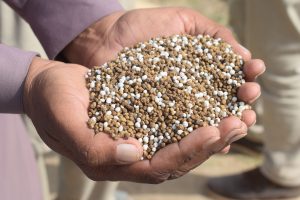
It is considered a balanced fertilizer, which means it supplies similar proportions of the three major nutrients. That makes it useful when:
- Soil tests show low to moderate levels of phosphorus and potassium
- You are feeding mixed beds with multiple vegetable species
- You want a straightforward, all-purpose product for garden beds
Granular 10-10-10 is best thought of as:
- A pre-plant or bed-preparation fertilizer
- Sometimes a side-dress fertilizer for established plants later in the season
It is not usually applied directly on top of tender seedlings in trays or into small transplant holes at full strength.
The role of fish fertilizer in spring vegetables
Liquid fish fertilizers are typically:
- Mild in NPK numbers compared to synthetic granular products
- Rich in organic nitrogen and trace minerals
- Helpful for feeding both plants and soil microbes
Fish fertilizers are well suited for:
- Seedlings in flats, trays, and small pots
- Newly transplanted vegetables that need gentle support after transplant shock
- Ongoing in-season feeding for leafy crops and other heavy feeders, at label rates
Because they are applied in water, fish fertilizers are easy to:
- Adjust in strength by dilution
- Target to root zones
- Apply more frequently in smaller doses
This makes them especially beginner friendly for seedling and transplant stages.
Step 1: Use soil testing to set the baseline
Before you choose between 10-10-10 and fish fertilizer, it helps to know:
- How much phosphorus and potassium your soil already contains
- Whether pH is in a reasonable range for most vegetables
- Whether any other nutrients such as calcium or magnesium may limit performance
A basic soil test for your vegetable beds gives you this information. Once you have your results:
- If phosphorus is high, you may not need or want much additional P in the form of 10-10-10
- If potassium is low to medium, a balanced or K-rich product often belongs in the plan
- If organic matter is low, building soil with compost and cover crops becomes as important as quick fertilization
Share your soil test with Supply Solutions if you want help deciding whether a 10-10-10 style starter makes sense or if another approach is better.
Step 2: Feeding seedlings in trays and pots
Seedlings in trays are more delicate than plants in the field. The potting mix holds limited nutrients, and roots are confined.
Key principles:
- Err on the side of gentle feeding
- Keep nutrients away from dry, bare roots
- Do not rely on granular field fertilizers inside small cells or pots
For seedlings, liquid feeding is usually the safer path.
When to start fish fertilizer on seedlings
In most cases, seedlings can be considered for feeding when:
- They have emerged and grown past the cotyledon (seed leaf) stage
- They have at least one to two sets of true leaves
- They are growing in a well-drained, healthy medium
At this stage, a diluted fish fertilizer can support:
- Root development
- Leaf color
- Overall resilience as they prepare for transplanting
Always follow the product label for dilution rates and frequency. For most seedling situations:
- Lower rates at longer intervals are better than strong doses applied frequently
- Avoid saturating media to the point that roots remain waterlogged
If you are unsure what dilution to use on small seedlings, contact Supply Solutions for guidance based on the fish product you are using.
Why granular 10-10-10 is not ideal inside trays
Granular 10-10-10 is not designed for use inside seedling cells and small pots at full lawn or field rates.
In trays:
- It is hard to control distribution from cell to cell
- Nutrient concentration can be too high for small root systems
- Prills can sit close to tender roots and cause burn if overapplied
For these reasons, it is better to:
- Use a potting mix that already contains a mild starter charge, and
- Supplement with diluted liquid fish or similar seedling-safe products
Save granular 10-10-10 for when seedlings move into larger containers or into beds.
Step 3: Feeding transplants at planting in beds and fields
When you move seedlings into beds or fields, you have a chance to support them with both:
- A pre-plant granular fertilizer such as 10-10-10, and
- Gentle liquid fish applications after transplanting
How you combine them depends on your soil test, crop, and planting system.
Using 10-10-10 as a pre-plant bed fertilizer
Before planting:
- Prepare the bed by removing residues and weeds
- Incorporate compost if it is part of your program
- Apply a granular product such as 10-10-10 at a rate that the label and your soil test support
- Work the fertilizer into the top few inches of the bed surface or apply in bands that will sit slightly below or beside the seed line
This approach:
- Positions nutrients in the zone where roots will explore
- Avoids placing concentrated fertilizer right against young roots
- Provides balanced N, P, and K support for the first weeks in the ground
Be careful not to overapply. For small gardens, it is often better to start with modest rates and observe plant response.
Using fish fertilizer around transplant time
After transplanting:
- Wait until plants recover from initial transplant shock, usually a few days
- Apply diluted fish fertilizer as a soil drench around the base of each plant, at the rate specified on the label for vegetables and transplants
Fish fertilizer can:
- Help ease transplant stress
- Support root regrowth and early top growth
- Provide mild nutrition while granular fertilizers continue to release nutrients
It is particularly helpful for:
- Tomatoes, peppers, and eggplant
- Brassicas like broccoli and cabbage
- Leafy greens that benefit from steady nitrogen
Avoid soaking leaves during cool, damp weather, since this can increase disease risk. Focus applications on the soil.
Step 4: Adjusting for crop type and feeding habit
Not all vegetables want the same amount of fertilizer.
Heavy feeders:
- Corn
- Potatoes
- Brassicas (broccoli, cabbage, cauliflower)
- Tomatoes and squash
Moderate feeders:
- Lettuce and leafy greens
- Onions and garlic
- Many annual flowers
Light feeders:
- Peas and beans
- Many herbs
For heavy feeders:
- A pre-plant granular application of 10-10-10 at a suitable rate often makes sense
- Follow up with fish fertilizer at key growth stages, such as early vegetative growth and pre-bloom
For moderate feeders:
- A lighter 10-10-10 pre-plant application may be enough, possibly with occasional fish fertilizer if plants look pale or growth slows
For light feeders:
- You might skip granular starter entirely and rely on residual fertility and occasional fish feeding, especially if your soil test shows good baseline nutrient levels
Supply Solutions can help tailor specific rates and frequencies once you know which crops you are growing and how many beds or rows you have.
Step 5: Safety and common pitfalls
A few common mistakes can be avoided with simple habits.
Avoid:
- Putting handfuls of granular 10-10-10 directly into transplant holes in concentrated form
- Forgetting to water after applying granular fertilizer if rain is not expected
- Fertilizing seedlings heavily when they are stressed by cold, low light, or waterlogging
- Combining several products on the same day without checking total nutrient rates
Do:
- Follow label instructions for both granular and liquid products
- Keep records of what you applied, where, and when
- Ask questions if you are unsure about mixing organic and synthetic fertilizers
Starter fertilization should feel thoughtful, not rushed.
Example beginner programs
Here are two simple example programs you can adapt.
Example 1: Backyard spring garden with mixed vegetables
- Pre-season
- Soil test the garden area
- Incorporate compost if needed
- Pre-plant
- Light application of 10-10-10 across the bed at a rate suited to your soil test and label
- Work into the top few inches of soil
- After transplanting
- Wait one week
- Apply diluted fish fertilizer around seedlings once every 2 to 3 weeks as growth picks up
- Mid-season
- For heavy feeders like tomatoes and corn, consider a small side-dress of 10-10-10 or another nitrogen source around mid-season, and continue fish applications as needed
Example 2: Raised beds and containers under lights and in a small tunnel
- Seedling stage
- Use a quality starting mix
- Begin very mild fish fertilizer once seedlings have 1 to 2 sets of true leaves, at label dilution and frequency
- Pre-plant in beds or large containers
- Mix a pelletized organic fertilizer or a small amount of 10-10-10 into the top few inches of soil at rates suitable for containers and raised beds
- Avoid overfilling containers with rich mixes that can become too salty
- Early after transplant
- Continue fish fertilizer every 2 to 3 weeks or as recommended on the label
- Later growth
- Adjust feedings based on plant appearance and your tasting and yield goals
These examples are starting points. Soil, climate, and crop mix will guide your final plan.
When to reach out for help
If you are ever unsure whether to use 10-10-10 or fish fertilizer in a specific situation, or how much to apply, ask before you spread or pour.
Supply Solutions can help you:
- Interpret your soil test for vegetable beds
- Choose an appropriate granular starter rate for 10-10-10 or similar balanced products
- Set a comfortable dilution and schedule for fish fertilizer on seedlings and transplants
- Avoid double-counting nitrogen when using both granular and liquid products
Your questions do not need to be technical. Simple information about your garden size, crop list, and current products is enough to build a clear, safe plan.
Supply Solutions, LLC – Fertilizer, Agricultural & Safety Solutions
Phone: 503-451-1622
Email: sales@mysolutionssupply.com
Hours: Monday to Friday, 7:00 a.m. to 5:00 p.m.
Web: www.mysolutionssupply.com
We provide balanced fertilizers including 10-10-10 and 16-16-16, nitrogen and potassium products, organic fish and pelletized fertilizers, gypsum, and practical guidance to help Pacific Northwest gardeners and growers raise stronger spring seedlings and transplants.