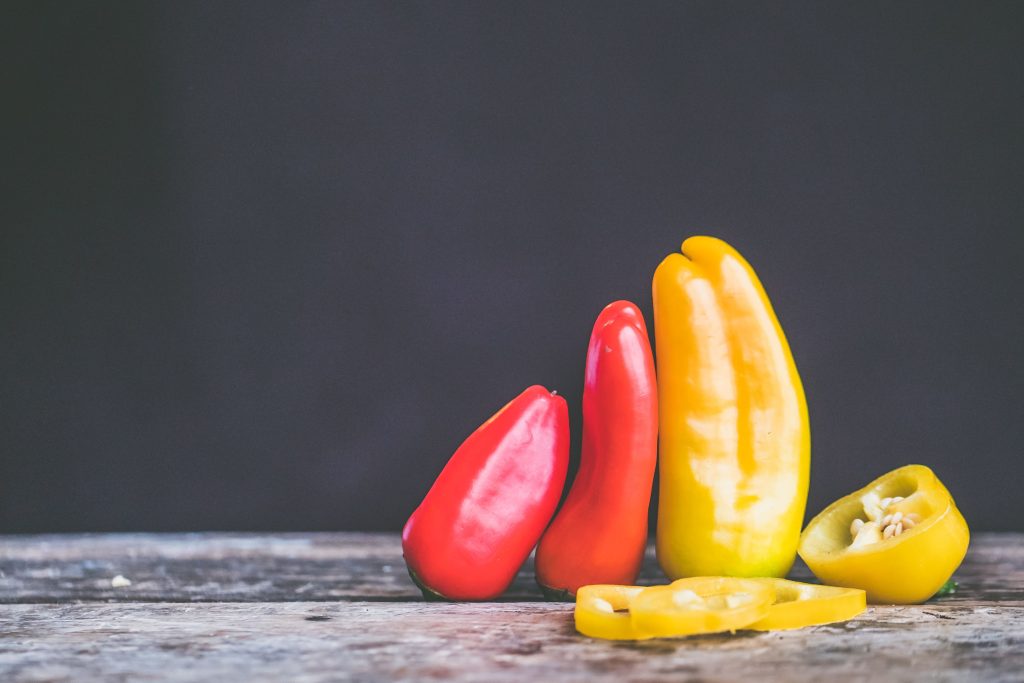
Peppers can fool growers in June.
They often start slower than tomatoes. In cool spring soil, they may sit still for a while, looking small but healthy. Then June warmth arrives, and the plants begin to move. New leaves expand. Stems thicken. Flower buds appear. Early fruit begins to form. Bell peppers, banana peppers, jalapeños, poblanos, habaneros, sweet frying peppers, and specialty varieties all begin shifting from establishment into production.
That shift is important because peppers do not need the same feeding approach all season.
A young pepper transplant needs gentle support while roots expand. A June pepper plant preparing to flower and fruit needs a steadier balance of nitrogen, calcium, and potassium. A plant carrying fruit in summer heat needs even more attention to water consistency and nutrient timing. If the plant is pushed too hard with nitrogen, it may grow leafy but set poorly. If potassium is short, the plant may struggle with fruit load and heat stress. If calcium movement is uneven, fruit quality problems can appear. If the root zone dries out repeatedly, flowers may drop and fruit may stall.
Peppers are not usually as aggressive as tomatoes. They tend to respond better to steady management than sudden corrections.
That is why June is the time to feed them before they are under full pressure. Once heat builds and fruit load increases, a weak fertility program becomes harder to correct. The plant may already be shedding blossoms, slowing fruit set, or struggling with water movement. A good June pepper program supports active growth without pushing excessive leaf, builds potassium before production demand peaks, and keeps calcium moving before fruit quality problems show up.
For this window, three Supply Solutions products fit especially well: Calcium Nitrate 15.5-0-0 + 19% Ca, 7-0-26 Organic Fertilizer, and Sulfate of Potash 0-0-50. Each one has a place, but they should not be used the same way. The right product depends on crop stage, plant vigor, soil fertility, moisture, and whether the pepper plant needs calcium, potassium, nitrogen, or restraint.
Peppers need time to build roots before they carry fruit
Pepper plants are sensitive to root stress.
They do not like cold soil. They do not like being planted too early into wet ground. They do not respond well to fertilizer placed too close to tender roots. They can stall if transplanted roughly, watered inconsistently, or forced into growth before the root system is ready.
That slow early behavior is normal, especially in regions where May weather is uneven.
Once June soil temperatures become more favorable, peppers often begin growing more steadily. The root system expands. The plant starts producing branches. Flower buds form. At this point, the grower may be tempted to push hard with fertilizer to “catch them up.”
That can be a mistake.
A pepper plant needs enough fertility to grow, but excessive nitrogen can push soft vegetative growth at the expense of fruiting balance. The plant may look dark green and healthy but set fewer fruit. Heavy leaf growth can also increase water demand right before heat stress increases.
The better June goal is to help peppers grow into production steadily.
Roots should be active. The soil should be moist but not saturated. Fertility should support branching, flowering, calcium movement, and potassium demand. The plant should be encouraged, not forced.
June heat changes the pepper plant’s priorities
Peppers are warm-season crops, but they still have limits.
They like warm conditions, but excessive heat can interfere with flower retention and fruit set. Hot days, warm nights, dry wind, and inconsistent watering can cause blossoms to drop. Small fruit may stall. Leaves may curl. Plants in containers may wilt by afternoon. Pepper plants in black plastic, raised beds, or near pavement may experience hotter root zones than expected.
This is why feeding before stress matters.
A pepper plant that enters June with balanced nutrition and active roots is better prepared to handle the first stretch of heat. It still needs water, shade where appropriate, and good management, but it has more reserve. A pepper plant short on potassium or calcium, or pushed too hard with nitrogen, may struggle sooner.
Heat raises water demand. Fruit load raises nutrient demand. Together, they expose weak spots.
The fertilizer program should prepare the plant before that combined pressure arrives.
Calcium supports fruit quality before symptoms appear
Peppers can suffer from calcium-related fruit quality problems, including blossom end rot.
The damage often appears as dark, sunken areas near the blossom end of the fruit. Once that tissue is damaged, it does not heal. The goal is to prevent the interruption before it shows up.
Calcium is important for cell wall strength and fruit tissue stability. But calcium does not move into fruit simply because it exists somewhere in the soil. It moves with water through active roots. If the plant dries out repeatedly, sits in saturated soil, or has roots that are not functioning well, calcium movement becomes uneven.
June is the window to manage calcium before pepper fruit are damaged.
Calcium Nitrate 15.5-0-0 + 19% Ca fits peppers that are established, actively growing, and moving into flowering or early fruit set. It supplies water-soluble calcium along with nitrate nitrogen.
The problem Calcium Nitrate helps solve is active calcium demand during fruit formation. It is especially useful when pepper plants need calcium support while still maintaining healthy growth. In June, that may include bell peppers setting early fruit, hot peppers beginning production, container peppers entering bloom, and raised-bed peppers showing strong vegetative growth but needing calcium support before fruit quality problems appear.
The timing is before blossom end rot becomes common. Apply when roots are active and soil moisture is steady. It should be watered in and used according to directions.
The caution is nitrogen. Calcium Nitrate is not only a calcium source. It also supplies nitrate nitrogen. That can be helpful for peppers that need growth support, but it can be too much if plants are already dark green, leafy, and slow to set fruit. Count the nitrogen in the full fertility program.
Calcium support works best when paired with consistent watering. A dry pepper root zone cannot move calcium well, no matter how good the product is.
Potassium becomes more important as peppers start carrying fruit
Peppers need potassium once they begin shifting into production.
Potassium supports water regulation, stress tolerance, fruit development, and overall plant strength. It helps the plant manage the pressure of heat and fruit load. A pepper plant with enough potassium is better prepared to maintain function during dry spells, high temperatures, and ongoing harvest.
Potassium shortage may not always show early.
The plant may look acceptable while it is small. Then, once flowers and fruit appear, demand increases. Older leaves may begin showing marginal yellowing or stress. Fruit sizing may slow. Plants may wilt more easily. Production may become inconsistent.
That is why June potassium review is useful before the plant is loaded.
A pepper plant that is actively flowering and setting fruit should not be treated exactly like a transplant that just went into the ground. The crop is entering a different stage. Potassium should move higher in the fertility conversation.
7-0-26 fits peppers that need potassium with modest nitrogen
7-0-26 Organic Fertilizer is a strong June pepper product because it supports potassium demand while still supplying modest nitrogen.
That balance fits many pepper plantings. Peppers in June often still need some nitrogen to maintain growth, but they should not be pushed with excessive nitrogen once flowering and fruiting begin. The 26% potash supports fruiting, water regulation, and stress tolerance, while the 7% nitrogen helps maintain active growth.
The problem 7-0-26 helps solve is the transition from vegetative growth to fruit production. It gives peppers potassium support without turning the program into a high-nitrogen push. This is useful for peppers that are established, branching, flowering, and beginning to carry fruit.
The timing is June after plants have rooted in and are actively growing. It fits raised beds, in-ground gardens, small farms, organic programs, and pepper plantings where fruiting demand is rising.
It is especially useful for growers who want an organic approach to supporting peppers through early summer. Bell peppers, frying peppers, chili peppers, and specialty peppers can all benefit from potassium support once fruiting begins.
The caution is that 7-0-26 still contains nitrogen. If pepper plants are already overly lush and slow to bloom, more nitrogen may not be needed. If the main need is potassium without nitrogen, Sulfate of Potash 0-0-50 may be the better fit.
Use 7-0-26 when the crop needs potassium and still has a legitimate need for modest nitrogen.
Sulfate of Potash fits peppers that need potassium without more nitrogen
Some pepper plants do not need more nitrogen.
They may already be dark green and vigorous. They may have received compost, manure, balanced fertilizer, or a nitrogen application earlier in the season. They may have plenty of leaf growth but need help shifting into fruiting strength. In those cases, more nitrogen can make the plant larger without making it more productive.
Sulfate of Potash 0-0-50 fits this situation.
It supplies potassium without nitrogen or phosphorus. That makes it useful when peppers need potassium support for fruiting, water regulation, plant strength, and heat tolerance, but do not need another nitrogen push.
The problem Sulfate of Potash helps solve is potassium demand during flowering, fruit set, fruit sizing, and summer stress. It is a good fit where the grower wants to support production without encouraging excessive foliage.
The timing is June, once peppers are established and entering bloom or fruiting. It should be applied when soil moisture is adequate and roots are active. Water it in according to directions and avoid placing concentrated fertilizer near stems or tender roots.
The caution is concentration. A 0-0-50 fertilizer is strong. More potassium is not automatically better. Excess potassium can interfere with calcium and magnesium relationships in some soils or media. This matters for peppers because calcium movement is already important for fruit quality.
Sulfate of Potash is best used when potassium is the clear need and nitrogen is not.
The right product depends on what the plant is already doing
A June pepper plant tells you a lot if you slow down and read it.
If the plant is pale, small, and slow, it may need nitrogen, but it may also be suffering from cold soil, wet roots, compaction, or transplant stress. Feeding should not happen until the root zone is checked.
If the plant is healthy green, branching, and beginning to flower, 7-0-26 Organic Fertilizer may fit well because it supports potassium while still offering modest nitrogen.
If the plant is dark green, leafy, and already vigorous, Sulfate of Potash may fit better where potassium support is needed without added nitrogen.
If the plant is setting early fruit and calcium support is the priority, Calcium Nitrate may fit, especially if the plant can use a measured amount of nitrate nitrogen.
If the plant is wilting every afternoon in dry soil, water comes before fertilizer.
If the plant is yellow in saturated soil, oxygen comes before fertilizer.
The product should match the problem. That is the main discipline of June pepper feeding.
Water consistency is part of the fertilizer program
Peppers need consistent moisture, especially during flowering and fruit development.
They do not perform well when they swing from dry to soaked. Repeated dry-down can interrupt calcium movement and cause blossom drop. Heavy watering after a dry spell can stress roots and lead to uneven growth. Saturated soil reduces oxygen and slows nutrient uptake.
This is why fertilizer and irrigation cannot be separated.
Calcium Nitrate depends on active water movement to help calcium reach developing fruit. 7-0-26 supports potassium demand, but potassium still needs moisture to move into the root zone. Sulfate of Potash will not perform well if applied to dry soil and left there.
Before feeding peppers in June, check moisture below the surface.
The top inch may be dry while deeper soil is fine. Mulch may hide moisture. Raised beds may dry faster than they look. Containers may be dry in the root ball even if the outer mix feels damp. Clay soils may be wet below but crusted on top.
Water deeply and evenly. Let the soil breathe. Then feed when roots are active.
Containers make pepper feeding more demanding
Container peppers are common on patios, decks, porches, and small garden spaces.
They can produce well, but the root zone is limited. That makes moisture and fertility more difficult to manage. A pepper in a container may dry out daily during June heat. Nutrients leach with watering. The pot can heat up in full sun. Roots may circle quickly if the container is too small.
A container pepper can show stress faster than an in-ground pepper.
Blossom drop, pale leaves, slow fruit sizing, and blossom end rot are all more likely when the pot dries out repeatedly or fertility is inconsistent.
For container peppers, product rates and timing need care.
Calcium Nitrate can fit where soluble calcium and nitrate nitrogen are needed, but it should be applied carefully because containers are less forgiving. Do not apply it to a dry, wilted plant. Water first, let the roots recover, then feed according to directions.
7-0-26 can fit container peppers that need potassium support with modest nitrogen as fruiting begins, but the grower should avoid heavy applications in a small root zone.
Sulfate of Potash can support potassium where nitrogen is not needed, but because it is concentrated, container use should be measured carefully.
A larger container makes pepper feeding easier. A small pot makes every mistake show faster.
Raised beds can dry quickly around pepper roots
Raised beds are good for peppers because they warm earlier and drain well.
But in June, those same qualities can create stress. Raised beds dry faster than ground-level soil. Edges dry first. Shallow raised beds have less water reserve. Beds filled with light compost-heavy mixes may leach nutrients quickly under frequent watering.
Peppers in raised beds can look fine in the morning and stressed by late afternoon.
If this happens repeatedly, the issue may not be fertilizer first. The plant may need deeper watering, mulch, or better moisture distribution. Fertilizer will not work well if roots are drying down too sharply between waterings.
For raised-bed peppers, 7-0-26 fits well when plants are established and beginning to fruit because it supports potassium with modest nitrogen. Calcium Nitrate fits when calcium support is needed during early fruit set. Sulfate of Potash fits where potassium is needed without nitrogen.
Pull mulch back before applying granular fertilizers. Apply to the soil where feeder roots are active. Water in. Replace mulch lightly after the product has reached the soil.
Bell peppers often need stronger calcium attention
Bell peppers tend to produce larger fruit with thicker walls than many hot peppers.
That larger fruit demand makes calcium and moisture consistency especially important. Bell peppers can develop blossom end rot when calcium movement is interrupted during fruit development. They can also drop blossoms during heat or water stress, reducing early yield.
June is a good time to support bell peppers before the first fruit load becomes heavy.
Calcium Nitrate fits bell peppers that are established and beginning fruit set, especially where soluble calcium support is needed. It should be used before fruit quality problems appear, not after several fruits are already damaged.
7-0-26 fits bell peppers that need potassium support during fruiting while still maintaining active growth. Sulfate of Potash fits when potassium is the main need and nitrogen should be limited.
For bell peppers, watering should be steady and deep. Uneven moisture is often the weak link.
Hot peppers still need balanced fertility
Hot peppers are often more tolerant of stress than bell peppers, but they are not maintenance-free.
Jalapeños, serranos, cayenne, habaneros, Thai peppers, and other hot types can produce heavily over a long season if roots, moisture, and fertility are steady. They may not show blossom end rot as often as bell peppers, but potassium demand still matters. Calcium still supports tissue strength. Excessive nitrogen can still push foliage at the expense of balanced fruiting.
Hot peppers often benefit from a controlled feeding approach.
If plants are still growing and entering bloom, 7-0-26 can support potassium and modest nitrogen. If plants are already vigorous and need fruiting support without more leaf push, Sulfate of Potash may be the better fit. If calcium support is needed during fruit set, Calcium Nitrate can fit, but nitrogen should be counted.
Hot peppers grown in containers should not be allowed to dry out severely every day. Some stress can affect flavor and heat, but repeated drought stress can reduce yield, drop flowers, and weaken plants. Productive stress management is not the same as neglect.
Blossom drop is not always a fertilizer problem
Peppers commonly drop blossoms in June when conditions are stressful.
Heat, dry soil, hot nights, poor pollination, transplant shock, heavy nitrogen, low light, and root stress can all contribute. A pepper plant may flower heavily and then shed blossoms during a hot spell. The grower may assume it needs more fertilizer, but the real issue may be temperature and water.
Before feeding for blossom drop, check the plant.
Is it too leafy from nitrogen?
Is it drying out between waterings?
Is it in a small container?
Are nights very warm?
Is the plant newly transplanted?
Is it sitting in wet soil?
Is it shaded too much?
Are flowers dropping during a heat wave?
If the plant is under water or heat stress, feeding harder may not help. Restore steady moisture. Protect the root zone with mulch. Avoid heavy nitrogen. Make sure the plant is not root-bound. Then support fertility based on crop stage.
Potassium support from 7-0-26 or Sulfate of Potash may help the plant carry production, but it will not change the fact that peppers can drop flowers under extreme heat.
Fertilizer supports the plant. It does not remove weather stress.
Too much compost can still mean too much nitrogen
Many gardeners think of compost and manure as gentle, but nutrient history still matters.
A pepper bed that received heavy compost, poultry manure, or rich organic inputs may already contain enough nitrogen. If additional nitrogen is applied in June, plants may become overly vegetative. This is especially true in warm soil when organic nutrient release speeds up.
Peppers in rich beds may look beautiful but set slowly.
Large dark leaves, thick stems, and delayed flowering can be signs that vegetative growth is strong enough. In that case, a product with less or no nitrogen may be more appropriate.
Sulfate of Potash fits peppers in rich soils where potassium support is needed but more nitrogen is not. 7-0-26 may still fit if modest nitrogen is acceptable, but it should be used with awareness of the existing nutrient load. Calcium Nitrate should be used carefully because it adds nitrate nitrogen along with calcium.
Organic fertility is real fertility. It should be counted.
Soil pH and nutrient balance affect pepper response
Peppers prefer a root zone where nutrients are available and roots are active.
If soil pH is too far out of range, nutrient uptake can be limited. A grower may apply fertilizer and still see poor response because the root environment is not right. Potassium, calcium, magnesium, phosphorus, and micronutrients all interact with soil chemistry.
Nutrient balance matters too.
Too much potassium can affect calcium and magnesium relationships. Too much nitrogen can push soft growth. Excessive phosphorus from repeated fertilizer use may not help and can complicate nutrient balance over time. Low calcium may increase fruit quality risk, but adequate calcium in soil still requires water movement.
This is why repeated pepper problems deserve testing.
If blossom end rot appears every year, if plants stay pale despite feeding, or if fruiting is poor in the same bed season after season, soil testing is useful. It can show whether the issue is pH, calcium, potassium, magnesium, nitrogen management, or something else.
June corrections are better when they are based on evidence.
Mulch helps peppers through June heat
Mulch is one of the most practical tools for pepper production.
Once soil is warm, mulch helps reduce moisture swings, moderate soil temperature, suppress weeds, and protect roots from heat stress. For peppers, that steadier root zone supports calcium movement and potassium uptake.
But mulch should be managed properly.
Do not pile mulch against the pepper stem. Keep a small space around the base of the plant. Do not apply fertilizer on top of thick dry mulch and assume it will reach roots. Pull mulch back, apply fertilizer to the soil, water in, and then replace mulch lightly.
Mulch is especially useful with Calcium Nitrate because calcium movement depends on steady moisture. It also supports the performance of 7-0-26 and Sulfate of Potash by keeping the root zone more consistent after application.
A mulched pepper bed is usually easier to manage through June heat than bare soil that dries and crusts.
Spacing and airflow affect fertility demand
Crowded peppers can create their own problems.
A tight canopy holds humidity, limits airflow, and makes disease pressure harder to manage. Plants compete for light, water, and nutrients. Lower leaves may yellow. Fruit may be hidden and slow to dry after watering or rain. The grower may think the crop needs more fertilizer, but the real issue may be crowding and canopy management.
Good spacing helps fertilizer work.
Plants with enough room can build stronger branch structure and better airflow. Roots have less competition. Leaves dry faster. Fruit is easier to harvest. Disease scouting improves.
If peppers are crowded but otherwise healthy, avoid pushing more nitrogen. That only makes the canopy denser. Potassium support may still matter, but the plant also needs airflow and water management.
For crowded pepper beds, Sulfate of Potash may be better than nitrogen-containing products if potassium is needed but foliage is already excessive. 7-0-26 should be used with care because it still supplies nitrogen. Calcium Nitrate should be applied only where calcium and measured nitrogen fit the plant stage.
Fertility should support the canopy, not overload it.
Early harvest changes the plant’s needs
Some peppers are harvested green. Others are left to turn red, orange, yellow, purple, or chocolate. Hot peppers may be harvested repeatedly. Bell peppers may be picked green early or allowed to mature longer for color and flavor.
Harvest strategy affects plant demand.
Picking fruit earlier can keep the plant setting more fruit. Leaving fruit to full color increases the time each fruit draws resources from the plant. A plant carrying many maturing peppers needs strong leaf function, steady water, and enough potassium to support fruit development.
As harvest begins, potassium demand remains important.
7-0-26 can support ongoing production where modest nitrogen is still useful. Sulfate of Potash can support potassium needs where nitrogen should be limited. Calcium Nitrate can support calcium and growth where appropriate, especially as new fruit continues forming.
A pepper plant does not stop needing nutrition after the first harvest. The feeding program should support continued production without pushing unnecessary softness.
Read the lower leaves, but do not panic over every yellow leaf
Older pepper leaves can yellow naturally as the plant grows.
A few lower leaves yellowing after transplanting or shading is not always a major problem. But patterns matter. Widespread lower leaf yellowing may suggest nitrogen shortage, root stress, or waterlogging. Leaf edges yellowing or browning may suggest potassium stress, drought, salt injury, or root damage. New leaves that are pale may point toward pH, micronutrient issues, or root trouble.
Do not fertilize based on one leaf.
Look at the whole plant. Is new growth healthy? Are flowers forming? Is fruit setting? Is the soil moist? Are roots active? Is the plant in a hot container? Has it been fed recently? Was compost or manure applied? Did heavy rain leach nutrients? Did the plant dry out?
Then choose the correction.
Use Calcium Nitrate when calcium and nitrate nitrogen fit the stage. Use 7-0-26 when potassium and modest nitrogen fit the plant. Use Sulfate of Potash when potassium is needed without nitrogen.
Pepper leaves give useful information, but they should be read in context.
A practical June pepper feeding approach
Start by checking root-zone moisture.
If the soil is dry, water first. If the soil is saturated, wait. If the plant is in a container, make sure the root ball is evenly moist and the pot drains well. If the bed is bare and drying quickly, mulch after the soil is warm.
Then look at the plant’s stage.
If peppers are still small and recovering from transplanting, avoid heavy feeding. Gentle support and consistent moisture may be enough until roots strengthen.
If peppers are established, branching, flowering, and beginning fruit set, 7-0-26 Organic Fertilizer can support potassium demand while providing modest nitrogen for continued growth.
If peppers are vigorous and need potassium without additional nitrogen, Sulfate of Potash 0-0-50 can support fruiting and stress tolerance without pushing more foliage.
If peppers are setting fruit and calcium support is needed, Calcium Nitrate 15.5-0-0 + 19% Ca can provide soluble calcium with nitrate nitrogen. Use it before fruit quality problems become widespread and count the nitrogen it supplies.
Keep fertilizer off stems. Apply to the active root zone. Water in according to directions. Do not overcorrect after one hot day or one dropped blossom.
Peppers respond best to steady support
June pepper feeding is not about forcing the plant.
It is about preparing the plant for the pressure ahead. Heat will increase water demand. Fruit load will increase potassium demand. Developing peppers will need steady calcium movement. Roots will need consistent moisture and oxygen. The plant will need enough nitrogen to stay productive, but not so much that it forgets to fruit.
A balanced June program helps peppers keep moving without becoming soft, stressed, or overloaded.
Supply Solutions offers practical products for this stage. Calcium Nitrate 15.5-0-0 + 19% Ca fits peppers that need soluble calcium and nitrate nitrogen during flowering and early fruit set, especially before blossom end rot or fruit-quality problems appear. 7-0-26 Organic Fertilizer fits established peppers that need potassium support with modest nitrogen as they move into fruiting. Sulfate of Potash 0-0-50 fits pepper plants that need potassium for fruiting and heat stress without another nitrogen push. Used with steady watering, warm soil, good spacing, and careful timing, these products help peppers carry fruit through June instead of slowing down when heat and production demand increase. Contact Supply Solutions for help choosing the right pepper fertility approach for raised beds, containers, gardens, high tunnels, or small farm plantings.