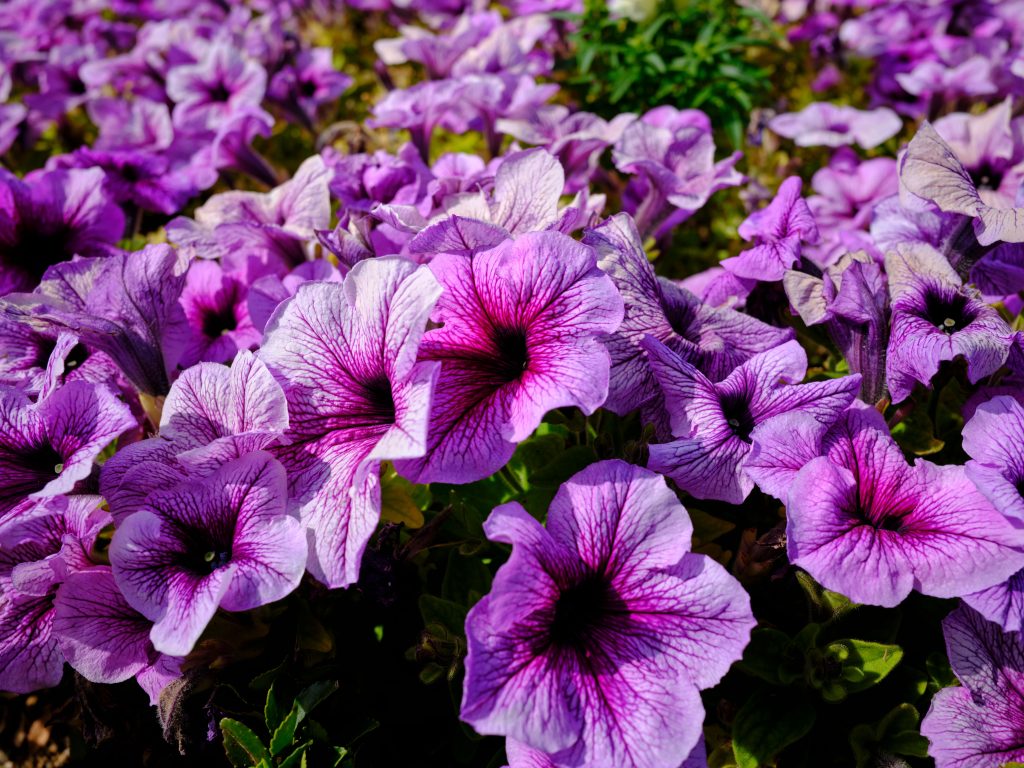
Hanging baskets often look their best when they leave the greenhouse.
They are full, bright, and covered in bloom. Petunias spill over the sides. Calibrachoa are loaded with color. Verbena trails well. Begonias, impatiens, geraniums, lobelia, lantana, fuchsia, and mixed annuals all look fresh. The basket has enough moisture, enough fertility, and enough root space to make a strong first impression.
Then June weather begins.
The days get longer. Sun gets stronger. Wind pulls moisture out of the basket. Porches and patios reflect heat. Baskets hanging under rooflines miss natural rainfall. Roots fill the container. Plants that were once compact begin stretching. Watering becomes daily. Nutrients move through the potting mix every time water drains from the bottom.
That is when many hanging baskets start fading.
Leaves turn pale. Blooms slow down. Petunias become leggy. Calibrachoa lose color. Lower leaves yellow. The center of the basket opens up. Plants wilt by afternoon, even if they were watered in the morning. Some baskets dry so hard that water runs straight through without soaking the root ball. Others stay too wet because drainage is poor or saucers hold water around the roots.
The problem is not always one thing.
A fading hanging basket may be hungry, dry, root-bound, overwatered, overheated, underfed, overfed, or simply past the point where the original greenhouse fertility can carry it. By June, a basket is a high-demand growing system. It has a small root zone, a heavy bloom load, and frequent watering. That combination means it needs a steady feeding plan, not a rescue dose after it collapses.
For June hanging baskets, three Supply Solutions products fit especially well: Jack’s Classic 20-6-22 Petunia Feed Water-Soluble Fertilizer, Jack’s Professional 10-30-20 Blossom Booster Water-Soluble Fertilizer, and Jack’s Classic 20-20-20 All Purpose Water-Soluble Fertilizer. Each one has a different role. The best choice depends on what is growing in the basket, what stage it is in, and what problem needs correcting.
Hanging baskets have very little reserve
A hanging basket does not have the same buffer as a flower bed.
In a bed, roots can spread into a larger soil volume. Soil can hold more water. Nutrients may be stored across a wider root zone. Mulch can help reduce evaporation. In a basket, roots are limited to a small volume of potting mix suspended in the air.
That makes the plant more dependent on the grower.
The basket dries from the top, the sides, and the bottom. Wind can pull moisture out quickly. Dark plastic baskets heat up in direct sun. Fiber or coco-lined baskets can dry even faster. A full basket has a large canopy pulling water from a small root system. Every bloom, leaf, and trailing stem increases demand.
By June, the basket may be using water faster than expected.
Frequent watering keeps the plant alive, but it also changes fertility. Every time water drains through the basket, soluble nutrients can move with it. Nitrogen, potassium, magnesium, and micronutrients can all decline as the season progresses. A basket may be watered every day and still become hungry because the feeding program has not kept up with leaching.
This is why hanging baskets fade faster than in-ground annuals.
They are not weak plants. They are working from a smaller supply.
Greenhouse fertility does not last all summer
Many baskets are grown under controlled greenhouse conditions.
In the greenhouse, they receive regular feeding, proper spacing, careful watering, and protection from harsh wind and extreme outdoor swings. Once they move to a home, business, storefront, porch, patio, or landscape site, conditions change quickly.
The basket may still carry some starter nutrition from production, but that reserve is not permanent.
Once June watering begins, fertility becomes the owner’s responsibility. A basket that was fed regularly in production will not keep blooming heavily for weeks without continued nutrition. Petunias and calibrachoa, especially, are heavy feeders. They can turn pale and tired quickly when nutrients run short.
This is why a basket can decline even when the grower is watering faithfully.
Watering alone does not replace the nutrients being used and leached. Blooming annuals need a feeding rhythm that matches their growth and water use.
The best time to begin feeding is while the basket still looks good, not after most of the foliage has yellowed.
Petunia baskets need special attention
Petunias are one of the most popular hanging basket plants, and they are also one of the plants most likely to show nutrient stress in June.
They grow fast. They bloom heavily. They trail over the basket edge. They use a lot of water. They can become pale when feeding falls behind, especially when iron and micronutrient availability become limiting. Calibrachoa, often called million bells, can behave similarly. They may look excellent early, then lose color and bloom density as heat and watering increase.
Jack’s Classic 20-6-22 Petunia Feed Water-Soluble Fertilizer is a strong June product for this situation.
It is designed for petunias and other iron-hungry annuals. The 20-6-22 analysis supplies nitrogen for growth, lower phosphorus than a bloom-booster formula, and strong potassium support. That potassium is important because baskets face heat, water stress, and heavy bloom demand. The formula also fits annuals that need steady micronutrient support to maintain color.
The problem Petunia Feed helps solve is fading color and weakening bloom in petunias, calibrachoa, and similar flowering annuals that are being watered frequently. It is especially useful when plants are still active but beginning to pale, stretch, or slow because fertility is not keeping pace with water use.
The timing is June through active bloom, before the basket is severely exhausted. Use it as part of a regular feeding rhythm according to directions. It works best when applied to moist potting mix and allowed to drain freely.
The caution is not to use it as a harsh rescue on a dry, wilted basket. If the basket is dry, water first. Let the root zone rehydrate. Then feed at the proper dilution.
For petunia-heavy baskets, Petunia Feed should often be the first product considered.
Blossom Booster fits established baskets that need bloom support
Blooming annuals need enough phosphorus, potassium, and overall fertility to keep flowering.
There are times when a basket is rooted, green, and established, but bloom performance has slowed. The plant may still have healthy foliage, but it is not setting as many flowers. This can happen after the first flush of bloom, after repeated heat stress, after a light trimming, or once the basket has used much of its early-season energy.
Jack’s Professional 10-30-20 Blossom Booster Water-Soluble Fertilizer fits this bloom-focused window.
The 10-30-20 analysis supplies lower nitrogen, higher phosphorus, and strong potassium. That makes it useful for established flowering baskets where the goal is to support bloom development rather than push a lot of soft foliage.
The problem Blossom Booster helps solve is reduced bloom performance in established annual baskets that still have healthy roots and foliage. It is useful after plants have rooted in, after trimming, or when a basket needs support for another bloom cycle.
The timing is important. Blossom Booster fits baskets that are established and actively growing. It should not be used as the only feeding plan for every basket at every stage. A weak, pale basket may need general nutrition first. A petunia basket with iron-related paling may be better served by Petunia Feed. A mixed basket with broad nutrient depletion may need an all-purpose feed.
The caution is that flowers do not appear from phosphorus alone. A basket also needs light, water, roots, potassium, and adequate nitrogen. If the basket is dry, root-bound, or severely stressed, bloom feeding will not fix the root cause.
Blossom Booster works best when the plant is healthy enough to respond.
20-20-20 fits mixed baskets and general feeding
Not every hanging basket is mostly petunias.
Many baskets are mixed. They may include geraniums, verbena, lobelia, lantana, sweet potato vine, coleus, begonias, impatiens, bacopa, scaevola, bidens, fuchsia, or ornamental foliage. These baskets need broad nutrition rather than a highly targeted petunia formula or a bloom-only push.
Jack’s Classic 20-20-20 All Purpose Water-Soluble Fertilizer fits that general June role.
The balanced 20-20-20 analysis supplies nitrogen, phosphorus, and potassium evenly. That makes it useful when a basket needs overall growth support, color maintenance, root activity, and continued flowering. It is especially practical for mixed baskets where different plants are sharing one small root zone.
The problem 20-20-20 helps solve is general nutrient depletion caused by frequent watering and active growth. When a mixed basket looks tired, pale, or slow but does not show one specific issue, balanced feeding may be the most practical correction.
The timing is June through active growth, especially after the basket has been home or installed for a few weeks and the original fertility is fading. It can be used regularly according to directions, always with attention to moisture and drainage.
The caution is that all-purpose does not mean careless. A water-soluble fertilizer can still burn roots if mixed too strong or applied too often. Use proper rates. Apply to moist potting mix. Let excess solution drain.
For mixed hanging baskets, Jack’s 20-20-20 is often the steady maintenance product.
Dry baskets should be watered before they are fed
A wilted basket should not receive fertilizer as the first response.
When potting mix dries hard, roots are already under stress. The mix may pull away from the basket sides. Water may run down the edge and out the bottom without soaking the center. If fertilizer solution is applied to that dry root zone, salts can concentrate around stressed roots and worsen the problem.
The first correction is water.
Water slowly. Give the basket time to absorb moisture. If the mix is extremely dry, water in stages. Sometimes it helps to take the basket down and water it thoroughly at ground level. The goal is to rehydrate the entire root ball, not just wet the surface.
Once the plant has recovered and the potting mix is evenly moist, feeding can resume.
This applies to Jack’s Petunia Feed, Jack’s Blossom Booster, and Jack’s 20-20-20. All of them work best when the root zone is moist and active.
Feeding a dry basket is like asking a tired plant to run before it has had water.
Overwatering can look like hunger
Some baskets decline because they are watered too much.
This is common where baskets hang under automatic irrigation, sit in decorative containers without drainage, or remain in shaded areas where water use is lower. Leaves yellow. Growth slows. Roots may turn brown. The basket looks hungry, but the real problem is oxygen. Roots need air as well as water.
If a basket is heavy, wet, and yellow, do not feed immediately.
Check drainage. Make sure water can leave the container. Do not allow baskets to sit in saucers filled with water. If the basket is under a roofline and watered by hand, make sure it is not receiving small amounts too often without ever drying slightly. If plants are in shade, they may need less water than baskets in full sun.
Fertilizer does not fix suffocated roots.
Water-soluble products can help once roots are active again, but feeding into a wet, oxygen-poor root zone will not restore growth. Let the basket drain and recover. Then apply the correct product at the correct rate.
A good June basket program balances water and air. Both are needed for nutrient uptake.
Sun, wind, and placement change feeding needs
Two identical baskets can behave very differently depending on where they hang.
A basket in morning sun with afternoon shade may stay fresh with moderate watering and feeding. The same basket in full afternoon sun and wind may dry twice as fast and need more frequent care. A basket under a porch roof may never receive rainfall. A basket near a brick wall may face reflected heat. A basket in a windy entryway may dry from all sides.
Placement affects both watering and nutrient loss.
The more often a basket is watered, the more often soluble nutrients can leach. That means the hot, windy basket may need a tighter feeding rhythm than the protected basket. It may also need trimming sooner, because stress causes plants to stretch and open up.
For petunia and calibrachoa baskets in exposed areas, Jack’s Petunia Feed can help maintain color and vigor through frequent watering.
For mixed baskets in moderate exposure, Jack’s 20-20-20 may provide steady all-purpose support.
For established flowering baskets that need help returning to bloom after stress or trimming, Jack’s Blossom Booster can fit when the plant is otherwise healthy.
Sometimes the best fertilizer move is also to move the basket. A plant struggling in harsh afternoon exposure may perform better with a few hours of protection.
Leggy baskets need trimming and feeding together
By June, many baskets begin stretching.
Petunias may send long stems with flowers only at the ends. Verbena may open in the center. Calibrachoa may become thin. Mixed baskets may lose their full shape as one plant outgrows the others. A grower may want to feed heavily to make the basket full again, but fertilizer alone may not correct the structure.
Leggy baskets often need trimming.
Cutting back long stems encourages branching and new growth. It can feel severe, especially when flowers are removed, but a light to moderate trim often restores shape and bloom over time. The key is to pair trimming with water and nutrition so the plant has the resources to regrow.
After trimming, the product choice depends on the basket.
For petunia-heavy baskets, Jack’s Petunia Feed helps support regrowth, color, and continued bloom.
For mixed baskets needing general recovery, Jack’s 20-20-20 can provide balanced nutrition.
For baskets that are established and ready to push another bloom cycle after trimming, Jack’s Blossom Booster may fit after new growth begins.
Do not trim a basket that is severely dry and then fertilize immediately. Water first. Let the plant recover. Then trim and feed when roots are functioning.
Yellow leaves need a careful read
Yellow leaves are one of the most common June basket complaints.
They can mean many things.
Lower leaves may yellow because the basket is crowded and shaded inside. Leaves may yellow because nitrogen has leached out. New growth may pale because petunias or calibrachoa are struggling with micronutrient availability. Leaves may yellow because roots are too wet. Leaves may yellow because the basket dried hard and roots were damaged. Salt buildup can also cause leaf burn and decline.
Before feeding, look at the pattern.
If the whole basket is pale but still growing, general fertility may be low. Jack’s 20-20-20 can fit mixed baskets with broad nutrient depletion.
If petunias or calibrachoa are pale, especially in newer growth, Jack’s Petunia Feed may be the better match because it is designed for these iron-hungry annuals.
If the basket is green but bloom has slowed, Jack’s Blossom Booster may fit once roots and moisture are in good shape.
If the basket is wet and yellow, fix drainage before feeding.
Yellow leaves are useful information, but they should not trigger blind fertilizer use.
Salt buildup can weaken baskets
Water-soluble fertilizers are effective, but they require discipline.
If fertilizer is mixed too strong, applied too often, or used in a basket with poor drainage, salts can build in the potting mix. Salt stress can burn roots and leaf tips. Plants may wilt even when moist. Leaves may brown along the edges. A white crust may appear on the surface or around the basket.
This can be mistaken for hunger.
The grower sees decline and adds more fertilizer, making the problem worse. In June, this is more likely because people feed more often as baskets fade.
The solution is careful mixing and good drainage.
Use Jack’s Petunia Feed, Jack’s Blossom Booster, and Jack’s 20-20-20 according to directions. Let water move through the basket. Do not allow fertilizer solution to sit in a saucer. Occasionally water thoroughly with plain water to help move excess salts out of the root zone if needed.
A good feeding program should create steady growth, not swings between starvation and burn.
Bloom boosters do not replace regular care
Bloom booster fertilizers have a place, but they are sometimes misunderstood.
A high-phosphorus bloom fertilizer can support flowering in established plants, but it does not override poor light, dry roots, weak plants, or lack of basic nutrition. If a basket is pale, root-bound, dry, and leggy, Blossom Booster alone will not restore it overnight.
Flowers are the result of the whole plant working.
The basket needs enough light. Roots need oxygen and moisture. Leaves need nitrogen and micronutrients. Potassium supports water regulation and stress tolerance. Phosphorus supports plant energy and bloom development where appropriate. The plant also needs pruning, deadheading where needed, and protection from severe stress.
Jack’s Blossom Booster fits best when the basket is established and ready to support bloom. It is not a substitute for rehydrating a dry basket, correcting drainage, or feeding a petunia basket that is pale from broader nutrient shortage.
Use bloom boosters when bloom support is the real need.
Deadheading and grooming help fertilizer work
Some basket plants are self-cleaning. Others benefit from deadheading.
Removing spent blooms can help redirect energy, improve appearance, and reduce disease risk in dense plants. Grooming also allows light and air into the basket. Removing dead leaves from the center can prevent rot and improve airflow.
Fertilizer works better when the plant is managed physically.
A basket full of dead flowers, yellow leaves, and tangled stems may not respond as well as one that has been cleaned up. Trimming leggy stems encourages new growth that fertilizer can support. Removing diseased or dead tissue improves plant health.
After grooming, feed based on need.
Use Jack’s Petunia Feed for petunia and calibrachoa baskets needing color and growth support. Use Jack’s 20-20-20 for general mixed baskets. Use Jack’s Blossom Booster when the basket is healthy and ready for stronger bloom support.
Feeding and grooming should work together through June.
Some baskets are simply too crowded
A beautiful basket at purchase is often planted densely.
That creates instant fullness, but it also means roots can become crowded by June. The plants are competing for water, nutrients, and space. The basket may need water twice a day in heat. Some plants may dominate while others decline. The center may dry unevenly or stay too humid.
Fertilizer can help, but it cannot create more root space.
If a basket is severely root-bound, feeding may keep it going but not fully restore it. In some cases, trimming and steady watering can extend performance. In other cases, moving the basket to a larger container or reducing plant competition may be necessary.
Before feeding a declining basket, check root condition if possible. If roots are tightly circling and potting mix is mostly gone, recognize the limitation.
In that situation, water-soluble feeding should be gentle and consistent. Jack’s 20-20-20 may provide broad support. Jack’s Petunia Feed may help petunia-heavy baskets. Jack’s Blossom Booster should be used when the plant still has enough health to respond with bloom.
Root space sets the limit on what fertilizer can accomplish.
Baskets at businesses and landscapes need a schedule
Hanging baskets on storefronts, municipal streets, patios, restaurants, churches, offices, and commercial landscapes often face harsher conditions than home baskets.
They may hang in full sun. They may be exposed to reflected heat from pavement and buildings. They may be watered by different people on different days. They may receive too much water one day and too little the next. They may not be groomed often enough. They may be expected to look good for months with limited attention.
For landscapers and property managers, June basket care needs a schedule.
Watering should be checked regularly, not guessed. Feeding should be consistent. Grooming should be built into the maintenance route. Baskets in extreme exposure may need more frequent attention than those in protected areas.
For petunia-heavy commercial baskets, Jack’s Petunia Feed fits the need for strong color maintenance through frequent watering.
For mixed commercial baskets, Jack’s 20-20-20 fits general nutrition.
For established baskets that need bloom push after grooming, Jack’s Blossom Booster can fit within the maintenance rotation.
Commercial baskets decline quickly when care is irregular. Consistency is the main advantage.
A practical June basket routine
A good June basket routine starts with moisture.
Check baskets daily during hot weather. Lift the basket if possible to feel its weight. A dry basket is light. A properly watered basket has weight. Water deeply enough that water reaches the full root zone and drains from the bottom. If water runs straight through, slow down and rewet the mix gradually.
Then check drainage.
Make sure the basket is not sitting in trapped water. Remove blocked drainage. Avoid saucers that hold water around roots unless they are managed carefully.
Then feed based on the basket type.
Use Jack’s Classic 20-6-22 Petunia Feed for petunias, calibrachoa, and iron-hungry annual baskets that need color, potassium, micronutrient support, and steady bloom maintenance.
Use Jack’s Professional 10-30-20 Blossom Booster for established flowering baskets that are healthy and need support for another bloom cycle, especially after grooming or once bloom has slowed.
Use Jack’s Classic 20-20-20 All Purpose for mixed baskets and general hanging containers that need balanced feeding through frequent watering.
Then groom.
Remove spent blooms where needed. Trim leggy growth. Remove yellow or dead leaves from the center. Rotate baskets if one side receives more sun. Move baskets out of extreme exposure if they cannot keep up.
This rhythm is simple, but it has to be consistent.
Keep baskets fed before they fade badly
The easiest hanging basket to maintain is the one that has not collapsed yet.
Once a basket has dried hard repeatedly, lost most of its leaves, become root-bound, and stopped blooming, recovery is slower and less certain. But a basket that is only beginning to pale or stretch can often be kept attractive with better watering, feeding, and trimming.
June is the month to get ahead of that decline.
Do not wait for the basket to look exhausted. If petunias are in full bloom and being watered daily, they are already using nutrients. If mixed baskets are growing heavily, they are already depleting the potting mix. If bloom slows after the first flush, the plant may need grooming and a feeding adjustment.
The best results come from matching the fertilizer to the actual basket.
A petunia basket needs different support than a mixed shade basket. A healthy established basket needing bloom support is different from a pale basket needing broad nutrition. A dry basket needs water before fertilizer. A wet basket needs drainage before feeding. A root-bound basket may need realistic expectations.
Supply Solutions offers practical products for keeping June hanging baskets full and colorful. Jack’s Classic 20-6-22 Petunia Feed Water-Soluble Fertilizer fits petunias, calibrachoa, and similar heavy-blooming annuals that need steady color, potassium, and micronutrient support through frequent watering. Jack’s Professional 10-30-20 Blossom Booster Water-Soluble Fertilizer fits established flowering baskets that need help supporting another bloom cycle once roots and foliage are healthy. Jack’s Classic 20-20-20 All Purpose Water-Soluble Fertilizer fits mixed baskets and general container plantings that need balanced nutrition as daily watering leaches nutrients from the potting mix. Used with consistent watering, good drainage, grooming, and correct dilution, these products help hanging baskets keep performing through June instead of fading just as summer begins. Contact Supply Solutions for help choosing the right feeding program for hanging baskets, patio containers, annual color, commercial landscapes, or greenhouse-grown plants.