Root crops and bulbs do not always show you what they need right away.
That is part of what makes them different from tomatoes, peppers, sweet corn, leafy greens, or lawn turf. With those crops, the visible part of the plant tells a fairly quick story. Leaves pale out when nitrogen is short. Turf thins when roots are weak. Tomatoes stretch when they are pushed too hard. Corn shows uneven color when soil, moisture, or fertility are limiting growth.
Root crops and bulbs are quieter.
A carrot can look decent above ground while the root below is short, forked, or underdeveloped. Beets may grow leaves but size slowly. Onions can look alive but fail to build strong bulbs. Garlic can stand green for a while but finish small if early root and nutrient support were weak. Flower bulbs may produce foliage but disappoint when bloom and root reserves are not supported properly.
By the time the underground crop tells you there is a problem, much of the yield or quality potential may already be set.
That is why May fertility for root crops and bulbs has to start early. The goal is not to force top growth. The goal is to support the underground structure before the plant reaches the stage where correction becomes difficult.
Phosphorus belongs in that conversation because it supports early root development, plant energy movement, and establishment. But phosphorus has to be used with judgment. It should be available early, close enough for young roots to reach, and applied only where the soil and crop need it.
Root crops build value below the surface
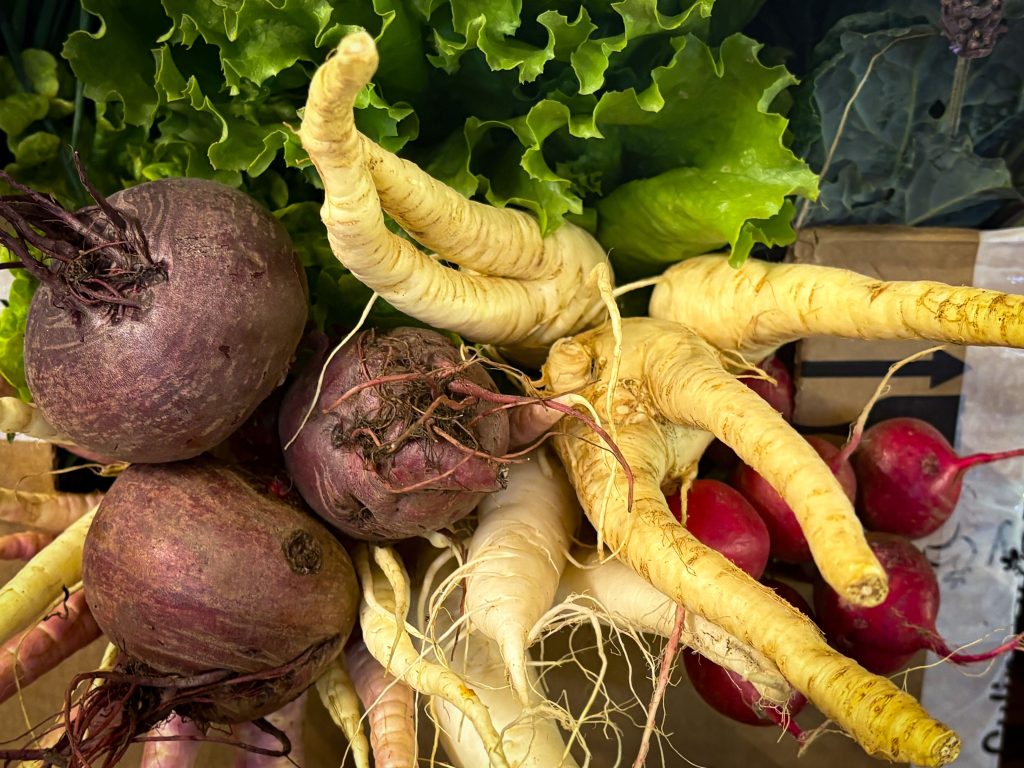
When people grow carrots, beets, radishes, turnips, onions, garlic, potatoes, sweet potatoes, dahlias, lilies, tulips, daffodils, gladiolus, or other bulb and root crops, the important growth is often hidden.
That changes the fertility strategy.
With leafy greens, the harvest is the leaf. With tomatoes and peppers, the harvest is the fruit. With lawn turf, the goal is density and color. With root crops and bulbs, the harvest depends heavily on what the plant does underground.
A strong root crop needs loose soil, steady moisture, enough early fertility, and room to expand. A bulb crop needs roots that can feed the plant, leaves that can capture sunlight, and balanced nutrients that help the plant store energy. If early rooting is weak, the plant may never fully recover, even if fertilizer is added later.
This is why root crops and bulbs should not be managed with a “feed it later if it looks weak” mindset.
Later feeding can help in some cases, but it cannot fully correct poor early rooting, compacted soil, uneven moisture, or nutrients that were unavailable when the plant was establishing. May is often the month when these crops are either being planted, actively rooting, or moving into the stage that determines final size.
The soil around the young root matters from the beginning.
Phosphorus supports early plant energy and root growth
Phosphorus is often associated with root development, and for good reason. It plays an important role in energy transfer inside the plant, early growth, root formation, flowering, and crop maturity.
For root crops and bulbs, that early energy support matters because the plant has to establish quickly and begin building the underground structure that will become the harvested crop or future bloom source.
The important point is timing.
Phosphorus is most useful early, when young roots are developing. But phosphorus does not move through the soil as freely as nitrate nitrogen. If phosphorus is not in the active root zone, young plants may not access it well. Cold soil, wet soil, compacted soil, or poor pH can also limit phosphorus uptake even when some phosphorus is present.
This is why May phosphorus decisions need to be made before the crop is behind.
If a garden bed, field, or bulb planting needs phosphorus, it should be placed where roots can find it as they grow. Scattering phosphorus far from the root zone after the crop is already struggling may not give the response a grower expects.
For root crops and bulbs, phosphorus should be part of the establishment plan, not just a rescue plan.
Soil structure matters as much as fertilizer
Root crops and bulbs are especially sensitive to soil condition.
A tomato can tolerate a little more roughness in the bed because its roots spread widely and the fruit grows above ground. A carrot does not have that luxury. A compacted layer, hard clod, rock, or smeared clay zone can deform the harvested root. Onions and garlic need a soil surface that lets roots breathe and bulbs expand. Flower bulbs need good drainage because saturated soil around bulbs can create rot and poor rooting.
Before thinking about fertilizer, think about the soil the root is growing into.
Root crops usually perform best in soil that is loose, crumbly, and free of hard obstructions. The soil should hold moisture but not stay waterlogged. It should be firm enough for seed contact but not compacted. It should allow young roots to grow straight and deep.
Bulbs also need drainage. A bulb planted in soil that stays wet may rot before it ever has a chance to perform. Heavy clay beds may need better structure, raised planting areas, organic matter, or drainage correction before fertilizer becomes the main concern.
May can be tricky because soil may still be wet from spring rains. Working soil too wet can create clods and compaction that root crops will show all season. If the soil smears when worked, wait. Root crops planted into damaged soil often tell the story later in misshapen roots and uneven stands.
Fertilizer supports growth. It does not replace good soil tilth.
Fish Bone Meal fits root and bulb establishment
For root crops, bulbs, flowers, and transplants that need phosphorus and calcium support at planting, Fish Bone Meal 6-13-0 + 14% Calcium is a natural fit.
The 6-13-0 analysis makes the role clear. It supplies moderate nitrogen, a stronger phosphorus component, and calcium. That is useful when the goal is to support root development, early establishment, bloom potential, and plant structure without turning the program into a high-nitrogen push.
This product fits May because many root crops and bulbs are either being planted or actively developing roots. It is best used early, worked into the planting zone according to directions, so roots can grow into the nutrient source gradually.
The problem it helps solve is weak early rooting where phosphorus and calcium are needed in the establishment zone. For carrots, beets, onions, garlic, potatoes, bulbs, and flowering plants, that early support can help the plant build the underground foundation it depends on later.
The timing is important. Fish Bone Meal is not a quick emergency fix for a crop that is already badly stunted. It is a foundation product. It belongs before planting, at planting, or during early establishment where it can release gradually as roots develop.
Placement also matters. It should not be dumped in a concentrated pile directly against tender roots or bulbs. Even organic fertilizers need proper rate and distribution. Mix it into the soil according to the crop and product directions, then water it in so soil microbes and moisture can begin working with it.
Organic Seafood Fertilizer fits broader root-zone support
Some root crops and bulbs need more than phosphorus and calcium. They may need a broader organic fertility base that supports roots, foliage, soil biology, and gradual nutrient release.
That is where Organic Seafood Fertilizer 6-7-2 fits.
With a 6-7-2 analysis, this product supplies nitrogen, phosphorus, and potassium in an organic form. It also fits garden and flower-bed situations where growers want to support soil life and steady nutrient release as May soils warm. For root crops and bulbs, that balanced but phosphorus-supportive profile can be useful when the bed needs general organic fertility, not only a single nutrient.
The problem it helps solve is low organic fertility in beds where root crops, bulbs, flowers, herbs, or mixed plantings need steady nutrition during establishment and early growth.
The timing is May planting or early growing season, when soil temperatures are warming and biological activity is increasing. Organic products depend on soil moisture, oxygen, and microbial activity to release nutrients effectively. If the soil is too cold, too dry, or too saturated, release and uptake will slow.
Organic Seafood Fertilizer fits well in beds where root crops are part of a broader planting. A gardener may have beets, onions, flowers, herbs, and early vegetables in the same area. A landscaper may be preparing a flower bed with bulbs and annuals. A small grower may want an organic source that supports both roots and future top growth without applying a harsh early fertilizer.
The caution is nitrogen. Root crops need nitrogen, but too much nitrogen can push leaves at the expense of root or bulb development. Organic Seafood Fertilizer supplies nitrogen, so it should be used with the same care as any other fertilizer. The goal is steady growth, not excessive foliage.
Balanced 10-10-10 fits mixed beds when the soil calls for it
Not every grower is working in an organic-only program. Some May beds simply need a straightforward balanced fertilizer to support general planting.
10-10-10 Complete Lawn & Garden Granular Fertilizer with Micronutrients fits mixed garden beds, small crop plantings, lawns, and landscape areas where nitrogen, phosphorus, potassium, and micronutrients are all needed in moderate balance.
For root crops and bulbs, 10-10-10 can be useful when the soil needs broad fertility support and the crop stage calls for early feeding. Nitrogen supports early leaf growth, phosphorus supports roots and energy movement, potassium supports plant strength and water regulation, and micronutrients help round out plant function.
The problem it helps solve is general nutrient shortage in a mixed planting or garden bed where no single nutrient source is enough.
The timing is before planting or early in the season when roots are developing and the soil can receive fertilizer. It should be worked into the soil or placed properly according to directions, not scattered heavily against tender seedlings, bulbs, or root crowns.
The caution is phosphorus buildup. Many long-used garden beds already have enough phosphorus because of repeated compost, manure, bone meal, or balanced fertilizer applications. If the soil already tests high in phosphorus, applying more 10-10-10 may not help and could create imbalance. A soil test is the best guide for repeated use.
Balanced fertilizer is useful when the soil needs balanced feeding. It should not be applied automatically every May just because the number looks complete.
Do not overdo nitrogen on root crops
Root crops and bulbs need leaves. Leaves capture sunlight, produce energy, and feed underground growth. Without healthy foliage, the plant cannot build a strong root, bulb, tuber, or storage organ.
But too much nitrogen can shift the plant toward top growth.
Carrots can produce lush tops while roots remain smaller or forked. Beets may grow leaves but size unevenly. Onions can produce a lot of green growth but fail to bulb properly if fertility and timing are not balanced. Garlic can produce tall leaves but still finish poorly if root development, moisture, spacing, and nutrient balance are off. Flower bulbs can produce foliage but fail to build strong reserves for future bloom if the program is unbalanced.
This does not mean nitrogen should be avoided. It means nitrogen should be managed.
The best root crop fertility program provides enough nitrogen for healthy leaves without pushing excessive vegetative growth. That is why a product like Fish Bone Meal 6-13-0 + 14% Calcium can make sense at establishment. It supports phosphorus and calcium more than nitrogen. Organic Seafood Fertilizer 6-7-2 provides broader organic nutrition but still should be used at sensible rates. 10-10-10 Complete Lawn & Garden Granular Fertilizer provides balanced mineral fertility and should be applied based on actual need.
For root crops, steady and moderate is usually better than heavy and fast.
Carrots need loose soil more than heavy fertility
Carrots are one of the clearest examples of why soil structure matters.
A carrot root grows downward. If it hits a compacted layer, stone, fresh manure clump, hard clay, or dense zone, it may fork, twist, or stop. Fertilizer cannot correct that once the shape has been set.
For carrots, bed preparation matters before fertility. The soil should be loose to the depth the carrot will grow. It should not be freshly overworked into powder, because fine soil can crust after rain. It should not be cloddy. It should hold moisture evenly so germination is consistent.
Phosphorus support should be in the root zone early if the soil needs it. Fish Bone Meal can fit organic carrot beds where phosphorus and calcium are needed before planting. 10-10-10 Complete Lawn & Garden Granular Fertilizer can fit where balanced fertility is needed and soil test levels justify it.
Avoid heavy nitrogen. Carrots need tops, but the marketable crop is the root. Overfeeding nitrogen can create more foliage than root quality.
Water is also critical. Dry-wet swings can lead to cracking, uneven growth, and poor shape. May carrot care should focus on loose soil, steady moisture, proper thinning, and early nutrient availability.
Beets and turnips need balanced early growth
Beets and turnips are more forgiving than carrots in some ways, but they still need good early management.
They need enough leaf growth to feed the root, but they should not be pushed into excessive tops. They need phosphorus early if the soil is low. They need potassium for plant strength and water regulation. They need steady moisture for even sizing.
Organic Seafood Fertilizer 6-7-2 fits beets and turnips where growers want an organic fertilizer that supports both foliage and root development. 10-10-10 Complete Lawn & Garden Granular Fertilizer fits mixed beds where balanced feeding is needed. Fish Bone Meal fits where phosphorus and calcium support are important at planting.
The timing is before planting or early after thinning, when plants have enough root system to use nutrients but before the crop is behind. Fertilizer should be placed beside the row or incorporated before planting, not dumped directly over seedlings.
Beets and turnips also need spacing. No fertilizer can overcome crowding. If plants are not thinned properly, roots will compete and remain small.
Onions and garlic depend on early root and leaf strength
Onions and garlic are often misunderstood.
The bulb is the harvest, but the leaves drive bulb development. Each leaf contributes to the plant’s ability to size the bulb. Weak early growth can limit final size. At the same time, excess late nitrogen can delay maturity or reduce storage quality in some situations.
May timing depends on region and crop stage. Garlic planted in fall is usually growing strongly by May. Spring onions may be establishing or beginning stronger vegetative growth. Bulbing is influenced by day length, variety, and crop development, so early fertility matters before the plant shifts fully into bulb formation.
Phosphorus support early can help roots establish. Fish Bone Meal 6-13-0 + 14% Calcium fits onion and garlic beds where the soil needs phosphorus and calcium support. It should be worked into the bed before planting or used early enough for roots to access it.
Organic Seafood Fertilizer 6-7-2 can support organic onion and garlic programs where broader fertility is needed. 10-10-10 Complete Lawn & Garden Granular Fertilizer can fit where balanced NPK is needed and the soil test supports phosphorus application.
The caution is timing nitrogen late. Onions and garlic need nitrogen early, but as bulbs mature, pushing nitrogen too late can interfere with proper finishing. May applications should be based on the stage of the crop, not only the calendar.
Potatoes need early fertility, but placement matters
Potatoes are not true root crops botanically, but they are managed as an underground crop and belong in this conversation.
Potatoes need a strong root system, healthy foliage, adequate phosphorus, potassium, and consistent moisture. They also need soil loose enough for tuber development and hilling. Fertility placement matters because concentrated fertilizer touching seed pieces can cause injury.
A balanced fertilizer such as 10-10-10 Complete Lawn & Garden Granular Fertilizer can fit potato plantings where the soil needs NPK support. It should be placed properly in the planting area and not concentrated directly on seed pieces.
Fish Bone Meal can fit organic potato programs where phosphorus and calcium are desired early, but it should be mixed into the soil rather than piled against the seed piece.
Organic Seafood Fertilizer can support organic fertility where broader slow-release nutrition is useful.
Potatoes also need steady moisture during tuber formation. Dry-wet swings can affect tuber quality. Fertilizer can support the plant, but water management and hilling are just as important.
Flower bulbs need roots before blooms
Bulbs are often planted for flowers, but blooms depend on stored energy and root activity.
Spring-planted bulbs and summer-flowering bulbs need early rooting so they can support foliage and bloom. Fall-planted bulbs that bloom in spring need their leaves protected after flowering because those leaves recharge the bulb for next year. Cutting foliage too early can weaken future performance.
Phosphorus is commonly associated with bulbs because of its role in roots and flowering, but again, soil test levels matter. If the soil already has adequate phosphorus, more may not help. If phosphorus is low, early placement is important.
Fish Bone Meal 6-13-0 + 14% Calcium fits bulb plantings naturally because it supports roots and bloom potential with slow-release phosphorus and calcium. It should be mixed into the planting zone rather than placed in direct concentrated contact with bulbs.
Organic Seafood Fertilizer 6-7-2 can fit flower beds where bulbs are part of a broader organic planting program.
10-10-10 Complete Lawn & Garden Granular Fertilizer can fit mixed ornamental beds where a balanced feed is needed.
Bulbs also need drainage. A bulb planted in soggy soil is more likely to rot than bloom strongly. Fertility will not solve poor drainage.
Soil pH can limit phosphorus availability
Phosphorus may be present in the soil but unavailable to the plant if pH is off.
In very acidic or very alkaline soils, phosphorus can become tied up in forms roots cannot easily use. That is why soil testing matters. A grower may keep applying phosphorus because crops look weak, but the real issue may be pH, compaction, cold soil, or moisture stress.
May is a good time to notice patterns.
If root crops are weak every year in the same bed, test the soil. If bulbs produce leaves but poor blooms year after year, check pH, phosphorus, potassium, drainage, and sunlight. If a field or garden has received repeated phosphorus applications, do not assume more is needed.
A product like 10-10-10 Complete Lawn & Garden Granular Fertilizer supplies phosphorus every time it is used. That is useful where phosphorus is needed. It is unnecessary where phosphorus is already high.
Fish Bone Meal and Organic Seafood Fertilizer also supply phosphorus. Organic sources still count. Repeated use builds soil nutrient history.
The best phosphorus program is based on need, not habit.
Moisture determines whether early nutrients move
Root crops and bulbs need steady moisture.
Seeds need moisture to germinate evenly. Young roots need moisture to access nutrients. Bulbs need moisture to root but not so much that they rot. Potatoes need moisture during tuber development. Onions need consistent moisture during active growth and bulb sizing.
If soil dries out, nutrient uptake slows. If soil is saturated, oxygen disappears from the root zone and roots struggle. If moisture swings from dry to soaked, root crops can crack, fork, split, or size unevenly.
Fertilizer should be applied when moisture can support uptake.
Dry fertilizer should be watered in. Organic fertilizer needs moisture for microbial breakdown. Phosphorus needs root contact. A May application made to dry soil and left sitting on the surface may not help much until rain arrives.
At the same time, avoid fertilizing into saturated soil. Roots that cannot breathe cannot use nutrients well.
The best May fertility timing is when the soil is moist, workable, and active.
Side-dressing root crops requires restraint
Side-dressing can help root crops, but it needs to be done carefully.
Heavy side-dressing with nitrogen can push leaves at the wrong time. Deep cultivation can damage developing roots. Fertilizer placed too close to seedlings can burn. Fertilizer left on foliage can injure leaves.
For root crops, side-dress only when the crop stage and soil condition call for it. Apply lightly beside the row, not on the plants. Water it in. Avoid disturbing roots.
If the crop is pale and slow after thinning, a light feed may help. If the crop has lush tops but poor root development, more nitrogen is not the answer. If roots are misshapen, the issue may be soil structure, spacing, or moisture rather than fertility.
For organic programs, Organic Seafood Fertilizer may fit as a moderate top-dress where broader nutrition is needed. For mineral programs, 10-10-10 Complete Lawn & Garden Granular Fertilizer may fit where balanced fertility is needed. Fish Bone Meal belongs more naturally in the early foundation than as a quick side-dress rescue.
Root crops reward early preparation more than late correction.
Farmers and market growers should watch crop stage closely
For farmers and market growers, root crops and bulbs can be high-value crops, and timing mistakes are costly.
Carrots, beets, onions, garlic, potatoes, turnips, radishes, and specialty bulbs all need fertility programs that match soil tests, crop removal, irrigation, and market goals. A small deficiency can affect size and quality. A heavy-handed application can create excess foliage, delayed maturity, poor storage, or quality issues.
May scouting should include more than leaf color. Dig plants. Look at root shape, root depth, soil structure, moisture, and early sizing. Compare rows, beds, and soil zones. If weak areas follow compaction, irrigation issues, or soil texture changes, do not treat the whole crop as a simple fertilizer problem.
Products like Fish Bone Meal, Organic Seafood Fertilizer, and 10-10-10 Complete Lawn & Garden Granular Fertilizer can all fit different systems, but they should be chosen based on the fertility plan, not guesswork.
A market crop needs consistent size and quality. That starts with early, accurate nutrition.
Home gardeners should avoid adding everything at planting
Home gardeners often want to give root crops and bulbs the best possible start, so they add compost, bone meal, granular fertilizer, manure, lime, and other amendments all at once.
That can create problems.
Too much amendment can make the soil uneven. Fresh manure can deform root crops and create food safety concerns. Excess nitrogen can push tops. Too much phosphorus can build up over time. Lime can raise pH when it is not needed. Fertilizer in direct contact with seeds or bulbs can injure tender tissue.
The better approach is simpler.
Prepare the soil well. Test when possible. Use one appropriate fertilizer or amendment for the crop and soil condition. Place it properly. Water consistently. Thin root crops on time. Avoid walking in the bed.
If phosphorus and calcium support are needed, use Fish Bone Meal correctly. If broader organic nutrition is needed, use Organic Seafood Fertilizer at the right rate. If balanced mineral feeding is appropriate, use 10-10-10 Complete Lawn & Garden Granular Fertilizer carefully.
More inputs do not automatically make better roots. Better timing and placement do.
Landscapers should think about bulbs as long-term plantings
In landscape beds, bulbs are often treated like seasonal color, but many bulbs are long-term plantings.
They need a soil environment that supports rooting, drainage, and nutrient storage. If the bed is compacted, wet, or low in fertility, bloom performance will suffer. If foliage is cut too early after bloom, bulbs may not rebuild reserves. If fertilizer is applied too late or too heavily, it may not support the right stage.
May is important for both spring-blooming bulbs finishing their cycle and summer-blooming bulbs beginning theirs.
For spring-blooming bulbs, allow foliage to remain until it yellows naturally. That foliage is feeding the bulb. Fertility may be applied after bloom where soil and crop needs support it, but the leaves must remain long enough to use it.
For summer-blooming bulbs planted in May, early phosphorus and calcium support can help establishment. Fish Bone Meal is a strong fit at planting. Organic Seafood Fertilizer can support broader organic bed fertility. 10-10-10 Complete Lawn & Garden Granular Fertilizer can fit mixed ornamental beds where balanced nutrition is needed.
A bulb bed should be built for roots first and color second.
The right product depends on the crop and soil
The three Supply Solutions products in this May root and bulb program each have a different fit.
Use Fish Bone Meal 6-13-0 + 14% Calcium when the main need is early phosphorus and calcium support for roots, bulbs, flowers, tomatoes, vegetables, or organic planting programs. It is best at planting or early establishment, worked into the soil where roots can grow into it.
Use Organic Seafood Fertilizer 6-7-2 when the bed needs broader organic nutrition with nitrogen, phosphorus, potassium, and calcium support. It fits root crops, flower beds, vegetables, herbs, fruiting crops, lawns, and gardens where slow-release organic feeding is desired.
Use 10-10-10 Complete Lawn & Garden Granular Fertilizer with Micronutrients when the soil and crop call for balanced mineral fertility with micronutrients. It fits mixed beds, general garden feeding, lawns, and plantings that need NPK support.
The products should not be stacked automatically. Choose the one that solves the actual problem.
If the bed is low in phosphorus and calcium, Fish Bone Meal may fit. If the bed needs broad organic fertility, Organic Seafood Fertilizer may be better. If the garden needs balanced NPK and micronutrients, 10-10-10 may be the practical choice.
The soil test, crop stage, and planting method should guide the decision.
May is the time to build the underground crop
Root crops and bulbs do not give many second chances.
A poor stand of carrots cannot be fixed late with fertilizer. A compacted onion bed will not size properly just because more nutrients are added. A bulb planted into wet soil may rot before feeding matters. A potato crop with poor early fertility or moisture stress may never reach full potential.
The work has to begin early.
Prepare loose, well-drained soil. Avoid working wet clay. Place phosphorus where young roots can access it. Keep nitrogen moderate. Maintain steady moisture. Thin root crops on time. Protect bulb foliage after bloom. Use fertilizer for a clear purpose, not out of habit.
May root and bulb fertility is about supporting what you cannot see yet.
Supply Solutions offers practical options for that early underground work, including Fish Bone Meal 6-13-0 + 14% Calcium for phosphorus and calcium support, Organic Seafood Fertilizer 6-7-2 for broader organic nutrition, and 10-10-10 Complete Lawn & Garden Granular Fertilizer with Micronutrients for balanced garden feeding. Used at the right time and placed properly, these products help root crops and bulbs establish before the season asks more from them. For help choosing the right fertilizer for your soil, crop, and May planting conditions, contact Supply Solutions and build the harvest from the root zone up.