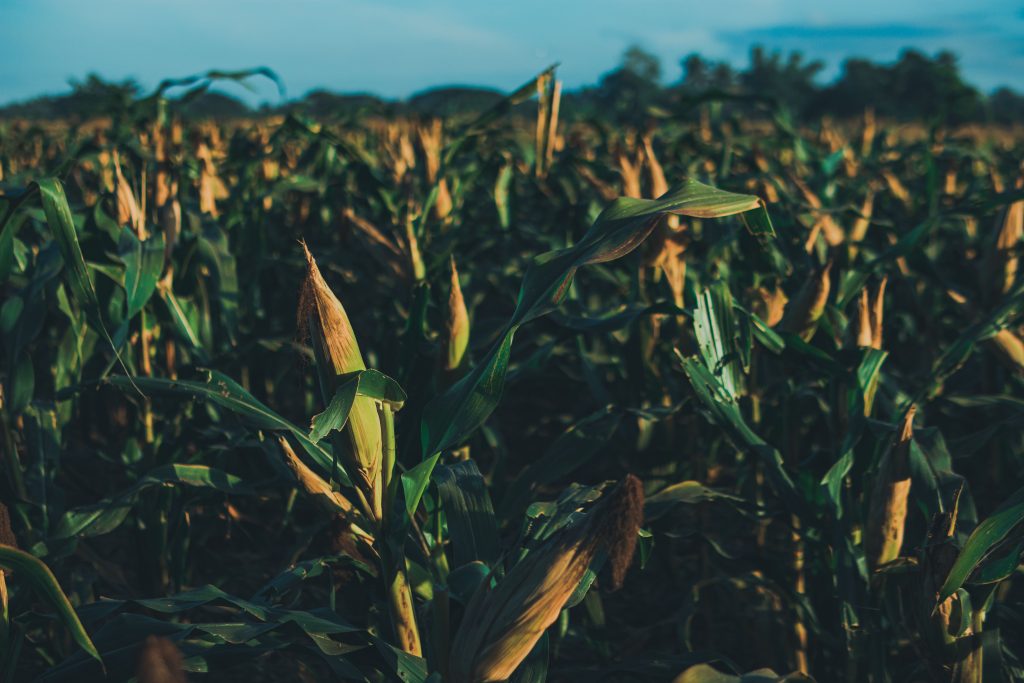
Plant color is one of the first things growers notice in May.
A corn row looks pale from the road. Soybeans come up yellow in one corner of the field. Sweet corn stalls after a cold rain. Tomato transplants stay light green. Brassicas look hungry. Peppers sit still. Beans emerge unevenly. A vegetable bed that looked rich at planting suddenly looks weak two weeks later.
Color matters, but it does not tell the whole story by itself.
A plant can be pale because it needs nitrogen. It can also be pale because the soil is too cold, too wet, too compacted, too dry, too alkaline, too acidic, or too damaged around the roots. A young crop can show yellowing because nutrients are missing, but it can also show yellowing because roots cannot reach nutrients that are already there.
That is why early-season color should be read carefully.
In May, the best fertility decisions come from slowing down long enough to ask what the color means. Is the whole plant pale, or only older leaves? Are leaf margins yellow? Is the yellowing between the veins? Are low spots worse? Are wheel tracks involved? Did heavy rain move nitrogen? Is the soil warm enough for root growth? Are soybeans nodulating? Are vegetables rooted, or are they still recovering from transplant stress?
A good grower does not fertilize color alone. A good grower reads color as a clue.
Color tells you where to look first
When a crop is off-color, start with the pattern.
A uniform pale green across the whole field or bed may point toward nitrogen shortage, cool soil, or low overall fertility. Yellowing on older leaves often points toward mobile nutrients such as nitrogen, potassium, or magnesium because the plant can move those nutrients from older tissue to younger growth. Yellowing on newer leaves may point toward less mobile nutrients, pH-related availability, sulfur, iron, or root stress.
Corn nitrogen deficiency often shows as pale green plants with yellowing on lower leaves in a V-shaped pattern from the leaf tip backward. University of Minnesota Extension describes sweet corn nitrogen deficiency as overall pale green color, yellowing of lower leaves in a V pattern, possible browning, and stunting.
Potassium deficiency looks different. University of Minnesota Extension notes that potassium deficiency in corn causes brown margins on lower leaves, often with a striped appearance, while soybean potassium deficiency begins as light green to yellow leaflet margins on lower leaves.
Magnesium deficiency also has a pattern. University of Minnesota Extension explains that magnesium shortage first shows as loss of healthy green color, then yellowing between the veins while veins remain green; in corn, it appears as striping along the full length of lower leaves.
Sulfur deficiency can look like nitrogen deficiency, but it often appears as general yellowing and reduced growth. In corn, sulfur deficiency can cause light green leaves with distinct striping.
These patterns help, but they are not perfect. Cold soil, compaction, herbicide injury, disease, insects, wet roots, and pH problems can mimic nutrient shortages. The plant’s color points you toward the next question. It does not finish the diagnosis.
Early corn color changes fast
Corn is one of the easiest crops to read from a distance, but early corn can be misleading.
In May, corn may be pale because soil is cool. Young roots are small. Nitrogen may not be mineralizing from organic matter yet. Wet soil may reduce oxygen. Heavy rain may move nitrate nitrogen below the active root zone, especially on sandy or well-drained soils. Compaction may restrict rooting. Starter fertilizer placement may be uneven. Residue-heavy fields may warm slowly.
At the same time, corn is a strong nitrogen user once growth accelerates.
That is why early corn color should be paired with crop stage. Small corn does not need its full seasonal nitrogen supply all at once, but it does need enough available nitrogen to build a strong plant before rapid uptake begins. By the time corn is visibly deficient, the crop may already be losing momentum.
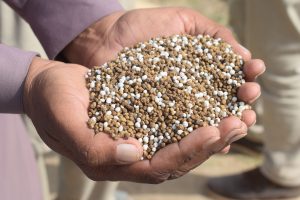
Urea 46-0-0 Nitrogen Fertilizer fits corn and sweet corn programs where nitrogen is clearly needed and the crop is actively growing. Supply Solutions lists urea as a 46% nitrogen fertilizer that supports plant development, protein synthesis, growth, deep green color, foliage, stems, and roots, with uses across crops, vegetables, fruits, lawns, flowers, trees, and shrubs.
The problem Urea 46-0-0 helps solve is nitrogen shortage in crops that are ready to use nitrogen. For corn, that often means a May or early-season sidedress window when plants are established, roots are working, and the crop is moving toward stronger vegetative demand.
The timing matters. Urea should not be thrown onto dry soil and forgotten. It needs moisture to move into the soil. It should be applied according to directions, kept off wet foliage where possible, and watered in or timed ahead of suitable rainfall. Surface-applied urea can be vulnerable to nitrogen loss if conditions are warm, moist, and it remains on the surface too long, so placement and timing are important.
The caution is that urea is concentrated. A little product carries a lot of nitrogen. Too much can burn, push soft growth, or waste money. Corn may need nitrogen, but the rate should be based on crop stage, soil conditions, yield goal, previous crop, organic matter, and weather.
Sulfur should be considered when corn is pale and striped
Sulfur has become a more common spring conversation in many parts of the country.
Cool, wet soils can slow sulfur availability. Sandy soils and low-organic-matter soils are more vulnerable to sulfur shortage. High crop removal and reduced atmospheric sulfur deposition have also made sulfur more important in some cropping systems. Purdue Extension notes that sulfur deficiency has been diagnosed in corn, soybean, alfalfa, and wheat in the Midwest, with cool wet soils, crop removal, residue, no-till systems, and reduced atmospheric sulfur deposition all contributing to more frequent concern.
For corn, sulfur deficiency can look like pale, striped leaves. It can be confused with nitrogen, magnesium, potassium, or zinc problems. That is why pattern, soil type, and field history matter.
Ammonium Sulfate 21-0-0 + 24% Sulfur fits situations where both nitrogen and sulfur are needed. Supply Solutions describes this product as a 21-0-0 fertilizer with 24% sulfur that promotes deep green foliage, supports strong growth, improves nutrient availability in alkaline soils through pH-regulating effects, and dissolves well for root uptake.
The problem Ammonium Sulfate helps solve is not just pale color. It solves a combined nitrogen-and-sulfur need where the crop and soil conditions justify both nutrients. In corn, that may be useful where early yellowing is tied to low sulfur supply or where sulfur has been a recurring issue.
The timing is May or early active growth, when corn can use the nitrogen and sulfur and before early deficiency limits development. It is especially relevant on sandy soils, low-organic-matter soils, fields with heavy residue, or areas where sulfur deficiency has been observed or confirmed.
The caution is pH and rate. Ammonium sulfate can acidify soil over time. That can be useful in some settings, but it is not something to apply repeatedly without soil testing. It is also a nitrogen fertilizer, so it should be counted in the total nitrogen program.
Soybeans should not be treated like corn
Soybeans are a different crop.
A pale soybean field can make a grower want to apply nitrogen, but soybeans are legumes. When properly nodulated, they can meet much of their nitrogen need through biological nitrogen fixation. University of Minnesota Extension explains that soybean can use atmospheric nitrogen through fixation in nodules when properly inoculated, and that in-season fertilizer nitrogen did not affect soybean yield in Minnesota research across soybean-growing areas.
That does not mean soybeans never have nutrient problems. They do. Soybeans can be short on potassium, phosphorus, sulfur, manganese, iron, or other nutrients depending on soil, pH, drainage, and field history. But early yellow soybeans should not automatically be treated with nitrogen.
Start by digging roots.
Look for nodules. Healthy active nodules are usually pink to reddish inside. If nodules are absent or inactive, ask why. Was the field recently planted to soybeans, or is this a first-time soybean field? Was inoculant used? Is the soil too wet? Is pH poor? Is seedling disease affecting roots? Was fertilizer placed too close to the seed? Is there herbicide carryover or compaction?
Soybeans can look yellow early while nodulation is still developing. They may improve as roots and nodules become active. If the field has a true nodulation failure, that is different, but nitrogen should not be the first assumption in every pale soybean field.
For soybeans, potassium deserves serious attention. Potassium deficiency often starts on lower leaves as yellowing or scorching along leaflet margins. If that pattern appears, especially in known low-potassium fields, compacted areas, drought-prone zones, or high-yield removal systems, soil testing and tissue testing become important.
KMS 0-0-21.5 Potassium Magnesium Sulfate fits soils and crops that need potassium, magnesium, and sulfur support. Supply Solutions describes KMS as supplying potassium, magnesium, and sulfur, with uses in vegetable gardens, fruit trees, flowers, lawns, shrubs, and soils prone to magnesium deficiency or nutrient loss.
For soybeans, KMS should be used based on soil test need, not color alone. It can help solve potassium, magnesium, and sulfur shortages where those nutrients are actually limiting. It is not a replacement for nodulation, pH correction, drainage, or root health.
Vegetables show color stress quickly
Vegetables often show nutrient and root stress faster than field crops because they are managed in smaller areas with more variable soil.
A garden bed may include compost, manure, potting mix, native clay, sand, mulch, old fertilizer, and fresh transplants all in the same space. A raised bed may warm quickly but dry quickly. A low garden may stay wet after spring rain. A container may leach nutrients every time it is watered. A market garden row may have high fertility in one section and poor soil structure in another.
That makes May vegetable color tricky to read.
Pale leafy greens may need nitrogen. Pale peppers may simply be sitting in cold soil. Yellow tomatoes may be waterlogged. Sweet corn may need nitrogen or sulfur. Brassicas may need nitrogen and sulfur. Potatoes may show nutrient stress when soils are cold. Cucumbers may stall after transplanting. Beans may yellow if roots are damaged or soil is wet.
Before fertilizing, check whether the vegetable is actively growing. A plant that has not rooted cannot use fertilizer well. A plant sitting in saturated soil needs oxygen before another feeding. A dry raised bed needs water before fertilizer response.
Once roots are active, product choice should follow the crop.
Use Urea 46-0-0 when the vegetable crop clearly needs nitrogen and is ready to use it. This fits heavy nitrogen users such as sweet corn, leafy greens, brassicas, and other actively growing vegetables where a strong nitrogen source is appropriate.
Use Ammonium Sulfate 21-0-0 + 24% Sulfur where both nitrogen and sulfur are needed. This can fit brassicas, onions, corn, and other crops where sulfur supports protein formation, growth, and crop quality.
Use KMS 0-0-21.5 where potassium, magnesium, and sulfur are part of the need. This can fit fruiting vegetables, potatoes, flowers, and gardens with low magnesium or potassium, but it should be guided by soil test results or clear field history.
The color may start the conversation. The crop stage should make the decision.
Nitrogen shortage usually shows on older leaves first
Nitrogen is mobile in the plant, so the plant can move nitrogen from older leaves to newer growth when supply is short. That is why nitrogen deficiency commonly begins on lower leaves.
In corn, the classic symptom is yellowing from the leaf tip down the midrib in a V-shaped pattern. In vegetables, nitrogen shortage often appears as overall pale green color, slower growth, and yellowing of older leaves. Leafy crops become less vigorous. Sweet corn loses color. Brassicas may stall. Tomatoes may become light green and slow, though overwatering or cold soil can cause similar symptoms.
Urea 46-0-0 is the strongest nitrogen source in this article. It is best used when nitrogen is the clear limitation and the crop can use a concentrated feed.
The problem it solves is nitrogen hunger. The timing is after emergence or transplant establishment, during active vegetative growth, or as a sidedress when the crop’s nitrogen demand is increasing. The crops that benefit most are those that need nitrogen to build canopy: corn, sweet corn, leafy greens, brassicas, lawns, and vigorous vegetable crops.
The caution is burn and overgrowth. Urea should be kept away from direct contact with tender stems, seeds, and roots. It should be watered in. It should be used at the correct rate. It should not be used to force crops that are pale from waterlogged roots, cold soil, or disease.
Nitrogen makes plants green, but green is not always the same as healthy.
Sulfur shortage can look like nitrogen, but the correction is different
Sulfur and nitrogen are closely connected in plant growth because both are tied to protein formation. When sulfur is short, plants may look pale or yellow and grow slowly.
The challenge is that sulfur symptoms can resemble nitrogen symptoms.
In some crops, sulfur deficiency often appears on younger leaves first because sulfur is less mobile in the plant than nitrogen. In corn, sulfur can produce light green striping. In vegetables, sulfur shortage may show as pale growth and weak vigor, especially in crops with higher sulfur demand such as brassicas and onions.
Ammonium Sulfate 21-0-0 + 24% Sulfur is useful when sulfur is part of the problem because it supplies both nitrogen and sulfur. It fits May situations where crops need a green-up response, but sulfur support is also important.
The problem it solves is combined N and S need. The timing is early active growth, especially after wet spring conditions, in sandy soils, low-organic-matter soils, or crops known to respond to sulfur.
For vegetables, ammonium sulfate may fit sweet corn, brassicas, onions, garlic, and other crops that need nitrogen and sulfur. For lawns and acid-loving ornamentals, it can also be useful where pH and sulfur needs fit. For soybeans, it should not be used as a routine nitrogen fix unless a soil and crop diagnosis supports the need.
The caution is pH. Ammonium sulfate can help in alkaline conditions but can push soil too acidic if used repeatedly without testing. It is a useful tool, not an automatic answer.
Potassium shortage shows on margins and stress tolerance
Potassium is not usually thought of as a “green-up” nutrient, but it affects how plants handle water, stress, sugar movement, and overall strength.
Potassium deficiency often appears on older leaves first. Leaf margins may yellow, scorch, or brown. In corn, lower leaf margins brown and the rest of the leaf may appear striped. In soybeans, leaflet margins turn light green to yellow and symptoms begin on lower leaves.
This is different from nitrogen deficiency, which tends to show as more general pale growth or V-shaped yellowing in corn.
Potassium matters in May because the crop is preparing for harder conditions. Corn will soon enter rapid growth. Soybeans will build canopy and nodules. Tomatoes, peppers, squash, cucumbers, and potatoes will move toward flowering, fruiting, or tuber development. Lawns and landscapes will face heat and traffic.
KMS 0-0-21.5 fits when potassium support is needed along with magnesium and sulfur. It helps solve low potassium, low magnesium, and sulfur need in soils where those nutrients are deficient or prone to loss.
The timing is May or early active growth, before heat and fruit load increase stress. For vegetables and flower beds, Supply Solutions lists applications for new gardens, transplants, and established plant side-dressing every two to three months depending on plant size and magnesium deficiency. For lawns, spring application and watering in are recommended. For trees and shrubs, it recommends applying around the drip line and watering in.
The caution is balance. Do not apply potassium blindly. Too much potassium can interfere with magnesium or calcium relationships in some soils. Use KMS where potassium, magnesium, or sulfur need is real.
Magnesium shortage shows between the veins
Magnesium is central to chlorophyll, so magnesium shortage shows up as loss of green color.
The pattern is often interveinal chlorosis, meaning the tissue between veins yellows while veins remain greener. Because magnesium is mobile in plants, symptoms often begin on older leaves. In corn, magnesium deficiency may look like striping along the full length of lower leaves.
This can be confused with potassium, sulfur, zinc, or general stress. That is why tissue testing can help when the crop value justifies it.
KMS 0-0-21.5 is a good fit for low-magnesium soils because it supplies magnesium along with potassium and sulfur. The problem it solves is not a general pale crop. It solves a specific magnesium and potassium-sulfur support need.
In vegetables, magnesium deficiency can appear in tomatoes, peppers, potatoes, cucurbits, and other crops under heavy nutrient demand or in soils where magnesium is low. In lawns and ornamentals, magnesium shortage can contribute to weak color. In field crops, magnesium recommendations should be guided by soil test and crop response.
The timing is before deficiency becomes severe. Apply during active growth when roots can take up the nutrients and soil moisture is steady.
The caution is that KMS does not contain nitrogen. If the crop is pale because it needs nitrogen, KMS will not green it the way urea or ammonium sulfate can. If the crop is pale because roots are waterlogged, none of the products will work well until the root zone improves.
Wet spring color is often root stress
May color problems often follow rain.
After a wet spell, corn may yellow. soybeans may pale. vegetables may stall. Lawns may look washed out. Low spots may be worse than high spots. Heavy soil may show symptoms before sandy ground, or sandy ground may lose nitrate faster and show nitrogen deficiency later.
Wet soil creates several problems at once.
Roots lose oxygen. Nitrogen can leach or denitrify depending on soil and conditions. Soil biology slows or changes. Roots may become shallow. Diseases can increase. Nutrient uptake slows even when nutrients are present.
That is why a yellow crop after rain should not automatically receive a fertilizer pass the next day.
Wait until the soil is fit. Dig roots. Look for new white growth. Check whether water has drained. Ask whether the crop is recovering. If yellowing is mainly in low, saturated areas, oxygen may be the first limitation. If yellowing is on sandy knobs after rain, nitrogen movement may be more likely. If margins are scorched, potassium may be worth checking. If interveinal striping appears on lower leaves, magnesium may be part of the picture.
Fertilizer should follow the cause.
Cold soil can create temporary deficiency symptoms
Cold soil slows root activity and nutrient uptake.
Corn, soybeans, and warm-season vegetables can all look pale or purple when planted into cool conditions. Peppers and tomatoes may sit still. Sweet corn may emerge unevenly. Soybeans may yellow until nodulation and root activity improve. Cucurbits may look weak until warmth returns.
In these cases, fertilizer may not be the only answer.
If nutrients are present but roots are cold, the crop may improve as soil warms. A heavy fertilizer application during cold stress may do little or may create salt stress around weak roots. The better response is often patience, moisture management, and avoiding compaction.
Once soil warms and roots are active, feeding decisions can be made more accurately.
This matters for May vegetables especially. A pepper transplanted into cold soil may look nitrogen deficient even when the fertilizer program is adequate. A tomato may be light green because roots are not expanding. A sweet corn row planted too early may look weak until the soil catches up.
Do not force a plant that is waiting on temperature.
Compaction changes color by limiting roots
Compaction often shows up as color.
Plants in compacted soil may be pale, stunted, or uneven. Roots cannot explore enough soil. Water may sit above compacted layers. Oxygen may be limited. Nutrients may be present but unreachable.
University of Minnesota Extension notes that compaction can reduce root access to nutrients and that fertilizer placement strategies such as split nitrogen or banded phosphorus and potassium may help improve root access in compacted conditions.
In May, compaction patterns often follow traffic.
Corn may yellow in wheel tracks. Garden rows may be weaker where people walked through wet soil. Lawn areas may stay pale where mowers turn. Vegetable beds may show poor growth along compacted paths. Soybeans may emerge unevenly where planting conditions were marginal.
Before increasing fertilizer rates, check rooting. Dig a plant from a good area and one from a poor area. Compare root depth, soil structure, moisture, and smell. If roots are restricted by compaction, adding more fertilizer may give only a short response.
Fertility and soil structure have to work together.
Urea fits high nitrogen demand, not every yellow plant
Urea 46-0-0 is useful because it supplies a concentrated nitrogen source.
That strength makes it valuable for crops with clear nitrogen demand, but it also makes correct use important.
It fits corn, sweet corn, leafy vegetables, brassicas, established lawns, and actively growing crops that need nitrogen for canopy growth. It solves pale growth and low nitrogen availability when the crop is ready to use nitrogen. It should be used after emergence or transplant establishment, during active growth, and watered in after application.
It does not fit every yellow plant.
Do not use urea to fix waterlogged roots. Do not use it to fix soybean nodulation without diagnosis. Do not use it to fix potassium or magnesium deficiency. Do not use it as a heavy feeding for newly transplanted peppers sitting in cold soil. Do not place it directly against stems, seeds, or tender roots.
Urea is a strong nitrogen tool. It works best when nitrogen is actually the limiting factor.
Ammonium sulfate fits nitrogen plus sulfur situations
Ammonium Sulfate 21-0-0 + 24% Sulfur is different from urea because it brings sulfur along with nitrogen.
That makes it useful when a crop needs both green-up and sulfur support. It fits corn, brassicas, onions, garlic, lawns, trees, shrubs, flowers, and acid-loving crops where the soil program supports its use.
It solves pale growth tied to nitrogen and sulfur need. It should be applied during active growth and watered in. It is especially helpful where sulfur deficiency risk is higher: sandy soils, low organic matter, cool wet soils, heavy residue, or fields and beds with a history of sulfur response.
It does not replace potassium or magnesium. It is not a blanket soybean nitrogen program. It is not a pH correction plan by itself. It should be used carefully where soil is already acidic.
Ammonium sulfate is best when the crop color points toward nitrogen and sulfur together.
KMS fits potassium, magnesium, and sulfur balance
KMS 0-0-21.5 is not a green-up nitrogen product.
That is important.
KMS supplies potassium, magnesium, and sulfur. It fits crops and soils where those nutrients are needed. It is useful for vegetables, fruit trees, flowers, lawns, shrubs, containers, and soils with low magnesium or potassium need. It can support stronger growth, better water regulation, magnesium-related color, sulfur nutrition, and long-season resilience.
The problem it solves is nutrient balance, especially potassium and magnesium shortage. The timing is May or active growth, before heat, fruiting, or heavy crop demand exposes the deficiency more severely.
Use it when symptoms, soil tests, tissue tests, or field history point toward potassium, magnesium, or sulfur. Do not use it as the main response to nitrogen deficiency because it does not contain nitrogen.
KMS is a balance product. It belongs where balance is the problem.
Soil testing and tissue testing keep color from becoming guesswork
Color is useful, but it is not proof.
A yellow leaf can have several causes. A striped corn leaf can point to more than one nutrient. A pale soybean field can be nodulation, pH, potassium, iron chlorosis, wet soil, compaction, or disease. A vegetable bed can look hungry because compost has not mineralized yet, because rain moved nitrogen, or because roots are not functioning.
Soil testing helps identify pH, phosphorus, potassium, magnesium, calcium, organic matter, and other fertility factors. Tissue testing can help confirm what the plant is actually taking up. Purdue Extension notes that plant analysis can identify hidden hunger and nutrient imbalance before yield is visibly reduced, and can be used as a diagnostic tool when visible symptoms appear.
For high-value vegetables, field crops, and recurring problem areas, testing is often cheaper than guessing.
A grower who guesses may apply nitrogen when potassium is short, sulfur when roots are waterlogged, or magnesium when pH is the real issue. A grower who tests can choose the product that actually solves the problem.
A practical May scouting rhythm
Start from the road, but do not stop there.
Color from a distance tells you where to walk. Walk the field, bed, or lawn and look for patterns. Are symptoms uniform or patchy? Are low spots worse? Are sandy areas worse? Are symptoms following traffic, irrigation, slope, or soil type?
Then look at the leaf.
Older leaves yellowing with a V pattern in corn suggests nitrogen. Leaf margins yellowing or scorching suggests potassium. Interveinal yellowing on older leaves suggests magnesium. Pale striping in corn can suggest sulfur, magnesium, potassium, or zinc, so do not jump too quickly.
Then dig.
Look at roots. Check soil moisture. Check compaction. Smell the soil. Look for nodules on soybeans. See whether roots are white and active or brown and stressed.
Then match the fertilizer.
Use Urea 46-0-0 when nitrogen is the clear need and the crop is actively growing.
Use Ammonium Sulfate 21-0-0 + 24% Sulfur when nitrogen and sulfur are both part of the correction.
Use KMS 0-0-21.5 Potassium Magnesium Sulfate when potassium, magnesium, and sulfur support are needed for crop strength, color, water movement, or soil-test correction.
Then apply properly. Keep fertilizer off tender foliage where needed. Avoid direct contact with stems, seeds, and roots. Water in. Do not apply before heavy runoff-producing rain. Do not fertilize into saturated soil.
May color decisions shape the rest of the season
Early crop color is not something to ignore.
Pale corn can lose momentum. Yellow soybeans can signal nodulation or fertility problems. Weak vegetables can fall behind before the season really starts. Potassium, magnesium, sulfur, and nitrogen shortages can all reduce plant strength if they are not corrected at the right time.
But color should be read, not chased.
The strongest May fertility programs combine observation, soil conditions, crop stage, and product fit. Nitrogen has its place. Sulfur has its place. Potassium and magnesium have their place. The grower’s job is to decide which one the crop is actually asking for.
Supply Solutions offers practical fertilizer options for these early-season decisions. Urea 46-0-0 Nitrogen Fertilizer fits high nitrogen demand in actively growing corn, sweet corn, Sulfur has its place. Potassium and magnesium have their place. vegetables, lawns, and other crops that need strong green growth. Ammonium Sulfate 21-0-0 + 24% Sulfur fits crops that need both nitrogen and sulfur support, especially where sulfur shortage or alkaline soil conditions are part of the picture. KMS 0-0-21.5 Potassium Magnesium Sulfate fits soils and crops that need potassium, magnesium, and sulfur for stronger growth and better nutrient balance. Used with field scouting, soil testing, and good timing, these products help growers respond to May crop color with judgment instead of guesswork. Contact Supply Solutions for help matching what you see in te field, garden, or landscape to the right fertilizer decision.