

Uncategorized
June Flower Beds: Holding Color Through Heat Without Overfeeding
June flower beds can look strong at the start of the month and tired by the end of it. That is common in both home
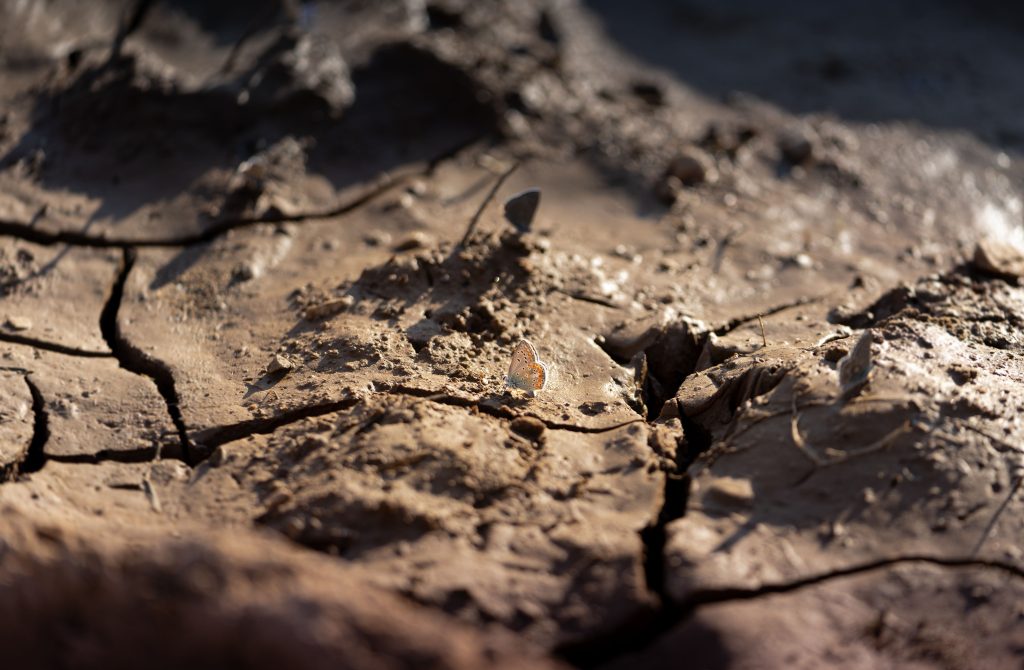
Clay soil can be frustrating in June because it often behaves like two different soils in the same week.
After a heavy rain, it may stay wet, sticky, and slow to drain. A few hot, dry days later, the surface can turn hard, sealed, and cracked. Water from a hose or sprinkler may run sideways instead of soaking in. Garden beds may look dry on top but wet below. Lawns may show standing water after storms, then gray-green drought stress once heat returns. Young trees and shrubs may wilt even though the soil seemed wet a few days earlier.
That is the clay soil challenge.
Clay holds water and nutrients well, but it does not always release them in a way plants can use easily. When clay soil is compacted, crusted, or low in pore space, water may sit on the surface or run off before reaching active roots. Roots need both water and oxygen. If the soil is saturated, roots cannot breathe. If the surface seals and dries hard, new water may not enter evenly. Either way, plants struggle.
June makes this more obvious.
Heat increases plant water demand. Lawns are being mowed and walked on. Garden crops are growing fast. Tomatoes, peppers, cucumbers, squash, melons, corn, annuals, shrubs, and trees all need steady water movement. Landscapes near sidewalks and driveways heat up faster. Irrigation systems may run more often. But if clay soil cannot accept water evenly, more watering does not always mean better moisture.
A good summer clay soil plan is not simply adding more fertilizer or more water.
It is about improving how water enters, moves, and stays available in the root zone. It is about reducing runoff, supporting soil structure, helping roots stay active, and timing amendments when the soil can receive them. For this kind of work, three Supply Solutions products fit naturally: Aqua Drive, Gypsum Powder, and HumiPro(K) WSP. Each one supports a different part of the clay soil problem.
It sounds backward, but plants can show drought stress in soil that was recently wet.
That happens because water availability is not only about how much water exists in the soil. It is about where that water is, how tightly it is held, whether roots can reach it, and whether roots have enough oxygen to function.
Clay particles are very small. They can hold water tightly. They can also pack together when compacted, reducing pore space. Large pores help water move and air enter. Small pores hold water. A healthy soil has a balance of both. A compacted clay soil has too few larger pores, so water movement and air exchange become limited.
After rain, compacted clay may stay saturated near the surface. Roots sit in low-oxygen conditions. Nutrient uptake slows. Plants may yellow or stall. Then, after several hot days, the surface dries into a hard crust. Water from irrigation runs across the surface, especially on slopes or thin turf, rather than entering evenly.
The plant experiences both extremes: too wet and too dry.
This is why clay soil management should focus on structure and infiltration, not just irrigation volume. A sprinkler running longer does not help much if most of the water runs down the driveway or across the lawn. A garden hose does not solve the issue if water puddles, then evaporates, without moving into the active root zone.
Clay soil needs water to enter slowly, spread evenly, and remain available without suffocating roots.
When water runs off clay soil, the problem often begins at the surface.
The surface may be sealed from raindrop impact, foot traffic, mower traffic, crusting, low organic matter, or repeated wet-dry cycles. In lawns, that surface sealing may be hidden under turf. In gardens, it may show as a crust that cracks or sheds water. In landscape beds, mulch may hide the issue until plants wilt.
Once the surface seals, water has trouble entering.
This is especially noticeable during summer thunderstorms. Rain falls hard and fast. Clay soil cannot absorb it quickly enough. Water runs to low areas, carrying soil particles, fertilizer, mulch, and nutrients with it. After the storm, low spots may be saturated while high spots remain dry below the surface.
Irrigation can create the same issue on a smaller scale.
A sprinkler may apply water faster than clay soil can absorb it. The grower sees water on the surface and assumes the soil is wet, but the root zone may not be evenly hydrated. A lawn may receive water, yet still show dry spots because water is not penetrating where roots need it.
Before increasing watering time, check whether water is actually soaking in.
Push a screwdriver, soil probe, or small trowel into the soil after irrigation. If only the surface is wet, the watering pattern needs adjustment. Shorter cycles with rest periods may work better than one long application. Soil conditioners and structure-supporting products can also help when used properly.
Aqua Drive is especially useful in June where clay soil, compaction, dry spots, or surface sealing are limiting water movement.
Aqua Drive is used as a liquid soil conditioner and lawn aerator to support water penetration and root-zone movement. In practical terms, it helps where water is running off, puddling, or failing to enter the soil evenly.
The problem Aqua Drive helps solve is poor infiltration. In clay lawns, that may show up as runoff during irrigation, dry patches after watering, compacted traffic areas, or turf that wilts quickly because water is not reaching active roots. In landscape beds, it may show up as water sitting on top of soil or moving around the root ball instead of into it. In vegetable gardens, it may show up as crusted beds where irrigation runs down the row.
The timing is June before summer dry spells become severe. It fits early summer because plants are using more water, and uneven infiltration becomes more costly. Applying Aqua Drive while roots are active can help support better water movement before heat stress peaks.
It is especially useful for lawns, turf areas, compacted beds, landscape plantings, and clay soils where irrigation efficiency matters. It can be part of a program for homeowners, landscapers, turf managers, gardeners, and growers who see water on the surface but still see plant stress.
The caution is realistic expectation. Aqua Drive is not a substitute for fixing severe drainage failures, buried construction debris, bad grading, or soil that has been compacted for years without any physical correction. It works best as part of a broader program that includes proper watering, reduced traffic on wet soil, aeration where needed, organic matter management, and correct fertilization.
Aqua Drive helps water enter. The rest of the program helps roots use it.
Gypsum Powder has a different role from Aqua Drive.
Gypsum supplies calcium and sulfur in the form of calcium sulfate. In clay soils where structure, calcium, and sulfur support are part of the issue, gypsum can help improve soil conditions over time. It is commonly used where clay particles need better aggregation, where water movement is limited, or where calcium and sulfur are needed without raising soil pH.
The problem Gypsum Powder helps solve is clay soil structure and calcium-sulfur support. When clay soil particles are tightly packed or poorly aggregated, water and air movement suffer. Gypsum can help support better soil structure in appropriate soils, allowing roots, water, and oxygen to move more effectively.
The timing is before or during the growing season when the soil can receive it and water can move it into the root zone. In June, gypsum can still be useful where clay soils are crusting, sealing, holding water too long, or resisting infiltration. It should be watered in and used according to directions.
Gypsum fits lawns, vegetable beds, gardens, field edges, fruit plantings, shrubs, trees, and landscape soils where clay structure and calcium-sulfur support matter.
The caution is important: gypsum is not lime. It does not raise pH the way lime does. If the soil pH is too low, lime may be needed based on a soil test. If the soil is poorly drained because of grade, hardpan, or a construction issue, gypsum alone will not solve it. If the soil already has very high calcium or sulfur, testing should guide use.
Gypsum is most useful when it matches the soil problem. It should not be treated as a cure-all, but it can be a practical part of clay soil improvement.
Clay soil problems are not only physical. They also affect nutrient movement and root activity.
When soil is tight, wet, dry, or crusted, roots do not explore as well. Nutrients may be present but not available where roots are active. Fertilizer response becomes uneven. Organic activity may slow when oxygen is limited. Water may move poorly through the root zone.
HumiPro(K) WSP fits this part of the problem.
HumiPro(K) WSP is a humic and fulvic acid product used to support soil conditioning, root activity, nutrient movement, and root-zone function. It is not primarily an NPK fertilizer. Its role is to help the soil environment work better so plants can make better use of moisture and nutrients.
The problem HumiPro(K) helps solve is inefficient root-zone performance. In clay soil, that may show up as uneven fertilizer response, poor root expansion, slow recovery after stress, or plants that look weak even when nutrients have been applied.
The timing is June when roots are active and summer stress is building. It can be used before the hottest part of summer to support better nutrient and moisture interaction in the root zone. It fits gardens, lawns, landscapes, turf, trees, shrubs, nursery plants, fruiting crops, and field situations where soil function is part of the fertility plan.
The caution is that HumiPro(K) does not replace calcium, potassium, nitrogen, phosphorus, or magnesium if those nutrients are deficient. It also does not physically open a severely compacted soil by itself. It works best with proper watering, soil testing, structure support, and good agronomic timing.
In clay soils, HumiPro(K) WSP is best viewed as a root-zone support product that helps the rest of the program work more efficiently.
Clay soil usually needs slower watering.
A fast application often runs off before soaking in. This is true for lawns, gardens, orchards, flower beds, and newly planted landscapes. The surface simply cannot accept water as fast as sandy soil might.
Cycle-and-soak watering can help.
Instead of running irrigation for one long period, apply water in shorter cycles with breaks between them. The first cycle wets the surface. The break allows water to enter. The second cycle moves more moisture into the soil. This approach can reduce runoff and improve deep moisture.
For gardens and landscape beds, slow watering at the base of plants is usually better than a quick overhead splash. Drip irrigation or soaker hoses may help where they are managed properly. For lawns, sprinkler output should match infiltration rate as closely as possible.
Products like Aqua Drive can support water penetration where clay is resisting infiltration. Gypsum Powder can support longer-term structure where appropriate. HumiPro(K) WSP can support root-zone conditioning and nutrient movement.
But even with the right products, watering method still matters.
If irrigation is applied too fast, runoff will continue. Clay soil rewards patience.
Working wet clay soil is one of the fastest ways to damage structure.
When clay is wet and plastic, tilling, digging, stepping, driving, or cultivating can smear soil particles together. That creates compaction, clods, and reduced pore space. Once it dries, the soil may become hard and blocky. Roots then struggle to move through it.
June gardens often suffer from this.
A grower sees weeds after rain and steps into the bed too early. A landscaper plants shrubs while the soil is wet. A mower runs across a lawn after a storm. A wheelbarrow crosses a wet bed. The damage may not show immediately, but roots and water movement pay the price later.
The best practice is to wait until clay soil is workable.
A simple field test is to squeeze soil in your hand. If it forms a sticky ribbon or smears easily, it is too wet to work. If it crumbles with some moisture, it is closer to ready.
Fertilizer and soil amendments should also be timed with workability in mind. Applying Gypsum Powder or HumiPro(K) WSP into a system with severe wet compaction may help over time, but preventing additional compaction is just as important. Aqua Drive can support water movement, but it cannot erase repeated wet traffic.
Clay soil management begins with staying off it when it is vulnerable.
Clay-based lawns often look good in spring and then struggle in June.
Spring rain and cooler weather keep turf green. But once heat increases, weak areas appear. Water runs off compacted zones. Soil near driveways dries and heats. Pet paths thin out. High-traffic areas become hard. Low areas stay wet. Fertilizer may green the lawn temporarily, but the root-zone problem remains.
A June lawn program on clay should focus on water movement, root depth, and stress support.
Aqua Drive fits lawns where water is running off, irrigation is uneven, or dry spots form despite watering. It helps support infiltration and root-zone movement.
Gypsum Powder fits clay lawns where calcium, sulfur, and structure support are appropriate. It can be part of a program for compacted or tight soils, especially when used with proper watering and aeration practices.
HumiPro(K) WSP fits lawns where root-zone conditioning and nutrient movement are priorities before summer stress builds.
The timing is early to mid-June, while turf is active and before severe heat stress. Avoid applying products to drought-stressed turf without restoring moisture first. Avoid working or mowing wet clay lawns heavily after storms.
A clay lawn should not be managed only by color. It should be managed by how well the root zone accepts water.
Vegetables can grow very well on clay soil when it is managed properly.
Clay can hold nutrients and moisture. Once improved, it can support strong crops. But unmanaged clay can make vegetable production difficult in June. Beds may crust. Roots may stay shallow. Water may puddle around transplants. Fertilizer may sit near the surface. Tomatoes, peppers, cucumbers, squash, beans, corn, and melons may all show uneven growth.
The common mistake is to keep adding fertilizer when the soil structure is the real problem.
If roots are shallow because the bed is compacted, fertilizer cannot fully solve it. If water runs off before soaking in, nutrients will not move evenly. If the soil stays saturated after rain, roots cannot take up nutrients well.
For June vegetable beds, Gypsum Powder can support clay structure and calcium-sulfur needs where appropriate. Aqua Drive can help with infiltration where water is not entering evenly. HumiPro(K) WSP can support root-zone function and nutrient movement.
These products should be paired with practical garden habits.
Use mulch after soil warms. Avoid walking in beds. Use permanent paths. Add organic matter over time. Water slowly. Avoid tilling wet clay. Apply fertilizer based on crop stage and soil need.
Clay vegetable beds improve when the grower treats soil structure as part of fertility.
New trees and shrubs often struggle in clay soils because the planting hole behaves differently than the surrounding soil.
If the hole is dug into heavy clay and filled with a looser planting mix, water may collect in the hole like a basin. Roots may stay too wet. If the surrounding clay is compacted, roots may circle inside the planting hole instead of moving outward. During dry weather, water may run off the surrounding soil and fail to rewet the original root ball.
This creates a strange pattern: the plant can be too wet after rain and too dry during heat.
In June, newly planted trees and shrubs need careful moisture checks. Do not rely on surface appearance. Check the original root ball and the surrounding soil. They may have different moisture levels. Water slowly around the root zone, not just at the trunk. Keep mulch wide and shallow, not piled against bark.
Aqua Drive can help where water is not moving into the surrounding soil evenly. Gypsum Powder can support clay structure and calcium-sulfur needs in the broader planting area where appropriate. HumiPro(K) WSP can support root-zone conditioning and nutrient movement as roots establish.
The timing is early summer while roots are active and before repeated dry spells stress new plantings.
For trees and shrubs, clay management is about helping roots leave the planting hole and enter the native soil.
Mulch is useful on clay soil because it reduces crusting, moderates soil temperature, limits evaporation, and protects the surface from raindrop impact.
In June, mulch can make a major difference in vegetable beds, flower beds, trees, shrubs, and landscape plantings. It helps keep the soil surface from baking into a hard crust. It reduces weed competition. It makes moisture more stable.
But mulch can also hide problems.
A mulched bed may look protected while the soil underneath is saturated. Or the mulch may be dry on top while the soil below is still moist. Fertilizer may be applied on top of thick mulch and never reach the soil properly. Mulch piled against stems can cause crown or bark problems.
When using amendments or fertilizers, pull mulch back first. Apply Gypsum Powder or other soil products to the soil according to directions. Water in. Then replace mulch lightly. For liquid applications like Aqua Drive or HumiPro(K) WSP, make sure the solution reaches the soil and does not simply wet the mulch surface.
Mulch should protect the root zone, not separate the grower from it.
Fertilizer response in clay soil depends heavily on moisture and oxygen.
If clay soil is too wet, roots cannot take up nutrients efficiently. If it is too dry and sealed, fertilizer may not move into the root zone. If water runs off, nutrients can be lost from the target area. If the surface is crusted, young roots may struggle.
This is why soil condition should be reviewed before fertilizing.
A pale plant in clay soil is not always hungry. It may be waterlogged. A wilting plant is not always dry below the surface. It may have roots damaged by wet conditions. A lawn that does not green after fertilizer may have compaction or infiltration problems.
Products that support water movement and root-zone condition can improve the foundation for fertility.
Aqua Drive can help water move into tight soils. Gypsum Powder can support structure and calcium-sulfur needs where appropriate. HumiPro(K) WSP can support nutrient movement and root-zone activity.
After the soil is functioning better, fertilizers aimed at nitrogen, potassium, phosphorus, calcium, or micronutrients can perform more consistently.
In clay soil, structure comes before response.
Traffic on clay soil causes more damage than many people realize.
Foot traffic, mower turns, utility carts, wheelbarrows, pets, equipment, and vehicles all compact clay soil, especially when it is wet. In June, the damage becomes visible as water movement gets worse and heat increases plant demand.
Common traffic zones include:
These zones often need more than fertilizer.
They need traffic control, path planning, aeration where appropriate, better watering strategy, and root-zone support. Aqua Drive can help support water movement in compacted surface zones. Gypsum Powder can support clay structure where the soil chemistry fits. HumiPro(K) WSP can support root-zone conditioning and nutrient movement.
But repeated traffic must also be reduced.
A compacted path that is used every day will not recover from products alone. Sometimes the best solution is to install a walkway, mulch path, stepping stones, or designated access route.
Clay soil remembers traffic. Good management gives it less traffic to remember.
Organic matter improves clay soil by helping aggregation, water movement, microbial activity, and root growth.
Compost, cover crops, mulch, plant residues, and organic amendments can all help clay soil over time. But organic matter is not an instant fix. Adding too much at once, especially fresh or poorly finished material, can create nutrient imbalance, drainage issues, or settling. Tilling organic matter into wet clay can also damage structure.
The best approach is steady improvement.
Use compost thoughtfully. Keep soil covered. Avoid bare crusting. Mulch beds. Rotate crops. Keep living roots in the soil where possible. Avoid excessive tillage. Use products like HumiPro(K) WSP to support root-zone function and nutrient movement as part of the program.
Gypsum Powder can support clay structure where calcium and sulfur fit the soil need. Aqua Drive can support infiltration while longer-term soil-building practices continue.
Clay soil improvement is cumulative. Each season should leave the soil easier to manage than the last.
Clay soils often hold nutrients well, but that does not mean they are always balanced.
Some clay soils have high pH. Some have low pH. Some have plenty of calcium. Some need calcium. Some have high magnesium that contributes to tightness. Some have low sulfur. Some have potassium reserves but poor availability. Some have nutrient buildup from years of fertilizer use.
Testing helps prevent wrong corrections.
Before applying repeated gypsum, lime, potassium, phosphorus, or nitrogen, growers should understand the soil’s pH and nutrient levels. This is especially important in gardens and lawns that have received years of amendments. A product can be agronomically useful in one clay soil and unnecessary in another.
Gypsum Powder should be used where calcium, sulfur, and structure support fit the soil need. HumiPro(K) WSP can support root-zone performance, but it does not replace testing. Aqua Drive can help with infiltration problems, but testing still helps guide fertility.
Clay soil problems are often physical and chemical at the same time. Testing helps separate the two.
Start by watching water.
After irrigation or rain, see where water puddles, runs off, or fails to soak in. Check the soil a few inches down, not just at the surface. Notice whether plants wilt in the same locations every time. Look for crusting, cracking, traffic paths, compacted areas, and low spots.
Then adjust watering.
Use slower applications. Try cycle-and-soak irrigation where runoff occurs. Water deeply but not constantly. Let soil breathe between waterings. Avoid heavy watering on already saturated clay.
Then support infiltration and structure.
Use Aqua Drive where water is not entering evenly, runoff is common, or compacted surface conditions are limiting moisture movement.
Use Gypsum Powder where clay soil structure, calcium, and sulfur support fit the soil condition. Water it in and give it time to work as part of a longer soil program.
Use HumiPro(K) WSP where root-zone conditioning, nutrient movement, and soil function need support before summer stress intensifies.
Then protect the soil.
Mulch beds. Keep traffic out of wet areas. Use permanent garden paths. Mow clay lawns when they can support equipment. Avoid tilling wet soil. Add organic matter over time. Test the soil before making repeated nutrient corrections.
This kind of plan does not just help one watering event. It improves how the soil supports plants through summer.
Clay soil is not bad soil.
It can hold nutrients. It can hold moisture. It can support strong lawns, gardens, crops, trees, shrubs, and landscapes. But in June, clay soil needs careful management because heat exposes every weakness in water movement and root-zone structure.
The goal is not to turn clay into sand. The goal is to help clay function better.
Water should enter instead of running off. Roots should breathe after rain. Soil should stay covered enough to avoid crusting. Fertilizer should move into the root zone instead of sitting on the surface. Plants should be able to use the moisture clay can hold.
Supply Solutions offers practical products for this early summer clay soil work. Aqua Drive helps support water penetration and root-zone movement where runoff, dry spots, or compacted surfaces limit moisture entry. Gypsum Powder supports calcium, sulfur, and clay soil structure where those needs fit the soil condition. HumiPro(K) WSP supports root-zone conditioning, nutrient movement, and soil function as summer stress builds. Used with slow watering, reduced compaction, mulch, soil testing, and proper timing, these products help farmers, gardeners, landscapers, and turf managers make clay soil more workable before June heat turns runoff into plant stress. Contact Supply Solutions for help choosing the right clay soil support program for lawns, gardens, landscapes, turf, trees, shrubs, or production beds.
June flower beds can look strong at the start of the month and tired by the end of it. That is common in both home
June is an important month for fruit trees and berries because the crop is no longer just setting. It is sizing. Apples, pears, peaches, plums,
Give us a call or visit our store, and we’ll help you find the right solution for your business.
© Supply Solutions LLC 2026