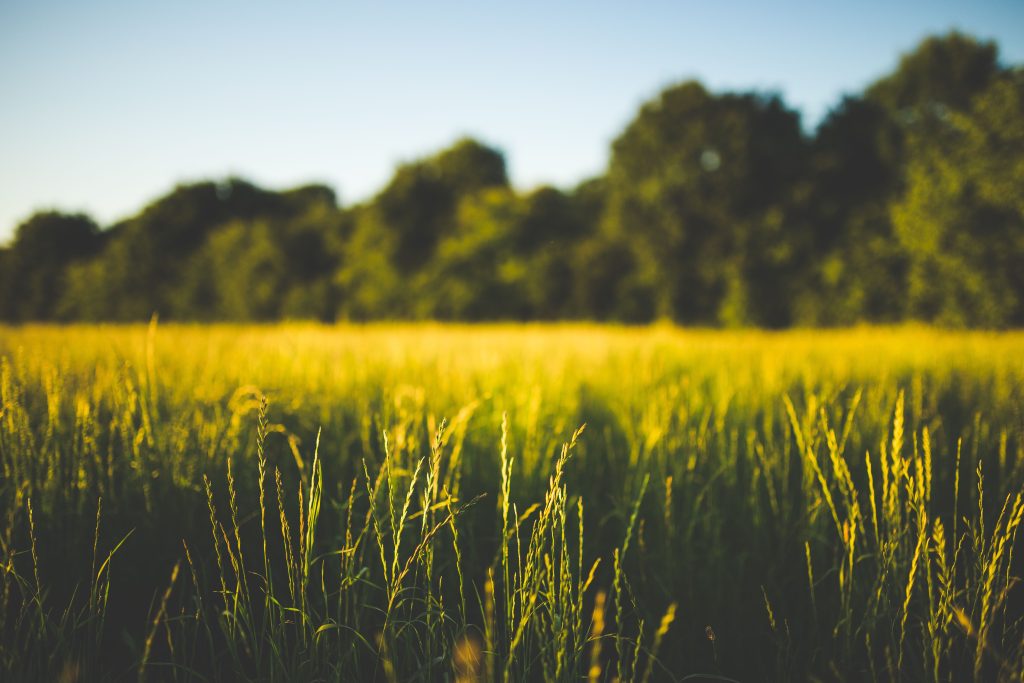
A pasture can disappear faster in August than many livestock producers expect.
Cool-season grasses may still be green, but growth slows sharply during hot or dry weather. Livestock continue consuming forage every day while the plants replace leaf area more slowly.
When stocking pressure remains unchanged, animals revisit plants before they have recovered. The pasture becomes shorter, roots weaken, weeds gain space, and the stand enters fall in worse condition.
The late-summer slump is not simply a shortage of visible grass. It is a period when plant growth and livestock demand are out of balance.
Cool-season grasses have a different growth rhythm
Tall fescue, orchardgrass, perennial ryegrass, bluegrass, and many other pasture species grow most actively during cool spring and fall weather.
High temperature and moisture stress reduce tillering and leaf expansion. Warm nights increase plant respiration, using carbohydrates that would otherwise support growth.
The plant may remain alive while producing little usable forage.
That distinction matters. A pasture that is dormant or slowly growing should not be managed as though every green leaf will be replaced within a few days.
The grazing rotation must slow down, not speed up.
Leaf area is the plant’s energy source
Grass leaves capture sunlight and produce carbohydrates.
When livestock remove most of the leaf area, the plant depends on stored energy in crowns, stems, and roots to begin regrowth. Repeated defoliation before the plant restores enough leaves steadily drains those reserves.
Root growth follows the amount of active leaf area. Severe defoliation causes roots to stop growing and can lead to root death.
Penn State Extension warns that overgrazing weakens root systems and makes pastures more susceptible to late-summer drought.
A short pasture therefore becomes less able to reach deeper moisture.
The common reaction—keeping animals on the pasture because there is still some green material—can accelerate the decline.
Maintain a protective residual
The correct residual height depends on species, season, and management, but most cool-season perennial grasses should not be grazed to the soil surface.
Leaving several inches of leaf area protects the crown, shades the soil, slows evaporation, supports photosynthesis, and allows faster recovery.
A pasture that has already been grazed too short should be rested even if rain is forecast. Moisture helps, but plants still need enough leaves and stored energy to respond.
Penn State guidance for dry conditions recommends allowing cool-season grasses to recover to roughly 8 to 10 inches before grazing and avoiding overgrazing after moisture returns.
Rain does not instantly rebuild roots.
Extend the rest period
During spring growth, a paddock may recover quickly. In August, the same paddock may require twice as long or more.
Rotation speed should be determined by plant recovery rather than a fixed calendar.
Watch the first paddock after livestock leave it. When regrowth slows, add days to the rest period. This may require reducing the area offered each day, adding temporary paddocks, feeding stored forage, or moving animals to a sacrifice area.
The objective is to prevent cattle, horses, sheep, or goats from returning to plants that have produced only a few new leaves.
Repeatedly biting fresh regrowth is especially damaging because the plant has invested stored carbohydrates in tissue that is immediately removed.
A sacrifice area can protect the whole farm
Removing livestock from pasture may seem costly, but a planned sacrifice area often reduces long-term damage.
Use a location with stable footing, access to water, and manageable runoff. Feed hay or other forage there while permanent pastures rest.
The sacrifice area will receive heavy traffic and manure, so it should not be placed where nutrients or sediment can reach streams, wells, or drainageways.
Its purpose is concentration: accept damage in one controlled location rather than weakening every paddock.
This is particularly important for horses, which graze closely and selectively, and for small acreage where stocking density is high.
Match livestock numbers to available forage
A pasture budget should compare forage supply with daily herd demand.
Estimate usable dry matter rather than total standing material. Not all forage can be removed without harming the stand. Trampling, fouling, and selective grazing also reduce utilization.
A 1,200-pound cow may consume roughly 2% to 3% of body weight in dry matter daily, depending on production stage, forage quality, and intake assumptions. The herd’s total demand continues whether the pasture grows or not.
When projected supply falls below demand, the choices are clear:
- Add supplemental forage
- Reduce livestock numbers
- Use annual forage or crop residue
- Move animals to another acreage
- Accept pasture damage
The last option is usually the most expensive over several seasons.
Water placement affects grazing pressure
Livestock concentrate near water, shade, gates, and mineral feeders.
During heat, time near water increases. The surrounding soil becomes compacted and vegetation is grazed repeatedly.
Where practical, rotate water and mineral locations. Provide enough access points to reduce crowding. Protect wet areas from trampling.
Check water quantity and quality daily. Low flow, algae, warm water, or poor access reduces intake and animal performance.
Adequate water does not make forage grow, but inadequate water increases heat stress and limits livestock use of the forage that remains.
Shade can create nutrient concentration
Natural shade improves animal comfort, but it also concentrates manure and traffic.
Trees may suffer root damage. Bare soil develops beneath the canopy. Nutrients accumulate in the shaded area instead of being returned across the pasture.
Portable shade or multiple shade locations can distribute pressure more evenly.
Where animals repeatedly loaf in one area, consider whether the location should be stabilized or excluded rather than expecting grass to survive constant traffic.
Watch poisonous and unpalatable plants
Overgrazed and drought-stressed pastures create opportunity for weeds.
Livestock may begin sampling plants they normally avoid because desirable forage is scarce. Some toxic plants remain green during drought or become more palatable after wilting.
Penn State Extension notes that livestock in brown or overgrazed pastures are more likely to consume less-palatable species, including poisonous broadleaf plants.
Walk the pasture before forage becomes critically short. Identify problem plants and consult local livestock or extension specialists.
Do not assume mowing every weed is safe. Some toxic species remain hazardous in wilted material or hay.
Do not apply nitrogen to dormant, overgrazed grass
Nitrogen can stimulate cool-season grass when temperature and moisture support growth.
It cannot replace missing leaf area, living roots, or rain.
Applying nitrogen to droughted, dormant pasture may produce little immediate response. Surface fertilizer may remain unavailable, and concentrated salts can increase stress near the crown if application is poorly timed.
Where fall growth is expected, nitrogen may be useful after moisture returns and the stand begins active growth. The rate should reflect species composition, legume content, soil test, forage objective, and local guidance.
A pasture containing a productive legume component may require less nitrogen. A weak, weedy stand may not justify the input until grazing management improves.
Fertilizer should support recovery, not finance continued overgrazing.
Potassium and phosphorus affect persistence
Pasture fertility is more than nitrogen.
Potassium supports water regulation, winter survival, and stand persistence. Phosphorus supports root growth and legumes. Soil pH affects nutrient availability and species composition.
Hay fields remove substantial potassium because the entire plant leaves the field. Grazed pasture recycles more nutrients through manure and urine, although distribution is uneven.
A soil test should determine whether phosphorus, potassium, lime, magnesium, or sulfur is needed.
Do not use a balanced fertilizer automatically. Many long-term livestock fields already contain high phosphorus near feeding areas, while distant paddocks may be lower.
Sample management zones separately.
Consider warm-season forage in future plans
A recurring summer slump may justify adding warm-season species.
Native warm-season grasses and summer annuals produce during the period when cool-season grasses slow. They can provide grazing while permanent cool-season pastures rest.
Species choice depends on region, livestock class, soil, equipment, and intended use. Sorghum-sudangrass, pearl millet, crabgrass, annual ryegrass, teff, and native perennials each have different management and animal-safety considerations.
Some warm-season annuals carry prussic acid or nitrate risks under drought, frost, or heavy nitrogen. Follow local recommendations.
The objective is not simply more acres. It is forage growth distributed across the season.
Use stored forage strategically
Feeding hay in August can feel backward, especially when hay is intended for winter.
It may still be economical if it protects permanent pasture and allows fall regrowth.
The cost of a few weeks of hay should be compared with reseeding, weed control, lost fall grazing, soil erosion, and reduced production next spring.
Feed in a controlled location or unroll hay where nutrient distribution is needed and soil conditions permit. Avoid creating mud or damaging wet ground.
Stored forage is a management tool, not evidence that the grazing system failed.
Prepare selected fields for fall stockpiling
Not every pasture should remain in the summer rotation.
Healthy tall fescue paddocks can be removed from grazing in mid-August and allowed to accumulate growth for late fall and winter.
This requires enough acreage elsewhere to support livestock while the stockpile develops.
Choose fields with good stands, reasonable fertility, accessible water, and a layout suitable for strip grazing. Avoid sacrificing the future stockpile to solve an immediate forage shortage.
Stockpiling works because the field is rested.
Record the pasture’s response
Measure recovery time, residual height, weed invasion, bare ground, and livestock days per paddock.
Photographs taken from fixed points are useful. So are pasture sticks, rising-plate meters, or clipped samples.
Records reveal whether a field is recovering more slowly each year, whether stocking rate is realistic, and whether fertility or grazing is the stronger limitation.
A pasture that receives fertilizer but remains continuously short has a grazing problem.
A well-managed pasture that produces limited growth despite adequate rest and moisture may have a soil-fertility or species problem.
Protect the crown now to protect spring growth
The condition of the pasture entering fall affects winter survival and spring production.
Plants need time to rebuild roots and carbohydrate reserves. Grazing too short in late summer and fall weakens that preparation.
Leave adequate residual, lengthen rest periods, and adjust livestock demand before the stand reaches a crisis.
The pasture may not look productive while it rests, but growth occurring belowground is part of the forage system.
Supply Solutions can help producers interpret pasture soil tests and select nutrients after grazing pressure, moisture, species composition, and stand condition have been evaluated. Contact the company before fertilizing a severely stressed pasture. Proper fertilizer use supports healthy regrowth; it does not make overgrazing sustainable.